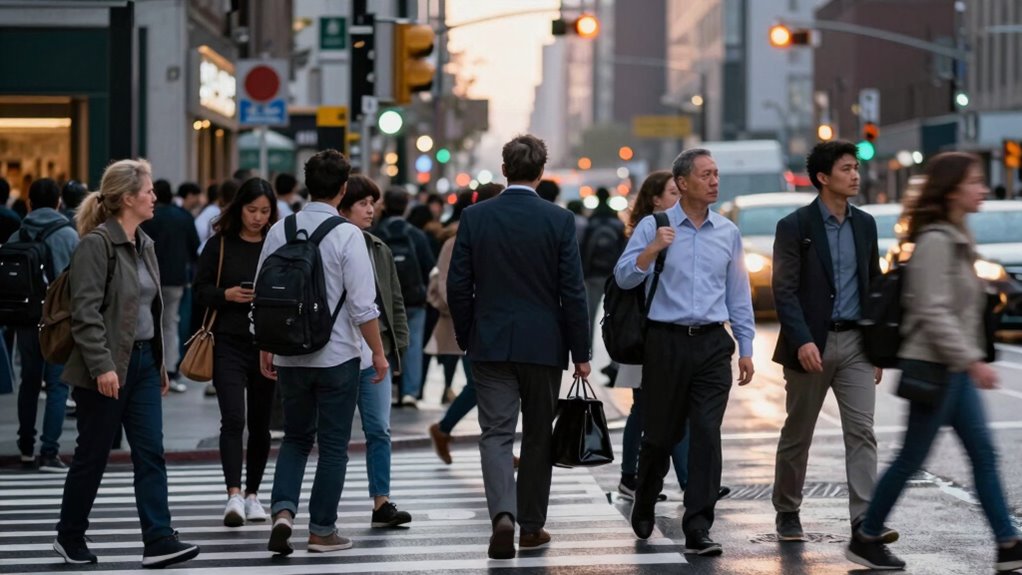

Commuting math uncovers the hidden “friction cost” of travel—small inefficiencies and hidden expenses that add up over time, affecting your schedule, environment, and well-being. Longer commutes reduce your free time, increase stress, and raise emissions, while tweaking routes or departure times can save valuable minutes. Understanding these math-driven insights can help you make smarter travel choices and improve your daily routine. Keep exploring to learn how your commute can be more efficient and eco-friendly.
Key Takeaways
- Friction cost quantifies hidden expenses like stress, time loss, and inconvenience during commutes.
- Longer commutes increase friction costs, reducing free time and elevating mental fatigue.
- Mathematical analysis helps identify route or timing changes that minimize friction costs.
- Understanding friction costs informs smarter travel choices and promotes sustainable, efficient routines.
- Small adjustments based on math can significantly reduce overall travel-related frustrations and environmental impact.
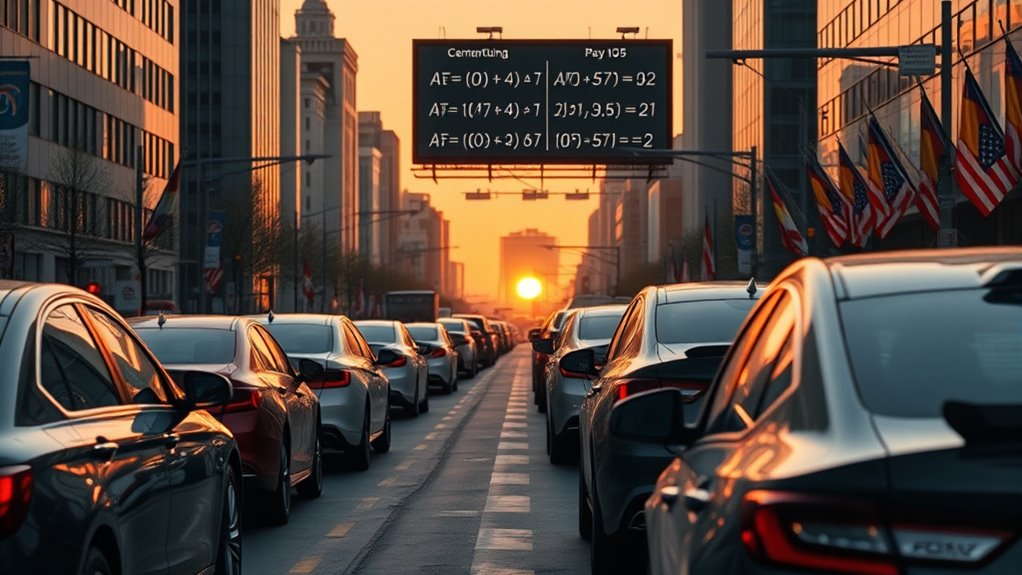
Have you ever wondered how math can help you make your daily commute more efficient? It might surprise you how much behind-the-scenes calculation goes into optimizing your travel plans. When you analyze your commute, you’re not just considering the time it takes to get from point A to B—you’re also looking at the broader impact on your work life balance and the environment. By applying simple mathematical principles, you can identify ways to reduce wasted time and lessen your ecological footprint.
Understanding the ‘friction cost’ of travel is key. This concept refers to the hidden expenses and inconveniences that add up during your daily journey. For example, long commutes can eat into your work life balance by reducing your free time and increasing stress. Math helps you quantify these costs, so you can make informed decisions. If you calculate your commute duration, you might realize that a slight change in route or departure time could save you valuable minutes each day. These small adjustments add up, giving you more time for family, hobbies, or rest, ultimately improving your overall well-being.
Calculating your commute time helps save minutes, reduce stress, and improve your overall well-being.
Furthermore, math reveals the environmental impact of your travel choices. Longer commutes often mean more fuel consumption, higher emissions, and increased pollution. By analyzing data such as distance traveled and vehicle efficiency, you can determine which routes or modes of transportation are more eco-friendly. For instance, calculating your carbon footprint based on your car’s fuel economy versus public transit allows you to compare the environmental costs directly. This quantitative approach empowers you to choose greener options, like biking, carpooling, or using transit systems, reducing your contribution to climate change.
Math also helps you balance your work and life commitments more effectively. If you consider the time spent commuting as a form of ‘cost,’ then optimizing your schedule can lead to better work-life harmony. For example, by using algorithms or simple calculations, you might find that working remotely a few days a week or adjusting your start time can cut your commute substantially. This not only saves time but also reduces the mental fatigue that often accompanies long travel hours.
Additionally, innovative European cloud servers can provide solutions for remote working, helping to reduce commuting needs and supporting sustainable practices. In essence, applying math to your daily commute isn’t just about saving minutes—it’s about making smarter decisions that positively impact your work-life balance and the environment. Small, calculated changes can lead to a more sustainable and satisfying routine. So, next time you’re stuck in traffic or pondering your travel options, remember that math is your secret tool for making your commute more efficient, eco-friendly, and balanced.
As an affiliate, we earn on qualifying purchases.
Frequently Asked Questions
How Do Different Transportation Modes Impact Friction Costs?
Different transportation modes impact friction costs based on their efficiency and infrastructure needs. Choosing alternative transport like cycling or walking reduces friction costs by avoiding congestion and infrastructure investments, saving time and money. Public transit can lower costs if well-funded, but requires significant infrastructure investments, which can temporarily increase friction costs. Overall, optimizing infrastructure and encouraging alternative transport options helps minimize these hidden travel costs for you.
Can Remote Work Significantly Reduce Commuting-Related Friction Costs?
Imagine you’re in the early days of telecommuting, and yes, remote work can substantially reduce commuting-related friction costs. By embracing telecommuting benefits, you eliminate time and money spent on travel, while virtual collaboration keeps you connected. This shift not only saves resources but also boosts productivity and well-being, proving that working from home is a smart move to cut down on the hidden costs of daily commutes.
What Factors Influence the Variability of Friction Costs Across Cities?
You’ll find that friction costs vary across cities mainly due to urban sprawl and infrastructure quality. In sprawling cities, longer commutes increase costs, while poor infrastructure leads to delays and congestion, raising friction. Well-planned urban areas with efficient transit systems reduce these costs. Your experience depends on how compact the city is and how well its infrastructure supports smooth travel, making some places more friction-heavy than others.
Are There Specific Policies That Effectively Minimize Commuting Friction?
You can effectively minimize commuting friction by advocating for policies like carpool incentives and flexible scheduling. Carpool incentives encourage shared rides, reducing congestion and cost, while flexible scheduling allows you to avoid peak travel times, saving time and stress. Implementing these policies helps streamline your commute, lowers overall friction costs, and creates a more efficient, less stressful travel experience for everyone involved.
How Does Commuting Friction Affect Overall Economic Productivity?
You might notice that commuting friction reduces your overall productivity by increasing travel time and stress. When urban sprawl spreads out workplaces, it forces you into longer, more frustrating commutes, which cuts into your work and leisure time. Your lifestyle choices, like living closer to work or opting for efficient transportation, can help minimize this friction, boosting both individual and economic productivity. Reducing commuting friction benefits everyone by making daily travel smoother and more efficient.
fuel efficiency calculator for cars
As an affiliate, we earn on qualifying purchases.
As an affiliate, we earn on qualifying purchases.
Conclusion
So, next time you complain about your long commute, remember you’re paying a hidden toll—literally. That extra hour stuck in traffic isn’t just lost time; it’s like pouring money down the drain, only with more fumes and less dignity. Your daily grind isn’t just a journey; it’s a costly rollercoaster, where the friction costs keep adding up, turning your commute into a high-stakes game of “How much can I lose today?” Cheers to that!
As an affiliate, we earn on qualifying purchases.
As an affiliate, we earn on qualifying purchases.