
Trust your intuition when your emotional signals—like feelings of calm confidence or subtle physical cues—align with factual information. Pay attention to emotions such as anxiety or hesitation, which may indicate bias or uncertainty. Practice self-awareness to distinguish genuine insights from impulsive reactions, and verify your feelings support your logical reasoning. Building confidence comes with experience and calibration, helping you make decisions that truly resonate with your inner guidance. Explore more to refine your intuitive trust process.
Key Takeaways
- Ensure emotional signals are calm, aligned with values, and supported by physical cues before trusting intuition.
- Differentiate genuine insights from impulsive reactions by practicing mindfulness and self-reflection.
- Confirm that emotional cues are consistent with factual information to strengthen trust in intuition.
- Develop self-awareness to identify biases, fears, or biases that may distort internal signals.
- Build confidence through experience, ensuring internal cues reliably guide decision-making.

Trusting your intuition can often lead you to make better decisions, even when the facts seem uncertain. When you rely on that gut feeling, you’re tapping into your emotional awareness—an often overlooked yet powerful aspect of your decision-making processes. Emotional awareness helps you recognize how you feel about a situation, which can serve as a valuable guide when logical analysis alone isn’t enough. But knowing when to trust that inner voice isn’t always intuitive; it requires calibration and self-awareness to avoid impulsive choices.
Trust your gut wisely—emotional awareness guides better decisions when facts fall short.
Your decision-making processes are influenced not just by facts and figures but also by subtle emotional cues. When you’re faced with a tough choice, pause for a moment to check in with yourself. Are you feeling anxious, excited, or hesitant? These emotional signals can provide insight into what your subconscious is processing. If your intuition is accompanied by a sense of calm confidence, it’s often a sign that you’re aligned with your values and instincts. Conversely, if it’s tinged with fear or doubt, it’s worth examining whether those feelings stem from genuine concern or unnecessary anxiety.
A key part of trusting your intuition involves developing emotional awareness. Pay attention to how your body reacts—do you feel tension in your chest, a flutter in your stomach, or a sense of ease? These physical responses are often tied to your emotional state and can serve as internal signals guiding your decision-making processes. Over time, practicing mindfulness and self-reflection helps you distinguish between genuine intuitive insights and fleeting emotional reactions. Recognizing the importance of emotional awareness allows you to better calibrate your intuition and make more informed choices.
Another important aspect is learning to calibrate your intuition by gathering relevant information without overanalyzing. Trust isn’t about ignoring facts; it’s about integrating your emotional awareness with available data. When you notice your emotions aligning with logical reasoning, that’s a good indication that your intuition is calibrated and trustworthy. Conversely, if your feelings are disconnected from the facts, it might be wise to seek additional information before acting.
Ultimately, trusting your intuition becomes a skill built through experience and self-awareness. It’s about recognizing when your emotional awareness is providing accurate guidance and when it’s clouded by bias or fear. By honing this sensitivity, you enhance your decision-making processes, making choices that resonate with your authentic self. When you learn to listen to your inner voice carefully and respectfully, you empower yourself to navigate uncertainty with confidence, making smarter, more aligned decisions every time.
Frequently Asked Questions
How Can I Differentiate Between Intuition and Impulsive Reactions?
You can differentiate between intuition and impulsive reactions by paying attention to your gut feelings and conducting a rational assessment. If your initial feeling is calm and consistent, it’s likely intuition guiding you. However, if your response is impulsive, emotionally charged, or urges quick action without thought, it’s probably an impulsive reaction. Trust your gut but pause to analyze the situation to guarantee your feelings align with rational judgment.
What Are Common Signs That Intuition Is Trustworthy?
Ever wonder if your gut feeling is trustworthy? You’ll notice trustworthy intuition often aligns with emotional triggers and subconscious cues, feeling natural rather than forced. It’s consistent across similar situations and brings you clarity, not confusion. When your instincts resonate with your core values and provide insightful guidance without excessive doubt, that’s a strong sign. Trust your intuition when it’s calm, clear, and rooted in genuine understanding, not impulsive reactions.
Can Intuition Be Influenced by Emotional Biases?
Yes, your intuition can be influenced by emotional biases and decision heuristics. When you’re feeling strong emotions, like fear or excitement, those feelings can distort your gut feelings, leading you to overestimate or underestimate risks. Decision heuristics, or mental shortcuts, may also cause you to rely on familiar patterns rather than objective analysis. Be aware of these influences to better calibrate when your intuition is trustworthy.
How Does Experience Enhance Intuitive Decision-Making?
Experience gently sharpens your intuitive decision-making by refining heuristic shortcuts and boosting pattern recognition. As you gain more exposure, your mind naturally filters relevant cues, enabling quicker and more accurate judgments. This process makes relying on intuition more reliable because your subconscious learns to spot subtle signals others might miss. Over time, your intuition becomes a finely tuned tool, helping you navigate complex situations with greater confidence and precision.
Is Intuition Reliable in High-Stakes Professional Settings?
In high-stakes professional settings, intuition can be reliable when you recognize heuristic shortcuts and subconscious cues guiding your decisions. Trust your gut when these cues align with your experience, but stay cautious of biases. Use intuition as a tool alongside rational analysis, especially when time is limited. By calibrating your instincts through awareness, you can make quicker, more confident choices without compromising accuracy.
Conclusion
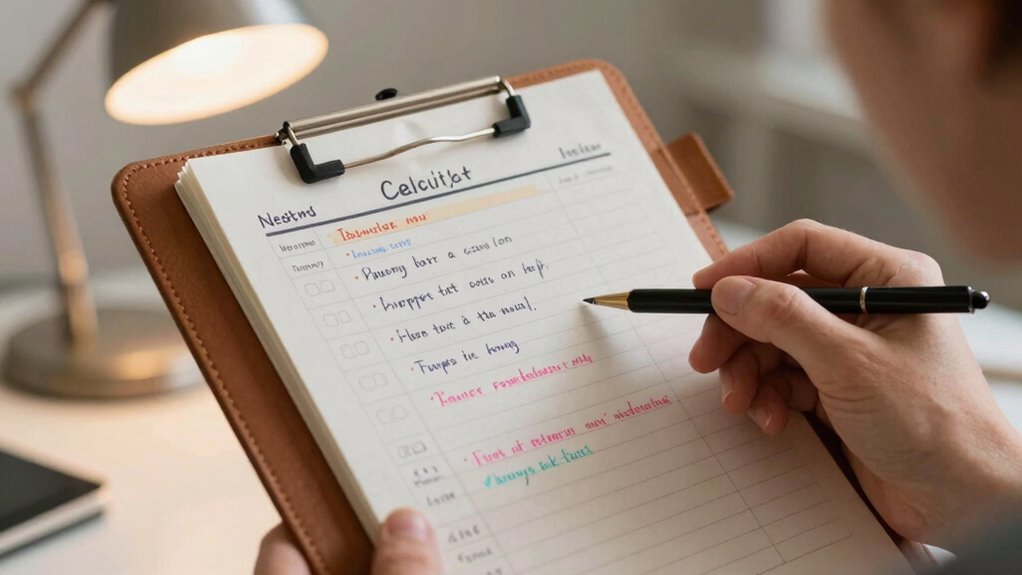
Trust your intuition, but don’t rely on it blindly—it’s your compass, not your crystal ball. Use the calibration checklist to weigh your gut feelings against facts and logic, ensuring you don’t fall into the trap of overconfidence. Remember, your instincts are powerful, but even the sharpest sword needs polishing. When you strike the right balance, you’ll make decisions so spot-on, they’ll make lightning seem dull in comparison. Trust wisely, and watch your confidence soar!