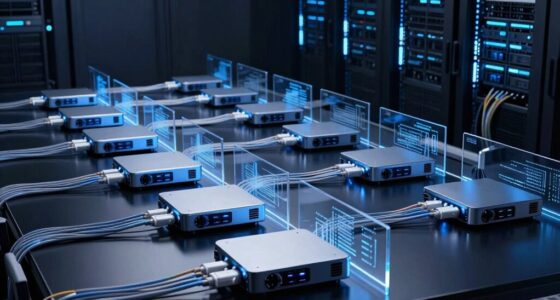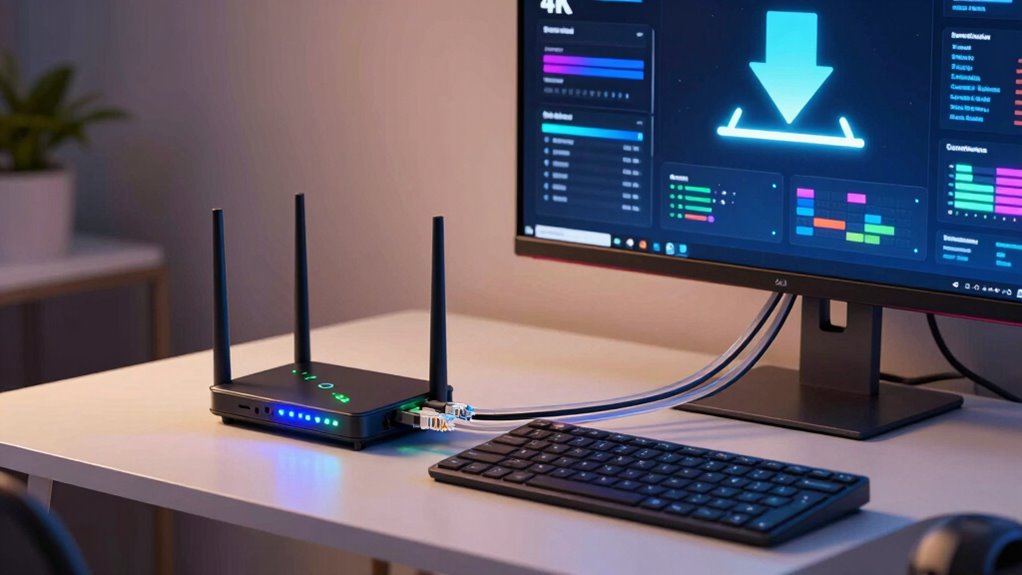

If you have multiple devices streaming, gaming, or transferring large files at the same time, 2.5GbE can make a real difference. It’s ideal when your current gigabit Ethernet isn’t enough to handle the demand, especially for high-bandwidth activities. Upgrading to a multi-gig connection future-proofs your network and minimizes bottlenecks. To understand how fiber technology and infrastructure upgrades can maximize these benefits, keep exploring what makes multi-gig internet truly valuable.
Listen free for 30 days with Audible
Thousands of audiobooks and originals — cancel anytime.
As an affiliate, we earn on qualifying purchases.
Key Takeaways
- 2.5GbE is essential for households or businesses with multiple high-bandwidth devices simultaneously streaming or transferring large files.
- Upgrading to fiber-based 2.5GbE infrastructure future-proofs networks for higher speeds like 10GbE.
- Multi-Gig Ethernet becomes critical when internal network speeds surpass traditional 1Gbps limits.
- Fiber supports reliable, long-distance connections needed for multi-Gig speeds without signal loss.
- Implementing 2.5GbE over fiber optimizes performance in environments demanding faster data transfer and minimal latency.
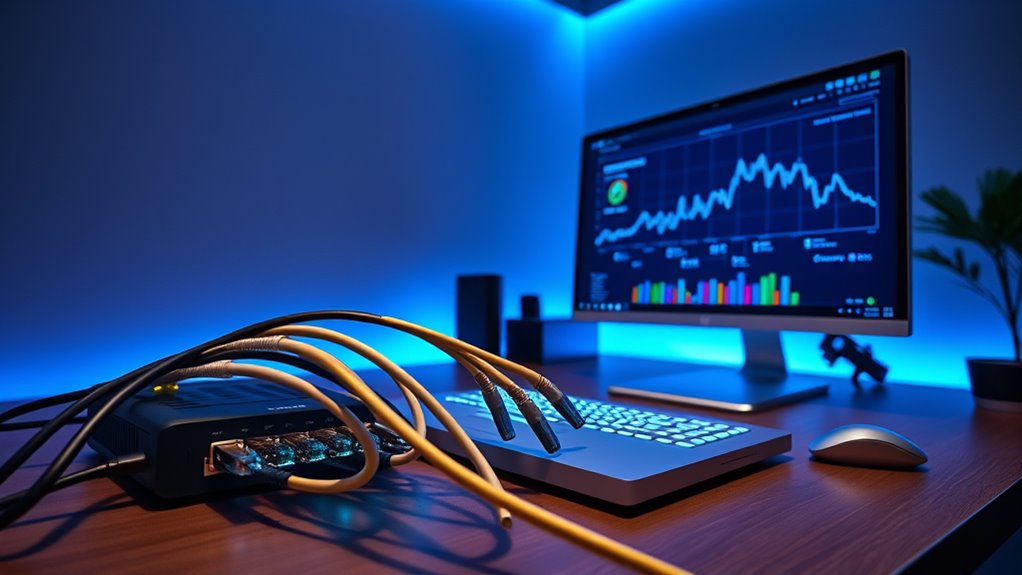
As more devices demand faster internet speeds, Multi-Gig Internet is becoming the new standard for home and business connectivity. If you’re upgrading your network, you’ll quickly realize that traditional Ethernet speeds of 1Gbps no longer cut it for the latest applications, streaming, or data transfers. That’s where multi-gig solutions, like 2.5GbE, come into play, offering a significant boost without overhauling your entire setup. To fully leverage these speeds, you’ll need to regard network upgrades that incorporate fiber technology, which is essential for supporting higher bandwidths and future-proofing your infrastructure.
Fiber technology has revolutionized how we approach network upgrades. Unlike copper cables, fiber optic cables transmit data via pulses of light, enabling much higher speeds over longer distances with minimal signal loss. When you adopt fiber for your network, you’re not just increasing speed—you’re also enhancing reliability and reducing latency. This means smoother streaming, faster backups, and more efficient data handling for your business. As your demand for bandwidth grows, fiber technology ensures your network can keep up without frequent rewiring or costly replacements. Additionally, investing in high-quality fiber cables can significantly improve overall network performance and longevity.
Fiber optic cables deliver higher speeds, greater reliability, and lower latency over longer distances compared to copper.
Incorporating Multi-Gig Ethernet into your network isn’t just about plugging in new hardware; it’s about designing a system that maximizes the potential of fiber technology. Many routers and switches now support 2.5GbE and even 10GbE, but to truly benefit from those speeds, your cabling infrastructure must be up to the task. Upgrading to fiber optics allows you to connect high-speed devices with minimal bottlenecks, especially in environments where multiple users or heavy data loads are common. It also means you’re preparing for the future, as more applications and devices will soon demand even faster connections.
If you’re contemplating a network upgrade, don’t overlook the importance of fiber technology. It not only supports Multi-Gig Ethernet but also ensures scalability and longevity, avoiding the need for frequent upgrades. As your home or business grows, having a robust fiber backbone allows you to expand seamlessly, adding more devices or increasing speeds without major disruptions. This makes investments in fiber-based network upgrades a smart move, providing a foundation that can handle the increasing data demands of modern digital life.
As an affiliate, we earn on qualifying purchases.
Frequently Asked Questions
How Does Multi-Gig Ethernet Differ From Standard Gigabit Ethernet?
Multi-gig Ethernet offers faster network speeds than standard gigabit Ethernet, typically reaching 2.5GbE or higher. You’ll notice quicker data transfers, especially when handling large files or multiple devices. To benefit, your hardware must be compatible with multi-gig standards, including routers, switches, and network cards. If your setup supports it, upgrading can substantially improve your network performance, making tasks smoother and reducing bottlenecks.
What Types of Devices Support 2.5gbe Connections?
You’ll find 2.5GbE supported by various devices like network switches, routers, and NAS drives. Some smartphones now support 2.5GbE via USB-C adapters for faster data transfer. Printers are also increasingly compatible, allowing quicker wired connections. Check device specifications to verify compatibility. Upgrading to 2.5GbE can improve your network speed, especially for data-intensive tasks like transferring large files or streaming high-quality content.
Is Upgrading to Multi-Gig Ethernet Cost-Effective for Home Users?
Upgrading to multi-gig Ethernet can be cost-effective if you’re streaming high-resolution content, gaming, or transferring large files regularly. It improves your network speed and reduces bottlenecks, especially as you upgrade wireless devices for faster connectivity. Plus, a faster wired connection enhances network security by providing a more stable, less vulnerable link. If these benefits align with your usage, investing in 2.5GbE is worth considering for your home setup.
How Does Multi-Gig Internet Improve Online Gaming Experiences?
Did you know that reducing latency by just 10 milliseconds can considerably improve your gaming? Multi-gig internet enhances your experience by boosting streaming quality and decreasing lag, giving you smoother gameplay. With faster data transfer, you’ll enjoy more responsive controls and less buffering during live streams. This upgrade makes a noticeable difference, especially in fast-paced games, helping you stay competitive and fully immersed in your online gaming adventures.
What Are the Future Prospects for Multi-Gig Networking Technology?
The future of multi-gig networking looks promising, especially with advancements in wireless integration and network security. You’ll likely see faster, more seamless connections that support smart homes, IoT devices, and high-bandwidth activities. As technology evolves, expect improved security measures, making your network safer. These developments will help you enjoy reliable, ultra-fast internet, opening up new possibilities for streaming, gaming, and remote work without sacrificing security or convenience.
As an affiliate, we earn on qualifying purchases.
Conclusion
Now that you see how 2.5GbE truly makes a difference, it’s clear that not all upgrades are created equal. If you want your internet to keep pace with your devices, skipping this step is like putting all your eggs in one basket. Embrace the change now, and you’ll avoid being left in the dust. When it comes to future-proofing, it pays to get ahead of the curve before it’s too late.
As an affiliate, we earn on qualifying purchases.
As an affiliate, we earn on qualifying purchases.
Labor Day sales Picks
labor day deals
As an affiliate, we earn on qualifying purchases.