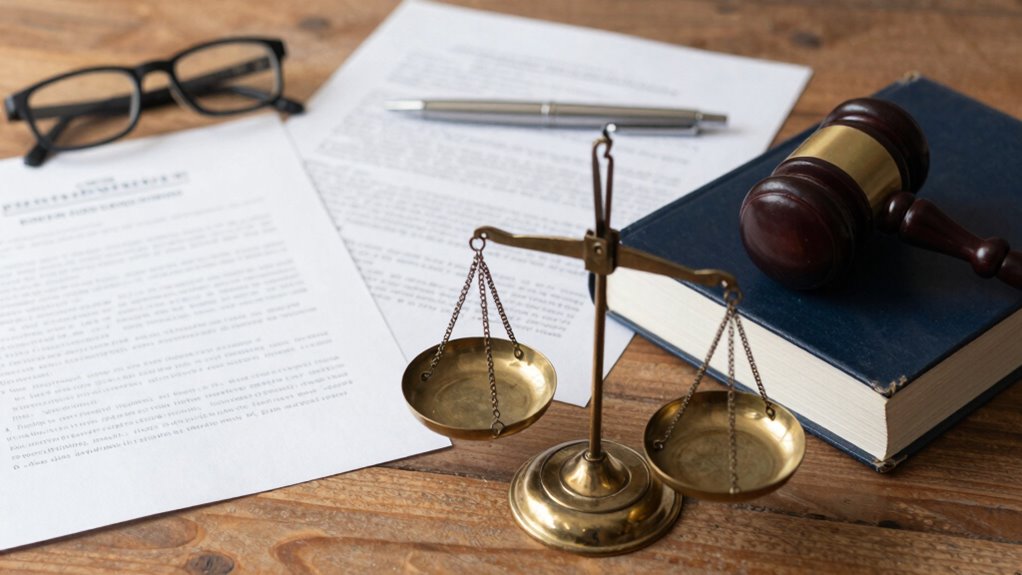

Many legal terms seem simple at first but are actually quite complex once you understand their nuances. For instance, “breach” isn’t just failure; it can be partial or delayed performance with different legal consequences. Words like “contract” or “ownership” also have precise meanings that can impact your rights and obligations. Small wording differences can change the entire result of a legal situation. Keep exploring to uncover how these terms really work and affect you.
Open a free Amazon Business account
Business pricing, bulk buying and tax-exempt orders.
As an affiliate, we earn on qualifying purchases.
Key Takeaways
- Legal terms like “breach” can involve nuanced distinctions, such as minor versus material breaches, affecting legal outcomes.
- Words like “ownership” in IP law have specific legal definitions that differ from everyday understanding.
- Contract language often contains subtle wording that significantly impacts rights and obligations.
- “Damages” in legal context may include more than simple monetary compensation, depending on breach severity.
- Legal terminology frequently varies by jurisdiction, making precise interpretation essential to avoid misunderstandings.

At first glance, some legal terms may seem straightforward, but beneath their simple appearances lie complex concepts that can trip up even those familiar with the language. Take “contract breaches,” for example. You might think it simply means breaking a contract, but it involves more nuanced ideas. A breach isn’t always outright refusal; it can be a failure to perform exactly as agreed, whether partially or entirely. Sometimes, you might think you’re just a little late on a deliverable, but that could still be considered a breach, depending on the contract’s terms. Understanding the difference between material breaches, which go to the heart of the agreement, and minor breaches, which might be repairable, is crucial. These distinctions impact your rights—you might owe damages or face legal consequences. Recognizing the importance of legal definitions can prevent misunderstandings that lead to disputes. Additionally, legal terminology often includes technical language that can be confusing without proper context, making it essential to understand the specific terminology used in legal documents. Some legal terms may also have different meanings depending on the jurisdiction, adding another layer of complexity.
Legal terms often hide complex ideas; understanding breaches and their types is key to protecting your rights.
Furthermore, legal language is often precise and nuanced, which means even small differences in wording can significantly alter the meaning or outcome of a legal issue.
Similarly, “intellectual property” sounds like a straightforward concept—ownership of ideas or inventions. But the legal framework surrounding it is anything but simple. When you hear “intellectual property,” you might picture patents or trademarks, but it also includes copyrights, trade secrets, and even licensing agreements. Each has specific rules about how you can use, share, or protect your creations. Misunderstanding these boundaries can lead to accidental infringement. For example, using copyrighted material without permission might seem harmless, but it’s a violation that could result in costly legal action. Protecting your intellectual property requires careful attention to detail and knowledge of the legal protections available. Grasping the scope of intellectual property rights is essential for safeguarding your creations.
Both contract breaches and intellectual property involve legal language that can seem clear-cut but actually demands careful interpretation. For instance, a contract clause might appear simple but contain legal nuances that determine whether a breach has occurred or whether your intellectual property rights are enforceable. If you overlook these subtleties, you risk costly disputes or losing rights you thought were secure. It’s also important to understand the legal implications of enforceability to ensure your rights are protected and upheld in legal proceedings. It’s tempting to think of these terms as straightforward, but true understanding requires digging into their legal definitions and implications.
In the end, what seems simple on the surface often involves a web of rules and potential pitfalls. Whether you’re drafting a contract, using someone’s creative work, or defending your rights, knowing the deeper meaning behind these legal terms helps you navigate potential problems more effectively. Don’t underestimate the complexity—being informed can save you from misunderstandings that lead to costly legal trouble.
legal terminology reference book
As an affiliate, we earn on qualifying purchases.
As an affiliate, we earn on qualifying purchases.
Frequently Asked Questions
What Is the Difference Between “Liability” and “Responsibility”?
Liability refers to your legal obligation, especially if you breach a contract, meaning you’re responsible for damages or consequences. Responsibility is broader, covering your moral or practical duty, which may not have legal weight. If you make a mistake, liability involves formal legal consequences like lawsuits, while responsibility might involve fixing the issue or owning up to your actions without formal penalties.
How Does “Consideration” Affect a Contract’s Validity?
Consideration is crucial for contract formation because it represents the mutual exchange of something valuable between parties. When you enter into a contract, both sides must give or do something for it to be valid. Without consideration, the agreement might lack enforceability, making it invalid. So, your promise or action must be exchanged for the other party’s to guarantee the contract’s legality and binding nature.
What Does “Tort” Really Mean in Legal Terms?
A tort, in legal terms, is a wrongful act that causes harm or injury to someone else, for which you can seek damages. Legal jargon often makes it seem more complicated than it is, leading to common misconceptions. Think of a tort as “shooting yourself in the foot”—it’s about someone’s actions causing harm unintentionally or intentionally. Understanding this helps you see how law protects people from others’ misconduct.
Is “Due Process” the Same as “Fair Trial”?
Due process isn’t exactly the same as a fair trial, but they’re related legal concepts. Due process guarantees your legal rights are protected throughout a legal proceeding, including fair treatment and notice. A fair trial is a key part of due process, guaranteeing an impartial hearing. Misunderstandings about common courtroom phrases can lead you to think they’re identical, but due process covers broader protections beyond just the trial itself.
Why Is “Indemnity” Important in Legal Agreements?
Indemnity acts as a safety net in legal agreements, shielding you from financial storms. It’s crucial because it guarantees insurance coverage kicks in when contractual obligations are breached or damages occur. Without it, you’d be left steering treacherous waters alone, risking hefty costs. Think of indemnity as your anchor, providing stability and peace of mind, so you’re protected when unforeseen troubles arise, and your obligations threaten to pull you under.
contract law guide for beginners
As an affiliate, we earn on qualifying purchases.
As an affiliate, we earn on qualifying purchases.
Conclusion
Next time you hear terms like “consideration” in a contract, don’t assume it’s straightforward. Remember, legal language often hides complexities—like in a case where a simple-sounding “agreement” was challenged because it lacked true “consideration,” making it unenforceable. By understanding these terms, you protect yourself from surprises and guarantee you’re truly on solid legal ground. Stay curious, ask questions, and don’t be afraid to seek clarity—legal language isn’t always as simple as it sounds.
intellectual property protection kit
As an affiliate, we earn on qualifying purchases.
As an affiliate, we earn on qualifying purchases.
As an affiliate, we earn on qualifying purchases.
Flea & tick season Picks
flea and tick prevention
As an affiliate, we earn on qualifying purchases.