
TL;DR

Get school and study supplies delivered free — and shop member deals
- Fast, free delivery on millions of items
- Access to Prime Big Deal Days deals on October 6–7
- Prime Video, Amazon Music and more included
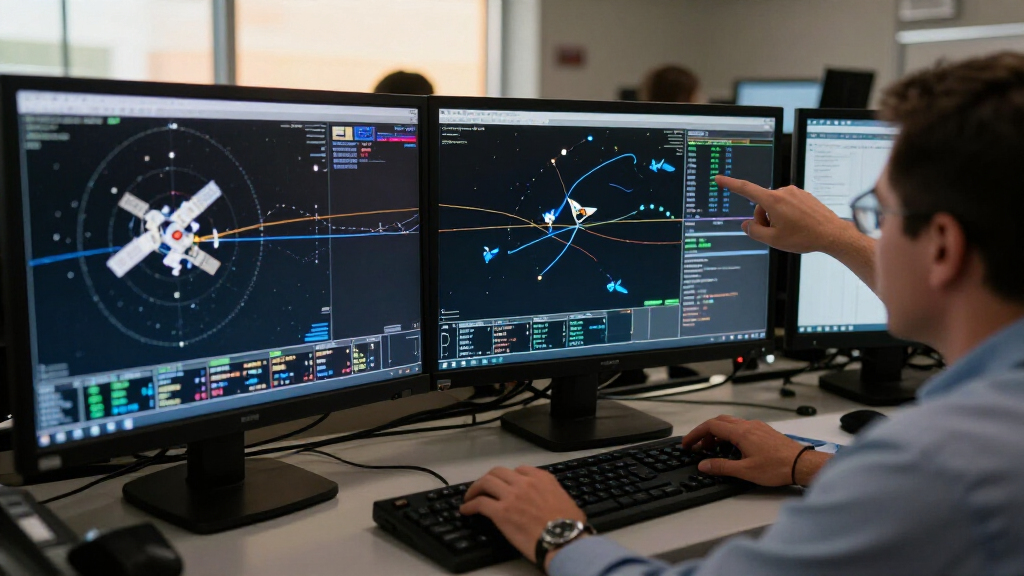
NASA awarded Omitron Inc. an indefinite-delivery contract valued at about $23.5 million over five years for orbital safety analysis services. The work includes conjunction screening for NASA uncrewed spacecraft, human spaceflight support and analysis for NOAA’s Office of Space Commerce.
NASA has awarded Omitron Inc. an indefinite-delivery contract valued at approximately $23.5 million over five years to provide orbital safety analysis services. The work includes screening NASA uncrewed spacecraft for potential close approaches with other objects, supporting human spaceflight activities and providing analysis support to NOAA’s Office of Space Commerce.
NASA said the contract will provide conjunction assessment screening for all of its uncrewed spacecraft. Conjunction screening evaluates whether a spacecraft may pass close to another object in orbit, supporting decisions about potential risks to spaceflight assets. NASA’s release describes the services as protection for agency spacecraft and astronaut lives, but it does not detail specific screening methods, thresholds or operational procedures.
The contract also covers support of human spaceflight activities and orbital safety analysis for the National Oceanic and Atmospheric Administration’s Office of Space Commerce. NASA did not specify in the announcement which missions, NOAA programs or individual analyses will receive support, or how the work will be divided among those activities.
Work is scheduled at several locations: Omitron’s site in Beltsville, Maryland; NASA’s Goddard Space Flight Center in Greenbelt, Maryland, and Johnson Space Center in Houston; Naval Surface Warfare Center Dahlgren in Virginia; and Peterson Space Force Base in Colorado Springs, Colorado. NASA announced the award on September 29, 2026, in a Goddard Space Flight Center contract release. The announcement identifies the contract’s approximate value and five-year period, but does not give a start date or a detailed delivery schedule.
Screening Spacecraft for Close Approaches
Satellites and other objects share increasingly busy orbital regions, where a close approach can require operators to assess possible collision risk and decide whether action is needed. NASA’s award funds a service intended to help the agency assess such encounters across all NASA uncrewed spacecraft, while also supporting human spaceflight activities.
The contract’s scope extends beyond NASA: Omitron is also to provide orbital safety analysis support to NOAA’s Office of Space Commerce. That connection makes the award relevant to federal efforts to monitor orbital activity across civil space programs. The release does not describe how information will be shared between agencies or identify specific decisions the contractor will support, so the practical reach of that work is not yet clear.
NASA calls the services critical to protecting spacecraft and astronaut lives. That is the agency’s description of the contract’s purpose; the announcement does not report a particular collision threat, incident or immediate change to mission operations. The award is a procurement development that establishes support capacity over a five-year period, rather than a report of a newly identified danger in orbit.
A Five-Year Goddard Contract
NASA’s September 29 release identifies the award as contract C26-002 and associates it with Goddard Space Flight Center in Greenbelt, Maryland. The release describes the arrangement as an indefinite-delivery contract. It gives an approximate total value of $23.5 million over five years, but does not provide a breakdown of the value or explain how individual orders will be placed under the contract.
The announcement places this procurement within work that spans NASA’s uncrewed spacecraft, human spaceflight support and NOAA’s Office of Space Commerce. It lists five work locations, including two NASA centers and facilities operated by the Naval Surface Warfare Center and the Space Force. NASA provides no prior contract history, comparison with earlier awards or description of any changes to existing orbital safety services.
Contract Operations Await Detail
NASA’s release does not state when the five-year period begins, whether options or extensions are included, or how the approximate $23.5 million value is distributed across the work. It also gives no schedule for task orders or milestones, and does not identify specific spacecraft, human spaceflight missions or NOAA activities that will receive support.
The announcement does not name the systems or data the contractor will use, explain how analysis findings will reach government decision-makers, or set out performance measures. It also provides no information about staffing levels or how responsibilities will be coordinated across the five listed work locations. These details may be specified in contract documents or later task orders, but they are not included in the NASA release.
Task Orders Will Define the Work
The contract provides a framework for NASA to acquire orbital safety analysis services from Omitron during the stated five-year period of performance. NASA’s announcement does not identify a first task order, initial operational date or next public milestone. Further details about specific assignments, schedules and deliverables may become available through subsequent agency notices or contract records.
Until NASA provides those details, the confirmed scope remains the release’s stated coverage: screening NASA uncrewed spacecraft for conjunctions, support for human spaceflight activities and orbital safety analysis for NOAA’s Office of Space Commerce.
Key Questions
Who received NASA’s orbital safety analysis contract?
Omitron Inc. received the award, according to NASA’s September 29, 2026 announcement.
How much is the contract worth and how long does it last?
NASA put the value at approximately $23.5 million over five years. The release does not state the start date or provide a detailed value breakdown.
What work does the contract cover?
The scope includes conjunction assessment screening for all NASA uncrewed spacecraft, support for human spaceflight activities and orbital safety analysis support for NOAA’s Office of Space Commerce.
Where will the work take place?
NASA lists Omitron’s Beltsville, Maryland, location; Goddard Space Flight Center in Greenbelt, Maryland; Johnson Space Center in Houston; Naval Surface Warfare Center Dahlgren in Virginia; and Peterson Space Force Base in Colorado Springs, Colorado.
Has NASA announced a specific spacecraft threat or start date?
No. The release describes the contract’s intended services but reports no specific threat or incident. It does not give the period’s start date or identify the first assigned task.
Source: primary
Fall Picks
fall essentials
As an affiliate, we earn on qualifying purchases.