
TL;DR

Prime made for students and young adults
- Fast, free delivery for dorm and study essentials
- Prime Video and Amazon Music included
- Member-only deals
Researchers have identified a small cell that divides without following the traditional rules of cell division. This discovery questions fundamental biological assumptions and could impact future research.
Scientists have confirmed the discovery of a small cell that divides without adhering to the traditional rules of cellular division, challenging a fundamental principle of biology. This finding, announced by a team at the Institute for Cellular Biology, has potential implications for understanding cell behavior and disease processes.
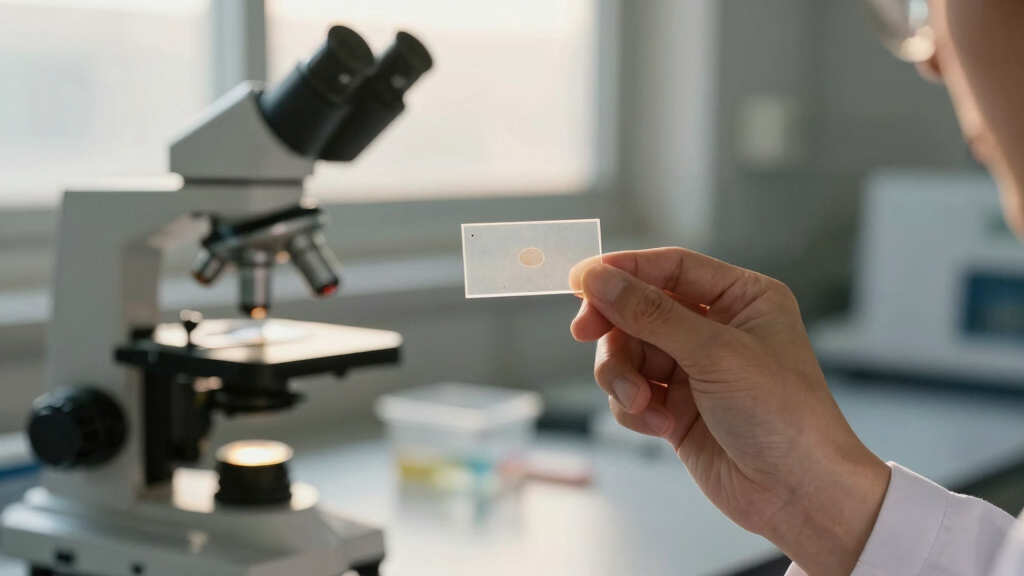
The research team observed this microscopic cell in laboratory conditions using advanced imaging techniques. Unlike typical cells that undergo mitosis following a well-understood sequence, this cell appears to divide rapidly and asymmetrically, without the usual preparatory steps. The phenomenon was documented over several weeks, with multiple instances confirming the abnormal division pattern.
According to Dr. Emily Carter, lead researcher, ‘This cell challenges the long-standing rule that cells must follow a specific cycle to divide correctly. Its behavior suggests there may be alternative pathways or mechanisms we have yet to understand.’
Implications for Fundamental Biology and Disease Research
This discovery could reshape understanding of cellular processes, particularly how cells proliferate and differentiate. It raises questions about the universality of established division rules, which underpin much of biology and medicine. If such cells exist naturally or can be induced, they might influence approaches to cancer treatment, regenerative medicine, and developmental biology.
microscope for cellular biology research
As an affiliate, we earn on qualifying purchases.
As an affiliate, we earn on qualifying purchases.
Previous Assumptions About Cell Division
For decades, biology has held that cells divide through a highly regulated process called mitosis, involving specific stages and checkpoints. This process ensures genetic stability and proper cellular function. While variations exist, the core principles of cell cycle regulation have been considered universal across species and cell types. The recent observations of an atypical dividing cell challenge this consensus and suggest that cellular division may be more flexible than previously thought.
“This cell’s behavior forces us to reconsider some of the fundamental assumptions about how cells divide.”
— Dr. Emily Carter
advanced imaging techniques for cell observation
As an affiliate, we earn on qualifying purchases.
As an affiliate, we earn on qualifying purchases.
Unanswered Questions About Cell Division Variability
It is still unclear whether this atypical division occurs naturally in living organisms or is an artifact of laboratory conditions. The prevalence, biological significance, and potential evolutionary advantages of such cells remain unknown. Researchers are also investigating whether similar cells exist in different species or tissue types, and what genetic or environmental factors trigger this behavior.
As an affiliate, we earn on qualifying purchases.
Next Steps in Research and Validation Efforts
Scientists plan to conduct further experiments to determine if these cells occur in vivo and to explore their molecular mechanisms. Collaborative studies are underway to assess whether this division pattern can be replicated in other cell lines or organisms. Additionally, researchers aim to investigate potential links to disease processes such as cancer, where cell division regulation is disrupted.
biological research tools for cell division
As an affiliate, we earn on qualifying purchases.
As an affiliate, we earn on qualifying purchases.
Key Questions
What is the significance of this discovery?
This finding challenges the fundamental understanding of cell division rules, which could impact biology, medicine, and disease treatment strategies.
Could this cell behavior be natural or is it an artifact?
It is currently unknown whether this division occurs naturally or results from laboratory conditions. Further research is needed to confirm its occurrence in living organisms.
Does this discovery have implications for cancer research?
Potentially, as abnormal cell division is a hallmark of cancer. Understanding alternative division mechanisms could open new avenues for treatment.
How widespread might this phenomenon be?
It remains to be seen whether similar cells exist in other species or tissues. Ongoing studies aim to determine the prevalence and significance of this behavior.
What are the next steps for scientists studying this cell?
Researchers will validate the findings, investigate the molecular mechanisms involved, and explore potential links to health and disease.
Source: hn
Halloween Picks
halloween
As an affiliate, we earn on qualifying purchases.