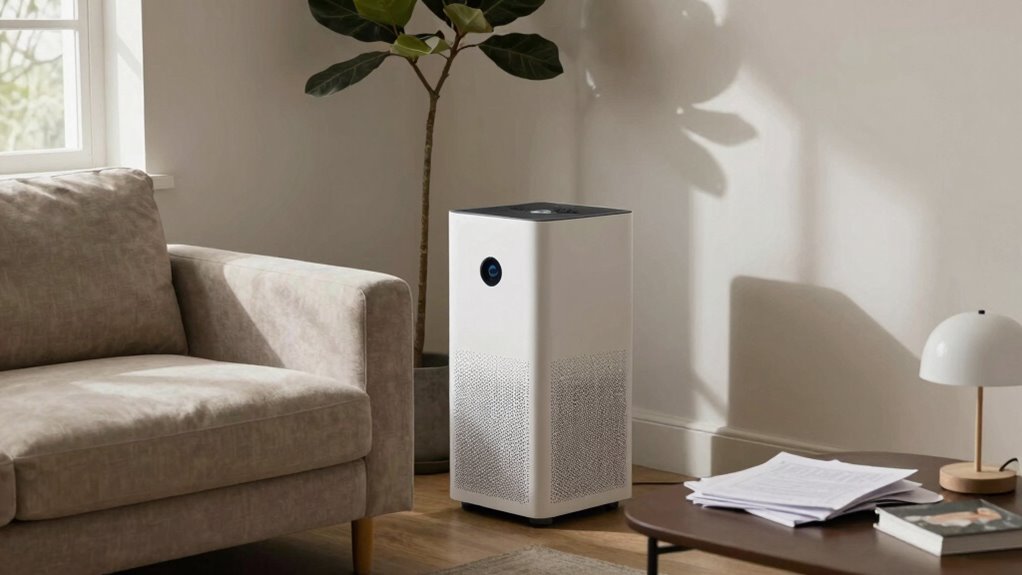

One major placement mistake that reduces your air purifier’s effectiveness is putting it behind furniture or in tight corners. Obstructed airflow limits how well it can draw in polluted air and circulate clean air, making it less efficient. Instead, place it in an open, central area where air can move freely. Elevate the unit on a table or stand for better performance. Keep these tips in mind to get the best results — more useful advice follows.

Prime made for students and young adults
- Fast, free delivery for dorm and study essentials
- Prime Video and Amazon Music included
- Member-only deals
Key Takeaways
- Placing the purifier behind furniture or against walls obstructs airflow, reducing its effectiveness.
- Positioning the device in corners or tight spaces limits air circulation and hampers pollutant removal.
- Incorrect placement in large rooms or near pollution sources causes uneven air cleaning and slower results.
- Keeping the purifier at ground level can hinder airflow; elevating it improves performance.
- Blocking air vents or placing the purifier in high-traffic areas disrupts optimal operation and decreases efficiency.
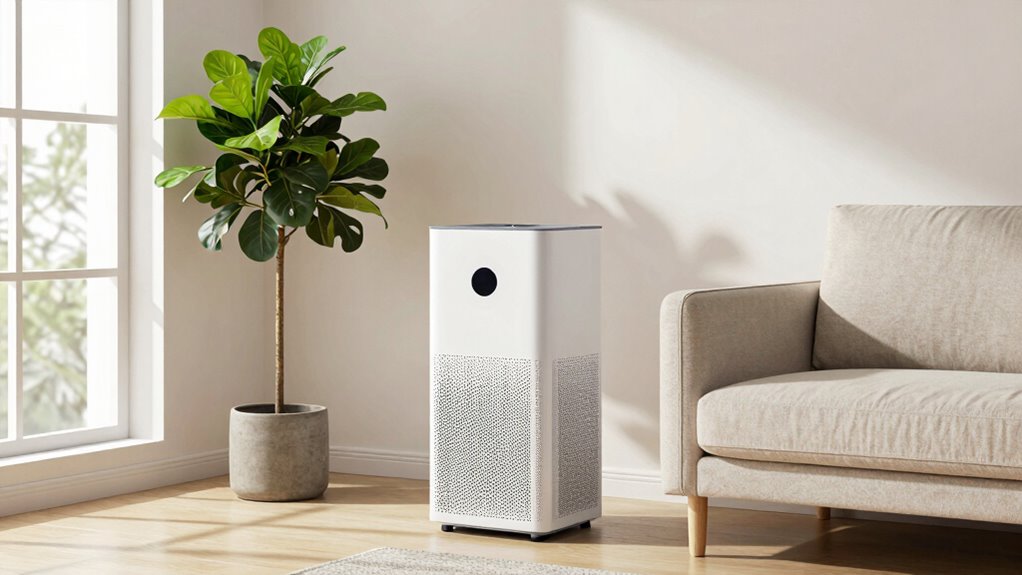
Placing your air purifier in the wrong spot can considerably reduce its effectiveness. If you don’t position it properly, the air flow around the device becomes restricted or inefficient, which means it can’t do its job as well as it should. One common mistake is placing the purifier in a corner or tight space. When it’s tucked away behind furniture or against a wall, the air flow becomes obstructed, preventing the unit from drawing in polluted air and circulating clean air effectively. To maximize results, you need to give your air purifier enough space to operate freely. This involves placing it in an open area where air flow can circulate around it without barriers. Proper air flow is essential for optimal performance. Another critical factor to contemplate is room size. An air purifier that’s too small for the space won’t be able to filter the air efficiently, no matter how well it’s placed. Conversely, a unit that’s too powerful for a small room may be overkill and won’t necessarily perform better if it’s not positioned correctly. Before setting it up, measure your room’s dimensions and compare them to the purifier’s recommended room size. If your space is large, you might need a more powerful model or multiple units to ensure ideal air quality. When choosing a spot, make sure the purifier is in a central location within the room, where the air can flow evenly and reach all corners. This helps the device work more efficiently and reduces dead zones where airborne particles might linger. Avoid placing the purifier near sources of pollution or high-traffic areas, such as near a door, window, or kitchen. These spots can overwhelm the unit, forcing it to work harder than necessary. Instead, aim for a balanced placement in the middle of the room, where the air can circulate naturally and pollutants are pulled into the device from all directions. Keep it elevated if possible—placing it on a table or stand rather than on the floor can improve air flow and prevent dust and debris from clogging the filter prematurely. Additionally, ensuring proper air circulation can help the purifier operate at its full potential, especially if the room has poor ventilation or complex airflow patterns.
As an affiliate, we earn on qualifying purchases.
Frequently Asked Questions
Can Placement Affect the Purifier’s Noise Level?
Yes, placement can affect your purifier’s noise levels. If you position it too close to walls or furniture, it may vibrate or produce more noise. Good placement considerations include keeping it on a flat, stable surface and away from walls or corners. This helps reduce noise levels, allowing the purifier to operate silently and efficiently. Proper placement ensures you enjoy cleaner air without unnecessary noise disturbances.
How Often Should I Reposition My Air Purifier?
You should reposition your air purifier every 3 to 6 months to maintain ideal air quality and purifier efficiency. Studies show that consistent placement helps prevent dust buildup and guarantees even airflow. If you notice a decline in air quality or if the purifier’s noise or performance decreases, it’s time to adjust its position. Regular repositioning keeps your air cleaner and maximizes the purifier’s effectiveness over time.
Does Furniture Placement Impact Purifier Efficiency?
Yes, furniture placement impacts your purifier’s efficiency. If furniture obstructs the air purifier or blocks airflow, it can reduce its ability to clean the air effectively. To maximize results, keep the purifier in an open space away from furniture, allowing room airflow to circulate freely. Avoid placing bulky items nearby, and guarantee vents are unobstructed for ideal air purification. Proper placement helps your purifier work more efficiently.
Is It Better to Place It Near Windows or Doors?
Placing your air purifier near windows or doors might seem logical, but it often hinders its performance. When you position it by windows, outside pollutants can constantly infiltrate, overwhelming the purifier. Near doors, it faces frequent opening and closing, reducing efficiency. Instead, place it centrally away from these openings, ensuring maximum airflow and filtration. Don’t let poor placement sabotage your air quality—think strategically for cleaner, healthier air.
Can Multiple Purifiers Be More Effective Than One?
Using multiple purifiers can improve your air quality more effectively, especially in larger spaces. It guarantees better coverage and quicker removal of pollutants. However, to maintain peak performance, you need to schedule regular purifier maintenance, like replacing filters and cleaning units. Proper placement is vital—spread purifiers out, avoiding corners or obstructions, so they work efficiently. This way, you maximize their benefits and keep your indoor air fresh and healthy.
As an affiliate, we earn on qualifying purchases.
Conclusion
You might think placing your air purifier anywhere is fine, but imagine it as a lighthouse shining in the fog—if it’s hidden behind furniture or near a corner, its light barely reaches the ships. Proper placement is like setting that lighthouse in an open, central spot, illuminating the entire harbor. When you position your purifier correctly, your home’s air feels clearer and fresher, just as a lighthouse guides ships to safety. Don’t let poor placement shadow your air quality.
air purifier with adjustable height
As an affiliate, we earn on qualifying purchases.
As an affiliate, we earn on qualifying purchases.
air purifier for optimal airflow
As an affiliate, we earn on qualifying purchases.
As an affiliate, we earn on qualifying purchases.
Halloween Picks
halloween
As an affiliate, we earn on qualifying purchases.