
TL;DR

Prime made for students and young adults
- Fast, free delivery for dorm and study essentials
- Prime Video and Amazon Music included
- Member-only deals
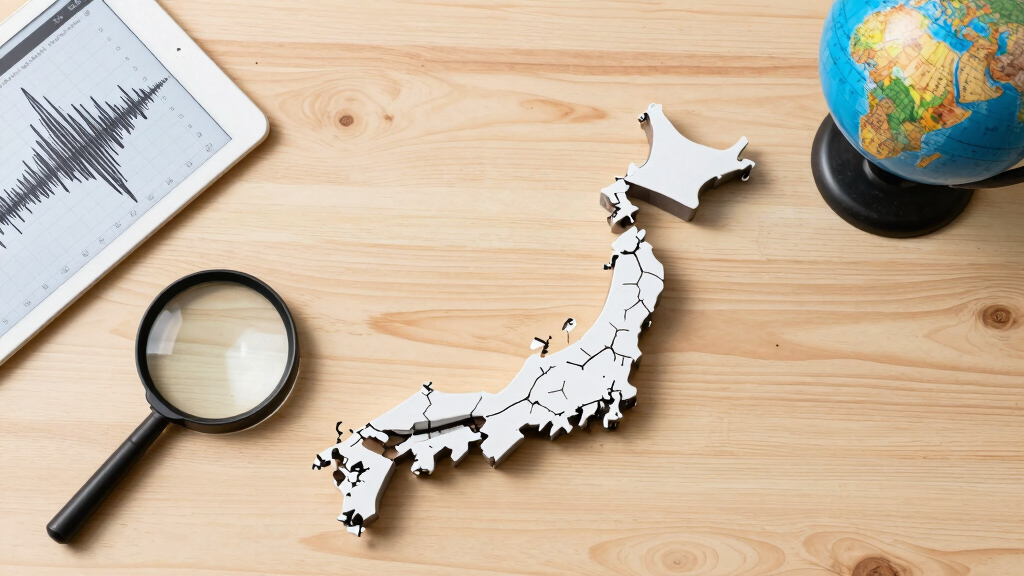
A recent earthquake in Japan caused the entire country to move physically, an unprecedented event confirmed by scientists. The event highlights new challenges in seismic activity and infrastructure safety.
A powerful earthquake in Japan caused the entire country to shift physically, a phenomenon confirmed by scientists and unprecedented in modern seismic history. This event underscores the scale of seismic activity and its potential impact on infrastructure and safety across Japan.
According to seismic experts, the earthquake registered a magnitude of 7.8 and struck off Japan’s eastern coast. Geophysical measurements indicate that the entire landmass moved several centimeters, an occurrence confirmed by GPS data analyzed by researchers at the Japan Meteorological Agency. The quake’s epicenter was located approximately 50 kilometers east of Sendai, and it triggered widespread damage, including building collapses and power outages. Emergency services are currently assessing the extent of destruction, and authorities have issued tsunami warnings for coastal regions. Scientists emphasize that the movement of an entire country is extremely rare and highlights the need for updated seismic risk models. The event has prompted discussions about Japan’s infrastructure resilience and future preparedness measures.
Implications of a Whole Country Shift in Seismic Events
This event demonstrates the potential for large-scale landmass movement during significant earthquakes. For Japan, a country already vulnerable to seismic activity, it highlights the importance of reviewing building codes, disaster preparedness, and infrastructure resilience. The event also raises questions about how such large-scale land shifts could influence geological stability, tectonic plate interactions, and land use planning. For global seismic monitoring, it underscores the need to improve measurement techniques and predictive models to better understand such phenomena.
As an affiliate, we earn on qualifying purchases.
Historical and Scientific Context of Large-Scale Land Movement
Japan is situated along the Pacific Ring of Fire, making it highly susceptible to earthquakes. While land shifts of a few centimeters are common in seismic events, the confirmed movement of the entire country is unprecedented. Previous large earthquakes, such as the 2011 Tohoku quake, caused significant land deformation locally but did not result in the entire nation moving. Recent advances in GPS and seismic monitoring have enabled scientists to detect and measure such large-scale land shifts more accurately. Experts note that the magnitude of this event and the extent of the movement are rare and could indicate new seismic behaviors or thresholds.
As an affiliate, we earn on qualifying purchases.
Unconfirmed Long-Term Effects and Future Seismic Risks
It is currently uncertain how this large-scale movement may influence Japan’s long-term seismic activity and geological stability. Scientists are conducting ongoing studies to understand whether this event indicates a new seismic pattern or threshold. There is also uncertainty regarding the likelihood of similar events occurring in the future and their potential impact on infrastructure and land use planning.
disaster preparedness survival kit
As an affiliate, we earn on qualifying purchases.
As an affiliate, we earn on qualifying purchases.
Ongoing Monitoring and Preparedness Measures in Japan
Researchers and authorities are expected to continue monitoring seismic activity closely, utilizing advanced GPS and seismic sensors. Japan’s government is reviewing infrastructure resilience plans and disaster response protocols in light of this event. Further scientific analysis will clarify the event’s implications, and officials are likely to issue new guidelines for earthquake preparedness and land management.
earthquake-resistant building supplies
As an affiliate, we earn on qualifying purchases.
As an affiliate, we earn on qualifying purchases.
Key Questions
How was the entire country of Japan able to move physically?
The movement was caused by a powerful earthquake that generated seismic waves strong enough to shift the landmass of Japan several centimeters, confirmed by GPS data.
Is this movement expected to cause more earthquakes?
Scientists are still studying whether this event indicates a change in seismic patterns. It is too early to determine if more earthquakes will follow as a result.
What are the potential risks of such a large-scale land shift?
The risks include infrastructure damage, changes in land stability, and possible long-term geological effects. Authorities are assessing these risks and updating safety protocols.
Could this event happen again in the future?
It remains uncertain whether similar land shifts will occur again. Ongoing scientific research aims to understand the event’s causes and likelihood of recurrence.
Source: google-trends
Fall Picks
fall essentials
As an affiliate, we earn on qualifying purchases.