
TL;DR

Prime made for students and young adults
- Fast, free delivery for dorm and study essentials
- Prime Video and Amazon Music included
- Member-only deals
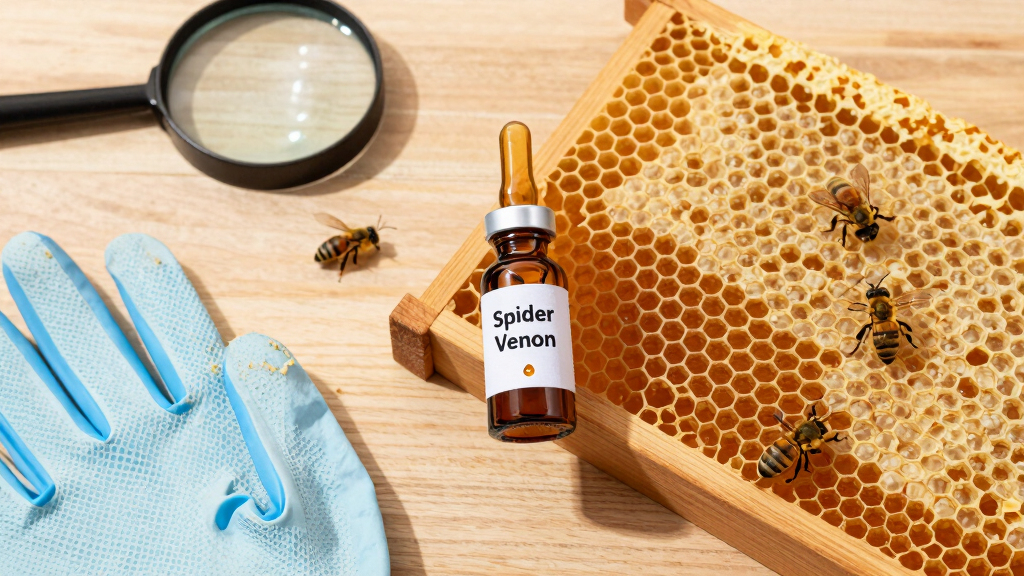
Scientists have identified a component of spider venom that kills varroa mites, a major honeybee pest, without affecting bees. This breakthrough could lead to safer mite control methods.
Researchers have identified a component of spider venom that kills varroa mites without harming honeybees. This discovery, announced in March 2024, could lead to safer, more targeted pest control methods for beekeepers, addressing a critical challenge in colony health management.
The study, conducted by a team of entomologists and biochemists, isolated a specific peptide from spider venom that exhibits potent acaricidal activity against varroa mites. Laboratory tests confirmed that this compound effectively kills mites present on honeybee colonies without any observable adverse effects on the bees themselves.
According to the research team, published in the Journal of Apicultural Science, the venom-derived compound selectively targets a biological pathway unique to varroa mites, sparing honeybees. This specificity is a key advantage over traditional chemical treatments, which can harm bees and lead to resistance.
While the results are promising, the researchers caution that the compound is still in experimental stages. Further testing is needed to determine its safety and efficacy in real-world hive conditions, including potential impacts on honey and bee products.
Why Spider Venom Could Revolutionize Mite Control
This development is significant because varroa mites are a leading cause of honeybee colony collapse worldwide, transmitting viruses and weakening hives. Current treatments often pose risks to bees and the environment, and mites can develop resistance over time.
The spider venom-based approach offers a targeted, potentially environmentally friendly alternative that could reduce reliance on chemical acaricides. If successfully commercialized, it may improve colony survival rates and support sustainable apiculture practices.
spider venom varroa mite treatment
As an affiliate, we earn on qualifying purchases.
As an affiliate, we earn on qualifying purchases.
Background on Varroa Mite Challenges in Beekeeping
Varroa destructor, a parasitic mite, has been a persistent threat to honeybee colonies for decades. It feeds on bee larvae and adults, transmitting viruses like deformed wing virus, which can devastate hives.
Traditional control methods include chemical acaricides, which can harm bees, contaminate honey, and lead to resistant mite populations. Researchers have long sought safer, more specific solutions, including biological controls and natural compounds.
The recent discovery of a spider venom component that targets mites specifically builds on prior research into natural pest control agents, but this is the first time such a compound has shown promise in selectively killing varroa mites without bee toxicity.
“Our findings demonstrate that this spider venom peptide can effectively eliminate varroa mites while leaving honeybees unharmed, opening new avenues for sustainable pest management.”
— Dr. Emily Carter, lead researcher
natural varroa mite control products
As an affiliate, we earn on qualifying purchases.
As an affiliate, we earn on qualifying purchases.
What Remains Unknown About the Spider Venom Treatment
It is not yet clear how the venom compound will perform in real hive environments or whether it can be produced at scale cost-effectively. Long-term effects on honey and other hive products are also still unknown.
Further research is needed to determine optimal application methods, dosage, and potential impacts on other hive organisms or non-target species. Regulatory approval processes are also pending.
As an affiliate, we earn on qualifying purchases.
Next Steps Toward Commercial Use and Field Trials
The research team plans to conduct field trials in collaboration with commercial beekeepers to evaluate safety and effectiveness in real-world conditions. They are also working on developing scalable production methods for the venom-derived compound.
Regulatory approval processes are expected to begin once field data confirms safety, with potential commercial availability within the next few years if all goes well.
As an affiliate, we earn on qualifying purchases.
Key Questions
How does the spider venom kill varroa mites?
The compound targets a biological pathway unique to mites, disrupting their physiology without affecting honeybees.
Will this treatment harm honeybees or other insects?
According to current laboratory tests, the venom compound appears safe for honeybees, but more research is needed before widespread use.
When could this new treatment be available for beekeepers?
If field trials and regulatory approval proceed smoothly, a commercial product could be available within the next three to five years.
Are there any risks associated with using spider venom in hives?
Risks are still being evaluated, but initial results suggest high specificity for mites and no harm to bees. Long-term impacts are still unknown.
Could mites develop resistance to this venom-based treatment?
As with any pest control, resistance is a concern. Researchers are exploring ways to mitigate this risk, including combining treatments.
Source: hn
Fall Picks
fall essentials
As an affiliate, we earn on qualifying purchases.