
TL;DR

Get school and study supplies delivered free — and shop member deals
- Fast, free delivery on millions of items
- Access to Prime Big Deal Days deals on October 6–7
- Prime Video, Amazon Music and more included
Recent research demonstrates that giant trees can successfully pump water to their top branches. This challenges earlier beliefs about size-related water transport limits and has implications for understanding forest health and resilience.
New research confirms that giant trees can effectively pump water to their top branches, defying earlier doubts about their ability to overcome size-related transport challenges. This finding enhances understanding of how large trees sustain their canopies and survive in diverse environments, making it a significant development for forestry science and ecology.
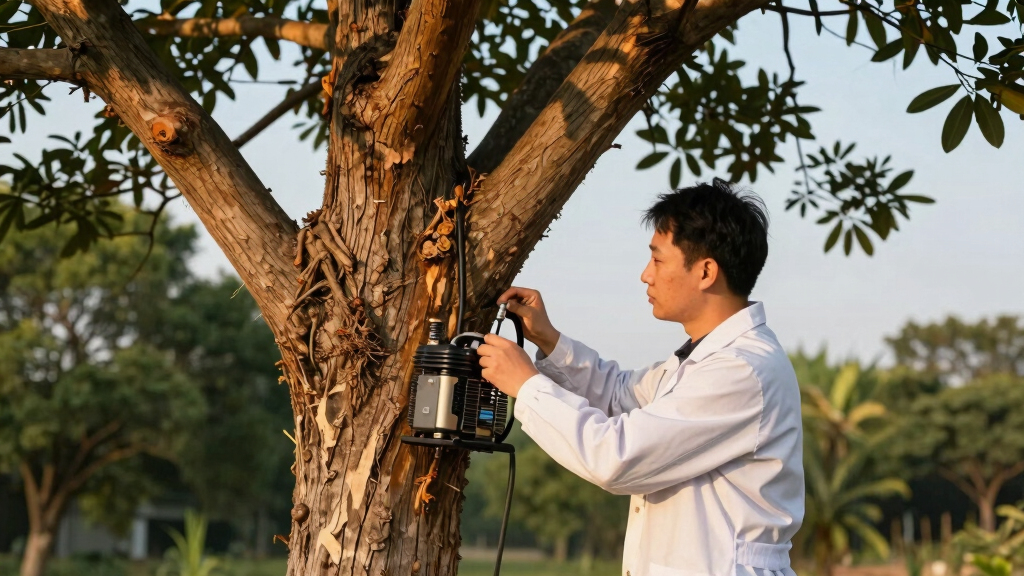
The study, conducted by a team of botanists and plant physiologists, used advanced imaging and measurement techniques to analyze water movement within large trees. Results showed that even the tallest trees, some exceeding 100 meters, maintain efficient water transport systems that reach their highest branches. This challenges previous models suggesting that gravity and resistance would limit water flow in such massive organisms. Researchers attribute this capability to specialized xylem structures and active regulation mechanisms within the trees’ vascular systems. The findings have been published in the Journal of Botanical Science and are based on observations from forests in North America and Southeast Asia. Experts say this discovery could influence how scientists assess forest resilience amid climate change and drought conditions.Implications for Forest Resilience and Climate Adaptation
This discovery is significant because it enhances understanding of how large trees sustain their extensive canopies, which play a critical role in carbon sequestration and habitat provision. Knowing that giant trees can efficiently transport water suggests they may be more resilient to drought than previously thought. This could influence conservation strategies and models predicting forest responses to climate change, especially in regions where water availability is increasingly uncertain.
As an affiliate, we earn on qualifying purchases.
Previous Assumptions About Water Transport Limits in Trees
Historically, scientists believed that the height of trees was limited by the capacity of their vascular systems to move water against gravity. Early models suggested that beyond a certain height, water transport would become inefficient, restricting tree growth. However, recent studies have hinted at more complex mechanisms allowing taller trees to thrive. The current research builds on these insights, providing concrete evidence that giant trees can maintain effective water flow to their highest branches, challenging longstanding theories about size constraints in plant physiology.
“Our findings show that even the tallest trees have evolved highly efficient water transport systems, which allow them to sustain their canopies without issue.”
— Dr. Emily Carter, lead researcher
As an affiliate, we earn on qualifying purchases.
Remaining Questions About Water Transport Mechanisms
While the study confirms that giant trees can pump water efficiently, the specific biological mechanisms enabling this are still being investigated. It is not yet clear how universal these adaptations are across different species or how they may vary under environmental stress conditions. Further research is needed to understand the limits of these systems and their responses to climate-related challenges.
As an affiliate, we earn on qualifying purchases.
Future Research to Explore Tree Water Transport Limits
Scientists plan to conduct broader studies across diverse forest types and species to determine the variability of these water transport systems. Additional experiments under drought and stress conditions are also expected to clarify how these mechanisms function in changing climates. This ongoing research will help refine models of forest resilience and inform conservation practices.
As an affiliate, we earn on qualifying purchases.
Key Questions
How do giant trees manage to pump water so high?
They possess specialized vascular structures and active regulation mechanisms that enable efficient water movement against gravity, even in very tall trees.
Does this mean large trees are less vulnerable to drought?
This research suggests they may be more resilient than previously thought, but further studies are needed to confirm their response under extreme drought conditions.
Why was it believed that tall trees couldn’t pump water effectively?
Earlier models assumed that gravity and resistance in the vascular system would limit water flow at great heights, but recent findings challenge that view.
Will this discovery affect forestry management?
Potentially, as it improves understanding of tree resilience and could influence conservation strategies, especially in drought-prone areas.
Source: hn
Halloween Picks
halloween
As an affiliate, we earn on qualifying purchases.