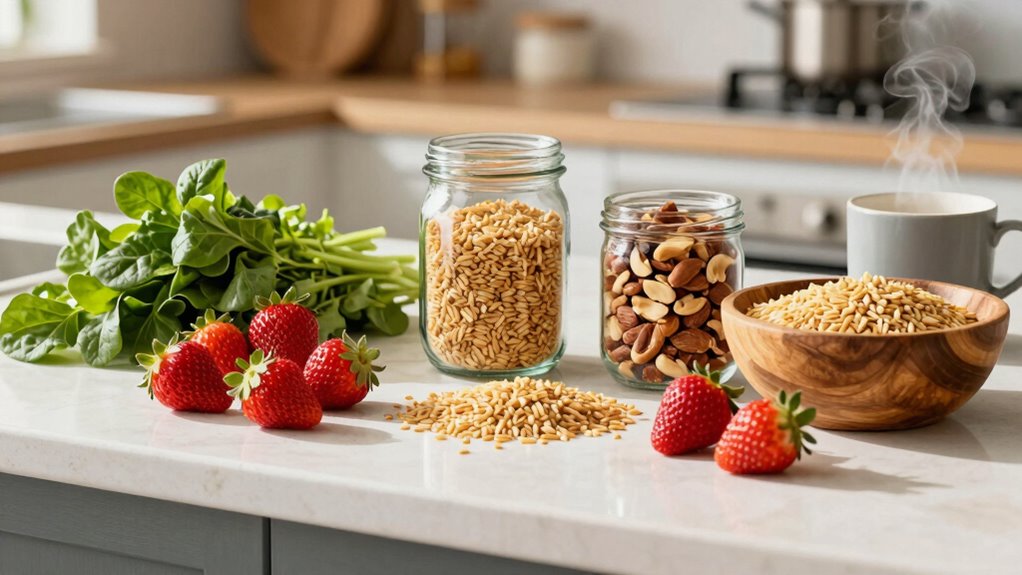

To practice nutrition without diet culture, focus on flexible, intuitive eating that honors your body’s natural cues. Pay attention to hunger, fullness, and cravings instead of following strict rules. Embrace mindful eating to enjoy food textures and flavors, fostering satisfaction without guilt. View food as nourishment and treats with balance, rather than good or bad. By shifting your mindset, you’ll develop a healthier, more joyful relationship with food—if you continue, you’ll uncover more ways to make this approach work for you.
Key Takeaways
- Prioritize internal hunger and fullness cues over external diet rules for sustainable eating.
- Emphasize mindful, pleasurable eating to enhance satisfaction and reduce overeating.
- Reject labeling foods as good or bad, fostering a balanced, flexible approach to nourishment.
- Focus on nourishing the body with a variety of foods while allowing treats without guilt.
- Cultivate self-compassion and patience, moving away from restriction and diet cycle guilt.

Many people focus on strict rules about what to eat, but adopting flexible nutrition principles can lead to better long-term health. Instead of obsessing over rigid diets, you can embrace a more sustainable and satisfying approach by prioritizing intuitive eating and making mindful choices. Intuitive eating encourages you to listen to your body’s signals—hunger, fullness, and cravings—without guilt or restriction. When you tune into these cues, you start to trust your body more, making food choices that feel right for you at any given moment. This approach shifts the focus from external rules to internal wisdom, helping you develop a healthier relationship with food. Additionally, understanding the role of projectors for home cinema can enhance your overall space, creating a more enjoyable environment for mindful eating and relaxation.
Mindful choices complement intuitive eating by prompting you to pay attention to the eating experience. Rather than rushing through meals or eating mindlessly, you consciously notice flavors, textures, and how your body responds to different foods. This awareness helps you recognize what truly satisfies you, reducing the likelihood of overeating or choosing foods out of boredom or stress. Over time, practicing mindful choices makes it easier to enjoy a variety of foods without guilt, fostering a more balanced and flexible attitude toward eating.
Adopting these principles means rejecting the idea that some foods are inherently good or bad. Instead, you see food as fuel and nourishment, with room for treats and indulgences. This mindset encourages moderation and balance, removing the guilt often associated with certain foods. When you focus on how different foods make you feel and how they fit into your overall well-being, you develop a more sustainable and satisfying diet. It’s about creating a positive relationship with food that’s based on care and respect for your body, rather than shame or deprivation.
Additionally, embracing intuitive eating and mindful choices helps you break free from diet culture’s cycle of restriction and guilt. You learn to listen to your body’s needs rather than external diet rules, which often lead to frustration and disappointment. This approach promotes self-compassion and patience, recognizing that nourishing your body is a lifelong journey rather than a temporary fix. As you practice these principles, you’ll find that eating becomes less about control and more about connection—connecting with your body, your tastes, and your overall health in a way that feels genuine and sustainable. Ultimately, choosing flexibility over rules empowers you to cultivate a healthier, more joyful relationship with food.

Intuitive Eating/Everybody's Natural Guide to Total Health and Lifegiving Vitality Through Food
Used Book in Good Condition
As an affiliate, we earn on qualifying purchases.
As an affiliate, we earn on qualifying purchases.
Frequently Asked Questions
How Can I Start Practicing Nutrition Principles Without Feeling Overwhelmed?
You can start practicing nutrition principles by focusing on mindful eating—really paying attention to your hunger, fullness, and food enjoyment. Don’t try to overhaul everything at once; instead, build sustainable habits gradually. Listen to your body’s cues and choose foods that nourish you without guilt. Over time, these small, consistent steps help you develop a balanced approach, making healthy eating feel natural and achievable rather than overwhelming.
What Are Common Misconceptions About Intuitive Eating?
A common misconception about intuitive eating is that it promotes disordered eating or ignoring nutritional needs. In reality, it encourages you to listen to your body’s signals instead of obsessively calorie counting or following strict rules. Many believe intuitive eating means eating whatever, whenever, but it’s about trusting your hunger cues and making balanced choices. This approach helps foster a healthier relationship with food and your body.
How Do I Handle Social Situations That Challenge My Nutrition Choices?
When faced with social situations challenging your nutrition choices, like at a party, focus on mindful snacking. For example, you might politely decline certain foods and choose what feels right, setting social boundaries without guilt. Stay present, savor your choices, and trust your body’s signals. This approach helps you maintain your principles, enjoy the moment, and avoid feeling pressured while respecting your needs.
Can Focusing on Principles Improve Long-Term Health Outcomes?
Yes, focusing on principles can improve your long-term health outcomes. By practicing mindful eating and prioritizing balanced nutrition, you develop a healthier relationship with food and your body. Instead of following strict rules, you become more intuitive and responsive to your body’s needs. This approach encourages consistency, reduces guilt, and fosters sustainable habits, leading to better overall health and well-being in the long run.
How Do I Stay Motivated Without Diet-Related Goals?
Staying motivated without diet-related goals might feel like climbing Mount Everest, but focusing on mindful habits keeps you grounded. Embrace self-compassion, celebrating small victories and learning from setbacks rather than punishing yourself. When you prioritize how you feel and develop a positive relationship with food, motivation flows naturally. Remember, it’s about progress, not perfection, and your journey becomes sustainable and empowering through kindness and mindful choices.

Mindful Eating Portion Control Flatware – for weight loss bariatric diet
Serrated knife makes cutting easier
As an affiliate, we earn on qualifying purchases.
As an affiliate, we earn on qualifying purchases.
Conclusion
By embracing nutrition principles over strict rules, you empower yourself to make balanced choices that nourish both your body and mind. Remember, studies show that 80% of people who follow flexible eating habits report higher satisfaction and better long-term results than those on rigid diets. So, focus on listening to your body, enjoying your food, and trusting the process. That way, you’ll build a sustainable, positive relationship with nutrition that lasts a lifetime.

A Year of Zen: A 52-Week Guided Journal (A Year of Reflections Journal)
As an affiliate, we earn on qualifying purchases.
As an affiliate, we earn on qualifying purchases.

Monthly Meal Plan: 2000 Calorie Balanced Diet: For Breakfast, Lunch, Dinner, and Snacks + 24 Low-Calorie Desserts (Balanced Nutrition Meal Plans)
As an affiliate, we earn on qualifying purchases.
As an affiliate, we earn on qualifying purchases.