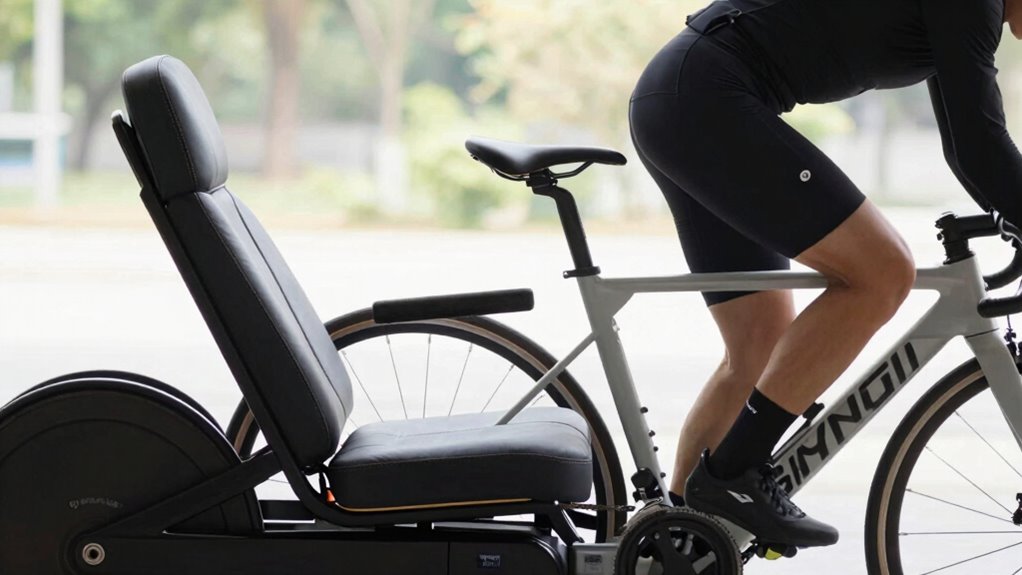

If you prefer comfort and longer, low-impact workouts, a recumbent bike is your best choice since it offers a reclined position that reduces joint strain and supports extended sessions. However, if you’re looking for a more intense workout that engages your core and mimics outdoor cycling, an upright bike suits you better. Understanding these differences helps you match your fitness goals — and if you want to explore further, there’s lots more to uncover.

Prime made for students and young adults
- Fast, free delivery for dorm and study essentials
- Prime Video and Amazon Music included
- Member-only deals
Key Takeaways
- Recumbent bikes offer greater comfort with a reclined position and supportive seat, reducing joint strain and enabling longer workouts.
- Upright bikes promote higher intensity with an active, upright posture, engaging core muscles and supporting vigorous exercise.
- Recumbent bikes are ideal for low-impact, steady cardio, especially for those with joint issues or recovering from injury.
- Upright bikes facilitate interval training and faster calorie burns due to their more engaging and demanding riding position.
- The choice depends on personal fitness goals: comfort and endurance versus intensity and calorie expenditure.
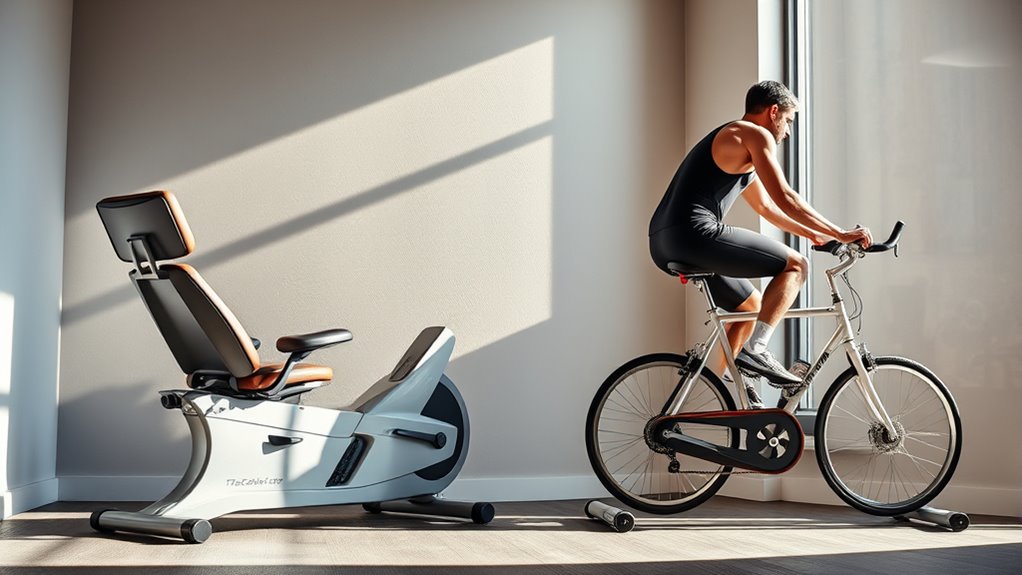
When choosing between recumbent and upright bikes, understanding their key differences can help you make the right decision for your fitness goals and comfort. One of the main distinctions lies in their ergonomic design. Recumbent bikes feature a larger, more supportive seat with a backrest, allowing you to sit in a reclined position. This design reduces strain on your back, hips, and knees, making it a comfortable choice if you have joint issues or prefer a more relaxed workout. In contrast, upright bikes mimic the feel of traditional bicycles, with a smaller saddle and an upright seating position. This setup requires you to engage your core and stabilize your body, which can be more demanding but also simulates outdoor cycling more closely.
Recumbent bikes offer a supportive, reclined seat, reducing joint strain for comfortable, longer workouts.
Your choice impacts not only comfort but also the cardiovascular benefits you can gain from each type. Recumbent bikes tend to be gentler on your joints, which encourages longer workout sessions without discomfort. Because of their ergonomic design, many users find it easier to maintain a steady, moderate pace, boosting cardiovascular health over time. These bikes are excellent for beginners or individuals recovering from injury, as they allow consistent cardio exercise with less risk of strain. On the other hand, upright bikes often encourage a higher intensity workout. Their design promotes more vigorous pedaling and increased engagement of core muscles, which can lead to a more substantial cardiovascular challenge in a shorter period. If you’re aiming to improve endurance or burn more calories in less time, upright bikes might be more suitable.
Another factor to contemplate is how each bike influences your overall workout experience. The ergonomic design of recumbent bikes makes them more accessible for longer durations, especially if you’re concerned about back pain or discomfort. The reclined position distributes your weight more evenly, reducing pressure points and allowing you to focus on steady aerobic activity. Conversely, the upright bike’s more active posture can make workouts feel more intense and engaging, especially if you’re looking to add interval training or sprints. The upright position also more closely resembles outdoor cycling, which can be motivating if you enjoy riding outside.
Ultimately, your decision hinges on your fitness goals and comfort preferences. If you prioritize low-impact, extended cardio sessions with maximum comfort, a recumbent bike’s ergonomic design and gentle nature make it a smart choice. If you’re seeking a more vigorous workout that challenges your core and provides higher cardiovascular intensity, an upright bike offers the benefits of a more active position. Both bikes can support your fitness journey, so understanding these differences helps you pick the one that aligns best with your needs.
recumbent exercise bike with backrest
As an affiliate, we earn on qualifying purchases.
As an affiliate, we earn on qualifying purchases.
Frequently Asked Questions
Are Recumbent Bikes Suitable for High-Intensity Interval Training?
Recumbent bikes aren’t ideal for high-intensity interval training because their design limits your ability to generate high upright speed and resistance quickly. You might find it hard to push yourself during sprints or intense intervals, as the recumbent position reduces the engagement of certain muscles. For HIIT, upright bikes usually better suit your needs, offering higher resistance and greater speed, making your workouts more effective and challenging.
Can Beginners Easily Learn to Use Upright Bikes Safely?
Yes, beginners can easily learn to use upright bikes safely. Start with gentle sessions to focus on maintaining proper posture and balance training, which helps prevent injuries. As you gain confidence, gradually increase your intensity. Pay attention to your posture correction to avoid strain. Upright bikes can boost your fitness safely when you learn the basics, making them a great choice for newcomers seeking an effective workout.
How Do Bike Designs Impact Long-Term Joint Health?
Bike designs greatly impact your long-term joint health by influencing your ergonomic posture and potential joint strain. An ergonomic design encourages proper alignment, reducing stress on your knees, hips, and ankles. If a bike forces you into an awkward position or causes repetitive joint strain, it can lead to pain or injury over time. Choosing a bike that fits your body and promotes good posture helps safeguard your joints and ensures comfortable, sustainable workouts.
Are There Specific Health Conditions That Favor One Bike Type?
When it comes to health conditions, you’re better off choosing the right bike for your needs. If you have spinal injuries, a recumbent bike might be your best bet since it offers more back support and reduces strain. For those focusing on cardiovascular health, upright bikes can boost intensity and heart rate. Always consult your doctor, but matching bike type to your condition helps you stay on the right track.
What Is the Average Lifespan of Each Bike Type With Regular Use?
With proper bike maintenance, you can expect your upright or recumbent bike to last around 5 to 10 years, depending on usage and care. Regular upkeep like chain lubrication and checking components helps extend lifespan. Keep in mind, well-maintained bikes tend to hold their resale value better, making upkeep a smart investment for long-term use and future resale. Proper maintenance guarantees your bike stays reliable and lasts as long as possible.
upright stationary bike for cardio
As an affiliate, we earn on qualifying purchases.
As an affiliate, we earn on qualifying purchases.
Conclusion
Ultimately, whether you choose a recumbent or upright bike depends on what you value most—comfort or intensity. Coincidentally, many find that trying both reveals which fits their body and goals best. You might start with a recumbent for easier workouts and discover that an upright bike pushes you further. Whichever you pick, remember that the right bike becomes your trusted partner, making every ride enjoyable and tailored to your journey.
ergonomic recumbent bike for seniors
As an affiliate, we earn on qualifying purchases.
As an affiliate, we earn on qualifying purchases.
high intensity upright exercise bike
As an affiliate, we earn on qualifying purchases.
As an affiliate, we earn on qualifying purchases.
Fall Picks
fall essentials
As an affiliate, we earn on qualifying purchases.