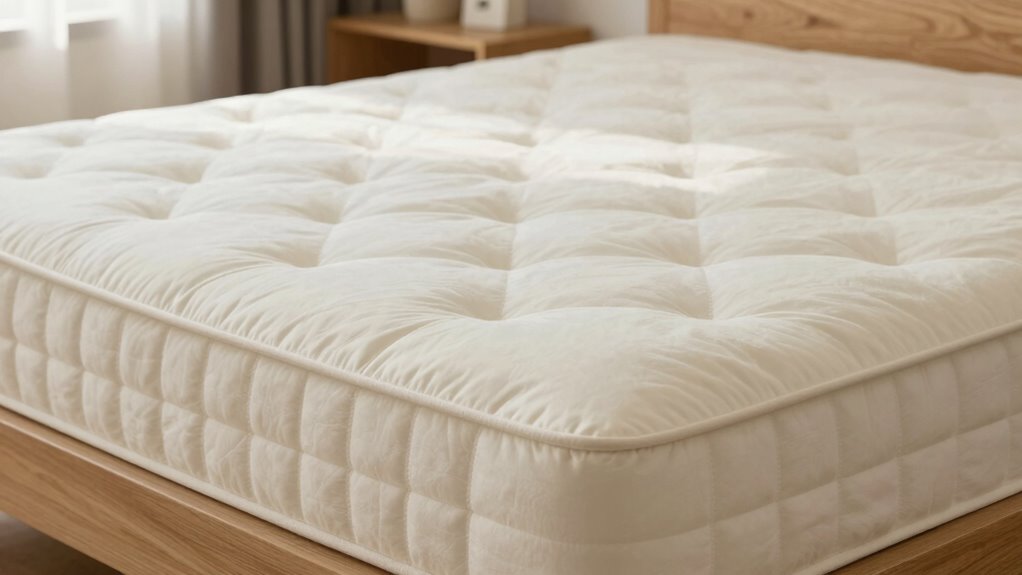

When choosing a mattress, support and proper alignment matter most, not how soft or firm it feels initially. The right support helps keep your spine aligned and reduces aches, regardless of feel. Firmness preferences vary, but support qualities depend on materials like memory foam, latex, or innerspring. Feel can be subjective, so focus on how well the mattress supports your sleep posture. Stay with us to discover why support beats initial softness for a better night’s rest.

Prime made for students and young adults
- Fast, free delivery for dorm and study essentials
- Prime Video and Amazon Music included
- Member-only deals
Key Takeaways
- Supportiveness ensures proper spinal alignment, which is more important than initial softness or firmness.
- Firmness levels are subjective; personal comfort does not guarantee adequate support.
- The mattress’s ability to relieve pressure points impacts sleep quality and reduces aches.
- Feel-based judgments are unreliable; testing support and alignment provides better data.
- Long-term support and material quality are key factors, not just how the mattress initially feels.
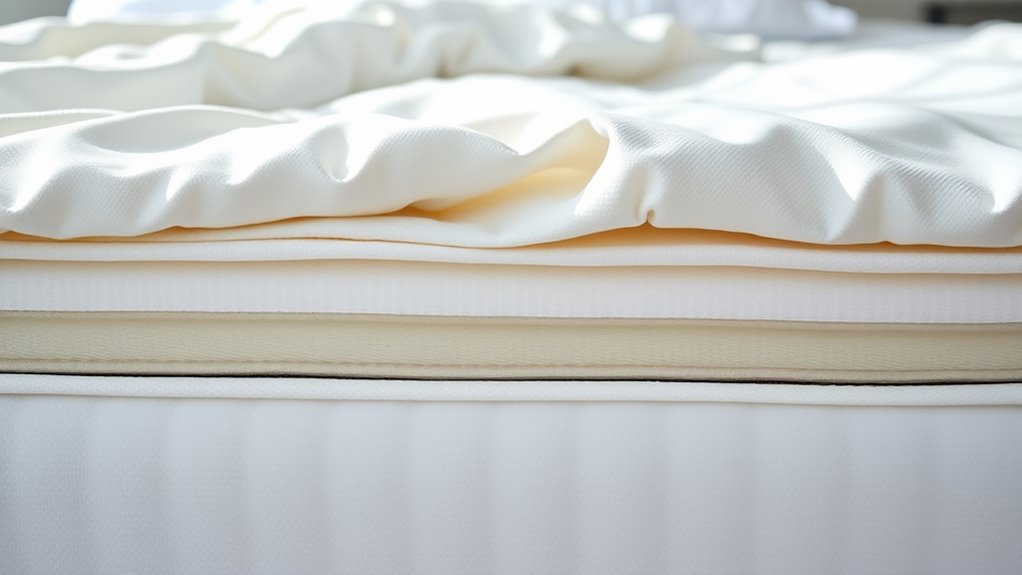
Have you ever wondered what makes a good mattress? It’s a question many people ask, but the answer isn’t as simple as choosing the softest or firmest option. Instead, it’s about how well a mattress supports your sleep posture and the quality of its mattress materials. Your sleep posture—whether you sleep on your side, back, or stomach—plays a essential role in determining the right mattress for you. For example, side sleepers need a mattress that cushions the shoulders and hips, while back sleepers require support for the lower back. Stomach sleepers often benefit from a firmer surface to keep their spine aligned. Understanding your sleep posture helps you narrow down the types of mattress materials that will work best, since different materials offer varying levels of support and comfort.
When it comes to mattress materials, you have several options, each with their own benefits. Memory foam, for instance, molds to your body’s shape, providing pressure relief and excellent support for different sleep postures. This material can help keep your spine aligned and prevent aches, especially if you tend to sleep in multiple positions throughout the night. Innerspring mattresses, on the other hand, use coils to give a responsive feel—some people prefer this because it offers a bounce that can make changing positions easier. Hybrid mattresses combine foam and innerspring layers to offer a balance of support, comfort, and breathability. Latex mattresses are another popular choice; they’re durable, naturally hypoallergenic, and offer a resilient, supportive feel that suits many sleep postures. Additionally, understanding the supportive qualities of mattress materials can help you choose the best fit for your needs.
It’s important to realize that “feel” isn’t a reliable way to judge a mattress’s suitability. What feels soft or firm to one person might not be the same for you, because comfort is highly subjective. Instead, focus on support and how the mattress influences your sleep posture. A mattress that properly supports your spine and relieves pressure points will help you wake up refreshed, regardless of whether it feels plush or firm at first touch. The best way to find the right mattress is to test it in person and consider your specific needs, rather than relying solely on how it feels initially. Remember, a good mattress isn’t just about comfort—it’s about how it supports your body during sleep, which ultimately impacts your health and well-being.
mattress support and spinal alignment
As an affiliate, we earn on qualifying purchases.
As an affiliate, we earn on qualifying purchases.
Frequently Asked Questions
How Often Should I Replace My Mattress?
You should replace your mattress every 7 to 10 years, depending on its mattress lifespan and your comfort needs. Over time, wear and tear diminish support and comfort, making it less effective. Pay attention to signs like sagging, increased aches, or disrupted sleep, which indicate it’s time for a replacement. Sticking to this replacement timeline helps ensure you get the restful sleep you need for your health and well-being.
What Materials Are Best for Allergy Sufferers?
If allergy relief is your goal, you’ll want to choose mattresses made from hypoallergenic fabrics and allergy-friendly materials. These materials, like organic cotton, bamboo, or specialized synthetic fibers, help prevent dust mites, mold, and allergens from settling in. You might be surprised how much a simple switch can improve your sleep quality. Don’t underestimate the power of these materials—they could be the key to a healthier, more restful night.
How Does Mattress Weight Affect Support?
You’ll find that mattress weight directly impacts support quality; heavier mattresses often provide better support because they can distribute your weight more evenly. When a mattress is too light, it might sag or compress easily, reducing support. Conversely, a heavier mattress tends to maintain its shape and support your body better over time. Keep in mind, the weight isn’t the only factor, but it’s a key indicator of how well it supports you.
Can a Mattress Be Too Firm or Too Soft?
Is your mattress too firm or too soft? You bet it can be! Your firmness preferences play a vital role in comfort, but choosing extremes can hurt your mattress’s longevity. Too firm, and you’ll feel pressure points; too soft, and you risk sagging faster. Find a balanced level that supports your body’s natural curves, ensuring lasting support and comfort for years to come.
What Are Signs My Mattress Needs Replacement?
If your mattress shows sagging, persistent discomfort, or new aches and pains, it’s time for replacement. Additionally, if you notice increased allergies or difficulty sleeping, these are signs your mattress’s lifespan has ended. Typically, mattresses last about 7-10 years, so pay attention to these replacement signs. Don’t ignore these cues, as sleeping on an old mattress can negatively impact your rest and overall health.
memory foam mattress for pressure relief
As an affiliate, we earn on qualifying purchases.
As an affiliate, we earn on qualifying purchases.
Conclusion
Remember, finding the perfect mattress is about more than just “feel”—it’s about subtle comfort signals and gentle support that suit your unique needs. Don’t rely solely on surface impressions; true comfort often lies beneath the surface. By paying attention to support and firmness, you’ll gently guide yourself toward better sleep. Trust yourself to navigate these gentle nuances, and soon you’ll discover a mattress that softly whispers “rest” every night.
hybrid mattress with support and breathability
As an affiliate, we earn on qualifying purchases.
As an affiliate, we earn on qualifying purchases.
latex mattress for durability and support
As an affiliate, we earn on qualifying purchases.
As an affiliate, we earn on qualifying purchases.
Fall Picks
fall essentials
As an affiliate, we earn on qualifying purchases.