

To reduce false alerts without losing coverage, start by carefully calibrating your sensors to guarantee accurate readings and minimize environmental noise. Implement advanced alert filtering that adapts to changing conditions, and use machine learning algorithms to distinguish real threats from false positives. Regularly review and tweak your system, and combine multiple detection methods for better verification. Keep these strategies in mind, and you’ll discover ways to keep your system effective and reliable.

Get school and study supplies delivered free — and shop member deals
- Fast, free delivery on millions of items
- Access to Prime Big Deal Days deals on October 6–7
- Prime Video, Amazon Music and more included
Key Takeaways
- Regularly calibrate sensors to ensure accurate readings and minimize false positives.
- Implement adaptive alert filtering based on activity thresholds and environmental conditions.
- Use machine learning algorithms to analyze patterns and improve false alarm discrimination over time.
- Conduct continuous review and maintenance to fine-tune system parameters and adapt to changes.
- Combine multiple detection methods through multi-layer verification for more reliable threat identification.
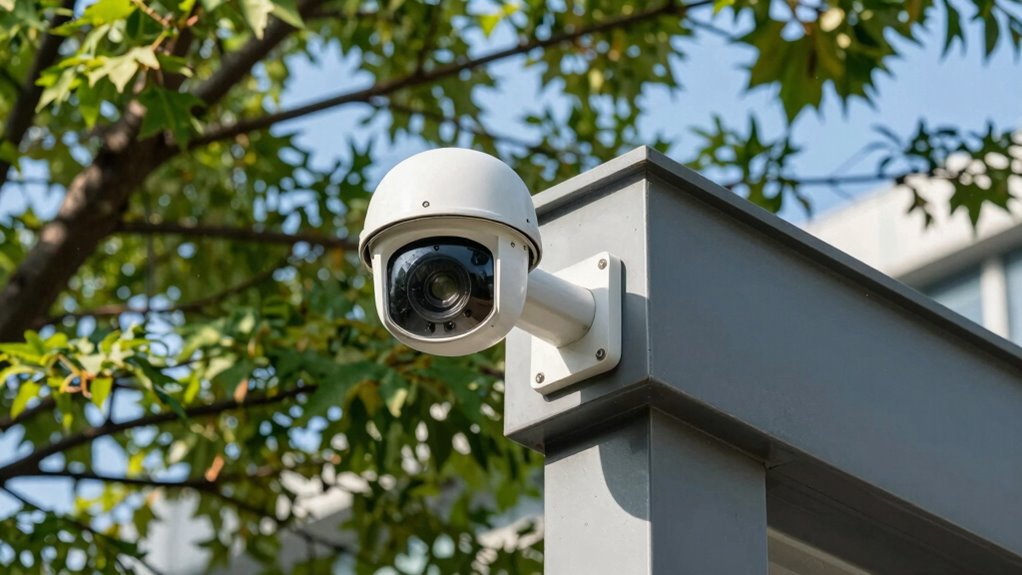
False alerts can be be a major headache, often leading to wasted time and resources while risking missed threats. To tackle this issue, you need to focus on refining your detection systems without compromising coverage. One effective way is through proper sensor calibration. When sensors are calibrated correctly, they provide accurate readings, reducing the chances of false alarms triggered by environmental noise or sensor drift. Regular calibration ensures your sensors respond precisely to real threats, not false signals. It’s a straightforward step that pays off by making your alerts more reliable and trustworthy.
Proper sensor calibration reduces false alarms, ensuring more reliable and trustworthy threat detection.
Along with sensor calibration, implementing robust alert filtering is essential. Alert filtering involves setting specific criteria that help distinguish between genuine threats and benign activities. By fine-tuning these filters, you prevent the system from raising unnecessary alarms due to minor or irrelevant incidents. For example, you can filter based on activity thresholds, time windows, or specific event characteristics. This way, your security team is only notified about alerts that truly matter, saving time and reducing alarm fatigue. Additionally, adaptive filtering techniques can help your system dynamically adjust to changing conditions, further reducing false positives. Incorporating these techniques allows your system to better adapt to environmental variations and evolving threat landscapes.
You should also leverage smart algorithms and machine learning to improve your alert filtering. These technologies analyze patterns over time, learning what constitutes a real threat versus a false alarm. As your system gathers more data, it becomes better at filtering out noise and focusing on genuine risks. This adaptive approach ensures your coverage remains extensive while minimizing false positives. Additionally, sensor calibration plays a crucial role in ensuring the data fed into these algorithms is accurate, further enhancing their effectiveness.
Another key step is to regularly review your alert logs and system performance. By analyzing past false alerts, you can identify common causes and adjust your sensor calibration or filtering parameters accordingly. Maintenance and review are ongoing processes that help you stay ahead of false alarms, especially as environmental conditions or threat landscapes evolve. Continuous monitoring allows you to adapt your system proactively, rather than reactively, to minimize false alerts. This proactive management is vital for maintaining optimal system performance.
Finally, consider integrating multiple detection methods and cross-referencing alerts from different sensors or systems. Multi-layered detection makes it harder for false alerts to slip through, as each layer verifies the legitimacy of potential threats. This approach enhances overall coverage while filtering out misleading signals. Combining data sources also provides a more comprehensive view, reducing the likelihood of missed threats or false alarms. Utilizing multi-layer detection strategies can significantly improve your system’s accuracy and reliability.
Reducing false alerts is a balancing act that requires continuous attention. By focusing on sensor calibration, implementing strategic alert filtering, and leveraging technology, you can considerably decrease false positives. This allows you to maintain extensive coverage without overwhelming your team with unnecessary alarms, ensuring you respond effectively to real threats.
As an affiliate, we earn on qualifying purchases.
Frequently Asked Questions
What Are Common Causes of False Alerts in Security Systems?
False alerts often happen because of sensor calibration issues or environmental factors. You might not have calibrated your sensors properly, leading to false triggers. Environmental adjustments, like changes in lighting, temperature, or even moving objects, can also cause false alarms. Regularly checking and calibrating sensors, and making necessary environmental adjustments, helps reduce false alerts. This way, you maintain effective coverage without unwelcome interruptions.
How Do False Alerts Impact Overall Security Effectiveness?
False alerts are like sirens that ring when there’s no real threat, drowning out genuine alarms. They dilute your security’s effectiveness, making it harder to trust alerts. By focusing on sensor calibration, you fine-tune your system, reducing unnecessary noise. Alert prioritization helps you distinguish between minor nuisances and serious threats, ensuring your security remains sharp and responsive. Together, these strategies keep your security fortress vigilant without the chaos of false alarms.
Can False Alerts Be Automatically Filtered or Ignored?
Yes, false alerts can be automatically filtered or ignored by optimizing sensor calibration and alert algorithms. Proper sensor calibration guarantees accurate detection, reducing unnecessary alerts. Advanced alert algorithms analyze data patterns to distinguish between true threats and false alarms, automatically filtering out irrelevant signals. By fine-tuning these systems, you maintain security coverage while minimizing false alerts, ensuring your security team responds only to genuine incidents.
What Role Does User Training Play in Reducing False Alerts?
User training plays a vital role in reducing false alerts by enhancing your awareness of alert triggers and proper response protocols. When you follow effective training protocols, you learn to distinguish between genuine threats and benign activities, minimizing unnecessary alerts. This knowledge helps you respond accurately, reducing false positives, and maintaining system coverage. Regular training guarantees you’re up-to-date with best practices, ultimately improving your ability to manage alerts efficiently and confidently.
Are There Specific Technologies That Minimize False Alarms?
Yes, specific technologies like sensor calibration and algorithm optimization help minimize false alarms. Proper sensor calibration guarantees sensors accurately detect real threats without false triggers, while advanced algorithms analyze data more effectively, filtering out noise and irrelevant signals. By implementing these technologies, you can considerably reduce false alerts, maintaining reliable coverage. Regularly updating calibration and algorithms keeps your system current and effective against evolving threats.
As an affiliate, we earn on qualifying purchases.
Conclusion
By implementing these strategies, you’re well on your way to minimizing false alerts without sacrificing coverage. But remember, the real challenge lies in fine-tuning your system over time—there’s always room for improvement. Stay vigilant, keep analyzing your data, and don’t settle for quick fixes. The next breakthrough could be just around the corner, quietly waiting to transform your approach. Are you ready to discover what’s possible when false alarms become a thing of the past?
machine learning security camera
As an affiliate, we earn on qualifying purchases.
As an affiliate, we earn on qualifying purchases.
multi-layer threat detection system
As an affiliate, we earn on qualifying purchases.
As an affiliate, we earn on qualifying purchases.
Fall Picks
fall essentials
As an affiliate, we earn on qualifying purchases.