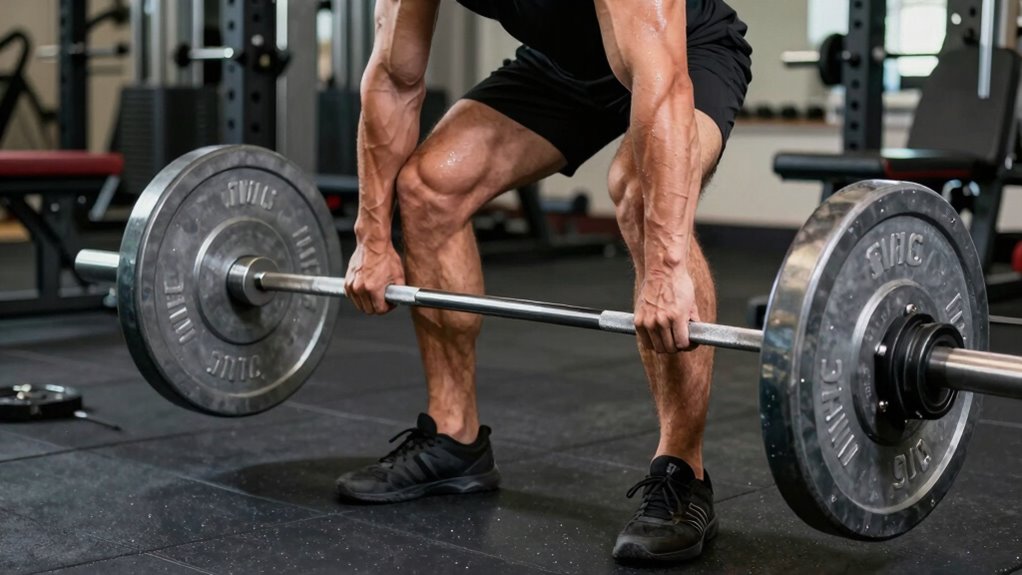

To add weight safely, focus on proper form and gradual progress. Use manageable loads to maintain control and avoid compensating with poor technique. Incorporate warm-ups, mobility exercises, and steady breathing to prevent injury. Track your reps and increments carefully, making small increases—like 5 pounds or one extra rep—over time. Listen to your body and rest when needed to prevent setbacks. Keep these principles in mind, and you’ll build strength safely and sustainably.
Key Takeaways
- Prioritize proper form over heavier weights to prevent injury and ensure effective muscle engagement.
- Increase weight gradually in small increments, like 5 lbs or 1 rep, to allow safe adaptation.
- Use manageable weights that allow control and full range of motion during each lift.
- Listen to your body and stop or reduce weight if you experience pain or excessive fatigue.
- Incorporate warm-up, mobility exercises, and rest days to support safe progression and recovery.

Understanding how to progress your strength training is vital for continual improvement and avoiding plateaus. When you’re focused on adding weight, it’s essential to prioritize proper form every step of the way. Proper form isn’t just about lifting heavier; it’s the foundation that guarantees your movements are safe and effective. If you sacrifice technique for heavier loads, you risk compensating with other muscles or using incorrect posture, which can lead to injuries. To prevent this, always start with a manageable weight that allows you to perform each rep with control and precision. Pay attention to your body’s signals—if you feel any discomfort or strain beyond normal fatigue, it’s time to reassess your form or reduce the load.
Injury prevention is a key part of progressing safely. When you lift weights, your muscles, tendons, and ligaments undergo stress, and if this stress isn’t managed properly, injuries can occur. The goal isn’t just to lift heavier but to do so in a way that strengthens your body without compromising its integrity. Incorporate warm-up routines and mobility exercises to prepare your muscles and joints for the demands of heavier weights. Always prioritize a full range of motion, controlled movements, and steady breathing. Rushing to add weight without these precautions increases the risk of strains, sprains, or more serious injuries that could set back your progress for weeks or even months. Additionally, understanding how to detect early signs of overtraining can help you avoid pushing your body past its limits.
Tracking your progress is another way to guarantee safe weight increases. Keep a workout log and note your reps, sets, and how you feel during each session. This helps you identify when it’s time to increase weight gradually rather than jumping too quickly. Remember, strength progression isn’t about rushing; it’s about steady, consistent improvement. Small, incremental increases—like adding five pounds or one more rep—are much safer and more sustainable than large jumps. These small steps allow your body to adapt gradually and maintain proper form, reducing injury risk.
Lastly, listen to your body. If you’re feeling overly fatigued or experiencing pain that’s not typical muscle soreness, take a step back. Rest days and recovery are essential parts of progress. Pushing through pain can quickly lead to setbacks and injuries. By focusing on proper form, injury prevention, and gradual progress, you’ll build strength steadily and safely, ensuring your training remains productive and free from setbacks. Remember, strength isn’t just about how much weight you lift but how safely and sustainably you get there.

TYZDMY Adjustable Dumbbells Set of 2,Free Weights Dumbbells Set,Adjustable Dumbbell Set,52.5 lbs pair 105 lbs,15 in 1,for Men/Women Gym Equipment for Home Strength Training Equipment
【15 in1 Adjustable Dumbbells】You will receive a pair of 52.5 lb dumbbells, each adjustable in 15 different weights:…
As an affiliate, we earn on qualifying purchases.
As an affiliate, we earn on qualifying purchases.
Frequently Asked Questions
How Often Should I Increase My Workout Weight?
You should increase your workout weight every 1-2 weeks, depending on your progression consistency and workout frequency. Listen to your body; if you’re completing sets with proper form and no pain, it’s a good sign to add weight. Avoid rushing, as increasing too often can cause injury. Stick to a steady progression, and adjust based on how your muscles respond, ensuring safe and effective strength gains.
What Are Signs of Overtraining During Progression?
They say, “listen to your body,” which is key to spotting overtraining signs. If you experience persistent muscle fatigue, increased soreness, or lack of progress, these are recovery signals you’re pushing too hard. You might also notice irritability or trouble sleeping. These signs indicate your body needs more time to recover, so back off slightly on weight increases and prioritize rest to avoid injury and continue safe progression.
Is It Better to Add Weight Gradually or Quickly?
You should add weight gradually to avoid hitting a training plateau and to give your muscles time to adapt. Rapid increases can lead to injury and stall your progress. By progressing slowly, you allow your muscles to adjust safely, build strength steadily, and prevent setbacks. This approach ensures continuous gains, minimizes injury risk, and keeps your training consistent and effective over time.
How Do I Prevent Injuries When Progressing Weights?
Imagine you’re increasing weights on the bench press. To prevent injuries, focus on technique consistency—proper form reduces strain. Incorporate recovery strategies like stretching and rest days to avoid overtraining. Listen to your body and don’t push through pain. By gradually progressing and maintaining good form, you minimize risks while boosting strength safely. Remember, patience and proper recovery are key to injury-free progress.
Can Progression Vary Based on Different Exercises?
Yes, progression can vary based on different exercises. Incorporate exercise variations to target muscles differently and prevent plateaus. Be mindful of progression consistency by gradually increasing weight or reps, but adapt based on how your body responds to each exercise. Some movements may require slower progression to avoid injury, while others allow more rapid increases. Listening to your body ensures safe, effective strength gains across all exercise types.

Gymreapers Weightlifting Wrist Wraps (Competition Grade) 18" Professional Quality Wrist Support with Heavy Duty Thumb Loop – Best Wrap for Powerlifting, Strength Training, Bodybuilding(Black,18")
IPF APPROVED COMPETITION GRADE, HEAVY DUTY – Built by athletes for athletes, Gymreapers, weight lifting wrist wraps are…
As an affiliate, we earn on qualifying purchases.
As an affiliate, we earn on qualifying purchases.
Conclusion
Now that you understand the fundamentals of strength progression, you’re ready to push your limits safely. But remember, the real gains happen just beyond your comfort zone—where you might feel unsure or even a little scared. Keep listening to your body, increase weight gradually, and stay consistent. The question is: how far can you go before you hit that next level? Stay committed—your strongest self could be just one safe step away.

Ekkovision Weight Lifting Straps With Cuffed D Ring, Wrist Support for Men, Heavy Duty Thick Comfortable Lifting Straps, Secure Fit, Enhanced Grip, Straps for Weightlifting & Gym Training, PHASE3
DURABLE DESIGN WITH PHASE 3 LOGO CUFFED D RING: These Ekkovision weightlifting straps are built with heavy-duty stitching…
As an affiliate, we earn on qualifying purchases.
As an affiliate, we earn on qualifying purchases.

Fitness Workout Journal for Women & Men, A5(5.5" x 8.2") Workout Log Book Planner for Tracking, Progress, and Achieving Your Wellness Goals – Green
Track Your Workouts – Stay organized and record your gym workouts with this comprehensive fitness planner. It provides…
As an affiliate, we earn on qualifying purchases.
As an affiliate, we earn on qualifying purchases.