To prevent falls at your treadmill desk, stay mindful of your posture by keeping your neck, shoulders, and back straight, and guarantee your monitor is at eye level. Wear supportive, non-slip shoes to maintain good footing. Start slow and gradually increase your pace, paying close attention to how you feel. Keep your workspace tidy and organized, avoiding trips and obstacles. By practicing these habits, you’ll work safely and confidently—discover more tips to keep yourself secure.

Prime made for students and young adults
- Fast, free delivery for dorm and study essentials
- Prime Video and Amazon Music included
- Member-only deals
Key Takeaways
- Maintain proper ergonomic posture with neutral spine, monitor at eye level, and upright sitting or standing to prevent falls.
- Wear supportive, non-slip footwear to ensure stable footing while using the treadmill desk.
- Start at slow speeds, increase gradually, and ensure the treadmill is fully stopped before dismounting.
- Keep the workspace clear of cords and obstacles to avoid tripping hazards during treadmill use.
- Monitor your body signals, take regular breaks, and practice safe dismounting to prevent loss of balance.
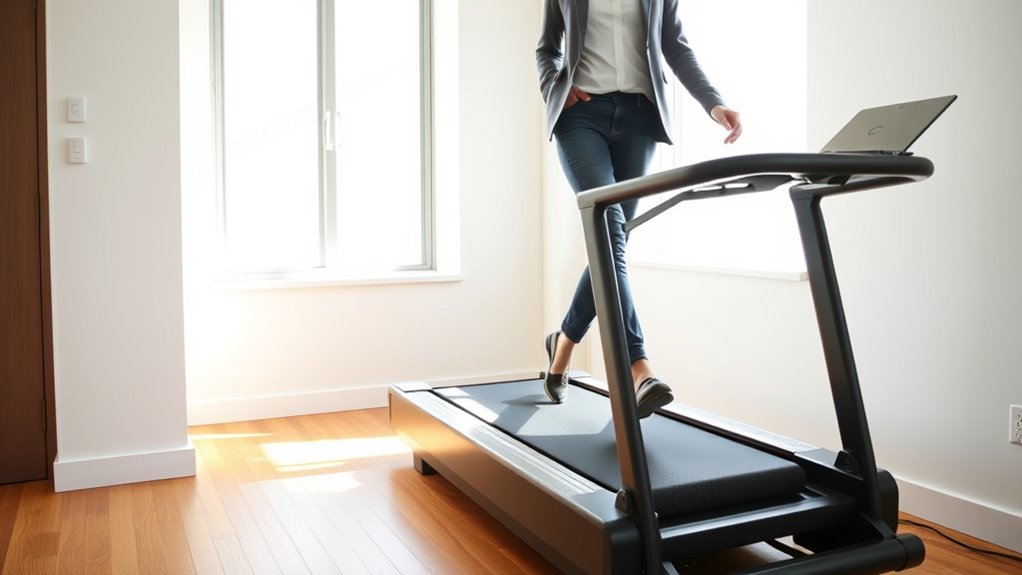
Have you ever wondered if working on a treadmill desk is safe? It’s a common concern, especially when it comes to maintaining good habits that keep you steady and prevent falls. The key lies in adopting habits that prioritize ergonomic posture and footwear safety. When you walk and work simultaneously, your body’s alignment becomes essential. An ergonomic posture ensures that your neck, shoulders, back, and wrists stay in neutral positions, reducing strain and making it easier to stay balanced. Keep your monitor at eye level, sit or stand upright, and avoid leaning forward or slouching. This alignment helps you maintain control and stability, so you don’t accidentally stumble. Additionally, understanding projector technology can help you create a better workspace environment that supports your ergonomic setup.
Maintaining ergonomic posture and proper footwear ensures safety and stability on a treadmill desk.
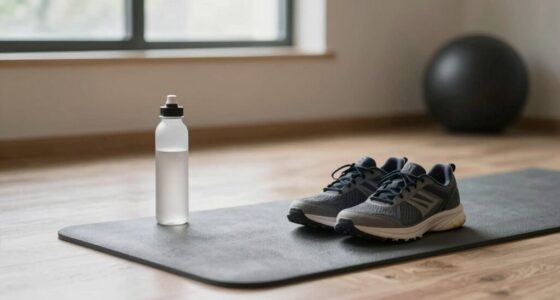
Footwear safety plays an indispensable role in guaranteeing your safety on a treadmill desk. Wearing the right shoes can markedly reduce the risk of slips or trips. Choose footwear that offers good grip, support, and stability. Sneakers with non-slip soles are ideal because they provide traction and cushioning, helping you stay grounded as you walk. Avoid loose or worn-out shoes that can cause your feet to slide or lose balance. It’s also wise to check your shoes regularly for wear and tear, replacing them as needed. Proper footwear not only keeps you safe but also minimizes fatigue, allowing you to focus on your work without worrying about slipping.
Developing a routine that includes adjusting your treadmill speed to a comfortable pace is another indispensable habit. Walking too fast can make you lose control, especially if your footwear isn’t ideal or your posture isn’t aligned properly. Start slow and gradually increase your pace as you become more comfortable. Practice stepping onto and off the treadmill carefully, making sure it’s completely stopped before dismounting to prevent missteps. Keep your workspace organized—clear cords and obstacles that could trip you up. This reduces the chances of accidental falls when you’re moving around your desk.
Finally, stay attentive to your body signals. If you feel unsteady or fatigued, pause and adjust your position or speed. Take regular breaks to stretch and reset your posture, ensuring your ergonomic setup remains optimal. Consistently practicing these habits creates a safer environment and helps you build confidence on your treadmill desk. Remember, safety isn’t just about avoiding falls; it’s about creating a sustainable routine that keeps you comfortable and productive. By focusing on ergonomic posture and footwear safety, you set yourself up for a healthy, secure work experience while enjoying the benefits of a treadmill desk.
Frequently Asked Questions
How Often Should I Replace My Treadmill Desk Safety Equipment?
You should replace your treadmill desk safety equipment every 1 to 2 years, depending on usage. Regular treadmill maintenance helps determine safety equipment lifespan, ensuring it stays effective. Check for signs of wear, such as fraying or damage, and replace safety features like emergency stop cords or mats promptly. Staying proactive in replacing worn safety equipment keeps you safe and prevents falls during your treadmill desk workouts.
Are There Specific Footwear Recommendations for Treadmill Desk Users?
You should wear footwear that meets specific footwear requirements for treadmill desk use, focusing on slip resistant shoes. Choose shoes with good grip, stable soles, and proper support to prevent slips and falls. Avoid sandals or loose footwear that can catch or slip. Always confirm your shoes are in good condition, clean, and fit well. Proper footwear is essential for safe, comfortable work sessions on your treadmill desk.
What Ergonomic Adjustments Can Reduce Fall Risk on a Treadmill Desk?
You can reduce fall risk by maintaining ergonomic posture and ensuring proper foot support. Stand tall with your shoulders relaxed, avoid leaning forward, and keep your feet flat on the treadmill. Adjust the desk height so your elbows are at a 90-degree angle, promoting comfort and stability. Using supportive footwear also helps, but ergonomic adjustments are key to keeping you balanced and safe during your treadmill desk sessions.
How Does Age Affect Treadmill Desk Safety Precautions?
As you age, age-related balance issues can increase your fall risk on a treadmill desk. To prioritize senior safety, you should start with shorter walking sessions, use sturdy handrails, and stay near a support surface. Maintaining good posture and avoiding distractions also help improve stability. Regularly check your treadmill for safety features, and listen to your body, stopping if you feel unsteady, ensuring a safer experience as you stay active.
Can I Use a Treadmill Desk if I Have Balance Issues?
If you have balance concerns, using a treadmill desk might not be your best option. But don’t worry—there are alternative options that can still help you stay active at work. You could consider a seated desk, under-desk elliptical, or balance board, which provide movement without risking falls. Stay proactive about your safety, and explore solutions tailored to your needs—your health and confidence depend on it.
Conclusion
Staying safe at your treadmill desk comes down to forming good habits and trusting your instincts. Some say that if you feel off balance, you should stop immediately—it’s true! Research shows that listening to your body and practicing proper posture can prevent falls. Remember, a little caution goes a long way. By staying alert and mindful, you’ll enjoy the benefits of movement without risking your safety. Keep these habits in mind, and walk confidently!
Evergreen bestsellers Picks
bestsellers
As an affiliate, we earn on qualifying purchases.