
TL;DR

Prime made for students and young adults
- Fast, free delivery for dorm and study essentials
- Prime Video and Amazon Music included
- Member-only deals
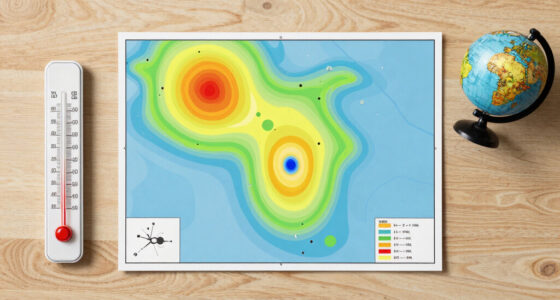
A Kalshi market indicates rising investor interest in predicting whether the maximum temperature will be below 86°F on September 10, 2026. The event’s outcome remains uncertain, with no confirmed forecasts or climate models providing definitive guidance. For long-term climate predictions, see climate prediction insights.
Market activity on the trading platform Kalshi has surged around a contract asking whether the maximum temperature in a specified region will be below 86°F on September 10, 2026. While the question has attracted 38 recent trades, no authoritative weather forecasts or climate models have yet confirmed or refuted this specific temperature prediction. Learn more about temperature forecasting. This development indicates increasing public and investor interest in long-term temperature projections, but the actual weather outcome remains uncertain at this stage.
The Kalshi market, which allows traders to bet on specific future events, shows a notable spike in interest over the question of whether the maximum temperature on September 10, 2026, will be less than 86°F. As of now, the market has seen 38 recent trades, reflecting a growing curiosity about long-range temperature trends, possibly driven by climate change concerns or speculative forecasts.
Climate experts emphasize that predicting specific daily maximum temperatures nearly four years in advance is highly uncertain. Current climate models provide broad trends rather than precise day-to-day forecasts so far into the future. Predicting future temperatures remains a challenge for climate science. No official meteorological agencies or scientific studies have issued forecasts or predictions for the temperature on this exact date, especially with such specificity.
The market’s activity appears to be more a reflection of speculation and interest in climate-related futures rather than a reliable forecast. Experts warn that long-term temperature predictions should be interpreted with caution, as they are subject to a wide margin of error due to the complexity of climate systems and the influence of unpredictable factors.
Implications of Long-Term Temperature Market Trends
The rising interest in predicting whether the temperature will be below 86°F on September 10, 2026, highlights increasing public engagement with climate futures and probabilistic forecasting. While the market itself does not provide scientific predictions, its activity signals a broader concern about future climate conditions and the desire for hedging or investment strategies based on climate outcomes. This trend may influence how policymakers, investors, and researchers approach long-term climate risk assessments.
However, the lack of concrete scientific data supporting such specific forecasts underscores the importance of understanding the limits of climate modeling. The event’s outcome could have implications for planning, resource management, and climate policy, especially if long-range forecasts become more precise or integrated into decision-making processes.
Popular right now

Bose QuietComfort Headphones (2nd Gen), Wireless Noise-Cancelling Over-Ear Headphones, Eucalyptus Green

Dyson V8 Cordless Vacuum

Shark AI Ultra Robot Vacuum with Self-Empty Base
As an affiliate, we earn on qualifying purchases.
Background on Long-Range Temperature Predictions
Long-term climate projections typically rely on global climate models that simulate broad trends over decades or centuries, rather than specific daily temperatures. While these models can forecast general warming patterns and regional climate shifts, predicting the exact maximum temperature on a particular day years into the future remains outside their scope.
The interest in a specific date like September 10, 2026, is part of a broader trend where markets and public discourse increasingly focus on probabilistic climate predictions, often driven by advances in data analytics and climate science. Nonetheless, scientific consensus emphasizes that precise short-term forecasts over multiple years are inherently uncertain and subject to significant variability.
As climate change accelerates, some models project increased likelihood of higher temperature extremes, but these are probabilistic rather than deterministic forecasts. The current spike in market activity appears to be speculative rather than based on established scientific forecasts.
Unconfirmed Nature of Long-Range Temperature Forecasts
It is not yet clear whether any scientific models or official forecasts will provide specific predictions for the maximum temperature on September 10, 2026. The current market activity is based on speculation, and no authoritative data confirms or refutes the likelihood of temperatures being below 86°F on that date. The inherent unpredictability of weather over such a long horizon makes definitive answers unlikely at this stage.
Monitoring Scientific and Market Developments
In the coming months, climate scientists may refine regional climate models, but precise day-to-day forecasts for 2026 remain improbable. Market activity on platforms like Kalshi will likely continue to reflect speculation until more concrete scientific data emerges. Researchers and policymakers will monitor climate trend reports and model updates to assess the plausibility of such long-range temperature predictions.
Potential future developments include the publication of regional climate outlooks closer to the date and increased public discourse on climate risk management. The outcome of the September 10, 2026, temperature prediction will remain uncertain until nearer the date or until authoritative forecasts are issued.
Key Questions
Can we reliably predict the temperature on September 10, 2026?
No. Current climate science and weather modeling do not support reliable predictions of specific daily maximum temperatures four years in advance. Most forecasts focus on broader climate trends rather than exact daily figures.
What does the Kalshi market activity indicate?
The increased trading activity suggests growing public and investor interest in long-term climate predictions, but it does not reflect scientific certainty or official forecasts.
Why is predicting a specific temperature so far in advance difficult?
Weather systems are highly complex and influenced by numerous variables. Long-range forecasts are inherently uncertain, especially for specific daily conditions years into the future.
Are there any official climate predictions for September 2026?
No. Scientific agencies typically do not issue precise daily temperature forecasts for specific dates more than a few months ahead. Most projections focus on long-term climate change trends.
Could climate change affect the accuracy of future temperature predictions?
Yes. Climate change increases the variability and extremes of weather patterns, which complicates precise long-term predictions and emphasizes the probabilistic nature of future climate forecasts.
Source: kalshi