![The Early History Of The Singular Value Decomposition (1993) [Pdf]](https://haltmal.com/wp-content/uploads/2026/07/the-early-history-of-the-singular-value-decomposition-1993-pdf-featured-200x110.jpg)
TL;DR

Prime made for students and young adults
- Fast, free delivery for dorm and study essentials
- Prime Video and Amazon Music included
- Member-only deals
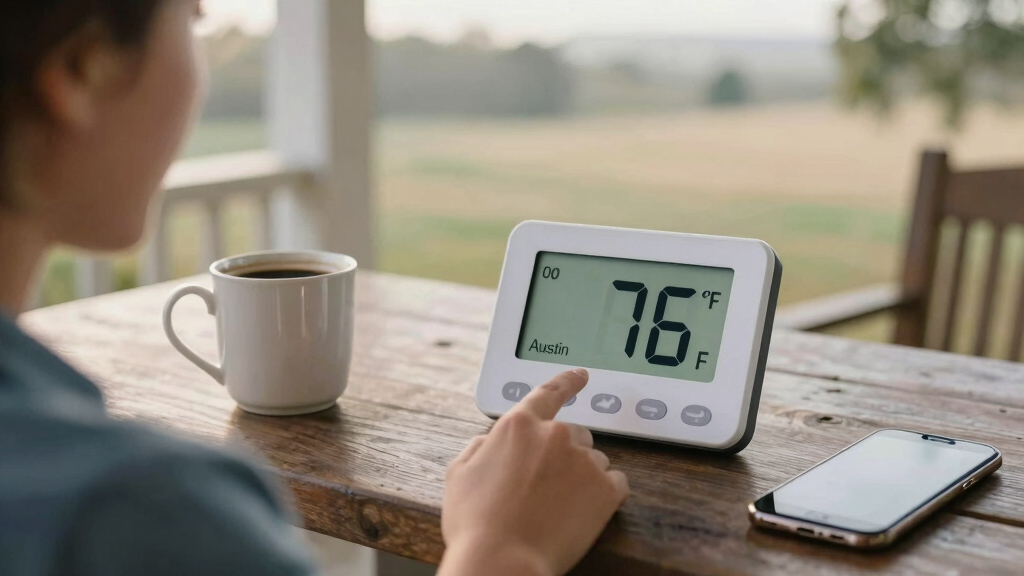
A betting market shows active trading on whether Austin’s temperature will be above 75.99°F on July 12, 2026, at 6am EDT. The actual weather outcome remains uncertain, with no confirmed forecast yet.
There is currently no confirmed weather forecast for Austin, Texas, on July 12, 2026, at 6am EDT. However, a prediction market has seen active trading on whether the temperature will be above 75.99°F at that specific time, indicating public interest and speculation about future weather conditions.
The prediction market, operated by Kalshi, has recorded 103 recent trades related to whether the temperature in Austin will surpass 75.99°F at 6am EDT on July 12, 2026. These trades reflect participants’ expectations but do not constitute a verified forecast or scientific prediction.
As of now, no official weather forecast or climate model has provided a definitive temperature prediction for that date and time. The actual weather remains uncertain, and the market activity is primarily speculative based on available climate trends and participant sentiment.
Implications of Market-Based Weather Predictions for Future Planning
This activity highlights how prediction markets are increasingly used as tools for gauging collective expectations about future weather events. While not scientifically authoritative, such markets can influence decision-making in sectors like agriculture, event planning, and energy management, especially when forecasts are uncertain or distant.
Understanding the limits of these markets is crucial, as they reflect opinions rather than verified data. Nonetheless, they demonstrate public interest and how future weather expectations can be aggregated from diverse participants.
As an affiliate, we earn on qualifying purchases.
Background on Weather Prediction Markets and Austin Climate Trends
Prediction markets like Kalshi allow participants to buy and sell contracts based on future events, including weather conditions. These markets have gained attention for their ability to reflect collective expectations, though they are not substitutes for scientific forecasts.
In Austin, historical climate data shows that early July typically features high temperatures, often exceeding 75.99°F in the mornings. However, specific conditions for July 12, 2026, are impossible to predict accurately this far in advance, as climate variability and changing weather patterns introduce significant uncertainty.
“The active trading on this weather contract indicates market participants are speculating about future temperature conditions, but it is not a scientific forecast.”
— Kalshi spokesperson
As an affiliate, we earn on qualifying purchases.
Current Limitations of Long-Range Weather Predictions
It is not yet possible to confirm the actual temperature in Austin on July 12, 2026, at 6am EDT. Weather forecasts at this range are inherently uncertain, and climate models cannot reliably predict specific conditions so far in advance. The market activity reflects expectations rather than verified data, and actual conditions could differ significantly.
As an affiliate, we earn on qualifying purchases.
Monitoring Market Activity and Awaiting Scientific Forecasts
Further trading activity on the prediction market may provide insights into collective expectations as the date approaches. However, official weather forecasts from meteorological agencies are unlikely to be available until closer to the date. Researchers and planners should consider both market indicators and scientific forecasts when assessing future weather risks.
As an affiliate, we earn on qualifying purchases.
Key Questions
Can the prediction market accurately forecast Austin’s temperature on July 12, 2026?
No, prediction markets reflect collective expectations and betting behavior, not scientific weather forecasts. Their accuracy diminishes over long time horizons.
Why is there active trading on this weather contract now?
Participants are speculating about future weather conditions, possibly influenced by climate trends and local historical data, but these trades do not predict actual weather outcomes.
How reliable are long-term weather predictions?
Long-term weather predictions, especially beyond a few weeks, are highly uncertain due to climate variability and model limitations. Specific forecasts for a date several years away are not scientifically reliable.
Will official weather forecasts be available before July 12, 2026?
Likely not, as meteorological agencies typically provide forecasts only up to a week or two in advance. Precise conditions on that date will only be known closer to the time.
Source: kalshi
Fall Picks
fall essentials
As an affiliate, we earn on qualifying purchases.