A 3D printer enclosure is essential when you want to improve print quality, safety, and environmental control, especially with filaments like ABS that emit fumes and require a stable environment. If you’re printing large or complex models, or working in shared or cluttered spaces, an enclosure can make a big difference. However, for PLA or infrequent printing in a well-ventilated area, it might not be necessary. To find out more, keep exploring the options and benefits.
Key Takeaways
- Use an enclosure when printing with fumes-emitting filaments like ABS to ensure safety and fume containment.
- Consider skipping an enclosure for PLA or infrequent prints in well-ventilated, spacious areas.
- Enclosures improve print quality by stabilizing temperature and humidity, especially for detailed or large models.
- Opt for an enclosure in shared or confined spaces to enhance safety, cleanliness, and workspace environment.
- Choose not to use an enclosure if environmental factors don’t affect print quality or if cost and setup complexity outweigh benefits.
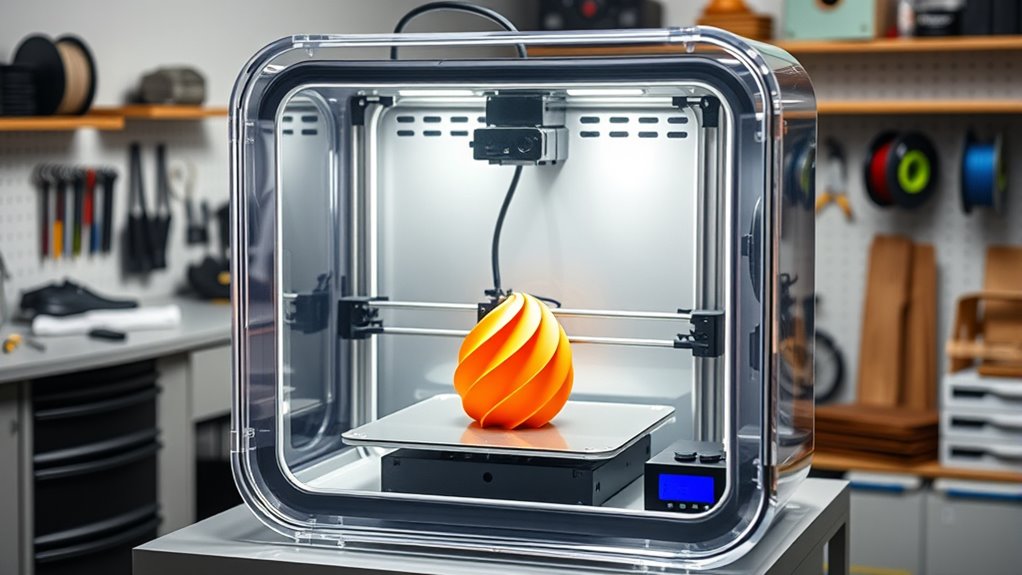
A 3D printer enclosure is indispensable for improving print quality, safety, and workspace cleanliness. When you’re considering whether to invest in one, understanding how material selection and environmental control play pivotal roles can help you make an informed decision. The materials used for your enclosure directly impact its effectiveness. You want something sturdy enough to contain fumes, resist heat, and withstand the wear and tear of regular use. Common choices include acrylic, polycarbonate, or metal, each offering different benefits. Acrylic is affordable and provides good visibility but might crack under impact. Polycarbonate is more durable and impact-resistant, making it suitable for a busy workshop. Metal enclosures, like aluminum or steel, excel in durability and heat resistance, though they can be heavier and less transparent. Your selection should align with your specific needs, including safety considerations and the type of materials you print with. For instance, if you often print with ABS or other filament that emits fumes, choosing a material with good containment qualities becomes essential for safety and comfort. Additionally, incorporating proper ventilation systems can enhance fume extraction and air quality.
Environmental control is another critical aspect that justifies having a 3D printer enclosure. By enclosing your printer, you create a controlled environment where temperature, humidity, and airflow are managed. This control minimizes warping and cracking, particularly with filaments sensitive to temperature fluctuations. It also ensures consistent print quality, as maintaining a stable environment reduces the chances of print failures. If you print large or complex models, environmental stability can considerably improve your results. Furthermore, controlling airflow prevents dust, debris, and other contaminants from settling on your print or inside the printer, keeping your workspace cleaner and reducing maintenance needs. An enclosure with proper ventilation and filtration systems can trap fumes and particles produced during printing, making your workspace safer for you and others nearby. If you’re working in a shared or compact space, environmental control becomes even more critical for health and safety.
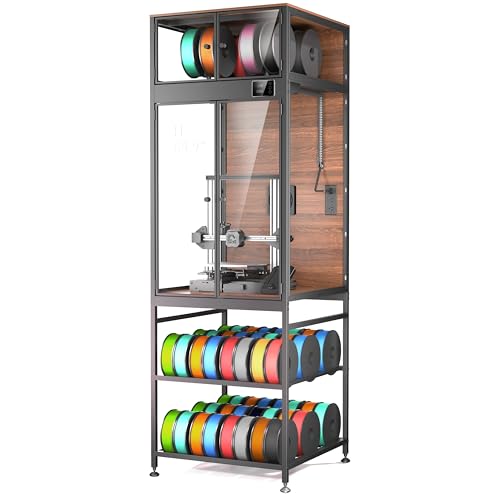
Crafit 3D Printer Cabinet with 48 Spools Filament Storage Rack, 3D Printer Enclosure with Ventilation, Thermo-Hygrometer and LED Light, Heat-Resistant, Dustproof and Noise-Reduction Design, Upgraded
Spacious Interior & Verified Compatibility – Designed to house most printers up to 21.6”W x 22”D x 28.7”H….
As an affiliate, we earn on qualifying purchases.
As an affiliate, we earn on qualifying purchases.
Frequently Asked Questions
Can Enclosures Improve Print Quality for All Filament Types?
Enclosures can improve print quality for many filament types, but not all. They work best with filament compatibility like ABS and PETG, which benefit from stable temperatures. Customization allows you to control airflow and heat, optimizing conditions for different filaments. However, for flexible or specialty filaments, enclosures might limit movement or introduce issues. So, consider your filament and enclosure customization options to decide if it’ll boost your print results.
Are DIY Enclosures as Effective as Commercial Options?
Think of your enclosure as a fortress for your prints. DIY enclosures can be effective, especially if you’re handy, but they often lack the consistency and reliability of commercial options. Commercial enclosures are built with precision, offering better temperature control and durability. While DIY may save money, it might not provide the same level of stability and peace of mind, making commercial reliability a smarter choice for critical projects.
How Do Enclosures Affect Print Bed Adhesion?
Enclosures improve print bed adhesion by maintaining temperature stability, which reduces warping and guarantees consistent filament flow. You’ll notice better adhesion with materials like ABS and PETG that benefit from a stable environment. By controlling temperature fluctuations, enclosures help your filament stick better to the bed, resulting in fewer failed prints. Keep in mind that some filaments may require specific enclosure conditions to optimize adhesion and print quality.
Do Enclosures Require Special Ventilation or Filters?
Enclosures do require special ventilation or filters primarily to manage filament fumes and maintain proper airflow requirements. While some might worry about added complexity, using a simple ventilation system or HEPA filter keeps fumes safe without complicating your setup. Proper airflow ensures your printer runs smoothly and fumes are filtered out, making your workspace safer and more comfortable. Don’t overlook this; it’s a small investment for a healthier printing environment.
Are Enclosures Necessary for Small or Low-Volume Prints?
Enclosures aren’t necessary for small or low-volume prints, but they can improve temperature stability and noise reduction. If your prints are sensitive to temperature fluctuations or you want a quieter workspace, using an enclosure helps maintain consistent conditions and dampens noise. However, for simple, quick projects, you can skip it. Consider your print’s complexity and your environment before deciding whether an enclosure benefits your process.

Bambulab A1 3D Printer Acrylic Enclosure,360° Transparent 3D Printer Cover Box with Power Strip/Thermo-Hygrometer/LED Light,Block Dust/Noise/Odor Isolation/Constant Temperature,21.65"Wx22.05"Dx24.02"H
【Improve Print Quality】TIOPY acrylic 3d printer enclosure creates a stable temperature and humidity environment,thereby enhancing print quality and…
As an affiliate, we earn on qualifying purchases.
As an affiliate, we earn on qualifying purchases.
Conclusion
So, whether you’re printing delicate filaments or aiming for a cleaner workspace, a 3D printer enclosure can be your best friend. It keeps temps steady and reduces fumes—think of it as your modern-day knight’s shield. But if you’re just tinkering with basic prints or don’t mind a bit of noise, you might skip it. Remember, in the world of 3D printing, having the right enclosure is as vital as a knight’s armor—sometimes, it’s the difference between victory and defeat.
Crafit 3D Printer Cabinet with 48 Spools Filament Storage Rack, 3D Printer Enclosure with Ventilation, Thermo-Hygrometer and LED Light, Heat-Resistant, Dustproof and Noise-Reduction Design, Upgraded
Spacious Interior & Verified Compatibility – Designed to house most printers up to 21.6”W x 22”D x 28.7”H….
As an affiliate, we earn on qualifying purchases.
As an affiliate, we earn on qualifying purchases.

Multifunctional 3D Printer Enclosure w/Adjustable Ventilation Kit Eliminate Odors Tent Cover Compatible with Anycubic Photon Mono, Elegoo Saturn/Mars 3/4 & Creality Halot Series Resin 3D Printer
UV sheet Block Window: The enclosure is designed with a UV block window, which protects the resin prints…
As an affiliate, we earn on qualifying purchases.
As an affiliate, we earn on qualifying purchases.