
Activated carbon filters are great at removing odors, chemical vapors, and airborne pollutants like VOCs and smoke, helping freshen your environment. However, they’re not effective against larger particles like dust, pollen, or bacteria, and they can’t eliminate allergens or microorganisms on their own. To fully purify your air or water, combining filters like HEPA or other methods is often necessary. Want to discover how to maximize their benefits? Keep exploring for more insights.

Get school and study supplies delivered free — and shop member deals
- Fast, free delivery on millions of items
- Access to Prime Big Deal Days deals on October 6–7
- Prime Video, Amazon Music and more included
Key Takeaways
- Activated carbon filters effectively remove chemical vapors, odors, VOCs, and smoke but are less effective against dust, pollen, or bacteria.
- They trap impurities within their porous structure, improving indoor air quality by reducing airborne chemical contaminants.
- These filters do not remove particulate matter, allergens, or microorganisms, often requiring supplementary filters like HEPA.
- They cannot eliminate dissolved minerals, heavy metals, or pathogens from water; their primary use is for air purification.
- Regular replacement is necessary as pores become saturated, decreasing filtration efficiency over time.
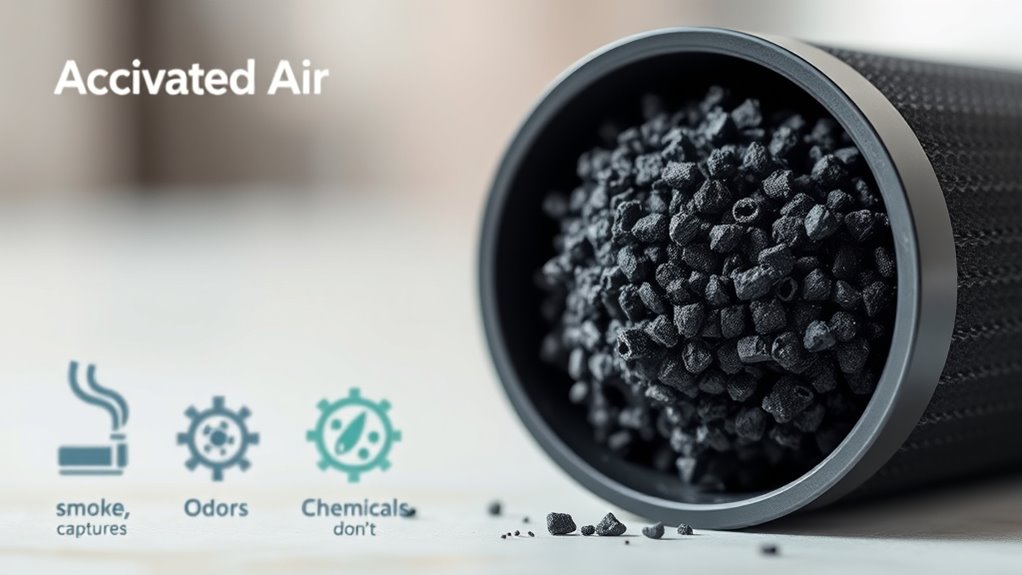
Have you ever wondered how to effectively remove contaminants from your water or air? Activated carbon filters are a popular choice for tackling this challenge, especially when it comes to air purification and odor elimination. These filters work by trapping impurities within their porous structure, making them highly effective at removing certain pollutants. When you use them in air purification systems, they can notably improve air quality by reducing airborne contaminants like volatile organic compounds (VOCs), smoke, and odors. Whether you’re dealing with pet smells, cooking odors, or chemical fumes, activated carbon filters can make a noticeable difference in your environment. Their ability to adsorb odors is one of their most valued features, providing a fresher, cleaner atmosphere in your home or workspace.
However, it’s important to understand what activated carbon filters can and cannot do. While they excel at odor elimination and the removal of many chemical vapors, they’re not as effective against particulate matter like dust, pollen, or bacteria. If your concern is airborne allergens or pathogens, you’ll need additional filtration methods, such as HEPA filters, to complement activated carbon’s capabilities. This combination ensures you’re covering a broader range of pollutants. It’s also worth noting that activated carbon filters won’t remove dissolved minerals, heavy metals, or microorganisms from water, which means they’re not a complete solution for all water purification needs. They primarily target chemical contaminants and odors, so if your water contains heavy metals or bacteria, you’d need specialized filters designed for those issues.
In terms of maintenance, activated carbon filters need regular replacement to stay effective. Over time, the pores become saturated with trapped contaminants, reducing their ability to adsorb new ones. Neglecting this can lead to decreased air purification performance and a decline in odor elimination efficiency. The lifespan of a filter depends on the level of pollutants in your environment and the frequency of use, but generally, it’s best to follow the manufacturer’s recommendations. Replacing filters on time ensures you continue to enjoy clean air free of unwanted smells and pollutants. Additionally, selecting the right type of activated carbon, such as vetted options, can enhance filtration efficiency and longevity. Ultimately, activated carbon filters are a valuable component of a thorough air quality management plan, especially when odor removal is a priority. Knowing their strengths and limitations helps you make smarter choices for creating a healthier, more pleasant environment.
Frequently Asked Questions
How Often Should I Replace Activated Carbon Filters?
You should replace your activated carbon filter every 3 to 6 months to guarantee ideal filter lifespan and maintain clean water or air. The replacement frequency depends on usage and the level of contaminants. If you notice a decrease in performance or unpleasant odors, it’s time for a change. Regularly checking your filter helps you know when to replace it, keeping your environment fresh and safe.
Can Activated Carbon Filters Remove Viruses From Water?
Think activated carbon filters are your water’s superhero? Sorry to burst that bubble, but they don’t remove viruses effectively. For true virus removal and water safety, you need technologies like UV sterilization or reverse osmosis. Activated carbon filters excel at odors and chemicals, but viruses slip right through. Rely on proper filtration methods if you want safe drinking water, not a filter claiming to do everything but actually doing very little.
Are Activated Carbon Filters Effective Against Heavy Metals?
Activated carbon filters are effective for heavy metal filtration through chemical absorption, which helps reduce contaminants like lead and mercury. You’ll find these filters work well for removing certain heavy metals, but they aren’t foolproof for all types. To enhance protection, consider combining activated carbon with other filtration methods, ensuring thorough removal of heavy metals from your water. Regular filter maintenance also keeps the filtration process effective.
Do Activated Carbon Filters Eliminate All Odors Completely?
You can’t expect activated carbon filters to eliminate all odors completely, as they’re battling an uphill climb with airborne pollutants and chemical absorption. While they considerably reduce many smells by trapping odor-causing molecules, some stubborn or strong odors may slip through. Think of it as trying to put out a fire with a cup of water — they’re effective but not foolproof. For best results, combine filters with proper ventilation.
Can Activated Carbon Filters Improve Taste Significantly?
Yes, activated carbon filters can considerably improve taste by removing chlorine, organic compounds, and other impurities that cause unpleasant flavors. You’ll notice better flavor enhancement in your drinking water, making it more enjoyable. These filters target taste and odor issues effectively, giving you cleaner, fresher water. Keep in mind, regular replacement is vital to maintain peak taste improvement and guarantee your filter continues to enhance flavor as intended.
Conclusion
So, next time you rely solely on activated carbon filters, remember—they’re great at removing odors and chemicals, but don’t expect them to catch every harmful particle or virus. Ironically, their reputation for pure air might fool you into thinking your home’s completely protected. While they’re handy, they’re not magic. Use them wisely and supplement with other filters to truly breathe easy. After all, even the best filters have their limits—don’t let that surprise you!
Fall Picks
fall essentials
As an affiliate, we earn on qualifying purchases.


![Competitive Programmer's Handbook (2018) [Pdf]](https://haltmal.com/wp-content/uploads/2026/10/competitive-programmer-s-handbook-2018-pdf-featured-560x300.jpg)