For most students, I’d choose the Franklin BES-2400 Talking English-Spanish Bilingual Dictionary as the best overall pick for its focus on two-way language study and spoken support. The Franklin MDE-1200 is a better match for English vocabulary and thesaurus work, while the Besta BK-50 stands out for Korean-English learners. The main tradeoff is between a device tailored to one language pair and a broader English reference tool; speech and translation features can help with practice, but they do not replace checking context or grammar. Read on for the full breakdown of how these 11 options differ and which student each one suits.

Get school and study supplies delivered free — and shop member deals
- Fast, free delivery on millions of items
- Access to Prime Big Deal Days deals on October 6–7
- Prime Video, Amazon Music and more included
Key Takeaways
- Language pair matters more than a long feature list: The Franklin Spanish-English models target distinct study needs, while the Besta BK-50 is the lineup’s specific Korean-English option.
- English study has two different paths: The Franklin MDE-1200 adds thesaurus support, whereas the Franklin MWD-460 and the English-focused Lexibook models center on monolingual reference.
- Speaking tools are useful for practice, not a substitute for context: The talking Franklin bilingual models emphasize hearing words and phrases, but students still need to check meaning in the sentence they are reading.
- Compact, focused tools may suit school rules better: A dedicated dictionary can be easier to use for quick lookup than a general-purpose device, though school policies still determine what is allowed.
- The best fit depends on the assignment: A language learner may benefit more from a bilingual translator, while a student building English vocabulary may get more from a monolingual dictionary and thesaurus.
| Besta BK-50 Korean-English Electronic Dictionary and Voice Translator |  | Best for Korean-English Study | Model: BK-50 | Languages: Korean and English | Display: 4.3-inch FSTN LCD, 240 x 160 resolution | VIEW LATEST PRICE | See Our Full Breakdown |
| Franklin Collins English Digital Dictionary Express Edition |  | Best for English Vocabulary Building | Brand: Franklin | Model: DMQ-221 | Dictionary entries: Over 118,000 words, definitions, and phrases | VIEW LATEST PRICE | See Our Full Breakdown |
| Franklin BES-2170 Speaking Spanish-English Dictionary |  | Best for Structured Spanish Study | Model: BES-2170 | Translations: Over 5 million | Spoken phrases: 4,800 | VIEW LATEST PRICE | See Our Full Breakdown |
| Franklin MDE-1200 Electronic Dictionary and Thesaurus |  | Best for Test Preparation | Model: MDE1200 | Headwords: 80,000 | Definitions: 250,000 | VIEW LATEST PRICE | See Our Full Breakdown |
| Franklin DBE-1200 Spanish-English Translating Dictionary |  | Best for Offline Spanish Reference | Languages: English and Spanish | Words: Over 150,000 | Translations: 1,000,000 | VIEW LATEST PRICE | See Our Full Breakdown |
| Franklin BES-2400 Talking English-Spanish Bilingual Dictionary |  | Best for Focused English-Spanish Study | Languages: English and Spanish | Voice: Native human voice | Features: Talking dictionary, phrase book, spelling correction, and proficiency tests | VIEW LATEST PRICE | See Our Full Breakdown |
| Franklin MES-2400 Digital Talking Dictionary and Multilingual Translator |  | Best for Multilingual Offline Translation | Languages: English, Spanish, Italian, German, and French | Translation: Offline | Voice: Native human voice | VIEW LATEST PRICE | See Our Full Breakdown |
| LEXiBOOK English Dictionary D650EN |  | Best for English Vocabulary and Homework Tools | Dictionary entries: 380,000 words | Synonyms: 78,000 | Verb conjugations: More than 8,000 verbs across four tenses | VIEW LATEST PRICE | See Our Full Breakdown |
| Franklin LV4-D English-Spanish Talking Bilingual Dictionary and Phrase Book |  | Best for Structured English-Spanish Learning | Languages: English and Spanish | Phrase book: 7,000 phrases | English-Spanish dictionary: 150,000 words; 1,000,000 translations | VIEW LATEST PRICE | See Our Full Breakdown |
| Franklin MWD-460 English Monolingual Dictionary | 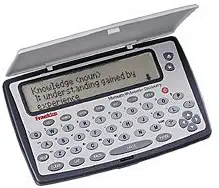 | Best for SAT Vocabulary and Word Choice | Definitions: 274,000 | Synonyms and antonyms: 500,000 | Learning exercises: 4 | VIEW LATEST PRICE | See Our Full Breakdown |
| Lexibook Collins English Dictionary, 13th Edition Electronic Dictionary, Blue/White (D850EN) |  | Best for English Study Tools | Dictionary edition: Collins English Dictionary, 13th Edition | Words, meanings, and phrases: 725,000 | Verb entries and conjugation: 8,000 dictionary verbs; conjugation for more than 7,000 verbs across four tenses | VIEW LATEST PRICE | See Our Full Breakdown |
| electronic dictionaries for student | Model |
|---|---|
| Besta BK-50 Korean-English Ele | BK-50 |
| Franklin Collins English Digit | DMQ-221 |
| Franklin BES-2170 Speaking Spa | BES-2170 |
| Franklin MDE-1200 Electronic D | MDE1200 |
| Franklin DBE-1200 Spanish-Engl | — |
| Franklin BES-2400 Talking Engl | BES2400 |
| Franklin MES-2400 Digital Talk | MES-2400 |
| LEXiBOOK English Dictionary D6 | D650EN |
| Franklin LV4-D English-Spanish | — |
| Franklin MWD-460 English Monol | — |
| Lexibook Collins English Dicti | — |
More Details on Our Top Picks
Besta BK-50 Korean-English Electronic Dictionary and Voice Translator
For students working specifically between Korean and English, the Besta BK-50 fills a different need from the English-only Franklin Collins DMQ-221. Its Korean-English translation focus and voice pronunciation function can help learners connect written vocabulary with spoken forms, while the built-in microphone supports voice input. The 4.3-inch backlit display is larger than the 3-inch screens on the Franklin MDE-1200 and DBE-1200, which may make entries easier to read during study. The tradeoff is age: its listed release date is 2013, and it uses two AAA batteries rather than a rechargeable setup. I’d choose it for targeted Korean-English reference, not as a broad, up-to-date study suite.
Pros:- Translates between Korean and English
- Voice function supports pronunciation practice
- Backlit 4.3-inch display and built-in microphone
- Compact 147 g design
Cons:- Requires two AAA batteries
- Listed release date is 2013
- Focused on Korean and English rather than a broad multilingual study range
Best for: Students learning Korean or English who want a portable two-language reference with voice and pronunciation support.
Not ideal for: Students who need a broad English dictionary, Spanish translations, or a newer device with rechargeable power.
- Model:BK-50
- Languages:Korean and English
- Display:4.3-inch FSTN LCD, 240 x 160 resolution
- Power:Two AAA batteries; 5V, 500mA power supply
- Dimensions:120 x 95 x 15 mm
- Weight:147 g
- Operating system:BESTA RTOS
- Release date:July 2013
Our verdict“Choose the BK-50 for Korean-English study and spoken-word support, but pick a Franklin English reference if Korean is not part of your coursework.”
Franklin Collins English Digital Dictionary Express Edition
The Franklin Collins DMQ-221 suits students who want to strengthen English vocabulary without carrying a translation-focused device. Its 118,000-plus words, definitions, and phrases give it a broad reference base, while the thesaurus adds 500,000 synonyms and antonyms for choosing more precise wording in essays. Phonetic spell correction and the Confusables feature are especially useful when a student knows a word’s sound but not its spelling or usage. Compared with the Franklin MDE-1200, the DMQ-221 puts more emphasis on a large thesaurus and practice features; the MDE-1200 instead lists grammar lessons and test-preparation vocabulary. The DMQ-221 also includes custom lists and six games, though its data does not specify a screen size or power source.
Pros:- Includes over 118,000 words, definitions, and phrases
- Large thesaurus with 500,000 synonyms and antonyms
- Phonetic spell correction and a Confusables feature support accurate word use
- Custom word lists, six games, and utility tools add study options
Cons:- English reference focus does not provide the Spanish or Korean translation support found in other picks
- Product data does not specify screen dimensions
- Product data does not specify its power source
Best for: English-language students who want spelling help, synonym choices, and custom vocabulary practice for writing assignments.
Not ideal for: Students who need English-to-Spanish translation, spoken pronunciation, or clearly specified display and battery details.
- Brand:Franklin
- Model:DMQ-221
- Dictionary entries:Over 118,000 words, definitions, and phrases
- Thesaurus entries:500,000 synonyms and antonyms
- Word games:6 games with 4 difficulty levels
- Weight:180 g
Our verdict“Pick the DMQ-221 for English spelling and word-choice practice; choose the MDE-1200 if grammar lessons and test-prep vocabulary matter more.”
Franklin BES-2170 Speaking Spanish-English Dictionary
The Franklin BES-2170 is the more study-oriented Spanish option here: alongside over 5 million translations, it includes Merriam-Webster’s Advanced Learner’s English Dictionary, grammar and verb-conjugation guides, quizzes, and study lists. Its 4,800 spoken words and phrases give language learners audio reference that the Franklin DBE-1200’s supplied feature list does not specify. The DBE-1200, by contrast, emphasizes offline translation, a phrasebook, and a 3-inch zoomable screen. The BES-2170’s mix of reference and practice makes it a stronger fit for coursework that requires regular grammar review, but its listed power source is two AA batteries, and the provided data does not specify screen dimensions. It is a focused Spanish-English learning tool, not a multilingual dictionary.
Pros:- More than 5 million Spanish-English and English-Spanish translations
- Includes 4,800 spoken words and phrases
- Grammar guides and verb conjugation tools support class study
- Study lists, interactive quizzes, and spell correction add practice
Cons:- Requires two AA batteries
- Product data does not specify screen size
- Language coverage is limited to Spanish and English
Best for: Spanish students who want spoken vocabulary, verb-conjugation support, and built-in quizzes alongside translation lookup.
Not ideal for: Students seeking a compact, clearly specified large-screen device or translation beyond Spanish and English.
- Model:BES-2170
- Translations:Over 5 million
- Spoken phrases:4,800
- Dictionary:Merriam-Webster’s Advanced Learner’s English Dictionary
- Dimensions:4.3 x 0.75 x 5.5 inches
- Weight:6.7 ounces
- Power:2 AA batteries
Our verdict“Choose the BES-2170 for Spanish coursework that calls for audio and grammar practice, rather than the DBE-1200’s simpler offline reference focus.”
Franklin MDE-1200 Electronic Dictionary and Thesaurus
For students focused on English exams and writing, the Franklin MDE-1200 earns its place through a direct mix of dictionary, thesaurus, grammar lessons, and test-preparation vocabulary. It lists 80,000 headwords and 250,000 definitions, plus synonyms and antonyms, giving students several ways to check meaning and refine word choice. The zoomable 3-inch LCD can help make entries more readable, though it remains smaller than the Besta BK-50’s 4.3-inch display. Compared with the DMQ-221, the MDE-1200 specifically calls out grammar and test-prep tools, while the DMQ-221 offers a much larger stated thesaurus and custom word lists. Its 5-ounce weight suits a school bag, but the compact screen and two-AA power requirement are practical compromises.
Pros:- Combines dictionary and thesaurus references
- Includes grammar lessons and test-preparation vocabulary banks
- Word solvers and educational games add practice options
- Lightweight 5-ounce body with a zoomable display
Cons:- The 3-inch screen is smaller than the Besta BK-50 display
- Requires two AA batteries
- Does not provide the language translation features of the Spanish-focused picks
Best for: Students preparing for vocabulary tests or editing English assignments who want grammar and test-prep tools in a lightweight device.
Not ideal for: Language learners who need translation or spoken vocabulary, or students who prefer a larger display.
- Model:MDE1200
- Headwords:80,000
- Definitions:250,000
- Synonyms:15,000
- Antonyms:12,000
- Screen:3-inch zoomable LCD
- Weight:5 ounces
- Power:2 AA batteries required
Our verdict“Choose the MDE-1200 for portable English test-prep and grammar support; favor the DMQ-221 if a larger thesaurus is your main priority.”
Franklin DBE-1200 Spanish-English Translating Dictionary
The Franklin DBE-1200 makes the most sense for students who need a dedicated offline English-Spanish reference for class or study away from a connection. Its stated 1,000,000 translations sit alongside more than 150,000 words and 250,000 definitions, so it combines translation lookup with English-language reference. A 7,000-entry phrasebook, spell checker, grammar tools, and test-prep vocabulary extend its classroom use. Compared with the BES-2170, the DBE-1200 clearly specifies offline operation and a zoomable 3-inch screen, while the BES-2170 lists spoken phrases and more explicit quiz and verb-conjugation practice. The DBE-1200 is therefore the practical reference pick, not the better choice for students seeking audio-led learning. Its language coverage is limited to English and Spanish, and it runs on batteries.
Pros:- Works offline without Wi-Fi
- Lists 1,000,000 translations and 250,000 definitions
- Includes a 7,000-entry phrasebook, thesaurus, and spell checker
- Grammar, test-prep, and word-game tools support study
Cons:- Limited to English and Spanish
- Battery-operated power requires students to keep batteries available
- The 3-inch display is compact for extended reading
Best for: Spanish and English students who need offline translation, definitions, and a phrasebook in one handheld device.
Not ideal for: Students studying other languages or those who prioritize spoken pronunciation and audio practice.
- Languages:English and Spanish
- Words:Over 150,000
- Translations:1,000,000
- Definitions:250,000
- Phrasebook:7,000 entries
- Display:3-inch zoomable LCD
- Connectivity:Offline; no Wi-Fi required
- Power:Battery-operated
Our verdict“Choose the DBE-1200 for offline Spanish-English lookup and phrase support; pick the BES-2170 if spoken phrases and interactive study are more useful.”
Franklin BES-2400 Talking English-Spanish Bilingual Dictionary
For students concentrating on English and Spanish, the BES-2400 keeps its scope focused while adding spoken pronunciation and phrase lookup. Its native human voice can help learners check how a word or expression sounds without an internet connection, while spelling correction can rescue searches when a new word is still difficult to spell. Proficiency tests give it a study-oriented edge over a basic bilingual lookup tool. Compared with the five-language Franklin MES-2400, this model is a better fit for dedicated English-Spanish practice, but it does not offer the same range of translation languages. The description also lists medical and drug dictionary content, a useful reference addition, though the device remains centered on two languages rather than broad school-subject research.
Pros:- Works offline for study away from Wi-Fi or mobile data
- Native human voice pronunciation covers words and phrases
- Spelling correction supports both phonetic and typographical searches
- Proficiency tests add a practice function beyond dictionary lookup
Cons:- Its English-Spanish scope is narrower than the five-language Franklin MES-2400
- The listed features do not include the extensive word counts and thesaurus tools found on some monolingual options
Best for: English- or Spanish-language students and teachers who want offline pronunciation, phrase lookup, and practice tools focused on one language pair.
Not ideal for: Students who regularly translate Italian, German, or French, or who need a general-purpose English dictionary with a broad thesaurus.
- Languages:English and Spanish
- Voice:Native human voice
- Features:Talking dictionary, phrase book, spelling correction, and proficiency tests
- Additional reference content:Medical and drug dictionary content
- Model:BES2400
- Package dimensions:6.69 × 6.38 × 1.26 inches
- Item weight:10.5 ounces
Our verdict“Choose the BES-2400 for offline English-Spanish study with spoken phrases and tests, but choose the MES-2400 if you need more language pairs.”
Franklin MES-2400 Digital Talking Dictionary and Multilingual Translator
The MES-2400 earns its place for students who move between several languages and cannot count on a connection: it translates offline across English, Spanish, Italian, German, and French. Spoken words and phrases give learners an audio reference, while the tactile keypad and simple interface suit direct lookups during lessons or travel. Compared with the two-language Franklin BES-2400, its broader language coverage is the clear advantage; the tradeoff is that students focused solely on English and Spanish may not need the extra languages or prefer the BES-2400’s listed proficiency tests. Phonetic and typographical spelling correction can make unfamiliar vocabulary easier to find. Its five-language limit still rules it out for students working with languages beyond those included.
Pros:- Offline translation works without an internet connection
- Supports five languages rather than only the English-Spanish pair on the BES-2400
- Native human voice pronounces words and phrases
- Tactile keypad and compact design support portable, direct use
Cons:- Language coverage is limited to English, Spanish, Italian, German, and French
- Its listed features do not include the proficiency tests offered by the BES-2400
Best for: Students learning or using English, Spanish, Italian, German, and French who need offline translations and audible pronunciation.
Not ideal for: Students who need translation beyond its five supported languages or want a device whose listed features include dedicated proficiency tests.
- Languages:English, Spanish, Italian, German, and French
- Translation:Offline
- Voice:Native human voice
- Spelling support:Phonetic and typographical spell correction
- Keypad:Tactile keypad
- Model:MES-2400
- Package dimensions:6.61 × 6.38 × 1.14 inches
- Item weight:10.5 ounces
Our verdict“Pick the MES-2400 if offline translation across its five languages matters more than a dedicated two-language study focus.”
LEXiBOOK English Dictionary D650EN
The D650EN is a study desk companion for students who need more than definitions: its 380,000-word dictionary is paired with synonyms, spelling and grammar tools, verb conjugations, and a crossword solver. That combination makes it more useful for English assignments and vocabulary practice than the bilingual Franklin BES-2400, which puts its emphasis on spoken English-Spanish lookup. Large buttons and a magnifying function may also suit younger users or anyone who prefers physical controls. The main compromise is the three-line display, which limits how much text appears at once and can make longer entries less convenient to scan. Its calculator and converters add everyday utility, but students seeking audible pronunciation or offline translation should look instead to the Franklin talking models.
Pros:- Large dictionary and thesaurus support vocabulary and word-choice tasks
- Includes spellchecking, grammar tools, and a crossword solver
- More than 8,000 verbs across four tenses help with conjugation practice
- Large buttons, magnifying function, and word games broaden its appeal for younger users
Cons:- Three-line screen limits the amount of entry text visible at once
- Does not list spoken pronunciation or bilingual translation features
Best for: Students working on English vocabulary, spelling, grammar, verb forms, and crosswords who want several study tools in one handheld device.
Not ideal for: Language learners who need spoken pronunciation or bilingual translation, or readers who want longer definitions visible at once.
- Dictionary entries:380,000 words
- Synonyms:78,000
- Verb conjugations:More than 8,000 verbs across four tenses
- Screen:Three-line display
- Language tools:Thesaurus, spellchecker, grammar tools, and crossword solver
- Additional functions:Calculator, memo list, currency and metric converter, clock, and date
- Word games:Three
- Model:D650EN
Our verdict“Choose the D650EN for broad English homework support, but select a Franklin talking dictionary if pronunciation and translation are the priority.”
Franklin LV4-D English-Spanish Talking Bilingual Dictionary and Phrase Book
The LV4-D is the most study-program-like English-Spanish option in this group. Its 7,000-phrase book sits alongside several substantial dictionaries, lessons, tests, grammar resources, and pronunciation recording, giving learners more ways to practice than the more focused BES-2400. Adjustable-speed human voice pronunciation is useful for students who want to hear and repeat words at a manageable pace. It also lists medical and drug references, which broaden its lookup range. Those extras come with tradeoffs: at 1.1 pounds, it is heavier than the 10.5-ounce BES-2400 and MES-2400, and its monochrome screen is less suited to students expecting a modern display. This is the richer learning package, not the lightest carry-around choice.
Pros:- Large phrase book complements its English-Spanish and monolingual dictionaries
- Human voice pronunciation includes adjustable audio speed and recording
- Lessons, tests, and grammar resources support structured practice
- MicroSD and USB connectivity support optional regional language packs and device connection
Cons:- At 1.1 pounds, it is substantially heavier than the BES-2400 and MES-2400
- Monochrome display may feel limited for students wanting a more modern screen
- Requires two AAA batteries
Best for: English-Spanish learners who want lessons, tests, grammar resources, a large phrase book, and adjustable spoken practice in one device.
Not ideal for: Students who prioritize a light daily carry, a color screen, or translation among languages beyond English and Spanish.
- Languages:English and Spanish
- Phrase book:7,000 phrases
- English-Spanish dictionary:150,000 words; 1,000,000 translations
- Spanish-English dictionary:150,000 words; 1,000,000 translations
- Display:4.5-inch monochrome LED-backlit LCD, 320 × 160 dots
- Connectivity:MicroSD card and USB
- Power:2 AAA batteries (included)
- Item weight:1.1 pounds
Our verdict“Choose the LV4-D for a fuller English-Spanish learning and practice toolkit, accepting added weight and a monochrome display.”
Franklin MWD-460 English Monolingual Dictionary
The MWD-460 is the strongest fit here for students building English vocabulary rather than translating between languages. It combines 274,000 Merriam-Webster definitions with 500,000 synonyms and antonyms, plus an SAT word list, customizable vocabulary list, and learning exercises. Confusable-word alerts and phonetic spelling correction can help catch mistakes during writing, while nine word games offer a different kind of practice from the LEXiBOOK D650EN’s grammar and verb tools. Unlike the bilingual Franklin LV4-D, this model does not provide translation, spoken pronunciation, or a phrase book. Its focus is narrower but purposeful: English reference and vocabulary development. The listed power requirement is two CR2 batteries, a less common format students may need to plan for.
Pros:- Large Merriam-Webster dictionary supports extensive English lookup
- Substantial thesaurus helps students compare synonyms and antonyms
- Phonetic spelling correction and confusable-word alerts support accurate writing
- SAT list, customizable vocabulary list, exercises, and games encourage practice
Cons:- English-only reference does not provide the translation and phrase tools found on the Franklin LV4-D
- Requires two CR2 batteries
Best for: Students preparing for SAT vocabulary work or improving English word choice, spelling, and recall without needing translation.
Not ideal for: Bilingual learners who need spoken pronunciation, phrase lookup, or English-Spanish translation, or students who want grammar and conjugation tools.
- Definitions:274,000
- Synonyms and antonyms:500,000
- Learning exercises:4
- Word games:9
- Battery requirement:2 CR2 batteries
- Weight:7.8 ounces
- Dimensions:9.84 × 7.48 × 2.05 inches
Our verdict“Pick the MWD-460 for English vocabulary building and SAT-focused practice, not for bilingual study or spoken language learning.”
Lexibook Collins English Dictionary, 13th Edition Electronic Dictionary, Blue/White (D850EN)
The Lexibook D850EN suits students who want more than a basic lookup device: its 725,000 words, meanings, and phrases are paired with a thesaurus, spellchecker, phonetic spell correction, and verb conjugation. That mix supports writing and vocabulary practice, while the crossword solver and word games add study-friendly ways to work with words. Compared with the Franklin MWD-460, which focuses on monolingual English reference, this Lexibook adds spelling help, conjugation, and extra tools. Its four-line screen and large buttons favor straightforward use, though the compact display shows less information at once than a larger screen might. A magnifying function helps with readability, but battery type and battery life are not specified, so buyers cannot plan around those details. It is a strong fit for English-focused study, not a translation-first choice like the Franklin Spanish-English models.
Pros:- 725,000 words, meanings, and phrases provide broad English reference coverage
- Thesaurus, spellchecker, phonetic spell correction, and conjugation support writing and language study
- Crossword solver and three word games add useful word practice
- Large buttons and screen magnification can make lookup easier
Cons:- Four-line display may show less information at once than a larger-screen device
- Battery type and battery life are not specified
- English-focused tools do not replace a bilingual dictionary or voice translator
Best for: Students studying English vocabulary, spelling, and verb forms who want a dedicated dictionary with writing and word-game tools.
Not ideal for: Students who need bilingual translation, spoken language support, or a larger display for viewing more information at once.
- Dictionary edition:Collins English Dictionary, 13th Edition
- Words, meanings, and phrases:725,000
- Verb entries and conjugation:8,000 dictionary verbs; conjugation for more than 7,000 verbs across four tenses
- Screen:Four-line display with magnifying function
- Language tools:Thesaurus, spellchecker, phonetic spell correction, crossword solver, and user list
- Word games:Hangman, word jumble, and anagram
- Other tools:Calculator, currency converter, and unit converter
- Color and model:Blue/White; D850EN
Our verdict“Choose the D850EN for broad English study and spelling support, but pick a bilingual model if translation is your main need.”

How We Picked
I compared these devices by the school tasks they can support: checking definitions, finding translations, building vocabulary, and practicing pronunciation. I gave weight to the match between a product’s language coverage and a student’s needs, along with how its speaking, phrase-book, or thesaurus functions could help during study. I also considered whether the product’s focus appears useful for repeated classroom or homework lookups, rather than treating a longer feature list as automatically better.
The order reflects fit and versatility for students, not a claim that every device suits every learner. The Franklin BES-2400 leads for students who want a focused English-Spanish study tool with talking support; the MDE-1200 ranks highly for English vocabulary work, and the Besta BK-50 earns a distinct place for Korean-English learners. More specialized or narrowly described models rank lower for general student use, though they may be the right choice when their language pair or reference style matches a specific course. I also avoid treating translation as a replacement for understanding context, and buyers should confirm current compatibility, included content, and school rules before choosing.
Factors to Consider When Choosing Electronic Dictionaries For Students
Before choosing, start with the student’s actual lookup habits and language classes, not the number of functions listed on a box. These broader checks can help prevent buying a capable device that does not fit the curriculum, study environment, or school policy.
Match the Dictionary Type to the Assignment
Students who read and write mainly in English may need definitions, spelling help, and related words more often than direct translation. A monolingual dictionary can support vocabulary development by keeping lookups in the language being studied, while a thesaurus can help with word choice. Bilingual tools are more practical when coursework regularly switches between two languages or when a learner needs help understanding unfamiliar text. A common mistake is choosing the most language pairs or functions without checking whether they support the student’s classes. Look at recent assignments and note whether the main task is reading, writing, translation, or speaking practice. Choose the device that fits those repeated tasks, rather than trying to cover every possible use.
Treat Speech and Translation as Study Aids
Pronunciation playback can help a learner connect a written word with its sound, especially when studying independently. Phrase tools may also offer useful starting points for common exchanges, but a memorized phrase can be wrong for a different setting or level of formality. Machine or dictionary translation may miss idioms, word forms, and the surrounding sentence’s meaning. For written assignments, students should use a lookup as a clue, then confirm the word in context and follow their teacher’s rules on translation aids. If pronunciation is the main goal, prioritize clear speech functions; if reading comprehension is the goal, definition quality and relevant examples matter more. Paying extra for speech features makes less sense when the student rarely studies aloud.
Check School Rules Before Choosing a Device
Classroom policies differ on electronic aids, and some assessments restrict translation or talking functions even when a device is allowed for ordinary study. A tool that is convenient at home may not be permitted during tests. Ask the teacher or school whether electronic dictionaries are allowed and whether bilingual, speech, or phrase-book functions have separate restrictions. This check can keep a student from relying on a feature they cannot use when it matters. It also helps narrow the choice: a straightforward English reference may suit one classroom better than a translator. Do not assume a product’s educational purpose automatically makes it acceptable in every setting.
Look Beyond the Language Pair
A model labeled for a language pair still needs to fit the student’s proficiency and course vocabulary. Beginners may benefit from spoken words or familiar phrases, while more advanced learners often need precise definitions and support for distinguishing close meanings. Check whether the dictionary’s entry style supports the kind of work assigned, such as reading comprehension, essay writing, or conversation practice. A translation-focused tool can speed up basic lookups but may provide less help with nuanced English word choice than a monolingual reference. Avoid choosing solely by the language named on the packaging; compare the intended study task with the available tools. If the student studies several languages, verify that the device actually covers those needs rather than assuming a translator is multilingual.
Balance Portability With Ease of Use
Students often need quick lookups between classes or while studying away from a desk, so a dedicated handheld device can be appealing. Yet a small device is not useful if its display or controls make entries slow to find. Think about where the dictionary will be used most: a backpack, a library desk, or at home beside a textbook. Ask whether the student prefers physical controls and a focused tool or already relies on another approved reference method. Also check practical details such as batteries, included accessories, and whether the device’s functions work without network access, since these can affect daily use. Do not assume a compact form alone makes a model the easiest choice; interface and study habits matter too.
Pay for Functions the Student Will Use
Extra functions are worthwhile only when they support regular study. A thesaurus can help a student revising essays, while talking entries may be more useful for pronunciation practice or language lessons. A phrase book suits learners practicing common exchanges, but it may add little for a student whose assignments focus on reading formal text. Compare the device’s core reference function with the specific extras, then decide whether those extras solve a recurring problem. One common buying error is paying for breadth when a focused dictionary would be quicker and clearer for the student’s main course. Another is choosing a basic model that lacks a feature the teacher regularly asks students to practice.
Frequently Asked Questions
Should I choose a bilingual dictionary or an English-only dictionary for school?
I’d base the choice on the student’s main coursework and current language level. A bilingual dictionary is useful when assignments involve translation or when a learner needs a bridge to a second language. An English-only dictionary can encourage students to build understanding directly in English and may be better for vocabulary and writing tasks. If the student takes both English and foreign-language classes, identify which one needs more frequent lookup support before paying for a specialized device. School rules may also favor one type over another, especially during tests.
Are talking dictionaries useful for students who are learning pronunciation?
They can help students hear how a word is spoken and practice independently, which is useful when a teacher or fluent speaker is not nearby. The benefit depends on whether the student will actually use audio during regular study. Speech tools do not explain every pronunciation pattern or guarantee that a phrase suits a particular conversation. Pair playback with class materials, teacher guidance, or other pronunciation practice rather than relying on isolated words alone. Check classroom rules before using audio in shared or assessment settings.
Can an electronic dictionary replace a phone translation app?
Not in every situation: a dedicated dictionary may offer a focused reference experience, while a phone app can provide broader tools depending on its features and connectivity. The Franklin and Besta options in this roundup are aimed at particular language needs, so their usefulness depends on the student’s language pair and study task. Neither a device nor an app should be treated as an authority on context, idioms, or grammar. A student should check the result against the sentence and course materials. School policies may also allow one tool and restrict another, so confirm before relying on either in class.
What should I check before buying a used or older electronic dictionary?
Confirm that the screen, keys, speaker, and battery compartment work, and ask whether any required accessories are included. Check the exact model and language coverage rather than relying on a similar product name, since the lineup includes several Franklin devices with different purposes. Make sure the reference content suits the student’s current course and that any promised functions are available on the unit being sold. For an older device, also check whether replacement batteries or other needed parts are easy to obtain. If the seller cannot verify the device’s operation or contents, a newer, clearly specified option may be a safer school purchase.
Which option makes sense if the student studies more than one language?
Start by listing the exact language pairs the student uses; a product described as multilingual should not be assumed to cover every classroom language or translation direction. The Franklin MES-2400 is positioned as a multilingual translator, while the Besta BK-50 and several other Franklin models have more specific language pairings. Compare those stated needs with the student’s courses and confirm the included dictionaries before buying. If most work is in one language pair, a focused model may be simpler than a broader device. If course needs change often, flexibility matters more, but only when the specific languages are supported.
Conclusion
For the broadest student fit in this lineup, I’d pick the Franklin BES-2400 as best overall for English-Spanish learners who want talking support. The Franklin MDE-1200 is my best value-style choice for students focused on English definitions and thesaurus work, while the Franklin MES-2400 is the best premium-style fit for learners who need a wider multilingual focus. For beginners studying Spanish, I’d look first at the Franklin BES-2170 or the phrase-oriented Franklin LV4-D, depending on whether speaking or common expressions matter more. For specific needs, the Besta BK-50 suits Korean-English study, and the Franklin MWD-460 or LEXiBOOK D650EN may fit students who want an English-only reference. I’d choose based on the student’s language pair, school policy, and most frequent assignments—not on the longest feature list.
Evergreen bestsellers Picks
bestsellers
As an affiliate, we earn on qualifying purchases.