TL;DR

Get school and study supplies delivered free — and shop member deals
- Fast, free delivery on millions of items
- Access to Prime Big Deal Days deals on October 6–7
- Prime Video, Amazon Music and more included
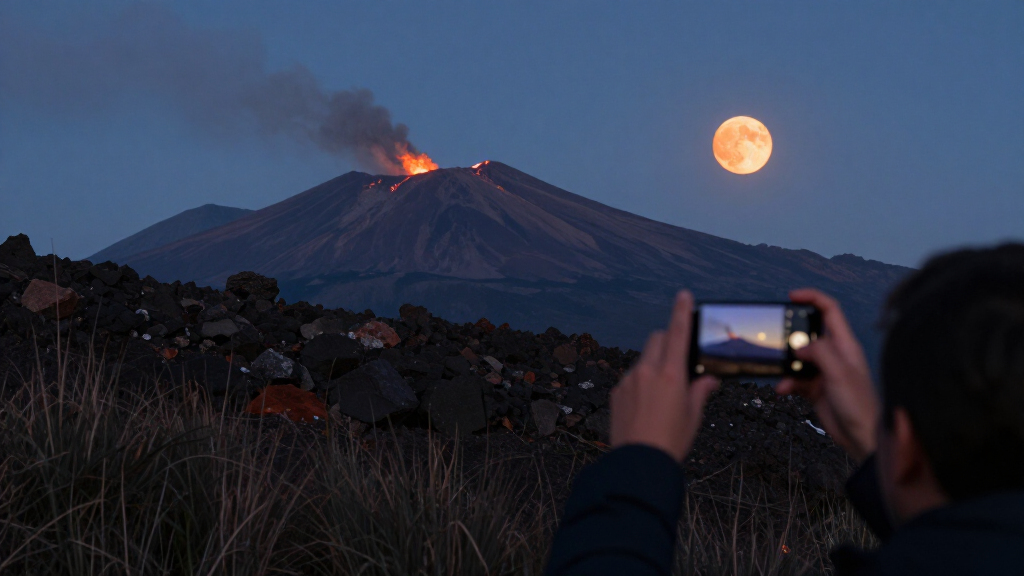
NASA’s Astronomy Picture of the Day for Oct. 1, 2026, features a composite photograph of the full Moon rising near Nicosia, Sicily, with Mount Etna’s ash and gas visible in the background. Photographer Dario Giannobile made the image last weekend; NASA’s explanation also describes the Belt of Venus and the September full moon’s Harvest Moon name.
NASA’s Astronomy Picture of the Day for Oct. 1, 2026, shows the full Moon rising over Sicily as Mount Etna’s ash and gas appear in the background. The composite photograph, credited to Dario Giannobile, was taken near the town of Nicosia and pairs a familiar lunar event with a view of the active volcano.
NASA says the image was photographed last weekend just outside Nicosia, Italy, on the island of Sicily. It is a composite showing the Moon rising while the sky grows darker. The agency’s description says lower clouds reflect the colors of twilight, while ash and gas from Mount Etna are visible higher in the background.
A pink strip near the horizon is the Belt of Venus, NASA explains. The image credit names Giannobile as photographer and lists the image as credited and copyrighted to him. APOD is NASA’s daily feature pairing an astronomy image or photograph with an explanation; the Oct. 1 entry was written and edited by a team that includes Cecilia Chirenti, Robert Nemiroff, Jerry Bonnell and Keighley Rockcliffe.
NASA’s text links the scene to the Harvest Moon, a traditional name used in some Northern Hemisphere cultures for the September full moon. It also explains that a full Moon occurs when the Moon and Sun are opposite one another in the sky, so the Moon rises around sunset. The date the photograph was taken is described only as the preceding weekend, rather than given as a specific calendar day.
A Lunar Rise Framed by Etna
The photograph makes a transient sky event visible alongside Mount Etna’s volcanic plume. The Moon’s rise, the changing twilight colors and the material visible above Etna appear together in one composition, offering readers a view that connects an astronomical subject with a specific Sicilian landscape.
For NASA’s audience, the image also serves as a brief explanation of how the Harvest Moon name relates to the calendar and how the Belt of Venus can appear opposite the setting Sun. APOD’s format combines the visual with accessible scientific context, rather than announcing a new lunar discovery or a change in the volcano’s status.
The image is a composite, a detail that matters when interpreting what it shows. It is presented as an assembled photograph of the Moon’s rise and the surrounding sky, not as a single unaltered exposure documenting every element at precisely the same instant. NASA’s published description does not provide technical details about the compositing process.
solar telescope with high magnification
As an affiliate, we earn on qualifying purchases.
As an affiliate, we earn on qualifying purchases.
How the Moon and Twilight Align
NASA describes a full Moon as occurring when the Moon and Sun are in opposition in the sky. In that arrangement, the Moon rises as the Sun sets, creating the timing shown in the APOD image. The lunar phase cycle takes about 29.5 days, while the Moon takes about 27 days to orbit Earth; these are different measures, referring respectively to the cycle of phases and the orbit.
The name Harvest Moon is not a separate astronomical phase. NASA says some cultures in the Northern Hemisphere use it for the September full moon. The naming is cultural, and the agency’s description invites readers to consider whether their own cultures have names for that Moon. The APOD caption does not claim the term is used universally.
The Belt of Venus is the pink band identified in NASA’s explanation. In the photograph, lower clouds reflect twilight colors while Etna’s ash and gas are seen higher in the scene. The caption’s focus is on those visible elements and the Moon’s rise; it does not report a new eruption measurement or provide a volcanic activity assessment.
As an affiliate, we earn on qualifying purchases.
Details Beyond the Caption
NASA’s APOD entry identifies the image as a composite photograph, but does not state how many exposures were combined, how they were processed, or whether all visible elements were recorded at the same moment. It gives the capture timing as “last weekend” without naming a precise date or time.
The caption says ash and gas from Mount Etna are visible, but supplies no measurements, eruption timeline or assessment of volcanic conditions. The image should not be taken on its own as an update on the volcano’s activity or as evidence about any hazards. The APOD page is a picture feature, not a volcano monitoring bulletin.
NASA also does not specify the cultural traditions behind every use of “Harvest Moon,” or identify a single formal definition beyond its reference to the September full moon in some Northern Hemisphere cultures. Those details are outside the scope of the published image explanation.
As an affiliate, we earn on qualifying purchases.
The Daily APOD Continues
NASA presents APOD as a daily feature, and the Oct. 1 page points readers to the next day’s picture with the teaser “sharpless.” The agency’s entry does not give further details about that upcoming image in the material provided here.
No further reporting on the Etna plume or the photograph’s production is announced in the APOD caption. Readers seeking developments about volcanic activity would need a separate, current update from relevant monitoring authorities; the picture feature itself offers no schedule or forecast for such information.
As an affiliate, we earn on qualifying purchases.
Key Questions
What does NASA’s Oct. 1, 2026, Astronomy Picture of the Day show?
It shows a full Moon rising near Nicosia, Sicily, with Mount Etna’s ash and gas visible in the background and twilight colors reflected in lower clouds.
Who took the photograph, and when?
NASA credits Dario Giannobile. The caption says it was photographed the weekend before Oct. 1, 2026, but does not give a specific date or time.
Why is it called the Harvest Moon?
NASA says some Northern Hemisphere cultures call the September full moon the Harvest Moon. The name is cultural and is not used universally.
What is the pink band in the sky?
NASA identifies the pink band lower in the sky as the Belt of Venus. The APOD explanation also says lower clouds are reflecting twilight colors.
Does the image provide an update on Mount Etna’s eruption?
No. The caption identifies ash and gas from Mount Etna in the background, but gives no eruption measurements, status assessment or hazard information.
Source: primary
Fall Picks
fall essentials
As an affiliate, we earn on qualifying purchases.