A “30-minute” fireproof safe rating shows how long the safe can withstand high temperatures during a fire test, typically reaching around 1,700°F. It indicates that the safe can protect its contents for that period under standardized testing conditions, not necessarily in every real fire. This rating helps you compare safes and choose one suitable for your risk level. Want to know more about what the ratings actually mean? Keep exploring.
Key Takeaways
- A “30-minute” rating indicates the safe can withstand temperatures up to around 1,700°F for that duration during testing.
- It reflects the safe’s ability to delay heat and smoke penetration, protecting contents during a fire.
- The rating is based on standardized tests, not guarantees of survival in all fire situations.
- Longer ratings generally mean higher fire resistance, offering more protection during fires.
- Use the rating as a guideline to match your specific fire safety needs and risks.
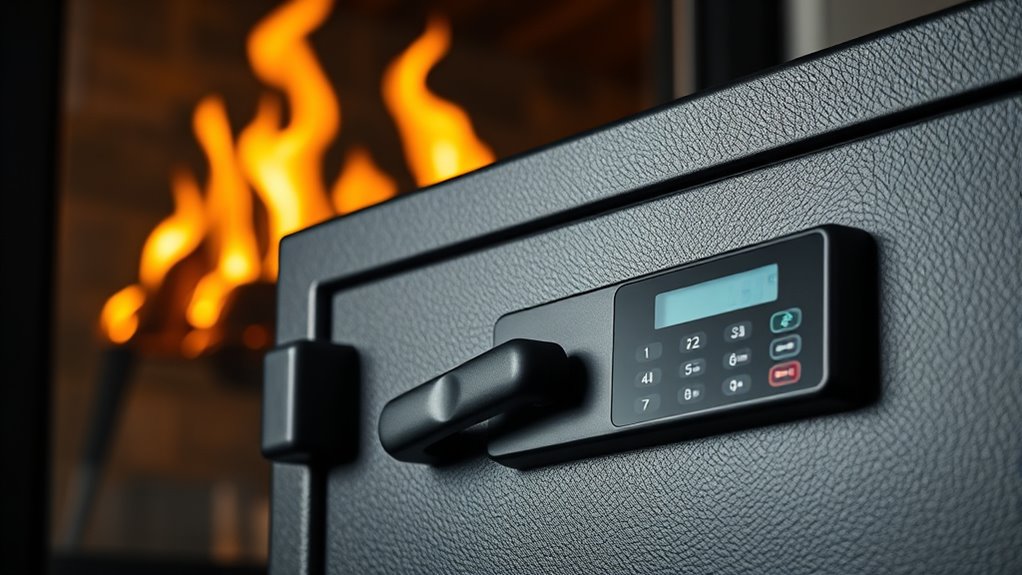
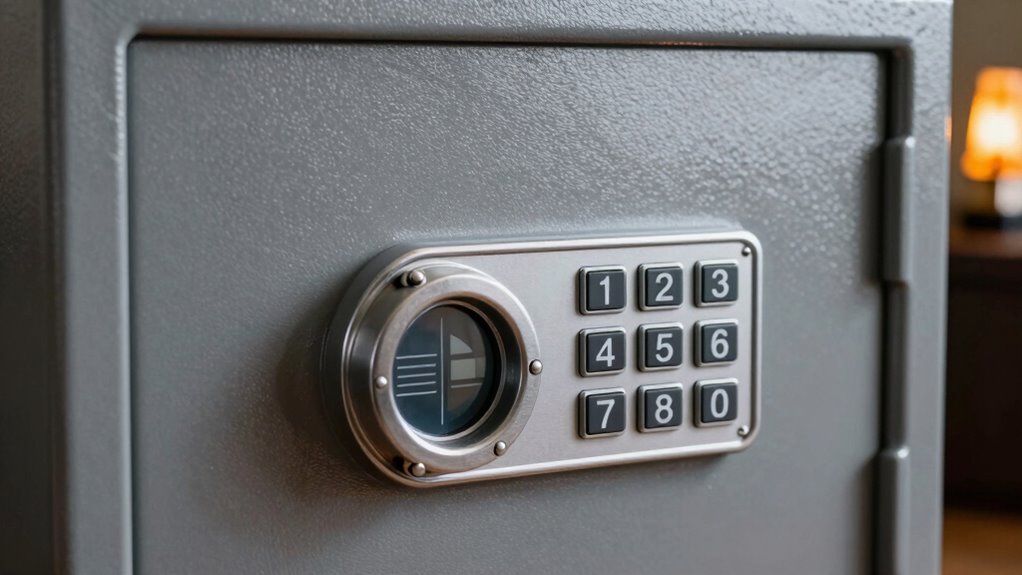
Choosing a fireproof safe can be confusing, but understanding its ratings can help you make an informed decision. When shopping for a safe, you’ll notice labels indicating how long it can withstand fire, often expressed in minutes, like “30 minutes” or “1 hour.” These ratings are based on standardized tests that measure fire resistance, but knowing what they truly mean is vital to guarantee your valuables are protected. Fire resistance refers to a safe’s ability to withstand high temperatures without allowing heat or smoke to penetrate. It’s not just about surviving a fire but about delaying the transfer of heat and smoke to keep contents safe for a specific period. This is where rating standards come into play—they are established criteria used by manufacturers and testing agencies to evaluate a safe’s fire resistance.
Rating standards set the benchmarks for what a safe must endure during testing. For example, the most common standards, like UL 72 (Underwriters Laboratories), specify the conditions under which a safe is tested, including temperature, duration, and whether the safe is open or closed during the test. These standards ensure consistency across different brands and models, so when you see a “30-minute fire rating,” it means the safe has been tested under specific conditions and has consistently maintained its fire resistance for that period. However, it’s important to recognize that these tests are conducted in controlled environments, not actual fires, which can vary considerably in intensity and duration.
When a safe boasts a “30-minute” rating, it indicates it can withstand temperatures up to approximately 1,700°F for that duration without allowing damaging heat to reach the interior. This means your important documents, jewelry, or digital media are protected for at least that time during a typical household or office fire. But it’s vital to remember that the rating doesn’t necessarily mean the safe will survive every fire, only that it’s been tested to perform for that specified period under certain conditions. The longer the rated duration, the higher the fire resistance, but it’s also essential to match the rating to your specific needs. If you live in an area prone to longer or more intense fires, choosing a safe with a higher rating can give you peace of mind.
As an affiliate, we earn on qualifying purchases.
Frequently Asked Questions
How Is Fire Resistance Tested in Safes?
You test fire resistance in safes through fire simulations, where the safe is exposed to controlled flames. During this process, the safe is monitored to guarantee it withstands specific temperature thresholds, often for a set duration like 30 minutes. This helps verify that the safe can protect its contents from heat and flames, giving you confidence in its fireproof capabilities.
Do All Safes With a 30-Minute Rating Meet the Same Standards?
Not all safes with a 30-minute rating meet the same standards. Fireproof materials and safe durability vary among brands, so some safes might resist fire longer or better withstand heat. You should check the specific testing methods used and the materials involved, as these factors impact performance. A safe with a higher-quality fireproof material and better construction offers more reliable protection during a fire, even if labeled for the same duration.
Can a Safe’s Fire Rating Be Downgraded?
Think of a safe’s fire rating like a shield that might wear down over time. Yes, a safe’s fire rating can be downgraded if it suffers damage or isn’t properly maintained, affecting its fire safety and durability. Damage from heat, impacts, or poor handling can compromise its fireproof integrity. Regular inspections and proper care keep your safe’s durability intact, ensuring it continues to protect your valuables as promised.
What Other Factors Affect a Safe’s Overall Fire Protection?
Other factors affecting your safe’s fire protection include the quality of fireproof materials and insulation thickness. Fireproof materials like gypsum, ceramic, or intumescent layers help withstand high temperatures. Thicker insulation provides better thermal resistance, protecting contents longer during a fire. You should also consider the safe’s sealing quality, as it prevents smoke damage, and verify it’s constructed to withstand not just heat but also impacts and flames effectively.
Are There Safes With Ratings Beyond 2 Hours?
Yes, you can find safes with ratings beyond two hours. These safes use advanced fireproof materials and thermal insulation to withstand higher temperatures for extended periods. Look for models specifically tested and rated for three, four, or even five hours. These safes are ideal if you need maximum protection for valuable documents or sensitive items, ensuring your belongings stay safe even during prolonged fires.
As an affiliate, we earn on qualifying purchases.
Conclusion
So, next time you see a safe rated for “30 minutes,” remember it’s a helpful guide, but not an absolute guarantee. It’s like testing a fire extinguisher’s spray—useful, but not foolproof. Trust the rating, but also take extra precautions with your valuables. Ultimately, understanding what these ratings mean helps you make smarter choices, giving you peace of mind without relying solely on the clock. Stay prepared and protect what matters most!
fire resistant safe for documents
As an affiliate, we earn on qualifying purchases.
As an affiliate, we earn on qualifying purchases.
high temperature safe for valuables
As an affiliate, we earn on qualifying purchases.
As an affiliate, we earn on qualifying purchases.