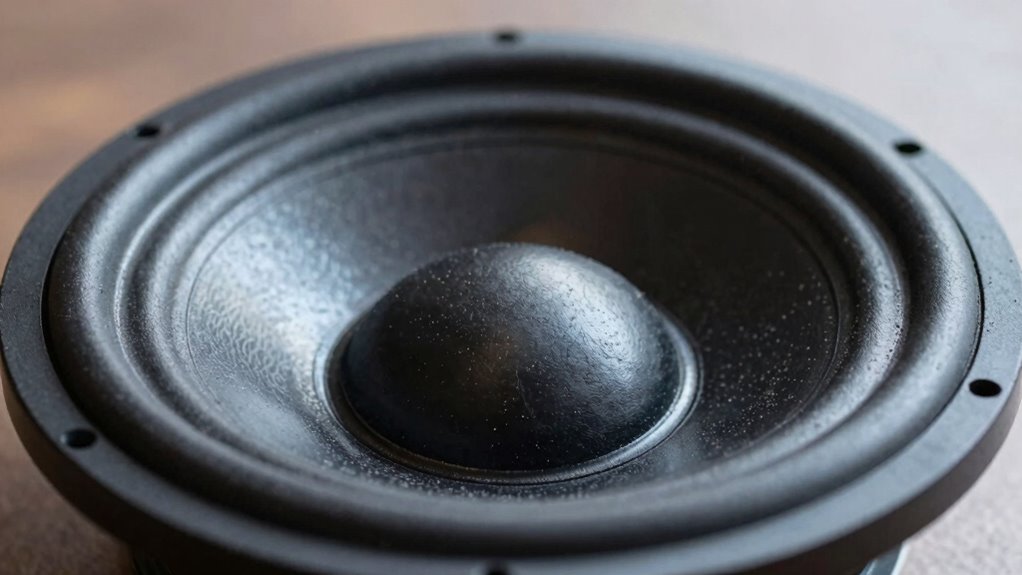

Adding more bass doesn’t always improve sound quality. When you turn up your subwoofer too high, it can cause a muddy or boomy sound that overwhelms other frequencies. Proper placement and balanced volume are key to clear, accurate bass. Too much bass can distract from the overall music experience and distort the audio. If you want to learn how to optimize your setup and avoid these pitfalls, keep exploring these essentials.
Prime for Young Adults — start your free trial
Fast free delivery, streaming and member deals for eligible 18–24 year olds.
As an affiliate, we earn on qualifying purchases.
Key Takeaways
- Excessive bass can cause muddiness, overshadowing mids and highs, reducing overall sound clarity.
- Poor subwoofer placement may lead to boomy or uneven bass, distorting the listening experience.
- Overemphasizing low frequencies can create dips and peaks, resulting in an unbalanced, fatiguing sound.
- Too much bass can overwhelm room acoustics, causing distortion and reducing natural audio detail.
- Proper integration and balanced frequency response ensure powerful bass without sacrificing clarity.
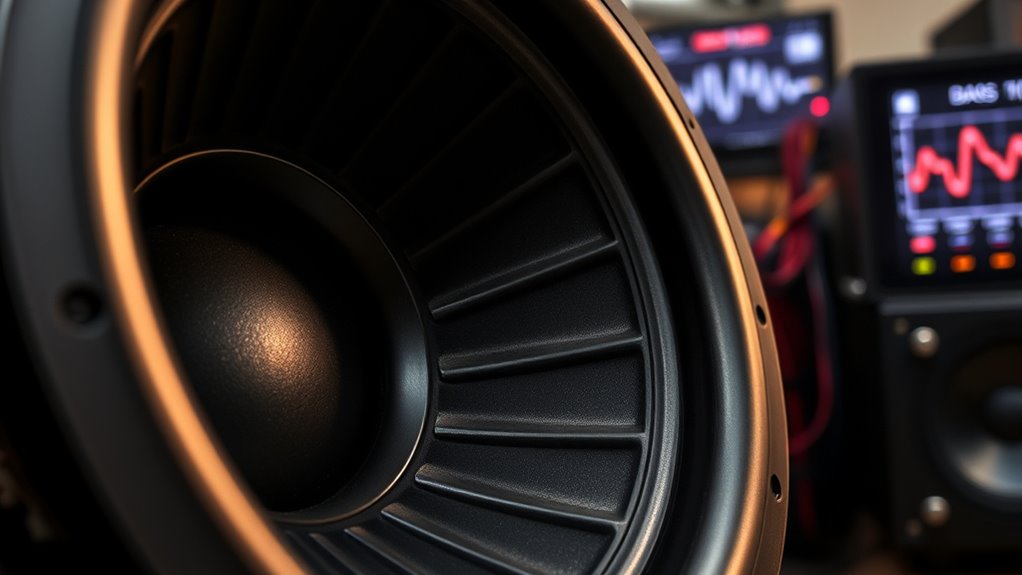
Have you ever wondered how deep, powerful bass can transform your listening experience? It’s tempting to think that more bass automatically equals better sound, but that’s not always the case. The key lies in understanding how placement considerations and frequency response influence your subwoofer’s performance. When you’re setting up a subwoofer, where you position it matters just as much as how loud it gets. Placing it too close to walls or corners can boost bass output, but it often results in boomy or muddy sound rather than clean, tight lows. Conversely, positioning it in a spot with unobstructed airflow can deliver more accurate bass, giving you a richer listening experience. Experimenting with different locations helps you find the sweet spot where bass sounds natural and balanced, rather than overwhelming or hollow.
Frequency response is another critical factor that shapes your subwoofer’s sound quality. It refers to the range of low frequencies the sub can produce and how accurately it reproduces them. A subwoofer that emphasizes only the lowest frequencies might seem impressive initially, but it can drown out mids and highs, creating a distorted or boomy sound. When you focus solely on increasing volume or “more bass,” you risk sacrificing clarity. A subwoofer with a well-defined frequency response covers a broader, more balanced range, ensuring that bass complements the rest of your audio rather than overpowering it. This balance helps your system sound more natural, making music, movies, or games more immersive without becoming fatiguing. Additionally, understanding the room acoustics can help optimize your subwoofer placement and performance.
It’s also important to deliberate that more bass isn’t just about cranking up the volume; it’s about how well the sub integrates into your overall sound system. A sub that’s too loud or poorly placed can produce uneven bass, causing dips and peaks that distract from the listening experience. Instead of chasing after “more bass,” aim for a setup where the subwoofer’s output aligns with the room’s acoustics and the rest of your speakers. Proper placement and an understanding of frequency response help you achieve a sound that’s powerful yet controlled, deep but clear. Remember, the goal isn’t just to feel the bass, but to hear it accurately and enjoyably. When you pay attention to these considerations, you’ll find your sound system offers not just more bass, but better bass — more satisfying and true to the original recording.
Top picks for "subwoofer basic bass"
As an affiliate, we earn on qualifying purchases.
Frequently Asked Questions
How Does Room Acoustics Affect Subwoofer Performance?
Room acoustics substantially impact your subwoofer’s performance. Room modes cause certain bass frequencies to amplify or cancel, creating uneven sound. To improve your experience, use acoustic treatment like bass traps to absorb unwanted resonances and smooth out the bass response. By addressing these issues, you’ll enjoy clearer, more balanced bass, making your listening experience more enjoyable and accurate without simply turning up the volume.
What Is the Ideal Placement for a Subwoofer?
You should place your subwoofer near a wall or corner for strong, deep bass. Try different spots to find where the bass sounds fullest and smoothest, as room acoustics can influence performance. Use subwoofer placement considerations like avoiding obstacles and minimizing bass cancellation. Follow subwoofer positioning tips by testing placement, adjusting distances, and listening carefully, ensuring your bass is balanced, powerful, and clear without overwhelming the room.
How Do I Calibrate My Subwoofer for Best Sound?
To calibrate your subwoofer for the best sound, start by adjusting the crossover settings so it blends smoothly with your main speakers. Then, fine-tune the phase correction to make certain the bass aligns properly, avoiding muddiness or hollow sound. Use a sound meter or receiver auto-calibration feature if available, and listen carefully, making small adjustments until the bass feels balanced, tight, and integrated with the rest of your system.
Can Too Much Bass Damage My Speakers?
Did you know that too much bass can cause 40% of speaker distortion? When you push your subwoofer too hard, it risks amplifier overload, which can damage your speakers over time. Excessive bass may lead to mechanical failure or electrical issues, compromising sound quality. To protect your setup, keep the volume within recommended limits and monitor for distortion, ensuring your speakers stay healthy and sound great.
What Are the Differences Between Ported and Sealed Subwoofers?
Ported and sealed enclosures differ mainly in design and sound. Ported enclosures include a vent, which uses port tuning to enhance bass output and efficiency at certain frequencies, making them louder and more boomy. Sealed enclosures, by contrast, are airtight, offering tighter, more accurate bass. Your choice depends on whether you prefer deep, resonant bass with ported or precise, controlled sound with sealed enclosures.
Conclusion
Remember, bigger isn’t always better when it comes to subwoofers. Sometimes, chasing after more bass can drown out clarity and ruin your listening experience. It’s like putting all your eggs in one basket—more isn’t always the answer. Instead, focus on quality and proper tuning. Your ears will thank you, and you’ll enjoy the music as it’s meant to be heard—crisp, clear, and just right, not overwhelmed by a tidal wave of sound.
Fall Picks
fall essentials
As an affiliate, we earn on qualifying purchases.