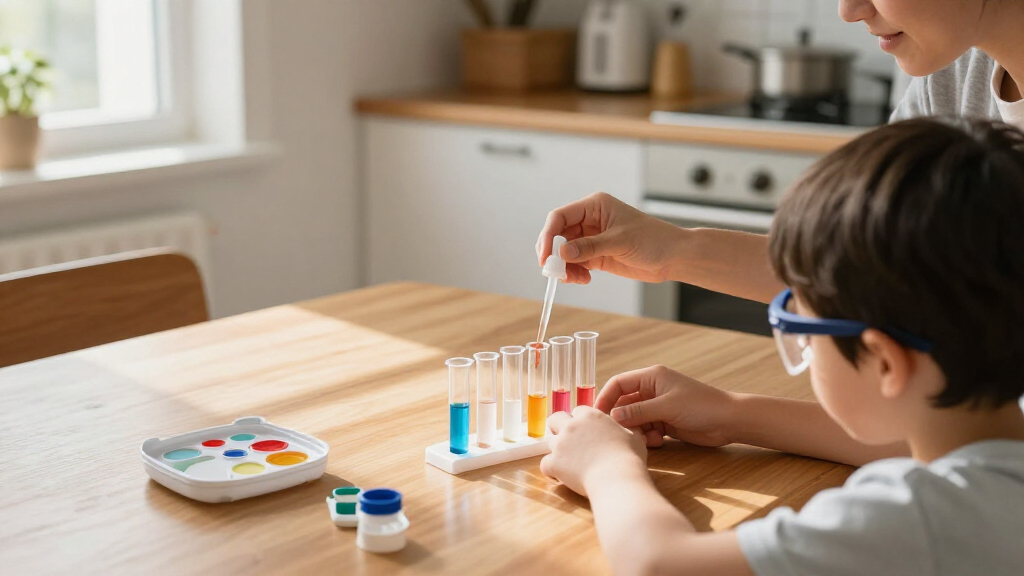
Use this guide to choose an educational science kit that matches a child’s age, interests, and abilities, then set up and complete an experiment together. It is written for parents, caregivers, and teachers with no specialist science background. Choosing a kit may take 10-20 minutes; a first activity usually takes 30-60 minutes, depending on the instructions.

Prime made for students and young adults
- Fast, free delivery for dorm and study essentials
- Prime Video and Amazon Music included
- Member-only deals
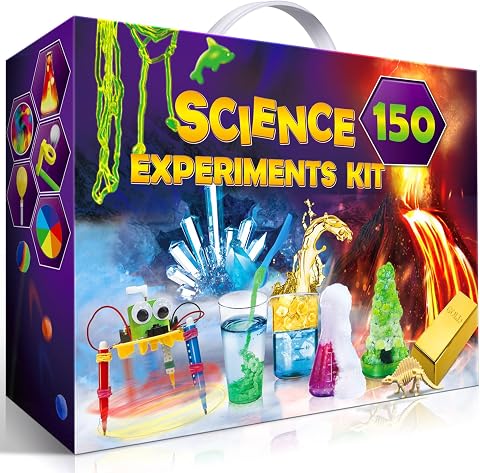
UNGLINGA 150 Experiments Science Kit for Kids
- ✔ Brand: UNGLINGA
- ✔ Experiments: 150
- ✔ Recommended age: 8 years and up

Creativity for Kids Grow ‘N Glow Terrarium Kit
- ✔ Recommended age: 6 years and up
- ✔ Planting capacity: Two plantings
- ✔ Seeds: Chia and wheatgrass

National Geographic Science Magic Kit, 100+ Experiments for Kids Ages 8+
- ✔ Brand: Blue Marble
- ✔ Age range: 8 years and up
- ✔ Materials included for: 20 magic experiments
Difficulty: Beginner | Time: 30-60 minutes for one experiment; allow extra time to compare kits before buying
What You’ll Need
Tools & Materials:
- A science kit with its instruction booklet and all listed components
- A clear, washable work surface
- Any household materials listed in the experiment instructions
- Safety glasses or other protective equipment if the kit instructions call for them
- Paper and pencil for recording observations
Knowledge:
- The child’s age, reading ability, interests, and comfort with hands-on tasks
- Basic ability to follow product safety labels and supervise a child
Check the kit’s recommended age, included materials, supervision guidance, and safety warnings before purchase or use. Read the full experiment instructions first. Do not substitute materials or skip protective equipment unless the manufacturer says it is safe.
UNGLINGA 150 Experiments Science Kit for Kids
For families looking for one kit to explore more than a single science theme, UNGLINGA is the strongest all-around fit in this group. Its 150 experiments span chemistry, physics, earth science, and more, giving children room to move between topics rather than repeating one kind of activity. That breadth is why we rank it above the more focused terrarium and magic kits for overall educational range.The illustrated, step-by-step manual and included kid-friendly tools make it easier to follow activities as a shared project. Safety goggles are included, too, which helps establish a practical routine around experiments. The tradeoff is that some activities require common household items, so the contents alone may not cover every project. Compared with Grow ’N Glow, this kit offers more varied science but less sustained observation of one changing subject; compared with National Geographic, its appeal is less centered on magic-style presentation.This is the best starting point for a child who wants to try many kinds of experiments and has an adult available to help source any extra supplies. Families seeking a self-contained gift with no preparation should check the manual’s requirements first. And for a child who mainly wants to grow plants or perform science tricks, one of the more specialized alternatives may hold attention better.
Pros:
- 150 experiments cover multiple science areas
- Illustrated manual gives step-by-step guidance
- Includes kid-friendly tools and safety goggles
- Supports hands-on activities children and adults can do together
Cons:
- Some experiments require household items not included
- The broad activity range may require adult help to choose and prepare projects
Best for: Children ages 8 and up who want to explore several science topics through guided experiments, especially with an adult joining in.
Not ideal for: Families who need every activity’s materials included, or children who prefer a single ongoing project over switching between experiments.
Bottom line: We recommend UNGLINGA as the broadest educational choice here, provided families are comfortable gathering occasional household supplies.
“We recommend UNGLINGA as the broadest educational choice here, provided families are comfortable gathering occasional household supplies.”
Creativity for Kids Grow ‘N Glow Terrarium Kit
Grow ’N Glow takes a gentler, more focused route into science: children assemble a small terrarium, plant seeds, then observe what happens. With a recommended age of 6 and up, it reaches younger children than the two experiment kits here. Chia and wheatgrass seeds can start growing in as little as 3–4 days, giving children a relatively quick first sign that their care is making a difference.There are supplies for two plantings, plus colored sand, glow-in-the-dark forest figures, and constellation stickers. Those craft details give the project a personal, imaginative feel; they also make it less like a conventional experiment set. Compared with UNGLINGA’s wider range of topics or National Geographic’s magic demonstrations, this kit spends its attention on plants and creative assembly. That focus can be an advantage for a child who likes making something tangible, but it means fewer kinds of science are represented.We would choose this for a young beginner who enjoys decorating and checking on a living project. The central drawback is that seeds need watering and care: the activity does not end when the terrarium is assembled. Children looking for a series of quick experiments, or families who want an activity that needs little follow-up, are better matched with one of the other picks.
Pros:
- Combines planting, science, and a decorating activity
- Includes materials for two plantings
- Chia and wheatgrass may begin growing in 3–4 days
- Glow-in-the-dark decorations make the finished terrarium personal
Cons:
- Plants need regular watering and care
- Covers a narrower science experience than the two experiment kits
Best for: Children ages 6 and up who enjoy crafts, gardening, and watching a project change over several days.
Not ideal for: Children seeking varied chemistry or physics activities, or families who do not want to manage watering and ongoing care.
Bottom line: We recommend Grow ’N Glow for younger children who will enjoy caring for a creative plant project, rather than cycling through experiments.
“We recommend Grow ’N Glow for younger children who will enjoy caring for a creative plant project, rather than cycling through experiments.”
National Geographic Science Magic Kit, 100+ Experiments for Kids Ages 8+
National Geographic makes science feel like a performance: children explore magic tricks alongside chemistry and hands-on STEM activities. The kit includes materials for 20 magic experiments and a bonus booklet listing more than 85 additional experiments. That combination gives it a distinctive hook in this lineup, particularly for a child who is more excited by a surprising demonstration than by a broad survey of science topics.Its experiment format contrasts with Grow ’N Glow, which develops through care and observation over days. It is also more tightly themed than UNGLINGA, whose 150 activities range across several areas of science. The booklet adds breadth on paper, but the supplied details do not establish that materials for all 85+ additional activities are included. We would therefore treat the materials for 20 experiments as the clearest guide to what families can start with directly, and check booklet instructions for any extra requirements.Recommended for ages 8 and up, this is a good match for children who like showing activities to others and want science wrapped in a magic theme. Its narrower performance focus may not satisfy a child looking for as much topic variety as UNGLINGA, and it lacks the long-term plant observations of the terrarium. Choose it for the presentation style, not simply for the large combined experiment count.
Pros:
- Materials are included for 20 magic experiments
- Bonus booklet describes 85+ additional experiments
- Combines magic presentation with chemistry and STEM activities
- Distinctive format can make demonstrations engaging to share
Cons:
- Recommended for ages 8 and up
- The supplied details specify materials for 20 experiments, not all booklet activities
Best for: Children ages 8 and up who enjoy magic tricks, surprising demonstrations, and science activities they can share with others.
Not ideal for: Children seeking a broad mix of science topics or a plant-growing project, and buyers expecting every booklet activity to have supplied materials.
Bottom line: We recommend this kit for children drawn to science as a magic performance, while UNGLINGA is the better fit for broader experiment variety.
“We recommend this kit for children drawn to science as a magic performance, while UNGLINGA is the better fit for broader experiment variety.”
As an Amazon Associate we earn from qualifying purchases.
Before You Start
Plan to stay with the child throughout the activity. Use the age guidance as a starting point, then consider the child’s reading, coordination, and ability to follow directions. Keep food and drinks away from the work area, and wash hands after handling kit materials. If the package is damaged, parts are missing, or safety directions are unclear, contact the manufacturer before starting.
Step-by-Step Instructions
Step 1: Match the kit to the child
Choose a kit within the child’s stated age range and select a subject that interests them, such as magnets, plants, weather, simple machines, or chemistry. Read the package description and product details to see what experiments are included, how much adult help is expected, and whether any supplies must be provided at home. For a first kit, prefer clear instructions and a small number of activities the child can repeat.
Tip:Check whether the age rating reflects small parts, supervision needs, or the level of reading and fine motor skills required. A child may need adult support even when their age fits the label.
Check: You can name the kit’s intended age range, required adult involvement, and any extra materials before opening it.
Step 2: Check contents and safety directions
Open the kit with the child and compare its contents with the parts list. Read the safety information, experiment steps, and disposal directions before setting anything up. Gather only the household supplies the instructions specify. If a component is missing or damaged, pause and ask the seller or manufacturer how to proceed.
Tip:Keep small pieces, powders, liquids, and tools in their labeled containers until the relevant step. Store them out of reach of younger children and pets.
Check: The listed components are accounted for, the instructions are readable, and you know what protective equipment and cleanup the activity requires.
Step 3: Prepare the workspace
Choose a stable, well-lit surface with enough room for the kit, instructions, and a sheet of paper. Move food, drinks, and unrelated objects away. Put on the protective equipment required by the instructions, and place a washable mat or tray under the experiment if spills are possible. Keep a sink or cleanup supplies nearby when directed by the kit.
Tip:Set up the materials before inviting the child to begin. This helps prevent rushed handling and makes it easier to follow steps in order.
Check: The work area is clear, stable, and ready, with required supplies and safety equipment within reach.
Step 4: Set a question and make a prediction
Read the experiment’s goal together, then ask the child what they think will happen. Help them state a prediction in one sentence and write it down. For example, they might predict which object a magnet will attract or whether a seed near a window will grow differently from one kept in a darker place. Treat the prediction as a testable guess, not a right-or-wrong answer.
Tip:Invite the child to explain their reasoning, but let them make the prediction themselves. Avoid showing the expected result before the test.
Check: The child can describe what the experiment will test, and the prediction is recorded before the activity begins.
Step 5: Follow the experiment in order
Have the child read or listen to one instruction at a time, then complete that action before moving on. Let them handle age-appropriate tasks while you manage any steps the package reserves for adults. Measure quantities as directed, use only the supplied or specified materials, and keep components away from the face and mouth. Stop if a step conflicts with the safety label or seems unclear.
Tip:Do not mix kit materials with household substances or repeat a reaction unless the instructions allow it. Follow the booklet’s ventilation, handling, and disposal directions.
Check: Each step has been completed in sequence, the child has taken part safely, and no unlisted materials have been added.
Step 6: Record and discuss the results
Ask the child to describe what they observed using details such as color, movement, texture, temperature, growth, or time, as appropriate to the activity. Write down the observations or draw what changed. Compare the result with the original prediction, then ask what the evidence suggests and what they might test next. If the result differs from the booklet’s example, describe it accurately rather than changing the notes.
Tip:Some experiments, such as plant growth or weather tracking, take several days. Record the date and any conditions the instructions ask you to track.
Check: The child can point to an observation and explain whether it matched the prediction, even if the experiment did not produce the expected result.
Step 7: Clean up and store the kit
Follow the kit’s cleanup and disposal directions. Have the child return reusable parts to their labeled containers, wipe the work surface as appropriate, and wash their hands. Keep any experiment that needs ongoing observation in the location specified by the instructions. Store the booklet and remaining components together, out of reach of younger children.
Tip:Do not pour materials down a drain or put them in household waste unless the instructions say to do so.
Check: The workspace is clean, hands are washed, and kit parts or ongoing experiments are stored as directed.
Common Mistakes to Avoid
- Choosing a kit based only on its topic or box picture. — Check the age range, reading demands, supervision notes, and extra supplies before buying.
- Starting before reading the full instructions. — Review the experiment, safety notes, and cleanup directions first so you can prepare the workspace and gather the right materials.
- Changing quantities or adding household materials. — Follow the specified amounts and materials. Ask the manufacturer when a step is unclear instead of improvising.
- Treating an unexpected result as a failed experiment. — Record what actually happened and discuss possible reasons. Observing a different outcome can still teach the child how evidence works.
Troubleshooting
Problem: A listed part or household supply is missing.
Solution: Pause before starting. Check the packaging and parts list, then obtain the exact specified supply or contact the manufacturer about the missing kit component.
Problem: The child cannot follow the written directions independently.
Solution: Read one step aloud at a time, show how to handle the materials safely, and let the child do age-appropriate actions with supervision.
Problem: The result does not match the booklet’s example.
Solution: Check whether the amounts, order, timing, and conditions matched the instructions. Record the actual result; repeat only if the booklet permits it and supplies are available.
Problem: A spill, irritation, or other unexpected reaction occurs.
Solution: Stop the activity and follow the product’s safety and first-aid directions. Move away from the material if instructed, rinse or seek help as directed, and contact the manufacturer or an appropriate medical service when the label advises it.
What Success Looks Like
The child completes the activity with the supervision and protective equipment specified by the kit, records at least one direct observation, and can describe how the result compared with their prediction. The work area is cleaned and materials are stored or disposed of according to the instructions. A result that differs from the example can still count as a successful investigation when the steps were followed and the observation was recorded honestly.
Next Steps
Write the experiment date and result in a notebook, especially if the activity continues over several days. Return to the observation at the interval named in the instructions. Afterward, invite the child to choose another activity that builds on the same question, or select a new kit based on what interested them. Replace used supplies only with the types specified by the manufacturer.
Frequently Asked Questions
How do I choose a science kit for a child who is younger than the recommended age?
Choose a kit labeled for the child’s age range. The age guidance may account for small parts, reading demands, tools, or supervision. If the child needs a simpler activity, select a kit designed for younger users and participate closely.
Do I need to buy extra materials?
Check the package and instructions for items marked as not included. Gather only the listed supplies before starting, and do not substitute other materials unless the manufacturer approves them.
Should I help the child get the result shown in the booklet?
Help them follow the directions safely, but do not alter their observations to match an example. Recording a different result gives you a chance to check the setup and discuss what the evidence shows.
Can a child repeat an experiment?
Repeat it only when the instructions allow it and enough materials remain. Follow the same measurements and steps each time, then compare the observations. Do not reuse single-use components or repeat a reaction against the safety directions.
Halloween Picks
halloween
As an affiliate, we earn on qualifying purchases.



![Navier-Stokes – Tristan Buckmaster [Pdf]](https://haltmal.com/wp-content/uploads/2026/09/navier-stokes-tristan-buckmaster-pdf-featured-560x300.jpg)