
TL;DR
Listen free for 30 days with Audible
Thousands of audiobooks and originals — cancel anytime.
Start your free trialAs an affiliate, we earn on qualifying purchases.
Japan’s Hayabusa2 spacecraft is scheduled to perform a flyby of the Torifune asteroid. This event advances Japan’s asteroid research efforts and provides new scientific data. The flyby is planned for late 2024, with further analysis expected afterward.
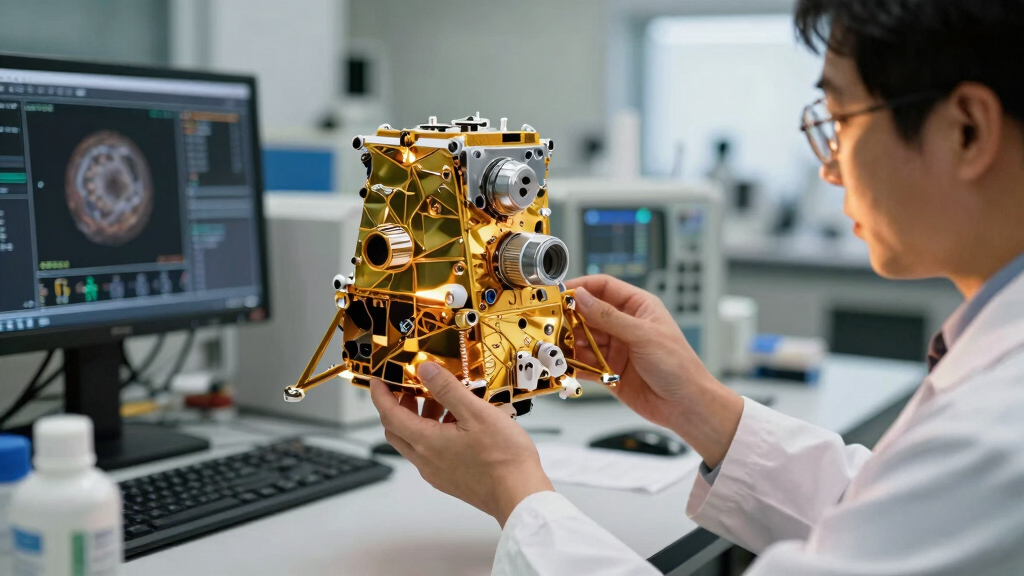
Japan’s Hayabusa2 spacecraft is set to perform a flyby of the Torifune asteroid in late 2024, according to the Japan Aerospace Exploration Agency (JAXA). This event represents a significant step in Japan’s asteroid exploration program, aiming to gather detailed data on near-Earth objects.
The flyby is scheduled for late 2024, with the spacecraft approaching the asteroid at a distance that allows for detailed imaging and spectroscopic observations. JAXA officials confirmed that the maneuver is part of Hayabusa2’s extended mission, following its successful sample collection from the Ryugu asteroid in 2019.
Initial mission plans indicated that Hayabusa2 would conduct a flyby of the asteroid, which is approximately 1.4 kilometers in diameter and orbits near Earth. The spacecraft’s onboard instruments will analyze the asteroid’s surface composition, shape, and rotation, providing valuable data for planetary science and future asteroid mitigation efforts.
JAXA has emphasized that this flyby will help refine models of asteroid behavior and contribute to the understanding of the early solar system, as the Torifune asteroid is believed to be a primitive object with ancient origins.
Implications for Planetary Defense and Science
This flyby enhances Japan’s capabilities in asteroid observation and contributes to global efforts in planetary defense. By studying the surface and composition of Torifune, scientists can better understand the physical properties of near-Earth objects, which is critical for future impact mitigation strategies. Additionally, the data will inform models of solar system formation and the origins of primitive asteroids, making this event scientifically valuable.

Telescope 130EQ Newtonian Reflector Telescopes for Adults, Professional Telescopes for Adults Astronomy, Comes with 1.5X Barlow Lens Smartphone Adapter & 13% T Moon Filter
- Large Aperture: 130mm for bright, detailed images
- High-Quality Optics: Fully-coated glass lenses for clarity
- Sturdy Carbon Fiber Frame: Lightweight and durable construction
As an affiliate, we earn on qualifying purchases.
As an affiliate, we earn on qualifying purchases.
Background on Hayabusa2 and Asteroid Missions
Launched in December 2014, Hayabusa2 successfully collected samples from the Ryugu asteroid in 2019 and returned them to Earth in 2020. The spacecraft has since been used for extended observations of other objects and celestial phenomena.
The upcoming flyby of Torifune marks an expansion of Hayabusa2’s mission scope, transitioning from sample collection to close-up reconnaissance of additional near-Earth objects. Torifune, a relatively small asteroid with an orbit that brings it close to Earth, has been identified as a target for detailed study due to its primitive composition and potential insights into the early solar system.
Previous missions, including NASA’s OSIRIS-REx to Bennu and Japan’s Hayabusa2 to Ryugu, have demonstrated the scientific value of close asteroid encounters, setting the stage for this upcoming flyby.
“The upcoming flyby of Torifune will provide unprecedented data on primitive asteroids, helping us understand their composition and behavior.”
— JAXA spokesperson

Space Telescope Building Set with Lights 995PCS Space Exploration Model Kit, Solar System Telescope Building Toy for Adults & Teens, STEM Science Gift for Space Lovers Age 8+
- Design Inspiration: Steampunk telescope-inspired design with gears
- Mechanical Functionality: Gear-driven system with smooth movement
- Lighting Effect: Built-in LED lights for night display
As an affiliate, we earn on qualifying purchases.
As an affiliate, we earn on qualifying purchases.
Details of the Flyby Trajectory and Data Collection
While the scheduled date for the flyby is confirmed for late 2024, specific details about the trajectory, distance of approach, and the exact instruments to be used remain under final planning. JAXA has not yet disclosed the precise timing or the scope of data collection during the flyby, citing ongoing technical preparations.
It is also unclear how the spacecraft’s instruments will perform during the flyby or how much new data will be obtained, as analysis is still in progress.

Galaxy Projector Pro for Bedroom, 13 in 1 Planetarium Star Projector with Solar System & Constellation, Night Light for Ceiling – 360° Rotating with Timer, Adjustable Knob, Kids Adults Room Decor
- 13 HD Galaxy Discs: Includes Solar System, Milky Way, and more
- Realistic Celestial Display: Lifelike constellation and nebula textures
- Enhanced Brightness & Area: Fills ceiling or wall with starry sky
As an affiliate, we earn on qualifying purchases.
As an affiliate, we earn on qualifying purchases.
Upcoming Preparations and Data Analysis Phases
JAXA will continue to prepare Hayabusa2 for the flyby through system checks and trajectory adjustments. The agency plans to release more detailed timelines and technical details as the event approaches. After the flyby, scientists will analyze the collected data, which could take several months to fully interpret. The results are expected to contribute to multiple scientific publications and inform future asteroid missions.

Celticbird Telescope for Adults High Powered, 80mm Aperture 600mm AZ Mount Refractor Telescope for Kids Beginners – Portable Telescopes for Adults Astronomy with Backpack, Phone Adapter, Moon Filter
- Optical Aperture: 80mm for bright, clear images
- Focal Length: 600mm (f/6.7) for detailed viewing
- Portable Design: Includes backpack for travel convenience
As an affiliate, we earn on qualifying purchases.
As an affiliate, we earn on qualifying purchases.
Key Questions
When will the Hayabusa2 flyby of Torifune occur?
The flyby is scheduled for late 2024, with the exact date to be confirmed closer to the event.
What is the purpose of the flyby?
The flyby aims to gather detailed data on the asteroid’s surface, composition, and rotation, enhancing scientific understanding of primitive near-Earth objects.
How will the data be used?
The data will improve models of asteroid behavior, support planetary defense strategies, and contribute to research on the solar system’s origins.
Has Hayabusa2 performed similar missions before?
Yes, Hayabusa2 successfully collected samples from Ryugu in 2019 and returned them to Earth in 2020. The current flyby is part of its extended mission.
What are the scientific benefits of studying Torifune?
Studying Torifune will provide insights into primitive asteroid composition and the early solar system, aiding planetary science and impact risk assessment.
Source: hn
Back to school Picks
back to school
As an affiliate, we earn on qualifying purchases.