

The best educational science reference book overall is The Way Things Work: Newly Revised Edition, because it explains mechanical and scientific principles through annotated illustrations that work for readers from about age nine through adulthood — no other title in this lineup balances accessibility and depth as well. Two other standouts: Knowledge Encyclopedia Science! 2nd Edition offers the most impressive visual reference for middle-grade readers, while Scientific American Science Desk Reference is the strongest pick for high school and college students who need dense, factual coverage rather than pictures. The main tradeoff in this category is visual appeal versus information density — books that wow younger readers often oversimplify, and the thorough adult-oriented references can overwhelm kids. Price also spreads widely, from inexpensive paperback quick references to premium illustrated encyclopedias. Keep reading for the full breakdown of all 14 titles and which one fits your reader.

Prime made for students and young adults
- Fast, free delivery for dorm and study essentials
- Prime Video and Amazon Music included
- Member-only deals
Key Takeaways
- The Way Things Work earned the top spot because it is the only title that genuinely serves a decade-long reading range — a nine-year-old and a parent can both get real value from the same page.
- Visual-first encyclopedias (Knowledge Encyclopedia Science!, National Geographic Kids) dominated for ages 8–12, but their coverage thins out noticeably at high-school level, where Scientific American Science Desk Reference and A Dictionary of Science take over.
- Usborne’s Science Encyclopedia and The Elements Book justify their higher prices through linked digital content and subject-specific depth that general encyclopedias cannot match.
- Sciencia packs five sciences into a compact, inexpensive volume — the best value per page in the lineup — but its dense text and small format make it a poor choice for reluctant readers.
- Two titles in this comparison are subject-specific rather than general (The Elements Book, The Animal Book); buyers should recognize that a periodic table or animal encyclopedia supplements a general reference rather than replacing one.
| The Usborne Science Encyclopedia |  | Best Multimedia Learning Pick | Publisher: Usborne | Format: Print encyclopedia with digital companion resources | Topics Covered: Gravity, flight, genes, DNA, and general science | VIEW LATEST PRICE | See Our Full Breakdown |
| Physical Science (Early Science Encyclopedias) | 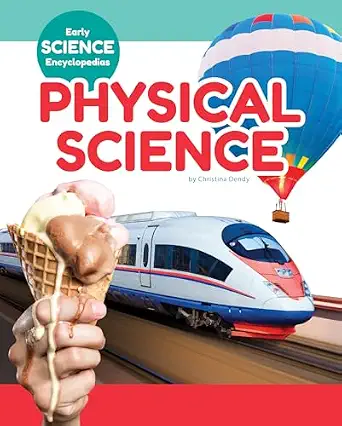 | Best for the Youngest Learners | Series: Early Science Encyclopedias | Subject Focus: Physical science fundamentals | Reading Level: Early reader / pre-K to grade 2 | VIEW LATEST PRICE | See Our Full Breakdown |
| Children’s Encyclopedia of Science |  | Best Value All-Rounder | Format: Print, illustrated children’s encyclopedia | Target Age Range: Approximately 7–11 years | Topics Covered: General science overview across disciplines | VIEW LATEST PRICE | See Our Full Breakdown |
| National Geographic Kids Science Encyclopedia |  | Best for Reluctant Readers | Publisher: National Geographic Kids | Format: Print, photo-rich children’s encyclopedia | Topics Covered: Chemistry, biology, space, physics, food science, animals | VIEW LATEST PRICE | See Our Full Breakdown |
| The Way Things Work: Newly Revised Edition |  | Best for Hands-On Engineering Minds | Edition: Newly revised edition | Format: Print, illustrated mechanics reference | Subject Focus: Machines, technology, and physical principles | VIEW LATEST PRICE | See Our Full Breakdown |
| Children’s Encyclopedia of Science Experiments |  | Best for Hands-On Learners | Format: Print encyclopedia | Content Type: Step-by-step science experiments | Target Audience: Children (age guidance unspecified) | VIEW LATEST PRICE | See Our Full Breakdown |
| Encyclopedia of Science |  | Best Classic Reference | Format: Print encyclopedia | Coverage: Multi-discipline: concepts, discoveries, figures | Visuals: Detailed illustrations and diagrams | VIEW LATEST PRICE | See Our Full Breakdown |
| Scientific American Science Desk Reference |  | Best for Quick Lookups | Format: Print desk reference | Publisher Pedigree: Scientific American | Entry Style: Concise, lookup-oriented | VIEW LATEST PRICE | See Our Full Breakdown |
| Knowledge Encyclopedia Science! 2nd Edition |  | Best Visual Learning | Format: Print encyclopedia, 2nd edition | Visuals: Full-colour illustrations and diagrams | Coverage: Comprehensive, multi-discipline | VIEW LATEST PRICE | See Our Full Breakdown |
| The Elements Book: A Visual Periodic Table Encyclopedia for Kids |  | Best Single-Subject Pick | Format: Print visual encyclopedia | Subject: Periodic table and chemical elements | Target Audience: Children (approx. 8–14) | VIEW LATEST PRICE | See Our Full Breakdown |
| Sciencia: Mathematics, Physics, Chemistry, Biology, and Astronomy for All (Wooden Books, 37) |  | Best Cross-Disciplinary Primer | Format: Paperback | Series: Wooden Books (Book 37) | Subjects Covered: Mathematics, Physics, Chemistry, Biology, Astronomy | VIEW LATEST PRICE | See Our Full Breakdown |
| A Dictionary of Science (Oxford Quick Reference) |  | Best Quick-Lookup Reference | Format: Paperback | Series: Oxford Quick Reference | Organization: A-to-Z dictionary entries | VIEW LATEST PRICE | See Our Full Breakdown |
| The Animal Book: A Visual Animal Kingdom Encyclopedia for Kids |  | Best for Young Animal Lovers | Format: Hardcover | Publisher: DK | Subject: Animal kingdom / zoology only | VIEW LATEST PRICE | See Our Full Breakdown |
| Science Book: Everything You Need to Know About the World and How It Works |  | Best Family Science Reference | Format: Hardcover | Publisher: National Geographic | Coverage: General science across all major fields | VIEW LATEST PRICE | See Our Full Breakdown |
| educational science reference book | Format |
|---|---|
| The Usborne Science Encycloped | Print encyclopedia with digital companion resources |
| Physical Science | Print, introductory encyclopedia |
| Children’s Encyclopedia of Sci | Print, illustrated children’s encyclopedia |
| National Geographic Kids Scien | Print, photo-rich children’s encyclopedia |
| The Way Things Work: Newly Rev | Print, illustrated mechanics reference |
| Children’s Encyclopedia of Sci | Print encyclopedia |
| Encyclopedia of Science | Print encyclopedia |
| Scientific American Science De | Print desk reference |
| Knowledge Encyclopedia Science | Print encyclopedia, 2nd edition |
| The Elements Book: A Visual Pe | Print visual encyclopedia |
| Sciencia: Mathematics | Paperback |
| A Dictionary of Science | Paperback |
| The Animal Book: A Visual Anim | Hardcover |
| Science Book: Everything You N | Hardcover |
More Details on Our Top Picks
The Usborne Science Encyclopedia
This option stands out for bridging print and digital learning, pairing its coverage of gravity, genes, and DNA with over 180 video clips and 1,000 curated website links. Compared with the National Geographic Kids Science Encyclopedia, which is purely a printed experience, this one turns every topic into a launchpad for self-directed research — a real advantage for curious kids who want to keep digging. The tradeoff is that the content skews toward older children; very young readers may find the explanations dense, where something like Physical Science (Early Science Encyclopedias) would land better. It also depends on internet access and screen availability, which families managing screen time will want to weigh before committing.
Pros:- Covers advanced topics like DNA and flight in real depth for young readers
- 180+ video clips and 1,000 vetted websites extend learning far past the page
- Encourages self-directed research skills that pay off in schoolwork
- Broad topical range from physics to genetics in one volume
Cons:- Reading level and content are too advanced for very young children
- Multimedia value depends entirely on internet access and working links over time
Best for: Independent readers ages 9–14 who love exploring topics beyond the page and have supervised internet access
Not ideal for: Families avoiding screen-based learning or with children under 8 — the text and digital components assume stronger reading skills
- Publisher:Usborne
- Format:Print encyclopedia with digital companion resources
- Topics Covered:Gravity, flight, genes, DNA, and general science
- Video Clips Included:180+
- Recommended Websites:1,000
- Target Age Range:Approximately 8–14 years
- Learning Style:Hybrid print and interactive self-directed
Our verdict“Choose this if you want an encyclopedia that keeps growing beyond its covers — and skip it if screens are off the table.”
Physical Science (Early Science Encyclopedias)
Where most entries in this roundup — like the Usborne Science Encyclopedia or Knowledge Encyclopedia Science! — aim at readers who can handle paragraphs of dense text, this volume is built for genuine beginners. It introduces core physical science ideas in short, simple language that builds confidence rather than overwhelm. The payoff is a child who finishes a page feeling capable; the tradeoff is a short shelf life. Once a reader is comfortably chapter-book level, the Children’s Encyclopedia of Science offers richer explanations and more visual depth. This makes the most sense as a first science reference — a stepping stone, not a long-term companion for the whole family.
Pros:- Language simple enough for early readers to tackle independently
- Builds foundational physical science vocabulary before textbooks introduce it
- Short entries suit short attention spans and bedtime browsing
- Low intimidation factor for reluctant or struggling readers
Cons:- Very limited depth — kids outgrow it within a couple of years
- Narrow focus on physical science leaves out life sciences and space entirely
Best for: Parents of pre-K through early elementary children who want a gentle, confidence-building first science book
Not ideal for: Upper elementary or middle school students — the simplified treatment will feel babyish and run out of content quickly
- Series:Early Science Encyclopedias
- Subject Focus:Physical science fundamentals
- Reading Level:Early reader / pre-K to grade 2
- Format:Print, introductory encyclopedia
- Entry Style:Short, simple explanations
- Scope:Core physical science concepts only
Our verdict“A smart first purchase for a 4-to-7-year-old, but plan to graduate to a fuller encyclopedia within a few years.”
Children’s Encyclopedia of Science
This is the balanced middle ground of the roundup: broader than the early-reader Physical Science (Early Science Encyclopedias), friendlier in price and reading level than the Usborne Science Encyclopedia‘s denser text. Its colorful illustrations carry the explanations, which makes abstract ideas stick for visual learners who glaze over at word-heavy pages. Compared with the National Geographic Kids Science Encyclopedia, the visual polish is a step down, but the topical coverage holds up well for everyday homework help and curiosity browsing. The honest tradeoff is depth — a middle schooler writing a report on genetics will hit its ceiling fast and need the Usborne or a dedicated volume instead. For elementary-age general reference, though, this pick makes the most sense for most families.
Pros:- Wide-ranging coverage across major science topics in one affordable volume
- Illustration-heavy layout makes concepts accessible to visual learners
- Reading level works for independent elementary readers
- Good balance of breadth and approachability for the price
Cons:- Explanations lack the depth older students eventually need
- Sparse publication and edition details make it hard to verify currency of content
Best for: Elementary-age families who want one affordable, visually engaging science book for homework help and browsing
Not ideal for: Students needing serious depth for reports or advanced study — explanations stay at surface level
- Format:Print, illustrated children’s encyclopedia
- Target Age Range:Approximately 7–11 years
- Topics Covered:General science overview across disciplines
- Visual Style:Full-color illustrations on most pages
- Reading Level:Independent elementary reader
- Best Use:Homework help and general curiosity browsing
Our verdict“The sensible default for a family’s first science encyclopedia — just expect to upgrade once middle school arrives.”
National Geographic Kids Science Encyclopedia
This model wins on engagement. National Geographic’s signature photography and fact-forward layout do something the Children’s Encyclopedia of Science can’t match: they pull in kids who claim to hate reading. Topics like atom smashing and food chemistry are delivered in punchy, browsable chunks rather than sustained chapters, which feels closer to a favorite magazine than a reference book. Compared with the Usborne Science Encyclopedia, you lose the digital extension and some academic rigor, but you gain a book that actually gets picked up off the shelf. The flip side is format-driven fragmentation — it’s superb for sparking curiosity and less suited to building systematic understanding of a topic, so serious students should treat it as a gateway rather than a primary reference.
Pros:- World-class photography and visual design that draws kids in voluntarily
- Truly broad topical range from chemistry to space to animal science
- Fact-forward format works in short sessions without losing interest
- Trusted brand with a strong track record in children’s nonfiction
Cons:- Bite-sized entries sacrifice depth and continuity for browsability
- Vague edition and publication details make it harder to confirm content currency
Best for: Parents of reluctant readers ages 7–12 who need a science book engaging enough to compete with screens
Not ideal for: Systematic learners or students researching structured topics — the bite-sized format doesn’t support deep study
- Publisher:National Geographic Kids
- Format:Print, photo-rich children’s encyclopedia
- Topics Covered:Chemistry, biology, space, physics, food science, animals
- Entry Style:Short, fact-forward browsable chunks
- Target Age Range:Approximately 7–12 years
- Visual Emphasis:High — full-color photography throughout
Our verdict“The pick that gets science-averse kids reading — pair it with a deeper encyclopedia once curiosity takes hold.”
The Way Things Work: Newly Revised Edition
Every other book in this lineup answers what science is; this one answers how things actually work, from levers to laptops. That mechanical focus makes it a different kind of reference — closer in spirit to a visual engineering guide than a traditional encyclopedia — and the newly revised edition folds in modern technology the original famously lacked. Compared with the National Geographic Kids Science Encyclopedia, it trades breadth for explanatory depth on mechanisms, which matters enormously for kids who take apart clocks and ask why planes fly. Its charm is the age range: it genuinely works read-aloud at seven and independent browsing at thirteen. The limitation is scope — biology, chemistry, and space are largely outside its lane, so it complements rather than replaces a general science encyclopedia.
Pros:- Explains mechanisms and physical principles with unmatched visual clarity
- Newly revised edition includes modern technology like smartphones and robotics
- Unusually wide usable age range, from read-aloud to independent teen browsing
- Timeless appeal that keeps kids returning across years
Cons:- Focused on mechanics and physics — nearly useless for biology or chemistry questions
- Too basic for advanced readers wanting mathematical or technical rigor
Best for: Tinkerers, builders, and mechanically curious kids ages 7–13 who want to understand machines, not just facts
Not ideal for: Buyers wanting one book to cover the full science curriculum — life sciences and space get minimal attention
- Edition:Newly revised edition
- Format:Print, illustrated mechanics reference
- Subject Focus:Machines, technology, and physical principles
- Target Age Range:Approximately 7–13 years
- Visual Style:Detailed cutaway and diagram illustrations
- Content Update:Includes modern devices and recent technology
Our verdict“A must-have second reference for kids who ask ‘how?’ more than ‘what?’ — but not a stand-alone science encyclopedia.”
Children’s Encyclopedia of Science Experiments
Most books in this roundup explain science; this one asks children to do it. Where The Elements Book dazzles with imagery and Encyclopedia of Science delivers dense reading, this option stands out for its step-by-step experiment instructions, turning passive reading into kitchen-table discovery. That hands-on framing makes abstract concepts stick far better for kinaesthetic learners than any illustrated spread could. Compared with the National Geographic Kids Science Encyclopedia, which prioritises breadth of topics, this trades coverage for depth of engagement in a smaller set of activities. The tradeoff is real, though: parents will need to gather materials themselves, and the vague age guidance means adults must preview each experiment to judge safety and difficulty.
Pros:- Hands-on experiments that make abstract science concepts concrete
- Step-by-step instructions kids can follow with adult help
- Fosters genuine curiosity through active participation rather than passive reading
- A refreshing change of pace from purely illustrative encyclopedias in this category
Cons:- No clear age suitability guidance, so difficulty is guesswork
- Materials for experiments are not included or clearly specified
- Narrower topic coverage than broad encyclopedias like Encyclopedia of Science
Best for: Parents of curious kids aged roughly 7–12 who learn best by doing rather than reading
Not ideal for: Families wanting a self-contained reference — you’ll need to source experiment materials and supervise activities yourself
- Format:Print encyclopedia
- Content Type:Step-by-step science experiments
- Target Audience:Children (age guidance unspecified)
- Learning Style:Hands-on / experimental
- Instructional Support:Step-by-step directions with educational insights
- Included Materials:None — materials sourced separately
Our verdict“Pick this if your child learns by doing and you’re willing to supervise experiments; skip it for a general-purpose reference.”
Encyclopedia of Science
This is the traditional one-volume science encyclopedia that the newer entries in this roundup are measured against. Its detailed illustrations and diagrams do serious work — concepts like plate tectonics or circuit design that the Scientific American Science Desk Reference covers in denser text are unpacked visually here, which matters enormously for visual learners. Coverage spans key concepts, discoveries, and the figures behind them, making it broader in scope than the single-subject Elements Book. The honest tradeoff: this is an older title, so cutting-edge topics are thin, and the level of detail can overwhelm a casual browser. This pick makes the most sense for a homework shelf where reliability and range beat novelty.
Pros:- Broad coverage across all major scientific disciplines
- Illustrations and diagrams that clarify complex concepts
- Includes scientific figures and discoveries, not just facts
- Serves students and adult enthusiasts equally well
Cons:- Older publication — recent scientific developments are absent
- Detail level can be heavy going for casual or younger readers
- Edition and publication information is unclear when ordering
Best for: Students and home-educating families who need a dependable, all-discipline reference for homework and projects
Not ideal for: Readers wanting current science coverage or a light browse — the detail level and older publication date work against casual use
- Format:Print encyclopedia
- Coverage:Multi-discipline: concepts, discoveries, figures
- Visuals:Detailed illustrations and diagrams
- Target Audience:Students and science enthusiasts
- Reading Level:Intermediate to advanced
- Edition:Unspecified — verify before purchase
Our verdict“A dependable all-rounder for the study shelf, best bought for depth and diagrams rather than currency.”
Scientific American Science Desk Reference
Where the Encyclopedia of Science is built for sitting and reading, this desk reference is built for fast answers. Its strength is the Scientific American editorial pedigree — entries are concise, authoritative, and formatted for the kind of quick fact-checking that students mid-essay and teachers prepping lessons actually need. Compared with the Knowledge Encyclopedia Science!, which leans on lavish visuals, this option favours compressed, text-first entries, which makes it faster to search but less enticing for a reluctant young reader. The tradeoff: advanced topics get shallow treatment, and there’s no recent-edition refresh, so it functions as a starter reference rather than a graduate-level resource. For a study desk rather than a coffee table, it earns its place.
Pros:- Concise, authoritative entries ideal for rapid consultation
- Scientific American editorial credibility behind the content
- Genuinely useful across student and educator contexts
- Compact single-volume design suited to a workspace
Cons:- Explanations stay surface-level on advanced topics
- No recent edition — some entries reflect older science
- No multimedia or digital companion content
Best for: High-school and college students, plus educators, who need rapid, reliable lookups while working
Not ideal for: Advanced students or researchers — deeper topics are summarised rather than explored, and the edition is dated
- Format:Print desk reference
- Publisher Pedigree:Scientific American
- Entry Style:Concise, lookup-oriented
- Coverage:Broad general science
- Target Audience:Students, educators, enthusiasts
- Edition Status:No recent update available
Our verdict“The one to grab when speed and reliability matter more than depth or visual flair.”
Knowledge Encyclopedia Science! 2nd Edition
This is the most visually ambitious pick in the batch, and the 2nd edition status gives it an edge the older Encyclopedia of Science can’t match: fresher content. Its full-colour illustrations and cutaway visuals are genuinely pedagogical rather than decorative — cross-sections and rendered diagrams explain things paragraphs cannot, which is why it suits readers of all ages where the Scientific American Desk Reference suits only confident readers. Compared with The Elements Book, which applies this visual approach to a single subject, this spreads it across the whole of science, at the cost of per-topic depth. Be aware that the visual-heavy layout means fewer words per concept, so a student needing rigorous written detail may come away under-served.
Pros:- Second edition with updated, current content
- Exceptional illustrations that genuinely aid comprehension
- Wide age appeal — accessible to children without boring adults
- Broad coverage across scientific disciplines
Cons:- Visual focus limits the depth of written explanation
- Sparse specification details make pre-purchase comparison hard
- Larger and pricier than minimal text references
Best for: Visual learners and families who want one visually engaging book that works for both kids and adults
Not ideal for: Students who need dense written explanations for coursework — the layout prioritises imagery over textual depth
- Format:Print encyclopedia, 2nd edition
- Visuals:Full-colour illustrations and diagrams
- Coverage:Comprehensive, multi-discipline
- Target Audience:All ages, students and curious minds
- Edition:2nd Edition (updated content)
- Reading Style:Visual-first with explanatory text
Our verdict“The best-looking way to understand science visually across the whole family, as long as depth isn’t the priority.”
The Elements Book: A Visual Periodic Table Encyclopedia for Kids
Sometimes depth beats breadth. This book takes one subject — the periodic table — and does it better than any generalist in this roundup could. Where the Knowledge Encyclopedia Science! might give an element a paragraph, this option gives each element visual treatment, facts, and context, which is exactly how a child develops genuine chemistry interest. The easy-to-understand explanations remove the intimidation factor that puts kids off chemistry, something broader encyclopedias rarely achieve. The obvious tradeoff: it’s chemistry only. A family buying this as their sole science reference will find physics, biology, and space entirely missing — pair it with a general encyclopedia rather than substitute it. For a child already drawn to chemistry, though, nothing else here competes.
Pros:- Deep, focused treatment of chemistry unavailable in general encyclopedias
- Colourful element-by-element visual layout that kids actually browse
- Simple explanations that remove chemistry’s intimidation factor
- Strong gift choice for science-curious children
Cons:- Single-subject scope — no physics, biology, or earth science
- Too shallow for advanced or older learners studying chemistry formally
- No digital or multimedia companion content
Best for: Kids aged roughly 8–14 showing early interest in chemistry, and parents wanting to nurture it
Not ideal for: Anyone seeking a general science reference — this covers only the periodic table and elements
- Format:Print visual encyclopedia
- Subject:Periodic table and chemical elements
- Target Audience:Children (approx. 8–14)
- Visuals:Colour imagery and element-by-element layout
- Depth:Introductory — not for advanced study
- Companion Content:None
Our verdict“A brilliant specialist companion for a chemistry-curious kid, provided it sits alongside a general encyclopedia.”
Sciencia: Mathematics, Physics, Chemistry, Biology, and Astronomy for All (Wooden Books, 37)
Sciencia is the rare reference that treats science as one connected story rather than five separate subjects. Where A Dictionary of Science defines terms in isolation, this volume weaves math, physics, chemistry, biology, and astronomy into a single illustrated narrative, which makes it far better for building conceptual understanding than for looking up quick facts. Its compact Wooden Books format rewards cover-to-cover reading rather than shelf reference, and the illustrations do real explanatory work instead of decoration. The tradeoff is depth: compared with Science Book: Everything You Need to Know, it covers fewer topics and skips fine detail, so students preparing for exams will outgrow it. This pick makes the most sense for curious adults and teens who want the big picture of how the sciences interlock without wading through a textbook.
Pros:- Unifies five science disciplines into one coherent narrative
- Illustrations genuinely aid understanding rather than just decorating pages
- Compact and readable cover to cover, unlike heavyweight encyclopedias
- Accessible to non-specialists without dumbing down core ideas
Cons:- Shallow on any single discipline compared with dedicated encyclopedias
- Not structured for quick lookup — it is a reading book, not a desk reference
Best for: Curious teens and adults who want a single, readable primer connecting all the major sciences
Not ideal for: Students who need exam-level depth or precise definitions — it trades detail for breadth
- Format:Paperback
- Series:Wooden Books (Book 37)
- Subjects Covered:Mathematics, Physics, Chemistry, Biology, Astronomy
- Illustrations:Diagram-heavy throughout
- Reading Style:Linear narrative, not A-to-Z reference
- Audience Level:Teen through adult
Our verdict“Buy this if you want the sciences presented as one elegant, interconnected story rather than a lookup tool.”
A Dictionary of Science (Oxford Quick Reference)
When the goal is speed and precision, A Dictionary of Science outperforms every illustrated encyclopedia in this roundup. It delivers clear, concise definitions across all major scientific disciplines, which makes it the natural companion to narrative books like Sciencia — one explains concepts, the other settles arguments about terminology. Compared with The Animal Book or the National Geographic Kids Science Encyclopedia, it has none of the visual appeal, and that is the point: this is a working tool for homework, writing, and study, not browsing material. The honest drawback is that a definition is sometimes not enough — a student meeting a concept for the first time will need a fuller explanation from another title on this list. It also lacks any digital or interactive layer, so expect print-only utility.
Pros:- Authoritative Oxford definitions across all major sciences
- Fast A-to-Z access — faster than any encyclopedia for term lookup
- Concise entries written for non-specialists
- Durable daily-use reference for homework and professional writing
Cons:- Definitions only — no diagrams, depth, or worked explanations
- No digital version features or interactive elements
Best for: Students, educators, and writers who need fast, reliable definitions of scientific terms while studying
Not ideal for: Visual learners and young children — there are no illustrations or explanatory context to hold interest
- Format:Paperback
- Series:Oxford Quick Reference
- Organization:A-to-Z dictionary entries
- Coverage:All major scientific disciplines
- Entry Style:Short, concise definitions
- Audience Level:Secondary school through adult
- Digital Features:None — print reference
Our verdict“This is the desk-side definition tool every science student eventually needs — just pair it with a fuller explainer book.”
The Animal Book: A Visual Animal Kingdom Encyclopedia for Kids
The Animal Book narrows its scope deliberately, and that focus is its strength. While Science Book: Everything You Need to Know About the World spreads itself across every scientific field, this title goes deep on the animal kingdom with vibrant photography and fun facts that actually hold a child’s attention. It stands apart from broader options like the Usborne Science Encyclopedia because it never asks a kid to care about chemistry on the way to the creatures — the visuals carry the learning. The tradeoff is obvious: physics, space, and the elements simply are not here, so it cannot serve as a general science reference despite sitting in this category. Text depth is also lighter than the Knowledge Encyclopedia Science!, which suits younger readers but leaves upper-elementary students wanting more.
Pros:- Stunning, high-quality animal photography on nearly every page
- Fun facts and bite-sized text suited to young attention spans
- Broad coverage of species across habitats worldwide
- Strongest browse-and-discover appeal in this roundup for kids
Cons:- Single-subject scope — useless for physics, chemistry, or astronomy questions
- Light on textual depth, so it is quickly outgrown
Best for: Elementary-school kids who are animal-obsessed and learn best through big, colorful images
Not ideal for: Families seeking one general-purpose science reference — this covers zoology only, no physics, chemistry, or space
- Format:Hardcover
- Publisher:DK
- Subject:Animal kingdom / zoology only
- Visual Style:Full-color photography and illustrations
- Text Style:Short facts and captions
- Audience Level:Roughly ages 6–10
Our verdict“Get this as a passion purchase for a young animal enthusiast, not as an all-purpose science reference.”
Science Book: Everything You Need to Know About the World and How It Works
Science Book: Everything You Need to Know earns its place as the household default reference — the one book that can answer a question from a curious fourth-grader and an adult in the same evening. Compared with Sciencia, it covers far more ground and works better as a dip-in-and-out shelf reference; compared with The Animal Book, it delivers the whole scientific landscape rather than one slice. Its accessible explanations and broad age range are the core appeal: concepts are introduced clearly enough for younger readers while still respecting adult curiosity. The compromise is that it is a generalist. Students wanting technical rigor will find A Dictionary of Science more precise, and none of its topics receive the depth a dedicated encyclopedia provides. Think of it as the science version of a trusted family atlas — wide, inviting, and deliberately not exhaustive.
Pros:- Covers an unusually wide range of scientific topics in one volume
- Clear explanations accessible to a broad age range
- Works equally well for browsing and for answering specific questions
- Engaging enough to be read voluntarily, not just assigned
Cons:- Generalist depth — no single topic is covered exhaustively
- Lacks detailed technical data and formal reference features
Best for: Families wanting one general-audience science book that works for both kids and adults
Not ideal for: High school or college students needing exam-grade technical detail — the explanations stay introductory
- Format:Hardcover
- Publisher:National Geographic
- Coverage:General science across all major fields
- Reading Style:Topic-by-topic, browse-friendly
- Visuals:Illustrated throughout
- Audience Level:Upper elementary through adult
- Use Case:Family reference and general browsing
Our verdict“If a household can own only one science reference, this is the safest all-ages pick on the list.”

How We Picked
I evaluated each book against five criteria that directly affect how well a science reference gets used: explanatory clarity (can a reader at the target age actually understand the entry without an adult translating), depth and coverage (how many topics are treated and whether explanations stop at trivia level or build real understanding), visual design (whether diagrams do explanatory work or merely decorate), longevity (whether the book stays useful for more than a year or two as the reader matures), and value (price relative to how much reference mileage a family or student gets). Digital tie-ins and physical durability were weighed as secondary factors.
The ranking logic reflects a simple premise: a reference book is only good if it gets pulled off the shelf repeatedly. That is why illustrated, wide-range titles like The Way Things Work and Knowledge Encyclopedia Science! rank above denser adult references for most buyers, while Scientific American Science Desk Reference still earns a high slot for the student audience it serves exceptionally well. Books were ordered by how broadly useful they are across reader ages first, with niche picks placed lower not because they are weaker, but because they demand a more specific buyer.
Factors to Consider When Choosing Educational Science Reference Books
Before choosing from the fourteen titles above, it helps to understand what actually separates a science reference that gets used weekly from one that gathers dust. These are the factors that most often make or break the purchase.Match the Reading Level, Not the Age on the Cover
Publishers label science books by age, but reading ability varies enormously within those ranges, and a book labeled for ages 9–12 can be either a picture-heavy browse or a serious text. The most common buying mistake is assuming a child is ready for an encyclopedia because they meet the age guideline. Reluctant readers almost always engage longer with visual-heavy formats like Knowledge Encyclopedia Science! or The Animal Book, where diagrams carry part of the explanatory load. Confident readers, by contrast, may find those same books thin and prefer the denser prose of Scientific American Science Desk Reference or the Usborne encyclopedia. A useful test: read one entry aloud from any candidate book — if the vocabulary stalls the conversation within two sentences, the reading level is too high regardless of what the cover says.
General Reference or Subject-Specific Depth?
General encyclopedias cover everything from atoms to zoology at moderate depth, while subject-specific books like The Elements Book or The Animal Book go far deeper into one domain. Families sometimes buy a specialized book expecting it to serve homework help across the board, then discover it has nothing on physics or weather. The smarter sequence for most households is one strong general encyclopedia first, then specialized titles layered on later based on the child’s actual obsessions. A kid who memorizes element symbols will get years out of a periodic table encyclopedia; a kid with passing interest will not. Specialized books are also more prone to being outgrown once the fascination passes, which makes them riskier full-price purchases.
Currency Matters More in Some Sciences Than Others
Physics and chemistry content ages slowly — a book explaining gravity or the periodic table from fifteen years ago is still largely correct. Astronomy, climate science, and paleontology move much faster, and older editions can carry outdated planet counts, superseded dinosaur classifications, or stale climate data. This is why I favored revised and second editions in the ranking, such as the updated Way Things Work and Knowledge Encyclopedia Science!. If buying used or older stock to save money, check the publication date against the topics your reader cares about most. Websites-linked books like Usborne’s partially solve this by directing readers to updated online content, though link rot is a real risk with any title more than a few years old — verify the companion site is still maintained before paying extra for that feature.
Print Versus Digital Tie-Ins
Several modern references bundle video clips, QR codes, or companion websites. These can genuinely extend a book’s usefulness, but they also introduce failure points: links break, platforms change, and a book that leans too heavily on its website loses value when the site goes offline. Books whose core explanations stand fully on the printed page — the annotated cutaways in The Way Things Work, for instance — are safer long-term investments. Treat digital extras as a bonus, never the deciding factor, and never pay a large premium for them alone. For families limiting screen time, a heavily digital-linked book can also create friction the buyer did not anticipate.
Durability and Format for Heavy Use
A reference book gets handled differently than a novel — open flat on a desk, propped beside a project, carried to school. Cheap paperback bindings on thick encyclopedias crack at the spine within a school year of regular use, and large-format illustrated volumes can be genuinely awkward for small hands. Hardcover editions are worth the premium for any book intended as a household or classroom reference, while paperbacks make sense for lighter, portable titles like Sciencia or A Dictionary of Science that live in a backpack. Also consider weight: some full-size encyclopedias exceed three pounds, which matters if the book needs to travel. Check the page count against the binding type before buying — a 400-page softcover reference is a structural gamble.
When to Pay More, and When Not To
Premium pricing in this category usually buys one of three things: heavier illustration budgets (National Geographic, DK), established editorial authority (Oxford, Scientific American), or bundled digital ecosystems (Usborne). If none of those three matter for your situation, an inexpensive reference will do most of the same work. The clearest case for spending more is longevity across multiple children or multiple years — a durable hardcover that serves ages 8 through 15 costs less per year of use than two cheaper books replaced along the way. Conversely, buying an expensive premium encyclopedia for a child with mild, passing interest in science is the most common wasted spend in this category. Start with the reading level and the interest level; the right price usually follows from those two answers.
Frequently Asked Questions
Which book in this roundup works best if I only want to buy one science reference for the whole family?
For a single household purchase spanning multiple ages, The Way Things Work is the safest choice because its annotated illustrations let young children browse visually while older readers and adults absorb the mechanical and scientific detail in the captions. It does not cover biology or space as thoroughly as a general encyclopedia, though, so if your family’s interests run toward life sciences, Knowledge Encyclopedia Science! 2nd Edition covers a broader spread of topics at a similar wide reading range. The one family situation where neither fits is a household with a high school student doing serious coursework — there, Scientific American Science Desk Reference is the single book that keeps up. The honest answer is that one book always involves compromise, and the best pick depends on which compromise you can live with.
Are these books useful for school homework, or are they more for casual browsing?
They split roughly into two camps. Knowledge Encyclopedia Science!, the Usborne Science Encyclopedia, and Scientific American Science Desk Reference are structured for lookup — indexed topics, clearly labeled entries, enough factual density to actually answer a homework question. The Way Things Work, Sciencia, and The Animal Book lean toward explanatory browsing: brilliant for building understanding over time, but slower when a student needs a quick definition by dinnertime. For pure rapid lookup, A Dictionary of Science (Oxford Quick Reference) beats every encyclopedia here, which is why many students end up owning both a browsing encyclopedia and a dictionary-style reference. If homework support is the primary purpose, weight your choice toward the indexed, entry-based titles rather than the narrative ones.
My child is 7 — is it worth buying one of these now, or waiting until they’re older?
At seven, most of the encyclopedias here are still a year or two ahead, but that is not automatically a reason to wait. The Animal Book and the National Geographic Kids Science Encyclopedia work at age seven because their visuals carry the content and a parent can read captions aloud, turning the book into a shared activity rather than independent reading. The denser titles — Usborne, Scientific American, A Dictionary of Science — will sit unread until roughly age ten or eleven, so buying them early mostly means storage. The practical middle path: buy one visual encyclopedia now for engagement, and plan the more serious reference as a gift at around age nine or ten when independent lookup habits start forming. Waiting entirely is rarely necessary; just match the first purchase to the browsing style of a seven-year-old.
Do the digital extras on books like the Usborne Science Encyclopedia actually work, and do they last?
What is the difference between the DK Knowledge Encyclopedia Science! and a cheaper children’s science encyclopedia — is the price gap justified?
The difference is mostly in the illustration budget and cross-sectional diagram quality. DK’s cutaway illustrations — a volcano opened layer by layer, a cell magnified into labeled organelles — do genuine explanatory work that cheaper encyclopedias replace with stock photos and shorter captions, and that difference compounds as topics get more abstract in the middle-grade years. That said, the underlying factual content across children’s encyclopedias at this level overlaps heavily, so a budget title like Children’s Encyclopedia of Science still teaches the same core facts. The DK premium is justified if the book will be browsed independently and repeatedly, because the diagrams hold attention that plain text does not. If an adult will be reading alongside and explaining, the cheaper encyclopedia closes most of the gap, and the savings may be better spent on a second subject-specific book like The Elements Book.
Conclusion
After comparing all fourteen titles, the recommendations break down cleanly by buyer. Best overall goes to The Way Things Work: Newly Revised Edition — the widest usable age range, explanations that never talk down, and re-readability that no other title matched. Best value is Sciencia, which delivers five sciences in a compact, inexpensive volume for teens and adults who like dense, idea-rich text. Best premium is Scientific American Science Desk Reference, the right spend for serious high school and college students who need authoritative, no-frills coverage. Best for beginners is Knowledge Encyclopedia Science! 2nd Edition, whose cutaway diagrams make it the strongest visual entry point for ages eight to twelve. For specific needs: The Animal Book for young biology enthusiasts, The Elements Book for chemistry-obsessed kids, A Dictionary of Science for rapid homework lookup, and Usborne’s Science Encyclopedia for families who want linked online content alongside print. Match the reader, not the marketing, and any of these picks will earn its shelf space.
Halloween Picks
halloween
As an affiliate, we earn on qualifying purchases.