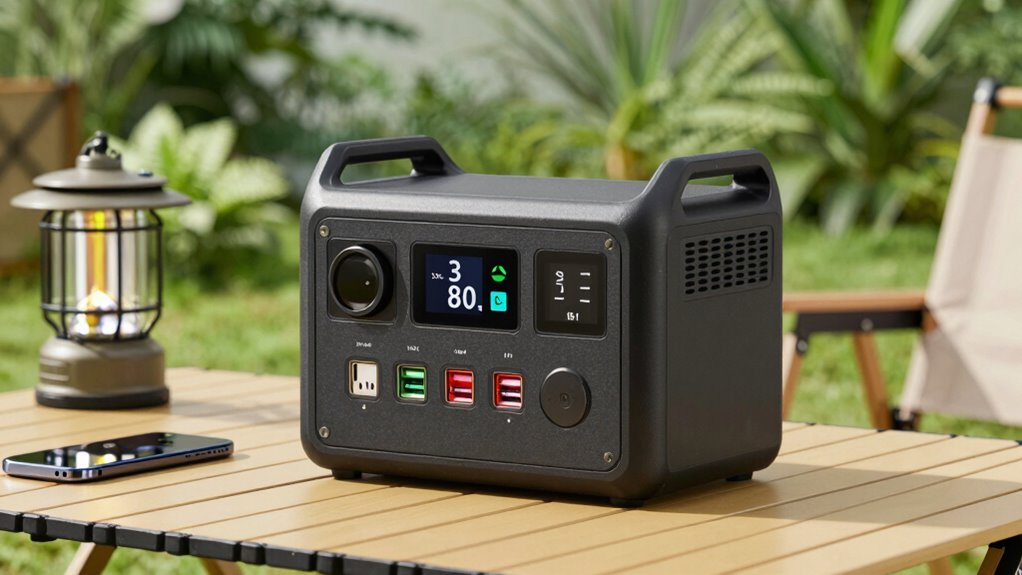

A portable power station is a handy device that stores energy to power your gadgets during outdoor trips, emergencies, or remote work. Capacity, measured in watt-hours, determines how long it can run your devices like phones or small appliances. The output options—AC, USB, or DC—let you connect various electronics, and some stations include solar inputs for recharging. Understanding these features helps you choose the right unit; keep going to explore how each works in real-life situations.
Key Takeaways
- Capacity, measured in watt-hours (Wh), determines how long a station can power devices like laptops or mini-fridges.
- Output options include AC, USB, and DC ports, supporting multiple devices simultaneously with stable, clean energy.
- Larger capacity stations are ideal for extended use or high-demand appliances, while smaller ones suit phones and small gadgets.
- Solar panel integration allows recharging in remote locations, making stations suitable for outdoor adventures and emergencies.
- Real-world use varies from camping and outdoor work to backup power during outages, providing reliable energy wherever needed.
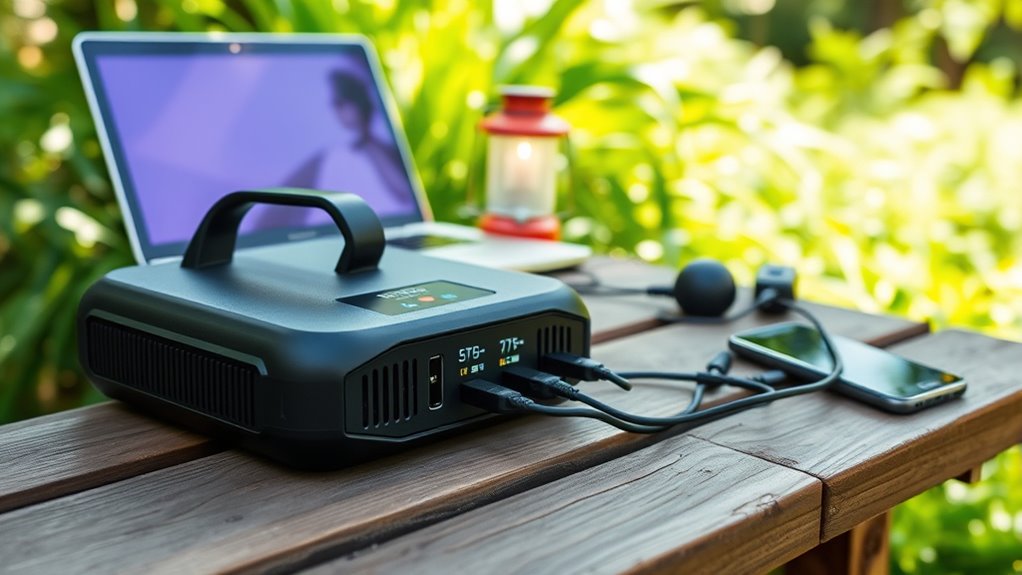
Have you ever been caught without power when you needed it most? Maybe you’re camping in a remote spot, facing a power outage at home, or working in the field where outlets are scarce. Portable power stations are designed to step in during these moments, giving you a reliable source of energy when traditional options fall short. Understanding their capacity, output, and real-world usability helps you choose the right one for your needs. These units are more than just big batteries; they’re versatile tools that can power devices, charge batteries, and even integrate with renewable energy sources like solar panels.
Portable power stations provide reliable energy for camping, emergencies, and remote work.
One key feature to look for is solar panel integration. Many modern portable power stations come equipped with inputs that allow you to connect portable solar panels directly. This setup enables you to recharge your station using sunlight, making it perfect for extended outdoor trips or emergency situations where grid power isn’t available. When you connect solar panels, battery management systems (BMS) come into play. The BMS monitors and controls the flow of energy, ensuring safe charging and discharging cycles. It prevents overcharging, overheating, and deep discharges, prolonging the lifespan of your portable power station and maintaining its efficiency over time.
Capacity is another crucial aspect. Measured in watt-hours (Wh), it determines how much energy your station can store. A larger capacity means longer runtimes for your devices—laptops, phones, small appliances, or even mini fridges. If you frequently need to power high-demand equipment, look for a station with a higher capacity. Conversely, for simple phone charging or small gadget use, a compact unit with lower capacity might suffice. It’s all about matching the station’s capacity to your typical power needs. Additionally, understanding the refresh rates of projectors can help in selecting devices that will perform well in your home theater setup.
Output options matter too. Look for stations with multiple outlets—AC, USB, or DC—to support a variety of devices simultaneously. The station’s rated output wattage indicates the maximum power it can deliver at once. For example, if you’re running a portable fridge or power tools, ensure the station’s output matches or exceeds their requirements. Real-world use shows that portable power stations excel in providing clean, stable energy, making them suitable for sensitive electronics that need consistent power.
In practice, these stations are indispensable in daily life and emergencies. Whether you’re charging your devices after a power outage, keeping your camping gear running, or supplying power to work sites, their versatility shines through. By understanding capacity, output, and features like solar panel integration and battery management systems, you can select a portable power station that reliably meets your demands, giving you peace of mind wherever you go.
Frequently Asked Questions
How Long Do Portable Power Stations Typically Last on a Single Charge?
On a single charge, a portable power station typically lasts anywhere from a few hours to over a day, depending on what you’re powering. Its battery lifespan and number of charging cycles influence overall durability. You can expect about 500 to 1,000 charging cycles before capacity diminishes markedly. To maximize lifespan, avoid over-discharging and store it in a cool, dry place. This way, your station stays reliable whenever you need it most.
Can Portable Power Stations Run High-Demand Appliances Like Refrigerators?
Yes, portable power stations can run high-demand appliances like refrigerators, but you need to verify their power station limitations. Many units have surge and continuous output limits that might not support appliances with high startup power. To guarantee your refrigerator runs smoothly, choose a power station with enough capacity and high surge wattage. Keep in mind, running high-demand appliances for extended periods may drain the power station quickly or cause it to shut down.
Are Portable Power Stations Safe for Outdoor or Emergency Use?
Think of a portable power station as a sturdy lifeboat in a storm—designed for safety but needing careful handling. Yes, they’re safe for outdoor or emergency use when you follow proper procedures. Always check battery safety features and avoid exposing the station to water or extreme conditions. Be mindful of electrical hazards, and you’ll have a reliable, safe power source when you need it most.
How Do Temperature Extremes Affect Power Station Performance?
Temperature extremes can affect your power station’s performance by impacting temperature stability and battery efficiency. In cold conditions, batteries may lose capacity, reducing runtime, while high temperatures can cause overheating and damage. To guarantee ideal performance, avoid exposing your device to extreme temperatures and store it in a cool, dry place. Proper care maintains battery health, ensures safety, and keeps your power station reliable during outdoor or emergency situations.
Can Portable Power Stations Be Recharged via Solar Panels?
Yes, you can recharge portable power stations with solar panels, turning sunlight into a dependable energy source. Think of solar panel compatibility as the secret handshake that guarantees your station and panels work seamlessly. To maximize recharge efficiency, position your panels for ideal sun exposure and choose high-quality panels. This eco-friendly duo transforms your outdoor adventures or emergencies into a sustainable power dance, keeping your devices alive when you need them most.
Conclusion
Think of a portable power station as your reliable lighthouse in a storm, guiding you safely through unexpected blackouts and outdoor adventures. Its capacity is the sturdy beam that keeps your devices shining bright, while its output is the steady glow ensuring everything runs smoothly. When you trust this beacon, you’re embracing independence and peace of mind—knowing that no matter how dark the night, your power remains unwavering, illuminating your path forward.