Choosing between pure sine wave and simulated wave inverters matters because it affects how safely and efficiently your electronics function. Pure sine wave inverters produce smooth, clean power similar to utility grids, making them ideal for sensitive devices like computers and medical equipment. Simulated sine wave inverters are cheaper and work for basic appliances but can cause noise, overheating, or damage over time. To guarantee your devices run smoothly and last longer, understanding these differences is vital—more details ahead will help you decide wisely.
Key Takeaways
- Pure sine wave inverters produce cleaner, more stable power, reducing electrical noise and interference for sensitive electronics.
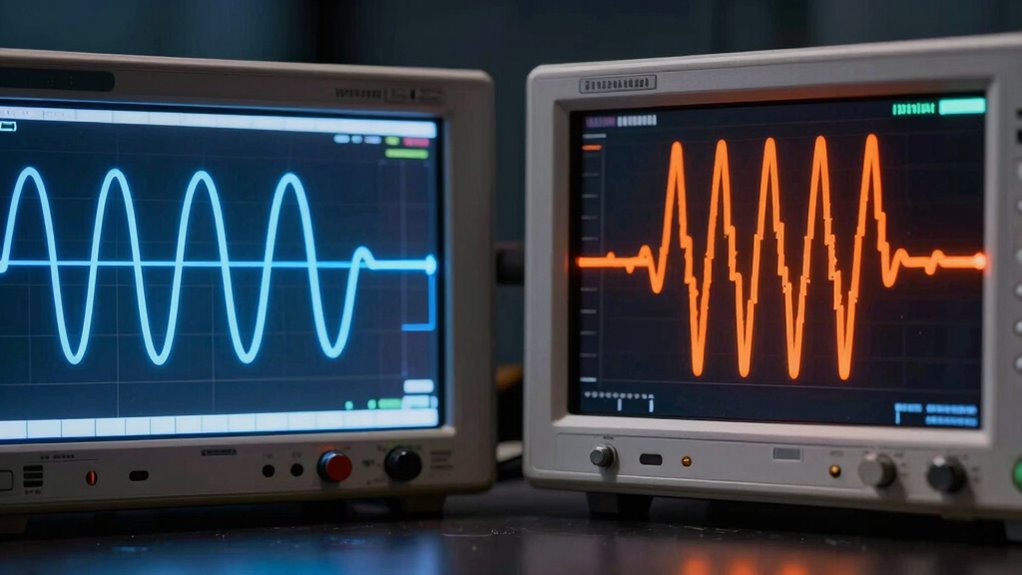
- Simulated sine wave inverters generate a stepped waveform that may cause noise, overheating, or malfunctions in delicate devices.
- Devices with motors or compressors operate more efficiently and safely with pure sine wave power, preventing damage over time.
- Pure sine wave inverters are essential for critical electronics like computers and medical equipment, ensuring reliable performance.
- Cost and complexity differ, with pure sine wave inverters being more expensive but offering superior power quality and device longevity.

When choosing an inverter or power source, understanding the difference between pure sine wave and simulated (or modified) sine wave) outputs is vital. The key factor here is power quality, which directly impacts the performance and lifespan of your electronic devices. Pure sine wave inverters produce a smooth, consistent wave that closely resembles the electricity supplied by your utility grid. This means your devices receive clean, stable power, reducing the risk of overheating, noise, or malfunctions. Conversely, simulated sine wave inverters generate a waveform that mimics a sine wave but isn’t perfectly smooth. Their output is more like a stepped wave, which can cause issues with sensitive electronics and appliances.
Your choice hinges on understanding how inverter design influences power quality. Pure sine wave inverters are built with sophisticated circuitry that creates a seamless waveform, often involving advanced switching mechanisms and filters. They’re engineered specifically to deliver high-quality power suitable for sensitive electronics like computers, audio equipment, medical devices, and certain appliances. This design ensures minimal electrical noise and harmonic distortion, leading to quieter operation and longer device life. On the other hand, simulated sine wave inverters tend to be simpler and cheaper, using basic switching techniques that produce a wave with abrupt changes. While they work fine for less sensitive devices—like LED lights, power tools, or chargers—they can cause issues with more delicate equipment, such as buzzing sounds, overheating, or even damage over time.
Power quality becomes a critical consideration if you rely on your inverter for critical electronics or long-term use. Devices with motors or compressors, for example, often require the cleaner power a pure sine wave inverter provides. Poor power quality can lead to reduced efficiency, increased wear, or outright failure of these devices. When you look at inverter design, it’s clear that pure sine wave models tend to be more complex, often larger and more expensive, but they’re worth the investment if you want ideal performance and reliability. Simulated sine wave inverters, although more affordable and lightweight, are better suited for basic applications where power quality isn’t a primary concern. Additionally, advances in European cloud solutions highlight the importance of reliable power quality for maintaining secure and sustainable digital infrastructure.
Frequently Asked Questions
How Do Pure Sine Wave Inverters Affect Sensitive Medical Equipment?
Pure sine wave inverters guarantee your sensitive medical equipment stays safe and operates correctly. They provide clean, stable power that enhances medical device compatibility, reducing the risk of malfunctions or damage. Using a pure sine wave inverter helps maintain medical equipment safety, preventing costly repairs and ensuring reliable performance. If you rely on medical devices, choosing a pure sine wave inverter safeguards your equipment and supports consistent, safe operation.
Are Simulated Sine Wave Inverters Suitable for High-Power Industrial Applications?
Simulated sine wave inverters aren’t ideal for high-power industrial applications because they lack the industrial scalability and inverter efficiency needed for demanding tasks. You might find them insufficient for heavy machinery, as their waveforms can cause equipment to malfunction or operate less efficiently. For reliable industrial performance, you should consider pure sine wave inverters, which provide cleaner power, better scalability, and higher efficiency essential for high-power operations.
Can Using a Simulated Sine Wave Inverter Reduce Overall Energy Costs?
Yes, using a simulated sine wave inverter can reduce your overall energy costs by improving energy efficiency. While it might not be as efficient as a pure sine wave inverter, it still offers significant cost savings for less sensitive electronics. You’ll notice lower energy bills because simulated inverters consume less power, making them a smart choice when you’re balancing performance and cost, especially for smaller or less critical applications.
What Maintenance Is Required for Pure Sine Wave Inverters?
While it’s easy to overlook, maintaining your pure sine wave inverter is key to longevity. You should regularly check and clean the battery terminals, ensuring ideal battery maintenance. Additionally, keep the inverter cooling system free of dust and debris to prevent overheating. Periodic inspections of connections and fans can help avoid untimely failures, ensuring your inverter runs smoothly and efficiently for years to come.
How Do Pure Sine Wave Inverters Impact Audio and Video Device Performance?
Pure sine wave inverters substantially enhance your audio fidelity and video clarity by providing clean, stable power. This minimizes hums, buzzes, or signal distortions that can occur with less refined power sources. As a result, your audio and video devices perform at their best, delivering clearer sound and sharper images. You’ll notice improved overall performance, making your entertainment and communication systems more reliable and enjoyable with a pure sine wave inverter.
Conclusion
Choosing between pure sine wave and simulated power matters because your electronics perform best with consistent, clean energy. For example, if you’re running sensitive equipment like medical devices, a pure sine wave ensures smooth operation and longevity. On the other hand, using simulated power might cause subtle issues over time, leading to potential damage. So, always consider your device’s needs—investing in pure sine wave power can save you headaches and costly repairs in the long run.