
Bank alerts are small but powerful tools that help you monitor your account activity instantly, preventing big financial problems. By setting up notifications for unusual transactions, login attempts, or large withdrawals, you stay informed and can act quickly if something looks suspicious. Customizing these alerts to suit your needs gives you control and peace of mind. Keep going to discover how these simple settings can protect your money and catch issues before they escalate.
Key Takeaways
- Bank alerts notify you immediately of suspicious or large transactions, helping prevent potential fraud or financial loss.
- Customizable alerts allow you to set thresholds and preferred delivery methods for better account monitoring.
- Managing alert settings proactively helps detect issues early and adapt to changing security needs.
- Security features like multi-factor authentication protect alert configurations from unauthorized access.
- Combining alerts with security measures ensures swift response and strengthens overall account protection.
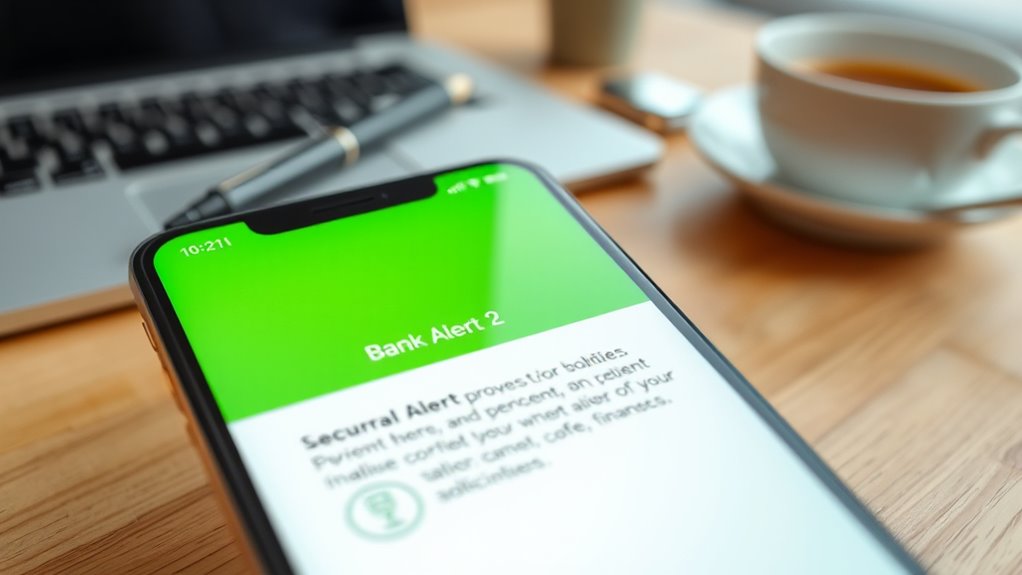
Bank alerts are quick, essential notifications that keep you informed about your account activity. When you set up these alerts, you gain a powerful tool that helps you monitor your finances in real time. By leveraging security features, you can receive alerts for various activities, such as large transactions, login attempts, or suspicious activity. These security features act as a safeguard, alerting you immediately if something unusual occurs, so you can act swiftly to prevent potential fraud or unauthorized access. This proactive approach puts you in control and helps protect your money from falling into the wrong hands.
One of the biggest advantages of bank alerts is the ability to customize them to suit your needs through alert customization. Instead of receiving generic notifications, you can tailor alerts based on your preferences. For example, you might want to be notified of any transactions over a certain amount, or when your account balance drops below a specific threshold. You can also choose how you receive these alerts—via text message, email, or push notification—making it easy to stay informed no matter where you are or what device you’re using. This flexibility ensures you’re always in the loop without being overwhelmed by unnecessary alerts.
With alert customization, you can set up multiple notifications for different account activities. For instance, you might want a daily summary of your account balance, combined with instant alerts for large withdrawals or foreign transactions. This way, you’re not just reacting to problems; you’re actively managing your account. Additionally, many banks allow you to pause or modify alerts at any time, giving you full control over your notifications. You don’t need to be tied to a fixed setup—if your needs change, so can your alert preferences. Moreover, security features like multi-factor authentication further enhance the safety of your alert system, ensuring that only authorized users can make changes or access sensitive information.
Security features also enhance the effectiveness of bank alerts. They often include multi-factor authentication, ensuring that only you can modify alert settings or access sensitive account information. Some banks implement fraud detection algorithms that automatically trigger alerts if suspicious activity is detected, providing an extra layer of security. This combination of alert customization and security features creates a tailored, secure environment where you can stay informed and protected against potential threats.
Frequently Asked Questions
Can I Customize the Types of Alerts I Receive?
Yes, you can customize the types of alerts you receive. Most banks offer personalization options within their alert management settings, allowing you to select specific transaction types, amounts, or account activities that trigger notifications. By adjusting these settings, you guarantee you’re only alerted to what’s important to you, reducing unnecessary messages and staying on top of your finances effectively. Take advantage of these features to tailor your alert experience perfectly.
Are Bank Alerts Available for All Account Types?
Yes, bank alerts are available for most account types, but not all. You’ll want to check with your bank’s security features to see which accounts qualify for alerts. Think of it as keeping an eye on your valuables; account monitoring through alerts helps catch issues early. While some specialized accounts might lack this feature, generally, you’re covered to stay informed and protect your financial health.
How Quickly Do Alerts Notify Me of Suspicious Activity?
You’ll typically get fraud detection alerts within minutes of suspicious activity, ensuring quick notification timing. Banks prioritize these alerts to help you act fast and prevent further issues. The faster you’re notified, the better you can verify or dispute transactions. Keep your contact info up-to-date, and enable alerts to stay informed about any suspicious activity, giving you peace of mind and stronger protection against fraud.
Is There a Cost Associated With Receiving Bank Alerts?
You’ll be glad to know that receiving bank alerts usually doesn’t come with any surprise costs. While some banks might have modest alert fees or cost implications for premium alert services, many offer basic notifications free of charge. To avoid any unexpected charges, check your bank’s policies on alert fees. Overall, these alerts serve as a small investment in peace of mind, helping you stay informed without breaking the bank.
Can I Set Alerts for International Transactions?
Yes, you can set alerts for international transactions to enhance international security and prevent fraud. By doing so, you stay informed whenever your account is used abroad, allowing you to quickly spot suspicious activity. These alerts serve as a proactive measure, helping you respond swiftly to potential threats. Most banks offer this feature through their mobile app or online banking, often at no extra cost, making it a smart security tool.
Conclusion
By setting up bank alerts, you stay one step ahead of potential issues, preventing costly surprises. Did you know that over 60% of fraud attempts are caught early thanks to these alerts? Imagine catching a suspicious transaction before it drains your account—small settings, big peace of mind. Don’t wait until it’s too late; enable alerts today and keep your finances secure, simple, and stress-free.