
TL;DR
Educational science kits for kids provide materials and guidance for exploring topics such as electricity, plant growth, chemistry, and robotics. Choose a kit that suits the child’s age, interests, abilities, safety needs, and available adult support, then encourage them to predict, observe, and explain what happens. A surprising result can be just as useful as the one shown in the instructions.
A paperclip that jumps toward a magnet can hold a child’s attention longer than a page of facts about magnetism. Educational science kits for kids make ideas tangible: children can watch a seed split, build a circuit, or see a shadow stretch across the floor.

Prime made for students and young adults
- Fast, free delivery for dorm and study essentials
- Prime Video and Amazon Music included
- Member-only deals
This guide explains how to choose a kit that fits your child, what to check before opening the box, and how to turn each activity into a chance to think. You’ll also learn why an experiment that goes “wrong” may still give your family something useful to investigate.
Match a kit to your child’s interests, reading level, coordination, and need for adult help as well as the age label.
Look for activities that invite predictions, observations, comparisons, and explanations.
Read safety instructions before starting and supervise according to the specific activity.
Compare reusable materials, required household supplies, and refill costs alongside the box price.
Treat an unexpected result as a chance to check the setup and test one change.
Choose a kit that fits your child, not just the age label
A good science kit fits a child’s interests, abilities, and need for support as well as their age. The number on the box is a starting point: reading level, hand coordination, patience, and confidence can all affect whether the activity feels exciting or frustrating. These factors shape whether a child can focus on the question an experiment raises or has to spend most of their effort decoding instructions and handling materials.
If a seven-year-old loves bugs but finds dense instructions tiring, a picture-led insect observation kit may suit them better than a chemistry set marked for the same age. A teenager who enjoys building could prefer a simple robotics project, even if they have never studied circuits. Interest creates a reason to keep going when the first attempt looks messy, while a manageable level of challenge lets the child make progress without removing every opportunity to think.
Before buying, scan the directions if you can. Look for the reading required, small parts, setup steps, and any point where an adult must handle a tool or material. Consider the balance between independence and help: if the child can do most of the activity but needs you to prepare one step, that can be a sensible fit. If the adult must complete nearly every step, the kit may still be enjoyable, but it may offer less independent practice than you expect.
Think about access, too. Clear diagrams, spoken instructions, large components, and experiments with more than one possible result can help children with different language skills or physical abilities take part. A kit should invite a child in; it should not make them feel tested. The best fit is one that preserves the interesting decisions—what to try, notice, or compare—while adapting the parts that would otherwise prevent participation.
Popular right now

Ninja Luxe Café Premier 3-in-1 Espresso Machine, Drip Coffee & Cold Brew

Bose QuietComfort Headphones (2nd Gen), Wireless Noise-Cancelling Over-Ear Headphones, White Smoke

Dyson Cyclone V10 Origin Cordless Vacuum
As an affiliate, we earn on qualifying purchases.
Look for experiments that teach children how to ask questions
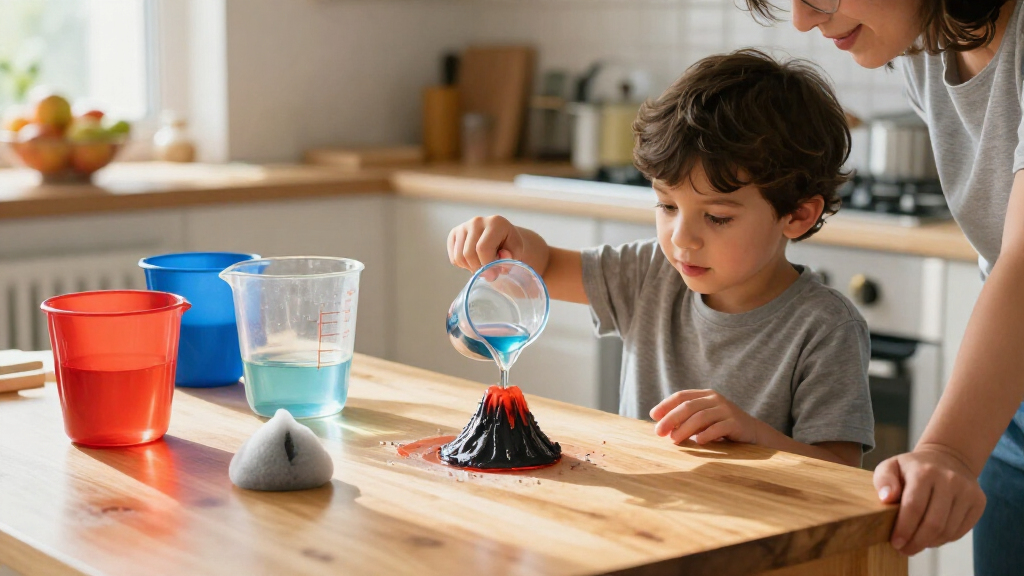
The strongest educational science kits for kids give children a chance to predict, test, observe, and explain. A sequence of steps can provide helpful structure, but children learn more about how science works when they can make choices and talk about the evidence they see. Following a recipe can show that a result is possible; changing one factor and comparing outcomes helps a child see how evidence supports or challenges an idea.
Suppose a plant kit asks a child to grow seeds in different amounts of light. Before starting, ask, “Which one do you think will grow taller?” Then help them keep the cups in the same place and compare what changes. Holding other conditions steady matters because it makes light a more plausible reason for a difference. If the seeds also get different amounts of water, the child cannot tell which change may have influenced growth. The point is not to run a perfect laboratory study, but to notice why a fair comparison makes an explanation more convincing.
Try these questions during an experiment:
- Predict: What do you think will happen, and what makes you think so?
- Observe: What changed, and what stayed the same? Describe what you can see before explaining it.
- Compare: Did each sample behave alike? Which conditions were different?
- Explain: What might account for the result, and what else could you test?
Keep the tone curious, especially when results differ from the picture in the booklet. A magnet may pull some metal objects but not others; a paper airplane may turn sharply when its wings bend. Instead of treating the booklet’s result as the only correct outcome, use it as a reference point: differences can prompt a check of the setup, a new comparison, or a question about the materials. An observation becomes useful when your child has room to interpret it. You do not need a perfect explanation on the spot. Looking closely and asking a better question are already part of the work.
Check safety and supervision before the box is open
A children’s science kit is not automatically risk-free because it is sold for children. Safe use depends on the specific activity, materials, and instructions, so read the warnings before you buy or begin. Check for small parts, chemicals, heat, sharp tools, strong magnets, and anything that should stay away from mouths or eyes. The practical question is not simply whether a hazard is present, but whether the child can use the materials safely with the level of supervision you can provide.
For example, a younger child may enjoy assembling a circuit, while an adult handles a hot glue step or keeps tiny components out of reach of a toddler nearby. Follow the manufacturer’s age guidance and supervision instructions for each activity; a kit’s overall age range may not describe every project inside it. This distinction matters when a box bundles easy projects with more demanding ones: choosing a suitable activity within the kit may be safer and more rewarding than assuming every project is appropriate for the same child.
Set up a clear work area before starting. A washable tray, good light, and a place to put unused pieces can make an experiment easier to manage. Keeping food and drinks away reduces the chance of materials being confused with something safe to eat, and washing hands afterward can remove residue when the instructions call for it. Supervision should match the task: some children can follow a simple observation activity independently, while other experiments need an adult close by throughout. As children gain experience, you can let them take on more steps while keeping control of hazards that require adult judgment.
Read the activity instructions first, then decide what your child can do independently and where you need to step in. Recheck the instructions if the activity changes or a result calls for an unplanned step.
If you are unsure about a material or step, pause and check the manufacturer’s information. Skipping an uncertain step or choosing a different activity can preserve the child’s interest without turning curiosity into pressure to proceed.
Compare what the kit includes with what you’ll use again
The price of a science kit only tells part of the story; check how many activities it supports, which materials it includes, and whether you can reuse the equipment. A box with dozens of single-use packets may offer less lasting value than a smaller set of durable tools for repeated experiments. Value depends on the experience your family will actually use: a reusable component is worthwhile when it makes another investigation possible, but less so if the child loses interest after one activity.
Before checkout, look for an activity count, a list of household supplies, replacement costs, and whether the instructions suggest extensions. A plant-growing kit might include pots and seeds but expect you to supply soil and water. A circuit kit may use reusable wires and a battery holder, then let your child try different layouts long after the first project. Those household-supply requirements are not necessarily a drawback; they can make an activity easier to repeat, but they affect how soon you can begin and the real cost of using the kit.
| What to compare | Why it matters | Example question |
|---|---|---|
| Materials | Missing supplies can delay the activity | Do I need vinegar, batteries, or soil? |
| Repeat use | Reusable pieces support more exploration | Can we rebuild this circuit? |
| Refills | Consumables add to the long-term cost | Are replacement seeds sold separately? |
| Instructions | Context helps children connect steps to ideas | Does the guide explain why the result happens? |
Packaging also matters to some families. Reusable tools and activities that use ordinary household materials can cut down on waste, though consumables may be necessary for particular experiments. For instance, a kit that uses a plastic magnifier again and again may pair well with leaves, fabric, or household objects you already have. Compare the experience you’ll get, not just the piece count printed on the front: a smaller kit with clear explanations and room to repeat an experiment may support more learning than a larger box of unrelated one-time activities.
Use digital extras when they add something the kit can’t
App-connected kits can add demonstrations, instructions, or extra challenges, but the screen is useful only when it supports the hands-on activity. Some kits combine a physical robot or circuit with online lessons; others offer videos that show a tricky setup. The feature itself does not tell you how much your child will learn. Its value depends on whether it helps the child understand, make a choice, or try something they could not easily do with the printed guide alone.
Imagine your child is building a small rover. A short video that shows how to attach the wheels could help them start, while an app that lets them change the rover’s route may offer a new challenge. But if the screen replaces building, observing, and making choices, it may add less than the box promises. A useful digital extra can reduce a frustrating barrier or extend the activity; a distracting one can shift attention from the physical evidence the kit is meant to explore.
Before you choose a connected kit, check whether it needs internet access, an account, a compatible device, or a paid subscription. These requirements affect not only cost but also whether the activity will work when your child is ready to use it. Look at how much of the activity remains physical, and whether the digital material works for your child’s reading and attention needs. Digital guidance should make the experiment clearer or more flexible, not become an obstacle to opening the box.
Product features change over time, so check current packaging and manufacturer details before you rely on a particular app or subscription being available. For a family with limited screen time, an offline building kit may be the better choice. For a child who enjoys coding, digital instructions could provide a useful bridge from a toy to a working program. The tradeoff is practical: choose the format that makes it more likely your child will build, test, and reflect, rather than judging the kit by the number of digital features it advertises.
Turn a failed experiment into the next question
A result that does not match the instructions can still teach your child something, especially when you help them look for what changed. Measurements, materials, timing, and conditions can affect what happens, so “it didn’t work” can become a question about the experiment. Treat the mismatch as information rather than proof that the child failed: it may reveal a setup difference, an overlooked variable, or a limitation in the activity’s instructions.
Suppose a paper bridge collapses under one coin, although the guide shows it holding several. Ask whether the paper was folded the same way, whether the gap between supports was wider, or whether the coin sat near the edge. Then change one thing and try again. Changing only one factor makes it easier to connect the new result with the adjustment; changing several at once may produce success, but leaves the child unsure what made the difference. One careful adjustment gives you a clearer clue than changing every part at once.
Use this simple reset when an activity surprises you:
- Describe the result: What did you see, hear, or measure? Be specific before deciding whether it worked.
- Check the setup: Were the materials and steps close to the instructions? Look for differences that could affect the outcome.
- Choose one change: Which single factor could you test, and what do you predict it will do?
- Try again: Did the result change in the way you expected? If not, what question does that raise?
A child who discovers that a paper bridge holds more coins after folding it into an accordion shape has learned through a real comparison. The moment can be more memorable than copying the sample result exactly because the child can connect a change in design with a change in strength. You can still consult the guide or contact the manufacturer if something seems faulty or unsafe; curiosity does not require ignoring the instructions.
Frequently Asked Questions
What age is right for a science kit?
Start with the manufacturer’s age guidance, then check reading demands, hand coordination, interests, and supervision needs. A picture-led activity may suit a younger child, while an older child may enjoy a kit with longer instructions or more open-ended challenges.
Are science kits safe for young children?
Safety depends on the particular kit and activity. Read its warnings and instructions, check for small parts or hazardous steps, and supervise as directed for the child’s age.
Can a science kit teach real science?
A kit can introduce science ideas and practices when children ask questions, observe results, and discuss evidence. The materials alone cannot guarantee understanding; conversation and opportunities to investigate help children make sense of what they see.
Do children need an adult to help?
Some activities allow older children to work independently, while others need adult setup or close supervision. Read the instructions for each experiment and offer help where the materials, tools, or reading level call for it.
Are app-connected science kits better?
They can be helpful when a video, lesson, or coding tool makes a hands-on activity clearer or adds a new challenge. Check device and internet needs, possible subscriptions, and how much of the activity still involves building or observing.
What if the experiment does not work?
Describe what happened, check the setup and materials, and choose one factor to change before trying again. A different result can still help your child ask a sharper question, as long as you follow the kit’s safety instructions.
Conclusion
Choose a science kit your child will want to open, then make room for questions that the instructions do not answer. A set of seeds, wires, magnets, or building pieces can offer structure, but your child’s observations and experiments give it meaning.
Start with one prediction and one careful look at the result. The next great discovery may be a seedling on the windowsill—or a paper bridge holding one more coin than yesterday.