TL;DR

Prime made for students and young adults
- Fast, free delivery for dorm and study essentials
- Prime Video and Amazon Music included
- Member-only deals
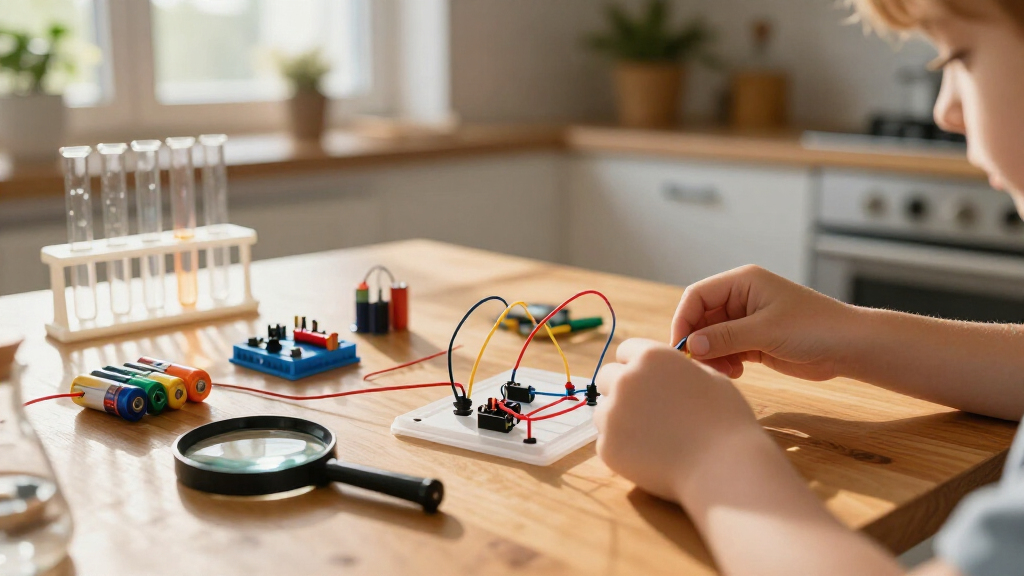
Educational science kits are hands-on STEM products, mostly targeting ages 4–14, that teach through experiments kids do themselves — and research on learning-by-doing shows kids retain more from this than passive instruction. To choose well, match the kit to your child’s age and reading level, favor reusable components over single-use spectacles, and pick kits that explain why the experiment works, not just how to perform it. Expect to pay $15–50 for a quality one-time kit, or $20–35/month for subscription boxes like KiwiCo or Mel Science.
The most expensive science kit I ever bought my nephew sat unopened in his closet for eight months. The $12 crystal-growing kit he got from his aunt? He checked on it every single morning like it was a pet. The lesson stuck with me: price and quality are not the same thing, and neither equals engagement.
Educational science kits for kids have exploded in variety over the last few years, driven by STEM education initiatives and the lasting bump from pandemic home learning. The kits market has responded with everything from chemistry sets to coding robots to monthly subscription boxes. Most kits target ages 4–14, and within that range, the right pick varies wildly.
Here’s what you’ll learn: which kit types actually teach versus just entertain, how to match a kit to your kid’s age, whether subscriptions are worth the money, and the questions to ask before you spend a dime.
Match the kit to your kid’s age and reading level — ages 4–7 need picture-based instructions and full supervision, while 11–14-year-olds can handle robotics an…
A teaching kit explains why the experiment works; an entertaining kit only shows the steps. Read the manual language before buying.
Reusable kits like Snap Circuits ($15–50 range) usually beat single-use spectacle kits on value; subscriptions ($20–35/month) win on novelty — but check cancel…
Modern chemistry sets are safe by design, but goggles and age-appropriate supervision remain non-negotiable.
Open-ended kits that allow multiple builds or experiments deliver the most replay value and teach iteration through failure.
What Science Kits Actually Teach (Beyond the Fizz)
Educational science kits work because kids learn by doing. Research on experiential learning — the constructivist approach built on Piaget’s work — consistently shows that hands-on activity beats passive instruction for retention. When your kid mixes two powders and watches a color change, that memory anchors in a way a video never will.
But the deeper value is failure tolerance. The volcano that doesn’t erupt, the circuit that stays dark — these teach iteration, which is the actual scientific method. A kid who re-checks her wiring three times is doing real science. A kid who watches a perfect demo once is watching a show.
There’s also a career-pipeline effect. Kits build early interest in STEM careers, and brands have caught on — you’ll see far more gender-neutral marketing now than a decade ago. That matters for closing stubborn gender gaps in science and engineering [1].
The best kits don’t guarantee success. They guarantee a question: “Why did that happen?”
Match the Kit to the Kid: Ages 4 to 14
Most educational science kits target ages 4–14, broken into three rough bands: early learners (4–7), elementary (8–10), and middle school (11–14). Getting this wrong is the number-one reason kits go unused — a reading-heavy manual defeats a 5-year-old, and a baking-soda volcano bores a 12-year-old.
Here’s how the categories map to age bands:
| Age | Best Kit Types | Real Examples | Supervision |
|---|---|---|---|
| 4–7 | Simple mixing, magnets, bug catchers, first microscopes | KiwiCo Koala Crate, beginner crystal kits | Always with a parent |
| 8–10 | Circuits, crystal growing, weather stations, intro chemistry | Snap Circuits Junior, National Geographic kits | Occasional |
| 11–14 | Robotics, coding, advanced chemistry, electronics | LEGO Boost, Sphero, Thames & Kosmos sets | Rarely needed |
Check the reading level of the instruction guide, not just the age on the box. My nephew at 8 could do Snap Circuits steps from pictures alone — that independence is gold.
How to Spot a Kit That Teaches Instead of Just Entertains
A teaching kit explains why the experiment works, not just the steps. Look at the manual before buying: does it include a paragraph on the science behind the reaction, or only “pour, stir, watch”? That difference separates a learning tool from a five-minute spectacle.
Use this checklist when you’re evaluating options:
- Read the manual’s language — does it explain the concept, or only the procedure?
- Count the experiments — more guided activities usually means more replay value.
- Check reusability — Snap Circuits components get rebuilt endlessly; a single-use volcano kit is one afternoon.
- Look for refills — can you buy more consumables, or is the kit dead when the powder runs out?
- Check curriculum alignment — in the US, kits that reference NGSS standards usually have real pedagogy behind them.
One honest tradeoff: modern chemistry sets are far safer than historical ones — no more hazardous reagents. Critics call them “watered down.” I’d call that a fair price for a kit your kid can use without you hovering, but know that serious chemistry at the middle-school level usually requires a school lab or a higher-end Thames & Kosmos set [1].
Subscription Boxes vs. One-Time Kits: Where Your Money Goes
Subscription science boxes became a major delivery model after pandemic home learning made monthly STEM activities a household habit. Services like KiwiCo, Mel Science, and Little Passports run roughly $20–35/month, while a solid one-time kit costs $15–50 upfront.
| Factor | Subscription Box | One-Time Kit |
|---|---|---|
| Cost over a year | $240–420 | $15–100 |
| Novelty | New project monthly — fights boredom | Fades after completion |
| Reusability | Often project-specific | Often higher (circuits, robotics) |
| Commitment | Check cancellation policy first | None |
The math: subscriptions win for sustained curiosity, one-time kits win for budget and replay. My rule — try one subscription month before committing to a year, and read the cancellation policy before entering a card, not after.
Three Trends Worth Knowing Before You Buy
Educational science kits are evolving fast, and 2024–2025 products differ from what you might remember from your own childhood. Three trends shape what’s on shelves now — and each one carries a tradeoff worth understanding before you spend.
1. Coding is everywhere — and that’s a double-edged sword. Robotics kits increasingly pair physical hardware with apps, using block coding based on Scratch-style interfaces. The upside is real: kids learn sequencing and logic, skills that transfer well beyond screens. The catch is that app dependence creates two hidden risks. First, screen-time budgets you’ve set at home can quietly erode when half the experiment lives on a tablet. Second, kits are only as durable as their software — if the developer stops updating the app, an expensive robot becomes a paperweight. Before buying, check the app’s last update date and whether it works offline.
2. Eco-themed kits are booming — but check what they actually teach. Solar-power builds, recycling experiments, and renewable-energy demos have grown into their own category. When done well, they’re genuinely valuable: a kid who builds a solar car understands energy conversion viscerally, not just definitionally. The risk is that some eco kits lean on the theme as marketing rather than substance — a “green” label slapped on a single-use plastic kit that ends up in the trash is teaching the opposite lesson. Judge them by the same standard as any kit: does the manual explain the science?
3. Open-ended beats scripted — the most important shift of the three. The pedagogical movement is away from single-outcome demos toward kits kids can tinker with freely. This matters because scripted kits have a ceiling: once the volcano erupts, there’s nothing left to discover. Open-ended kits invert that — a robot your kid can program ten different ways, or a circuit set with hundreds of possible configurations, keeps generating new questions. That question-generating quality is exactly what builds iteration skills and long-term engagement. Some newer kits layer on augmented reality to extend the physical experiments — fun, but treat AR as a bonus, not a feature you’re paying premium for, and verify the app still gets updates before buying [1].
Are Chemistry Sets Actually Safe? (The Honest Answer)
Yes — modern chemistry sets for kids are safe when used as intended. Manufacturers removed hazardous reagents decades ago, and kits for children under 12 are typically non-toxic and food-grade-adjacent. The vinegar-and-baking-soda era is here to stay.
That said, supervision guidance on the box exists for a reason. Fizzing reactions can splash eyes, and heat-based experiments (some crystal and slime kits) need an adult nearby. For kids under 8, plan to be at the table anyway — that’s not a safety tax, it’s the family bonding most kits are explicitly designed around.
If your 12-to-14-year-old wants real chemistry, look at higher-end sets and read the reagent list. And keep the general rule: goggles come with the kit for a reason — make wearing them non-negotiable, even when it feels silly.
Frequently Asked Questions
What’s the best science kit for a 5-year-old?
For ages 4–7, choose kits with picture-based instructions and instant results: simple mixing kits, magnet sets, or beginner boxes like KiwiCo’s early-learner crates. Avoid anything requiring independent reading. Plan to do the activities together — most kits in this band are designed for parent-child collaboration.
Are subscription boxes like KiwiCo worth the money?
At $20–35/month, subscriptions are worth it if your kid’s curiosity needs constant feeding — a new project each month prevents boredom. Over a year, that’s $240–420, so a one-time reusable kit ($15–50) is better on pure budget. Always test one month and read the cancellation policy before committing to an annual plan.
Which kits actually teach science instead of just entertaining?
Kits that explain the why behind each experiment — look for manuals that discuss the science concept, not just steps. Reusable systems like Snap Circuits, LEGO Boost, and NGSS-aligned kits from Thames & Kosmos tend to teach most effectively because kids experiment repeatedly and learn from what doesn’t work.
Are there good screen-free science kits?
Yes — circuitry kits, microscope sets, crystal growing, geology, and chemistry kits are all fully screen-free. Robotics and coding kits increasingly require a companion app, so check product descriptions carefully if you’re limiting device time. Snap Circuits is a strong screen-free pick for ages 8+.
How do I keep my kid engaged with a kit after the first use?
Pick kits with multiple experiments or open-ended builds rather than one dramatic payoff. Refills extend consumable kits, and reusable component systems like circuits can be rebuilt endlessly. Doing a second, self-designed experiment — “what happens if we double it?” — is the single best way to extend engagement.
Conclusion
Buy the kit your kid will still open in week three, not the one with the best box. That usually means age-appropriate, reusable, and built around questions rather than a single wow moment. The crystal kit that gets checked every morning beats the robot that gets checked never.
Start small — one $25 kit, one Saturday afternoon, one experiment that fails hilariously. That failure is where the scientist shows up.
Fall Picks
fall essentials
As an affiliate, we earn on qualifying purchases.