

Price psychology uses subtle tactics like charm pricing, scarcity, and social proof to influence your buying decisions without you noticing. Retailers cleverly position prices, use colors, and create urgency to make products seem more valuable or affordable. Small tricks like $9.99 or limited-time offers play on your subconscious. If you stay aware of these strategies, you’ll spot them easily. Keep going to uncover how these tricks manipulate you and how to protect yourself.
Key Takeaways
- Consumers are unaware of subconscious cues like charm pricing and visual hierarchy that influence their purchasing decisions.
- Retailers use color, font, and design elements to evoke emotional responses and enhance perceived value.
- Small price differences (.99 or .95) manipulate perceptions of affordability without significant savings.
- Limited-time offers and social proof create urgency and influence impulsive buying behaviors.
- Recognizing framing, discount tricks, and manipulation tactics helps shoppers make more informed and rational decisions.
What Is Price Psychology and Why Does It Matter?
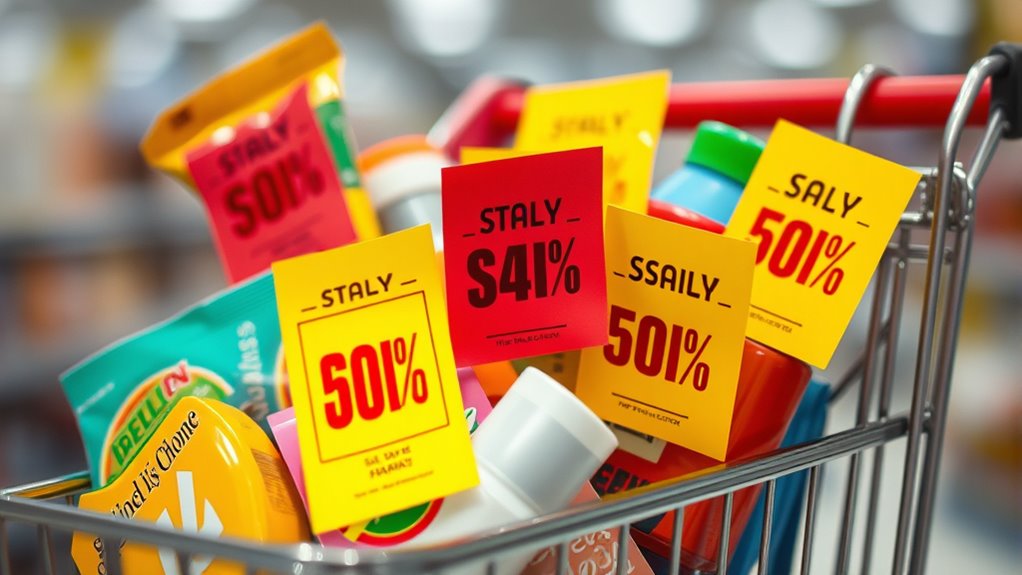
Have you ever wondered why certain prices feel more appealing than others? That’s the power of price psychology in action. It’s about understanding how pricing strategies influence consumer behavior, guiding your perceptions and decisions without you even realizing it. Businesses use these tactics to make products seem more attractive or valuable, often by adjusting the way prices are presented. Price psychology taps into your subconscious, shaping your buying choices based on perceived value rather than just the actual cost. Recognizing this helps you become more aware of how pricing affects your behavior, so you can make more informed decisions. For example, the contrast ratio in home cinema projectors subtly influences how sharp and vibrant the images appear, affecting your perception of quality. Additionally, techniques like price framing can make a product seem like a better deal, even if the actual savings are minimal. Understanding how pricing strategies work can empower you to avoid being influenced by subtle cues and make more rational purchasing choices. Being aware of perception of value also allows you to better recognize when marketers are using sensory cues, such as visual or auditory signals, to sway your buying decisions. Ultimately, it’s a subtle but powerful tool that influences what you buy and how much you’re willing to pay.
How Charm Pricing Tricks Your Brain Into Thinking Items Are More Valuable
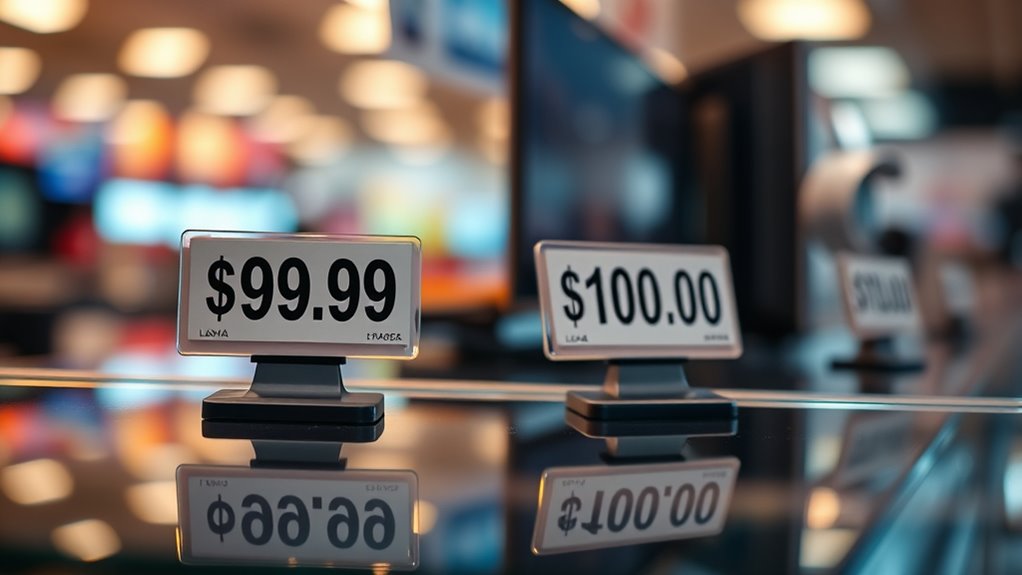
Charm pricing, like $9.99 instead of $10, influences how you perceive value by making prices seem lower. Your eyes naturally focus on the left side of the price, amplifying this effect through the left-side focus effect. Even small differences in price can considerably impact your perception of worth without you noticing, tricking your brain into valuing items more highly. Incorporating multi-functional gear into your purchases can further influence your perception of value by maximizing utility and savings. Additionally, understanding price perception can help you make more informed decisions and avoid falling for these subtle tricks. Recognizing how visual cues affect your purchasing decisions can enhance your ability to resist these tactics. Developing a keen awareness of software quality assurance practices can also help consumers recognize when companies are employing these tactics to influence purchasing behavior.
Perception of Value
You might find yourself more inclined to purchase an item priced at $9.99 rather than $10.00 because your brain perceives the lower number as considerably cheaper, even though the difference is just a penny. This is a prime example of how perception of value is influenced by psychological pricing techniques. Businesses use branding strategies that leverage this effect to make products seem more appealing and affordable. By pricing items just below a round number, they tap into your subconscious, making the item seem like a better deal. This perception of value encourages you to buy more often and spend more overall. Additionally, understanding how Mad Tasting employs flavor and presentation tricks can further influence your purchasing decisions. Recognizing perception biases helps you become a smarter shopper, aware of how your brain is being subtly influenced to see value where it might not truly exist. Being aware of these pricing tactics can empower you to make more conscious buying decisions and avoid falling for common tricks. For example, visual cues on packaging can also enhance perceived value and attractiveness. Moreover, understanding how perception of value is manipulated can help you resist impulse purchases and focus on items that truly meet your needs.
Left-Side Focus Effect
The left side of a price tag naturally draws your attention first, which is why retailers often position key or discounted items there. This creates a strong visual hierarchy, guiding your eyes toward the most important information immediately. The pricing layout leverages this tendency by placing charm prices—like $9.99—on the left, making the number appear smaller and more appealing. Your brain processes the left side first, so it subconsciously associates the item with a better deal or higher value. Retailers capitalize on this effect to influence your perception without you realizing it, making prices seem more attractive and compelling. Additionally, understanding price psychology can help you recognize and resist these subtle tactics during your shopping experiences. By understanding the left-side focus effect, you become more aware of how your attention is subtly guided during your shopping experience.
Subtle Price Differences
Subtle price differences, such as ending prices with .99 or .95, create the illusion that items are more affordable or a better deal. This is a common tactic rooted in pricing myths that influence our perception of value. By using charm pricing, retailers tap into discount psychology, making prices seem notably lower than they really are. You might think you’re saving money, but in reality, these small differences often have little impact on your actual spending. This trick exploits your brain’s tendency to focus on the first digits, ignoring the cents. Recognizing this can help you make more mindful decisions and avoid falling for the subtle manipulations that brands use to boost sales without offering real discounts. Additionally, understanding the psychology of perception behind consumer behavior can reveal how subconscious influences shape our purchasing choices, such as how visual cues can further manipulate our perception of a product’s value. Being aware of perception biases can empower you to evaluate prices more objectively and resist unnecessary mental shortcuts. Moreover, awareness of pricing illusions can significantly improve your ability to identify genuine bargains from deceptive tactics.
How Price Anchoring Affects Your Buying Choices
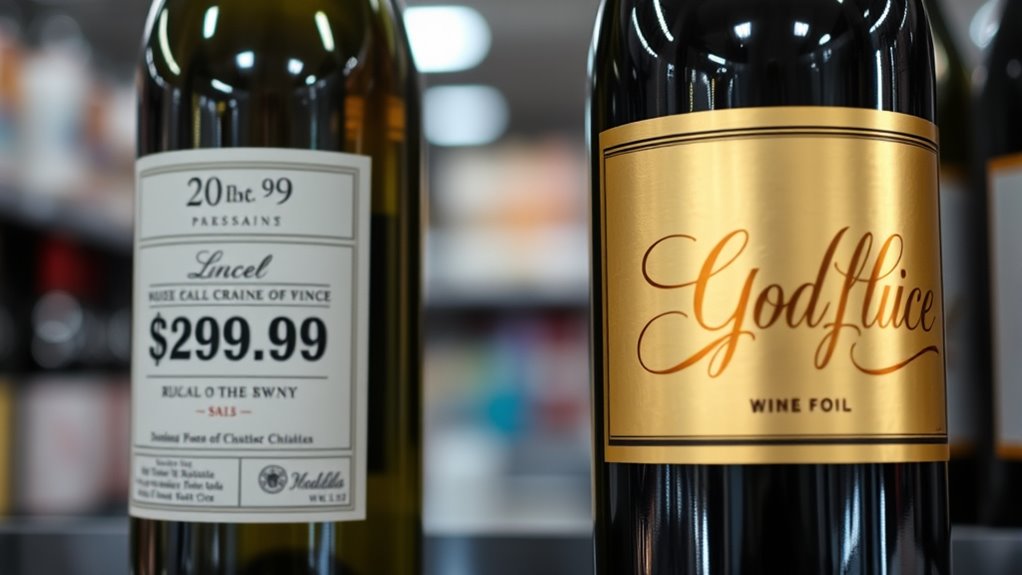
Price anchoring influences your buying decisions more than you realize, often guiding you toward higher or lower purchases based on initial comparisons. When you see a high-priced item first, it sets a benchmark that makes subsequent options seem more affordable, shaping your price perception. This creates a decision bias, nudging you to choose options that seem like better deals in comparison. Conversely, starting with a lower-priced item can make more expensive options appear less attractive. Retailers use this tactic intentionally to steer your choices, often without you noticing. By anchoring your expectations, they manipulate your perception of value and influence your willingness to spend more or less. Understanding this trick helps you make more conscious, informed decisions when shopping. Additionally, being aware of support breakfast options can help you better recognize value and make smarter choices in your daily purchases. Recognizing price psychology strategies enables you to avoid falling prey to these subconscious influences. Being mindful of cognitive biases, such as anchoring, can empower you to resist manipulation and choose options that truly benefit your needs and budget. Knowing how retail pricing tactics are designed to influence your perception can further enhance your ability to shop wisely.
Why Limited-Time Offers Create Urgency and Boost Sales

Limited-time offers work by creating a sense of urgency that prompts you to act quickly, often before you fully consider other options. This tactic taps into your fear of missing out, making you feel pressured to make a decision immediately. Time limited deals leverage urgency marketing to increase sales by highlighting scarcity and time constraints. When you see a deal ending soon, your brain perceives it as an opportunity you can’t afford to pass up, pushing you toward impulsive buying. Retailers use this psychology to boost conversions and clear inventory faster. The ticking clock makes the offer seem more valuable and exclusive, encouraging you to act now rather than delay. Ultimately, urgency marketing exploits your tendency to prioritize immediate rewards over careful consideration, increasing the likelihood of a purchase.
How Framing and Presentation Shape Your Perception of Value

How information is presented can considerably influence how you perceive value. Visual cues, decoy pricing, and the context in which options are shown all shape your decisions. Recognizing these tactics helps you understand why some prices seem more appealing than others.
Visual Cues Influence Perceived Value
The way products are framed and presented can considerably shape how you perceive their value. Visual cues like color psychology and font choices play a big role in this process. For example:
- Bright, bold colors can make a product seem more exciting and urgent, boosting its perceived value.
- Elegant fonts suggest quality and sophistication, influencing you to see the item as premium.
- Minimalist layouts focus your attention on key details, making the offer seem straightforward and trustworthy.
Decoy Pricing Alters Choices
Decoy pricing is a subtle yet powerful strategy that influences your choices by framing options in a way that makes one seem more appealing. This technique, known as decoy pricing, uses a less attractive middle option to steer you toward a preferred choice. It manipulates your perception of value by making one option appear considerably better when compared to the decoy. This choice manipulation exploits your tendency to rely on relative comparisons rather than absolute value. For example, a restaurant might offer a small, medium, and large drink, with the medium priced close to the large, nudging you to choose the larger size. By presenting the decoy, businesses subtly guide you toward a more profitable option without you realizing it.
Context Shapes Price Acceptance
Your perception of a product’s value can change dramatically depending on how it’s presented. This is the power of context in shaping consumer perception. For example, consider these factors:
- Framing: Presenting a price as a discount or a limited-time offer makes it seem more attractive.
- Visuals: High-quality images or premium packaging elevate perceived value.
- Pricing Tactics: Psychological pricing, like $9.99 instead of $10, subtly influences your acceptance of the price.
These techniques leverage how your brain interprets information, often unconsciously. Understanding that context influences consumer perception helps you see through marketing tricks and makes you more aware of how prices are framed to influence your buying decisions. It’s all about how the presentation shapes what you’re willing to accept.
How Visual Cues and Design Elements Influence Price Perception
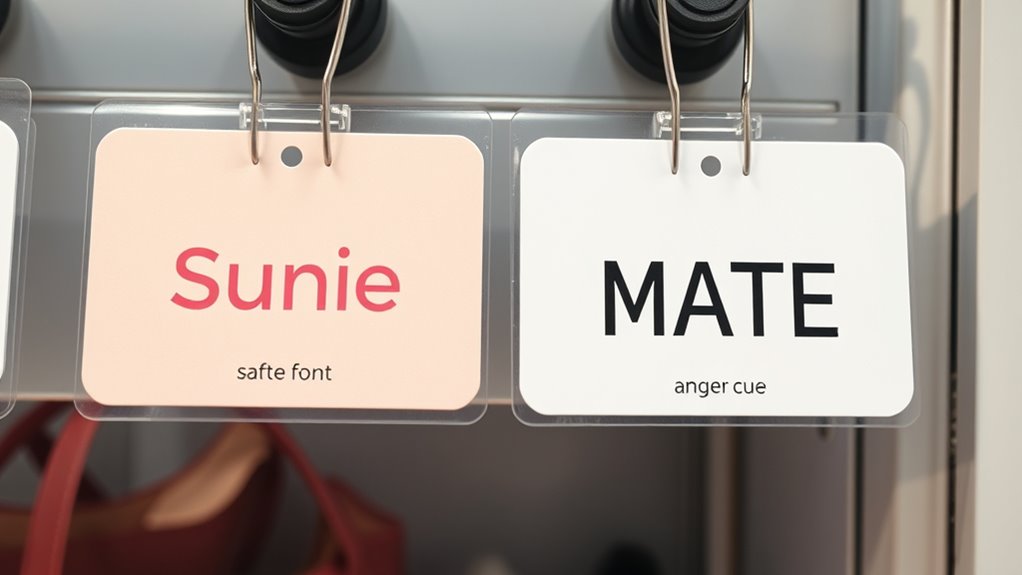
Visual cues and design elements play a pivotal role in shaping how you perceive prices. For example, color psychology influences your emotions and judgments; red can create urgency, while blue suggests trustworthiness. Font choices also matter—sleek, modern fonts might make prices seem more premium, whereas playful fonts can give a sense of affordability. The way prices are displayed, such as bolding or size differences, guides your focus and influences perceived value. Even spacing and layout contribute to your perception, making prices appear more or less attractive. These subtle design strategies work together to steer your subconscious, often encouraging you to see prices as fairer or more appealing than they truly are. Recognizing these cues helps you make more conscious, informed purchasing decisions.
How Social Proof and Scarcity Encourage You to Spend More

Social proof and scarcity are powerful psychological triggers that can persuade you to spend more. When you see others buying a product, your sense of customer loyalty grows, making you more likely to follow suit. Scarcity taps into emotional pricing by creating a sense of urgency, pushing you to act quickly. Here’s how it works:
Seeing others buy increases loyalty, while scarcity creates urgency, prompting quick purchases.
- Limited-time offers make you fear missing out, increasing your willingness to pay.
- Showing that a product is almost sold out boosts its perceived value.
- Testimonials and reviews serve as social proof, convincing you that others find the item worth purchasing.
Discount Tricks and Promotions Retailers Use to Influence You

Retailers skillfully use discount tricks and promotions to sway your buying decisions. They rely on pricing illusions that make deals seem more valuable than they truly are, tapping into consumer psychology to influence your perception of savings. For example, they might advertise a “50% off” sale, but the original price may have been inflated to make the discount look bigger. Limited-time offers create urgency, pushing you to act quickly without fully evaluating the deal. Bundle discounts and “buy one, get one free” promotions also manipulate your perception of getting more for less. These tactics exploit your subconscious tendencies, making you feel like you’re getting a steal while often just encouraging more spending. Recognizing these tricks helps you stay in control of your purchases.
How to Recognize and Protect Yourself From Price Manipulation Tactics
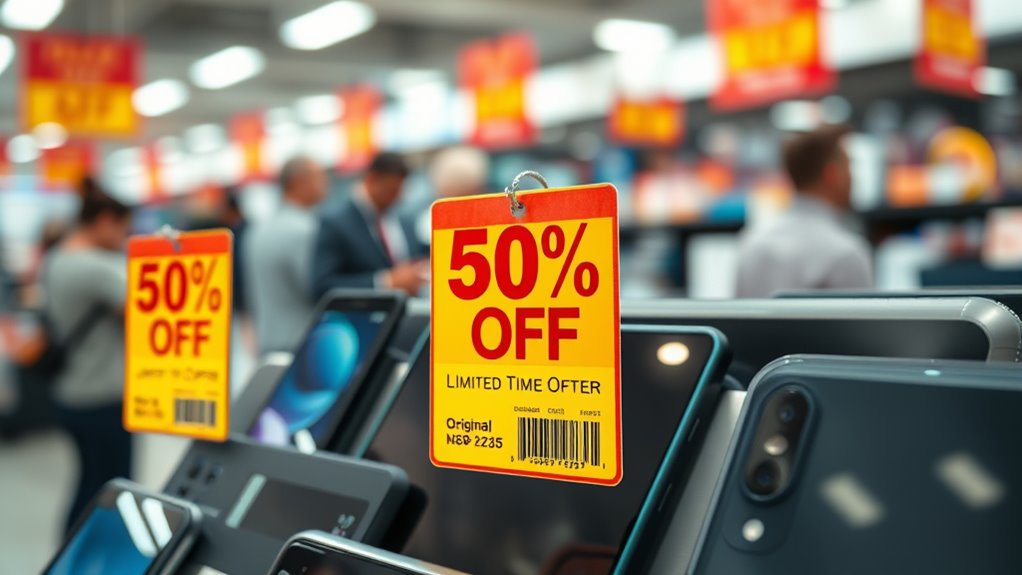
Knowing how discount tricks and promotions are designed to influence your choices is the first step in protecting yourself from price manipulation. To spot deceptive pricing strategies, pay attention to:
- Compare prices across stores to see if discounts are genuine or inflated.
- Analyze the original price to determine if the sale price is truly a deal.
- Beware of limited-time offers that create urgency but may lack real value.
Understanding these tactics helps you assess consumer perception and avoid falling for false discounts. Recognizing manipulation allows you to make informed decisions, rather than reacting to marketing tricks. Stay skeptical of pricing strategies that seem too good to be true—they often are. Being vigilant empowers you to buy smarter and protect your budget from hidden price manipulation.
Frequently Asked Questions
How Can I Identify When a Price Is Intentionally Manipulated?
You can identify intentional price manipulation by looking for pricing thresholds, like ending prices in .99 or .95, which aim to trigger your perception of a better deal. Watch for anchoring effects, where initial higher prices make discounts seem more appealing. If a price seems just below a common threshold or feels unusually rounded, it’s likely manipulated to influence your buying decision without you noticing.
Are There Psychological Tricks Retailers Use That I Haven’t Noticed?
Yes, retailers use psychological tricks you might not notice, like strategic retail store layouts that guide your flow and increase spending. They also craft brand storytelling to create emotional connections, making you more likely to buy. These subtle cues influence your perceptions and decisions without you realizing it. By being aware of these tactics, you can better recognize when your choices are being subtly manipulated and shop more consciously.
What Subconscious Cues Influence My Willingness to Pay More?
Subconscious cues like pricing cues and consumer bias heavily influence your willingness to pay more. You might notice that higher prices often signal better quality, triggering a bias to perceive value. Retailers also use charm pricing, like ending prices in .99, to make items seem cheaper, nudging you to spend more. These subtle cues tap into your subconscious, steering your purchasing decisions without you realizing it.
How Do Cultural Differences Affect Price Perception and Psychology?
You might think price perception is universal, but cultural valuation and pricing customs deeply influence how you see value. In some cultures, higher prices are linked to quality, making you more willing to pay premium amounts. Others may associate lower prices with bargains, affecting your buying decisions. Recognizing these differences helps you understand that your willingness to pay is shaped by cultural cues, often subconsciously.
Can Understanding Price Psychology Help Me Negotiate Better Deals?
Yes, understanding price psychology can help you negotiate better deals. By recognizing pricing biases and how consumer perceptions influence pricing strategies, you can identify when a seller is trying to manipulate your perception. Use this knowledge to ask for discounts, challenge unfair prices, or leverage psychological tactics like anchoring. Being aware of these factors empowers you to make smarter decisions, ultimately leading to more favorable negotiations.
Conclusion
Think of your mind as a savvy sailor steering a sea of prices. Sometimes, the waves of charm pricing or the siren call of limited offers pull you off course. By understanding these tricks, you become the captain of your wallet, steering clear of hidden rocks. With awareness, you’ll sail smoothly through shopping storms, making choices based on facts, not illusion. confidently chart your course and enjoy the voyage of smarter spending.