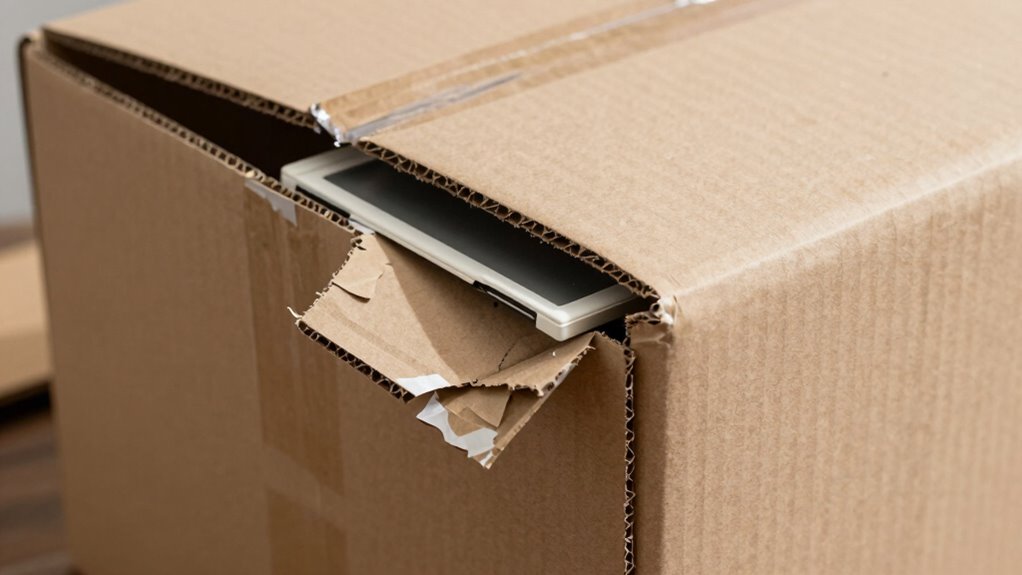

Before tossing a box, closely inspect the exterior for any visible signs of damage like cracks, tears, dents, or crushed areas. Take photos from multiple angles to document what you see, especially before opening it. Look for irregular packaging or signs of mishandling, as these can indicate internal issues. If any damage is evident, examining further can save you time and trouble later—keep going to discover more helpful tips.

Get school and study supplies delivered free — and shop member deals
- Fast, free delivery on millions of items
- Access to Prime Big Deal Days deals on October 6–7
- Prime Video, Amazon Music and more included
Key Takeaways
- Examine the exterior for visible damage like dents, tears, or crushed areas before opening.
- Document exterior packaging with photos from multiple angles to support claims.
- Carefully open the box and inspect internal contents for broken or missing items.
- Check for misaligned components or signs of rough handling inside the package.
- Assess packaging quality, ensuring adequate padding and sturdy materials to prevent future damage.

Shipping damage can happen unexpectedly, causing delays, expenses, and frustration. When you receive a package, it’s tempting to tear into it immediately, but taking a moment to inspect the box can save you headaches later. First, check the exterior for obvious signs of damage—cracks, tears, crushed areas, or dents. If you notice any issues, document them with photos before opening the box. This step is imperative if you need to file an insurance claim later, as evidence strengthens your case and can streamline the reimbursement process.
Once you’ve noted the external condition, carefully open the package. Be cautious with the contents inside, especially if the box shows signs of rough handling. As you unpack, look for signs of internal damage—broken items, missing parts, or misaligned components. Sometimes, the box may look fine on the outside, but the contents are compromised. If you find damage, take detailed photos from multiple angles, including the packaging and the damaged goods. These images are essential when submitting insurance claims, helping to verify your report and expedite resolution.
Preventing damage starts even before shipment, with effective packaging improvements. If you’re a seller or shipper, investing in high-quality packaging materials makes a significant difference. Use sturdy boxes, reinforced corners, and adequate padding—bubble wrap, foam inserts, or packing peanuts—to cushion items. Proper packaging reduces the chance of damage during transit, saving you money on claims and replacements. Remember, well-packed items not only protect your products but also enhance customer satisfaction, leading to fewer complaints and returns.
If you’re on the receiving end, consider providing feedback to the sender about packaging quality. Many companies are open to suggestions that can improve their shipping practices. Additionally, familiarize yourself with the shipping carrier’s policies regarding damage and claims procedures. Understand their timelines for reporting issues and the documentation required. Acting promptly ensures you don’t miss deadlines for filing insurance claims, which can be critical when seeking compensation. Proper handling techniques and understanding packaging standards can further prevent damages and improve overall shipping outcomes.
Frequently Asked Questions
How Can I Prevent Shipping Damage During Transit?
You can prevent shipping damage during transit by using proper packaging and selecting the right carrier. Wrap items securely with bubble wrap or foam, and choose sturdy boxes that can withstand handling. Opt for a reliable carrier known for careful handling and timely delivery. Additionally, clearly label fragile items and include cushioning inside the package to absorb shocks. Taking these steps guarantees your shipment arrives intact and undamaged.
What Are My Rights if My Package Arrives Damaged?
If your package arrives damaged, you have rights under carrier liability and insurance coverage. You should document the damage with photos and contact the seller or shipping carrier promptly. Many carriers hold themselves liable for damages up to a certain amount, so filing a claim can help you recover costs. Always review the carrier’s policies and insurance options to guarantee your package is protected and your rights are upheld.
How Do I Document Damage for Insurance Claims?
A picture is worth a thousand words, so start by taking clear photo evidence of the damage from multiple angles. Then, write a detailed damage description noting what’s broken or compromised. Keep all packaging materials and the damaged item intact, as they may be needed for proof. Submit these along with your insurance claim promptly. This documentation strengthens your case and speeds up the resolution process.
Can I Refuse Delivery for Visibly Damaged Packages?
Yes, you can refuse delivery for visibly damaged packages. When that happens, request a signature confirmation upon refusal to document the issue. This helps protect your insurance options later if you need to file a claim. Make sure to notify the delivery carrier immediately and keep all evidence of damage. Refusing damaged packages guarantees you’re not held responsible for unusable items and makes insurance claims smoother.
What Packaging Materials Best Protect Fragile Items?
Use bubble wrap, foam peanuts, and sturdy packing materials to protect fragile items during shipping. Bubble wrap cushions delicate surfaces, absorbing shocks and preventing scratches. Foam peanuts fill empty spaces, reducing movement and impact. Double-box fragile items for extra security, and wrap with ample padding. By combining bubble wrap and foam peanuts, you create a layered defense that minimizes damage risks and guarantees your items arrive safely and intact.
Conclusion
Before tossing that box, remember – it’s not just packaging; it’s a story of your item’s journey. A tiny dent or rip might hide a bigger problem waiting inside, like a silent storm. Checking carefully turns chaos into clarity, turning a potential disaster into peace of mind. So, pause, inspect, and decide—because what’s beneath the surface might surprise you, transforming your unboxing into a moment of discovery rather than disappointment.
Halloween Picks
halloween
As an affiliate, we earn on qualifying purchases.