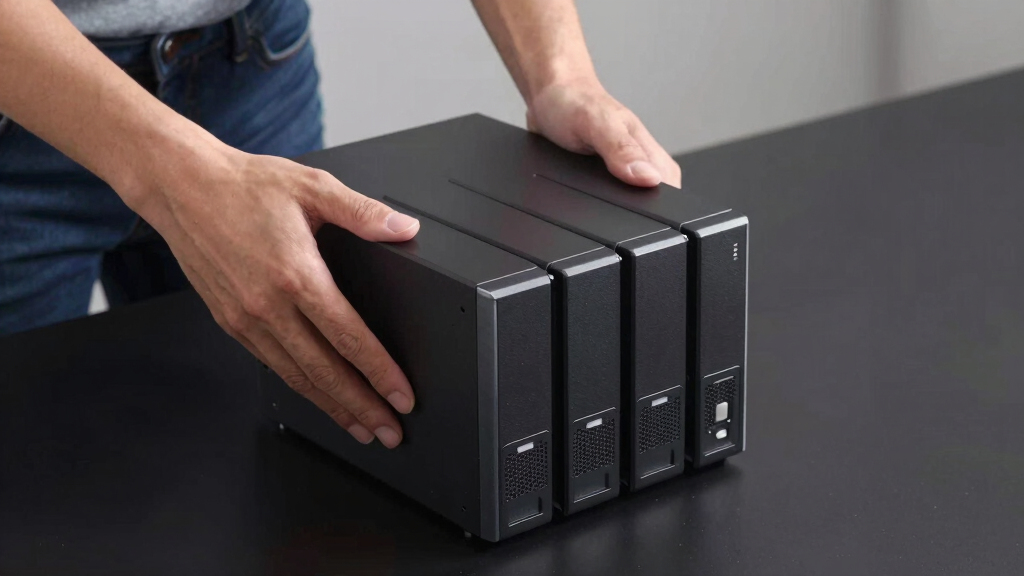

If you’re seeking the best 4 bay NAS for data redundancy, you’re looking for a reliable device that safeguards your files while offering flexible features. The QNAP TS-453E stands out as the overall top choice due to its balanced performance and user-friendly interface. For those on a budget, the UGREEN DXP4800 Plus delivers solid value for small teams and families. Power users and professionals might prefer the Asustor Lockerstor 4 Gen3 with its advanced connectivity and expandability. Each option involves tradeoffs: higher performance often means higher cost, while simpler models may lack advanced features. Continue reading for an in-depth comparison to help you find the best fit for your needs.

Prime made for students and young adults
- Fast, free delivery for dorm and study essentials
- Prime Video and Amazon Music included
- Member-only deals
Key Takeaways
- Performance and expandability vary significantly; premium models offer more powerful CPUs and additional features.
- Ease of setup and user interface are crucial for beginners, but advanced users benefit from more customization options.
- Build quality and drive bays influence long-term reliability and future upgrade potential.
- Value for money depends heavily on the included features versus the price, especially considering scalability.
- Network options, such as 2.5GbE or 10GbE ports, are key for future-proofing and high-speed data transfer.
| QNAP TS-453E 4-Bay Desktop NAS |  | Best Overall for Versatile Performance | Processor: Intel Quad-core up to 2.9 GHz | RAM: 8GB | Number of Bays: 4 | VIEW LATEST PRICE | See Our Full Breakdown |
| UGREEN DXP4800 Plus 4-Bay NAS for Families, Creators & Small Teams |  | Best Value for Massive Storage and Advanced Features | Storage Capacity: Up to 144TB | Number of Bays: 4 | Connectivity: 10GbE network port, 10Gbps USB | VIEW LATEST PRICE | See Our Full Breakdown |
| Synology DS423 4-Bay Diskless NAS for Backup, File Sharing, and Video Surveillance |  | Best for Data Security and Backup | Number of Bays: 4 | Warranty: 2 years | Supports: Remote cloud access, surveillance | VIEW LATEST PRICE | See Our Full Breakdown |
| TERRAMASTER F4-425 4-Bay NAS Intel x86 Quad-Core CPU 4GB RAM (Diskless) |  | Best for Budget-Conscious Performance | Processor: Intel x86 quad-core | RAM: 4GB | Number of Bays: 4 | VIEW LATEST PRICE | See Our Full Breakdown |
| UGREEN NAS DXP4800 Pro 4-Bay for IT Professionals, Developers & Power Users |  | Best for High-End, Demanding Workflows | Processor: Intel Core i3-1315U (6 Cores, 8 Threads) | RAM: 8GB DDR5 (expandable to 96GB) | Storage Capacity: 144TB (4x HDD + 2x M.2 SSD) | VIEW LATEST PRICE | See Our Full Breakdown |
| TERRAMASTER F4-424 Pro NAS 4-Bay, Core i3-N305 8-Core, 32GB DDR5 (Diskless) |  | Best Overall for High-Performance Data Redundancy | Processor: Core i3-N305 8-core 3.8GHz | Memory: 32GB DDR5 4800MHz | Storage Bays: 4 | VIEW LATEST PRICE | See Our Full Breakdown |
| Asustor Drivestor 4 Gen 2 AS1204T 4-Bay NAS, Quad-Core 1.7GHz, 2.5GbE, 1GB DDR4, 3 USB 3.0, Diskless |  | Best for Home and Small Office with High-Speed Networking | Processor: Realtek RTD1619B 1.7GHz Quad-Core | RAM: 1GB DDR4 | Network: 2.5GbE | VIEW LATEST PRICE | See Our Full Breakdown |
| UGREEN NAS DH4300 Plus 4-Bay Home Storage for Beginners, Remote Access, AI Photo Backup |  | Best for Beginners and Cost-Conscious Home Users | Digital Storage Capacity: 120 TB | Hard Disk Interface: SATA | Maximum Capacity: 128TB | VIEW LATEST PRICE | See Our Full Breakdown |
| Asustor Lockerstor 4 Gen3 AS6804T 4-Bay NAS with AMD Ryzen 3.8GHz Quad-Core, 16GB ECC DDR5, 4 M.2 NVMe Slots, Dual 5GbE & 10GbE Ports |  | Best for Creators and Power Users Requiring High Performance | Processor: AMD Ryzen 3.8GHz Quad-Core | Memory: 16GB ECC DDR5 | Hard Disk Interface: NVMe | VIEW LATEST PRICE | See Our Full Breakdown |
| UGREEN NAS DXP4800 GT 4-Bay for Creators, Tech Enthusiasts, and Office Teams |  | Best for Power Users Needing Extensive Performance and Expandability | Processor: AMD Ryzen Embedded R2514, 4 cores | RAM: 8GB DDR4, expandable to 64GB | Storage Capacity: Up to 144TB | VIEW LATEST PRICE | See Our Full Breakdown |
| QNAP TS-473A-8G-US 4-Bay Desktop NAS |  | Best for Power Users Needing High Performance and Expandability | Processor: Quad-core AMD Ryzen V1500B 2.2 GHz | RAM: 8GB DDR4, expandable up to 64GB | Number of Bays: 4 | VIEW LATEST PRICE | See Our Full Breakdown |
| 4 bay NAS for data redundancy | Processor | RAM | Number of Bays |
|---|---|---|---|
| QNAP TS-453E 4-Bay Desktop NAS | Intel Quad-core up to 2.9 GHz | 8GB | 4 |
| UGREEN DXP4800 Plus 4-Bay NAS | — | — | 4 |
| Synology DS423 4-Bay Diskless | — | — | 4 |
| TERRAMASTER F4-425 4-Bay NAS I | Intel x86 quad-core | 4GB | 4 |
| UGREEN NAS DXP4800 Pro 4-Bay f | Intel Core i3-1315U (6 Cores, 8 Threads) | 8GB DDR5 (expandable to 96GB) | — |
| TERRAMASTER F4-424 Pro NAS 4-B | Core i3-N305 8-core 3.8GHz | — | — |
| Asustor Drivestor 4 Gen 2 AS12 | Realtek RTD1619B 1.7GHz Quad-Core | 1GB DDR4 | 4 |
| UGREEN NAS DH4300 Plus 4-Bay H | — | — | — |
| Asustor Lockerstor 4 Gen3 AS68 | AMD Ryzen 3.8GHz Quad-Core | — | — |
| UGREEN NAS DXP4800 GT 4-Bay fo | AMD Ryzen Embedded R2514, 4 cores | 8GB DDR4, expandable to 64GB | — |
| QNAP TS-473A-8G-US 4-Bay Deskt | Quad-core AMD Ryzen V1500B 2.2 GHz | 8GB DDR4, expandable up to 64GB | 4 |
More Details on Our Top Picks
QNAP TS-453E 4-Bay Desktop NAS
The QNAP TS-453E stands out for its combination of powerful hardware and flexible connectivity, making it a strong contender against the Synology DS423. Its Intel quad-core processor and 8GB RAM deliver responsive performance for both file sharing and media management, while dual 2.5GbE ports ensure fast network speeds. The inclusion of M.2 SSD slots for cache acceleration boosts overall responsiveness, which can be especially beneficial compared to the more basic Synology. However, setup can be a bit complex for beginners, and the RAM is not included. Compared to the UGREEN DXP4800 Plus, it offers less raw storage capacity but excels in performance and expandability. This model is well-suited for users needing a reliable, high-performing NAS with flexible connectivity options but who are comfortable with a slightly more involved setup process.
Pros:- Fast dual 2.5GbE network ports for quick data transfer
- Supports SSD cache for improved performance
- Expandable USB ports for additional storage or peripherals
Cons:- No included drives, requiring additional purchase
- Potentially complex setup for less experienced users
Best for: Tech-savvy small business owners or media enthusiasts who need a reliable, expandable NAS with fast data transfer.
Not ideal for: Beginners or users seeking plug-and-play simplicity, as setup and configuration may be challenging.
- Processor:Intel Quad-core up to 2.9 GHz
- RAM:8GB
- Number of Bays:4
- Network Ports:Dual 2.5GbE
- SSD Slots:2 M.2 PCIe Gen3x2 NVMe
- USB Ports:Multiple USB 3.2 Gen 2
Our verdict“This NAS offers excellent performance and expandability for users comfortable with configuration, making it ideal for demanding small business or media use.”
UGREEN DXP4800 Plus 4-Bay NAS for Families, Creators & Small Teams
The UGREEN DXP4800 Plus makes a compelling case for those needing enormous storage capacity and advanced features at a relatively accessible price point, especially when compared to the more premium UGREEN NAS DXP4800 Pro. Its support for up to 144TB of storage and 10GbE connectivity ensures fast data access for small teams or serious home users, while features like Docker and AI-powered photo tools add versatility. However, since drives are not included, initial costs can add up, and the device relies solely on wired Ethernet, limiting flexibility in some environments. Unlike the Synology DS423, it offers much higher capacity but requires more technical setup and management. This pick suits users who prioritize large storage and advanced capabilities without a premium price tag, but it’s less ideal if you prefer built-in Wi-Fi or simpler setup.
Pros:- Massive storage capacity up to 144TB
- Fast transfer speeds with 10GbE and USB 3.2 ports
- Supports Docker, VMs, and AI photo tools
Cons:- Hard drives not included, increasing initial cost
- Limited to wired Ethernet, no Wi-Fi support
Best for: Small teams, creative professionals, or families needing extensive storage with high-speed connectivity and advanced features.
Not ideal for: Users seeking a plug-and-play or Wi-Fi-enabled NAS, as it requires wired setup and additional drive purchases.
- Storage Capacity:Up to 144TB
- Number of Bays:4
- Connectivity:10GbE network port, 10Gbps USB
- Compatibility:Windows, macOS, Linux, iOS, Android
- Hard Drives:Not included, compatible with third-party drives
- Warranty:2 years
Our verdict“Ideal for users needing large-scale storage and advanced features on a budget, requiring technical setup and wired connectivity.”
Synology DS423 4-Bay Diskless NAS for Backup, File Sharing, and Video Surveillance
The Synology DS423 excels in data security and backup, making it a prime choice for users prioritizing reliable data protection over raw performance. Its comprehensive backup features, including snapshots and multi-destination options, outperform many competitors, and its private cloud access adds a layer of security for remote file sharing. The device supports up to 30 IP cameras, making it versatile for surveillance purposes. Compared with the UGREEN DXP4800 Plus, it offers less raw storage capacity but provides a more straightforward, user-friendly interface. The main limitation is that camera licenses are sold separately, and it requires additional drives. This model is best suited for users who want a secure, easy-to-manage NAS dedicated to backup and remote access, rather than high-speed media processing.
Pros:- Secure private cloud access for remote file sharing
- Advanced backup options with snapshots and multi-destination support
- Supports up to 30 cameras for surveillance
Cons:- Camera licenses must be purchased separately
- No included drives, additional purchase needed
- Advanced features may require technical expertise
Best for: Home users or small offices focusing on data backup, security, and surveillance without requiring high-performance media streaming.
Not ideal for: Power users needing extensive media transcodes or high-speed data transfer, as its hardware is more security-focused than performance-oriented.
- Number of Bays:4
- Warranty:2 years
- Supports:Remote cloud access, surveillance
Our verdict“Perfect for security-conscious users prioritizing backup and surveillance over raw speed or media performance.”
TERRAMASTER F4-425 4-Bay NAS Intel x86 Quad-Core CPU 4GB RAM (Diskless)
The TERRAMASTER F4-425 offers solid performance with its Intel x86 quad-core processor and 4GB RAM, making it a good choice for those who want a capable NAS without paying a premium for top-tier hardware. Its support for 4K transcoding and large RAID configurations makes it suitable for media streaming and data redundancy, comparable to the UGREEN DXP4800 Plus but at a more affordable price point. The setup, however, relies on mobile apps, which some users find less intuitive than desktop interfaces, and the moderate customer ratings hint at some reliability concerns. Compared to the higher-end UGREEN DXP4800 Plus, it sacrifices some advanced features for simplicity and cost savings. This NAS is best for budget-conscious users who need reliable redundancy and media capabilities but are comfortable with mobile setup.
Pros:- Quad-core processor for multitasking
- Supports 4K hardware decoding and large RAID arrays
- Quiet operation at 21dB
Cons:- Setup via mobile app may be less user-friendly
- No drives included, additional purchase required
- Moderate user ratings suggest potential reliability issues
Best for: Home users or small offices seeking reliable data redundancy and media streaming without the need for advanced virtualizations.
Not ideal for: Power users or those requiring extensive virtual machine support, as it lacks advanced virtualization features and higher RAM capacity.
- Processor:Intel x86 quad-core
- RAM:4GB
- Number of Bays:4
- Network Interface:2.5GbE
- Max Storage Capacity:120TB
- Noise Level:21dB
Our verdict“A cost-effective option for users needing dependable redundancy and media streaming with straightforward operation.”
UGREEN NAS DXP4800 Pro 4-Bay for IT Professionals, Developers & Power Users
The UGREEN NAS DXP4800 Pro is tailored for demanding workflows, offering a robust Intel Core i3 processor, 8GB DDR5 RAM, and support for virtualization and AI features. Its support for up to 144TB and extensive RAID options surpass many competitors, including the UGREEN DXP4800 Plus, making it suitable for professional environments. Its comprehensive security and support for Docker, VMs, and AI tools make it a powerhouse for developers and IT professionals. The tradeoff lies in its high cost and complexity — setup can be daunting, and its large footprint might be unsuitable for small spaces. Compared to the Synology DS423, it offers much more power but at a higher price point and complexity. This model fits best with experienced users needing maximum flexibility and performance for critical data workloads.
Pros:- High-performance Intel Core i3 processor for intensive tasks
- Supports up to 144TB storage with flexible RAID
- Extensive RAM and virtualization support
Cons:- High cost for advanced features
- Setup and management require technical expertise
- Large physical size may not fit small spaces
Best for: IT professionals, developers, or power users running demanding virtualized or AI workloads who need maximum storage and flexibility.
Not ideal for: Casual or home users seeking simple, plug-and-play solutions, due to its complexity and cost.
- Processor:Intel Core i3-1315U (6 Cores, 8 Threads)
- RAM:8GB DDR5 (expandable to 96GB)
- Storage Capacity:144TB (4x HDD + 2x M.2 SSD)
- Network Ports:10GbE + 2.5GbE
- SSD Slots:2 M.2 PCIe 4.0
- RAID Support:0, 1, 5, 10
Our verdict“Designed for demanding users who need maximum performance and flexibility, accepting higher complexity and cost.”
TERRAMASTER F4-424 Pro NAS 4-Bay, Core i3-N305 8-Core, 32GB DDR5 (Diskless)
The TERRAMASTER F4-424 Pro stands out for its powerful hardware, including an 8-core Intel Core i3-N305 processor and 32GB DDR5 RAM, making it ideal for demanding environments like small businesses. Compared to the Asustor Lockerstor 4 Gen3, which offers high-speed networking but less raw CPU power, this model excels in handling multiple simultaneous tasks with minimal slowdown. Its multiple RAID options, including RAID 6 and 10, provide robust data redundancy, while the dual 2.5G Ethernet ports ensure fast network throughput. However, being diskless, it relies on the user to purchase drives separately, and the non-upgradable RAM could limit future expansion. The noise level may also be a concern in quieter office settings due to its high-performance cooling needs.
Pros:- Powerful 8-core CPU and 32GB DDR5 RAM for demanding workloads
- Multiple RAID options including RAID 6/10 for strong redundancy
- Dual 2.5G Ethernet ports for fast network speeds
- Easy SSD installation for performance tuning
Cons:- Diskless configuration requires additional hard drives
- Non-upgradable RAM may restrict future performance needs
- Potential noise due to cooling fans
Best for: Small to medium-sized businesses needing a reliable, high-performance NAS with extensive RAID options and fast data transfer.
Not ideal for: Home users with limited technical expertise or those seeking a simple, plug-and-play solution without the need for high-end hardware.
- Processor:Core i3-N305 8-core 3.8GHz
- Memory:32GB DDR5 4800MHz
- Storage Bays:4
- Network:Dual 2.5G Ethernet
- SSD Slots:2 M.2 NVMe
- RAID Support:RAID 0/1/5/6/10/JBOD/Single
Our verdict“This NAS is best suited for tech-savvy small business users prioritizing performance and redundancy over simplicity.”
Asustor Drivestor 4 Gen 2 AS1204T 4-Bay NAS, Quad-Core 1.7GHz, 2.5GbE, 1GB DDR4, 3 USB 3.0, Diskless
The Asustor Drivestor 4 Gen 2 offers a balance of affordability and functionality, featuring a quad-core 1.7GHz processor and a 2.5GbE port that provides faster local data transfer than traditional gigabit solutions. Compared with the UGREEN NAS DXP4800 Plus, which emphasizes extensive expandability and surveillance features, this model is more straightforward, focusing on media streaming and basic redundancy. Its support for multiple RAID configurations makes it suitable for protecting personal data, but its limited 1GB RAM might hinder multitasking with multiple users or intensive applications. The diskless setup requires users to purchase drives separately, and the absence of advanced hardware upgrades limits longevity for heavy users.
Pros:- 2.5GbE port for noticeably faster local network speeds
- Supports multiple RAID configurations for data protection
- Easy setup with a user-friendly interface
- Supports 4K media streaming
Cons:- Limited 1GB RAM restricts multitasking
- Diskless configuration requires separate drive purchase
- No hardware upgrade options for RAM
Best for: Home users or small offices seeking a simple, reliable NAS with faster-than-Gigabit networking for media and data backup.
Not ideal for: Power users or enterprises requiring extensive virtualization, large-scale multitasking, or advanced hardware upgrades.
- Processor:Realtek RTD1619B 1.7GHz Quad-Core
- RAM:1GB DDR4
- Network:2.5GbE
- Number of Bays:4
- USB Ports:3
- RAID Support:Multiple options
Our verdict“This NAS is a solid choice for home users who want faster local network performance with straightforward setup and reliable redundancy.”
UGREEN NAS DH4300 Plus 4-Bay Home Storage for Beginners, Remote Access, AI Photo Backup
The UGREEN NAS DH4300 Plus is tailored for those new to NAS with its intuitive setup and AI-powered photo backup features. While it doesn’t boast high-end hardware like the Asustor Lockerstor 4, it provides sufficient redundancy options for basic home use, along with remote access capabilities. Its main advantage lies in its simplicity and affordability, making it accessible for users who want a secure private cloud without complex configurations. However, the lack of Wi-Fi support and non-ECC RAM could limit its performance with larger data sets or multitasking. Drives are sold separately, which might increase initial costs for some buyers.
Pros:- User-friendly setup with clear instructions
- Automatic AI photo organization and backup
- Remote access for multiple devices
- Cost-effective for basic storage needs
Cons:- No Wi-Fi support, limited to wired Ethernet
- Storage drives sold separately
- Non-ECC RAM limits performance for large data workloads
Best for: Home users or casual users seeking easy-to-use storage with automatic backups and remote access, without the need for advanced features.
Not ideal for: Power users or small businesses needing high-speed networking, extensive virtualization, or hardware upgradeability.
- Digital Storage Capacity:120 TB
- Hard Disk Interface:SATA
- Maximum Capacity:128TB
- Connectivity Technology:Ethernet, HDMI, SATA, USB
- Speed:312 MB/s
- Supports Virtual Machines:No
Our verdict“This NAS makes sense for beginners or casual users prioritizing ease of use and automatic backups over advanced features.”
Asustor Lockerstor 4 Gen3 AS6804T 4-Bay NAS with AMD Ryzen 3.8GHz Quad-Core, 16GB ECC DDR5, 4 M.2 NVMe Slots, Dual 5GbE & 10GbE Ports
The Asustor Lockerstor 4 Gen3 delivers exceptional raw power with a 3.8GHz AMD Ryzen quad-core processor and 16GB ECC DDR5 RAM, supporting intensive tasks like video editing, virtualization, and AI workloads. Its four M.2 NVMe slots provide fast SSD caching options, which surpass the performance of traditional HDD-based NAS devices like the UGREEN DXP4800 GT. The dual 5GbE and 10GbE ports accommodate high-bandwidth workflows. The setup can be complex, especially for beginners, and the diskless configuration requires additional investment in drives. Its larger size and higher price point make it less suitable for small spaces or budget-conscious users, but it excels in demanding professional environments.
Pros:- Powerful AMD Ryzen 3.8GHz CPU for demanding workloads
- 16GB ECC DDR5 RAM for reliability
- Four M.2 NVMe slots for caching and fast storage
- Dual 5GbE and 10GbE ports for maximum network throughput
Cons:- Requires separate drives for operation
- Complex setup for non-technical users
- Larger footprint may not suit small spaces
Best for: Creative professionals and tech-savvy small business users needing high-speed performance and extensive expandability.
Not ideal for: Home users or those new to NAS who prefer simple, plug-and-play solutions without complex setup requirements.
- Processor:AMD Ryzen 3.8GHz Quad-Core
- Memory:16GB ECC DDR5
- Hard Disk Interface:NVMe
- Network:Dual 5GbE & 10GbE
- Dimensions:7.28 x 6.69 x 9.06 inches
- Warranty:3 years
Our verdict“This NAS is ideal for creators and professionals who need top-tier performance and expandability at a higher cost and complexity.”
UGREEN NAS DXP4800 GT 4-Bay for Creators, Tech Enthusiasts, and Office Teams
The UGREEN DXP4800 GT offers a compelling mix of performance and versatility, powered by an AMD Ryzen Embedded R2514 processor and supporting up to 144TB of storage. Its dual 10GbE ports with link aggregation enable high-speed data transfer, suitable for multi-user environments or large media files. Unlike more basic options, it supports extensive multitasking, virtualization, and surveillance integration, making it a flexible choice for small offices or media creators. However, the initial cost is higher, and drives are not included, adding to setup complexity. The non-ECC RAM limits its reliability for critical enterprise tasks, but for demanding creators and tech enthusiasts, this NAS provides a strong balance of power and expandability.
Pros:- Powerful AMD Ryzen Embedded processor for multitasking
- Dual 10GbE ports support link aggregation for maximum bandwidth
- Expandable storage up to 144TB with multiple SSD options
- Built-in surveillance center for IP camera management
Cons:- Drives not included, increasing initial setup costs
- Non-ECC RAM limits data integrity for critical workloads
- Setup for advanced features like Plex via Docker can be complex
Best for: Small businesses, creators, and tech enthusiasts who require high throughput, extensive storage, and versatile features.
Not ideal for: Casual home users or those seeking a simple, budget-friendly NAS with minimal setup complexity.
- Processor:AMD Ryzen Embedded R2514, 4 cores
- RAM:8GB DDR4, expandable to 64GB
- Storage Capacity:Up to 144TB
- Network:Dual 10GbE
- Connectivity:USB 3.0, USB-C, HDMI, SD
- Warranty:2 years
Our verdict“This NAS suits power users and small teams needing extensive performance and expandability at a higher price point and setup effort.”
QNAP TS-473A-8G-US 4-Bay Desktop NAS
The QNAP TS-473A-8G-US stands out for its powerful quad-core AMD Ryzen V1500B processor, making it ideal for demanding tasks like virtualization, media editing, or large-scale backups. Unlike the Synology DS423, which offers simpler setup and lower price, this model provides significantly more processing power and expandability with up to 64GB RAM, catering to users with intensive workflows. The dual M.2 NVMe slots enable fast cache acceleration, which can dramatically improve performance during high I/O operations. However, its complexity and price make it less suitable for casual users or small home setups. The multiple USB 3.2 ports and dual 2.5GbE ports add versatility for connectivity and network bandwidth. Still, beginners may find the setup daunting, and its higher cost could be a barrier for those with limited budgets.
Pros:- Excellent processing power for demanding multitasking and virtualization
- Expandable RAM up to 64GB for future-proofing
- Dual M.2 NVMe slots for accelerated caching
- Fast 2.5GbE network ports support high-speed connectivity
Cons:- Setup can be complicated for first-time NAS users
- Higher price point compared to entry-level or basic NAS units
- Overkill for simple backup or file-sharing needs
Best for: Power users and small businesses needing high performance, expandability, and robust multitasking capabilities.
Not ideal for: Home users seeking simple, plug-and-play storage or those with tight budgets due to its complexity and price.
- Processor:Quad-core AMD Ryzen V1500B 2.2 GHz
- RAM:8GB DDR4, expandable up to 64GB
- Number of Bays:4
- SSD Slots:2 M.2 PCIe Gen 3 NVMe
- Network Ports:2 x 2.5GbE
- USB Ports:Multiple USB 3.2 Gen 2 (Type-A & Type-C)
- Warranty:3 years
Our verdict“This NAS is best suited for tech-savvy small businesses or power users who need raw performance and future expandability, despite its complexity and cost.”

How We Picked
Our evaluation focused on performance, build quality, ease of use, expandability, and value. We analyzed each NAS’s hardware specs, including CPU power, RAM capacity, and network connectivity, to assess how well they can handle data redundancy and multitasking. User interface and setup complexity were considered to determine suitability for both beginners and advanced users. Price-to-feature ratio was also a key factor, ensuring each pick offers meaningful value. The ranking reflects a balance between raw performance, ease of maintenance, and future-proof features, aiming to help different buyer profiles find the right match.Factors to Consider When Choosing Best 4 Bay NAS For Data Redundancy
Choosing the right 4 bay NAS for data redundancy involves balancing multiple factors. Beyond raw specs, consider how the device fits your current needs and future plans. A well-chosen NAS should support your backup strategies, network environment, and expansion potential without overpaying for unnecessary features. Here are some key considerations to guide your decision.Performance and CPU Power
The CPU determines how well your NAS can handle multiple data streams, backups, and media servers. Higher-end processors, like Intel Core or AMD Ryzen chips, offer greater multitasking ability and faster data processing. If you plan to run virtual machines or intensive applications, prioritize models with more powerful CPUs. Conversely, basic tasks like file sharing and backups can be managed by less robust hardware, saving money without sacrificing redundancy.
Network Connectivity
Fast, reliable network ports are critical for maximizing data transfer speeds and future-proofing. Many modern NAS devices now include 2.5GbE or 10GbE ports, which significantly reduce transfer times for large files. If your current network is only Gigabit Ethernet, you might not need high-speed ports immediately, but investing in a NAS with multi-Gig options can pay off as your network upgrades. Avoid models with only 1GbE if high-speed data access is a priority.
Drive Bays and Scalability
While four bays suit many use cases, consider whether the NAS supports expansion or additional M.2 SSD slots for caching. Some models, like the Asustor Lockerstor 4, offer M.2 slots that enhance performance and expandability. Think about your long-term data storage plans—if you expect to grow or require more redundancy features, choosing a model with flexibility can prevent costly replacements later.
Ease of Use and Management
User interface and setup process can vary widely. For beginners, a streamlined, intuitive app ecosystem is essential to avoid frustration. Advanced users may appreciate detailed control panels and customization options. Read reviews about the setup process and ongoing management to ensure your chosen NAS won’t become a maintenance headache. Remember, a complex interface can hinder effective data protection, especially if you’re not technically inclined.
Price and Total Cost of Ownership
Initial purchase price is just part of the story; consider the total cost of ownership, including drives, optional expansion modules, and ongoing maintenance. Higher-end models often come with better warranties and longer lifespan, but they also demand more upfront investment. For cost-conscious buyers, finding a balance between features and affordability is key. Avoid overpaying for features you don’t need, but don’t skimp on critical capabilities like redundancy support and network speed.
Frequently Asked Questions
Can I upgrade the RAM or CPU later?
Many 4 bay NAS models allow some degree of hardware upgrade, especially RAM. CPUs are less often upgradeable due to integrated design, but some higher-end models like the Asustor Lockerstor 4 do support RAM expansion. Before purchasing, verify the upgrade options, especially if you anticipate needing more processing power or memory for intensive tasks. Upgradability can extend the device’s lifespan and improve performance as your needs evolve.
What is the best network setup for a 4 bay NAS?
For optimal data redundancy and transfer speeds, a multi-Gigabit network environment is recommended. If your NAS supports 2.5GbE or 10GbE ports, pairing it with compatible switches and cabling will drastically improve file transfer times. For home or small office setups, a simple upgrade to a 2.5GbE switch can often be enough, but larger environments should consider 10GbE for serious workloads. Always check your existing network hardware compatibility before investing.
How much RAM do I need for data redundancy tasks?
The amount of RAM impacts the NAS’s ability to handle multiple concurrent tasks, including redundancy operations like RAID rebuilds. For most users, 4-8GB of RAM is sufficient for basic redundancy and file sharing. Power users running virtual machines, surveillance, or large media libraries should look for models with 16GB or more. Some NAS units support RAM upgrades, so plan accordingly if your workload is expected to grow.
Is a diskless NAS a good choice?
Choosing a diskless NAS provides flexibility in selecting drives that match your capacity and performance needs. It also allows for better control over drive quality and brands. However, it requires additional setup time and knowledge to install drives correctly. For beginners or those seeking a hassle-free experience, pre-configured NAS with drives included might be preferable. Diskless models are best suited for users who want to customize their storage and are comfortable with hardware installation.
Should I prioritize a higher-end NAS or save money with a basic model?
The decision depends on your current needs and future plans. Investing in a higher-end NAS with faster processors, more RAM, and better connectivity ensures smoother operation and longevity, especially if data redundancy is mission-critical. On the other hand, budget models can handle essential backup and sharing tasks well enough for home users or small teams. Consider how much you value future scalability and whether the initial savings outweigh potential limitations down the line.
Conclusion
For general use, the QNAP TS-453E offers a balanced mix of performance, ease of management, and expandability, making it ideal as the best overall choice. Budget-conscious buyers or small households will find the UGREEN DXP4800 Plus to deliver solid data redundancy without breaking the bank. Power users and those with demanding workflows should consider the Asustor Lockerstor 4 Gen3 for its advanced connectivity and future-proof features. Beginners should focus on models with simple setup and user-friendly interfaces, while professional users need options that support high-speed networks and hardware upgrades. Carefully match your needs with these strengths for the best long-term investment.
As an affiliate, we earn on qualifying purchases.Fall Picks
fall essentials