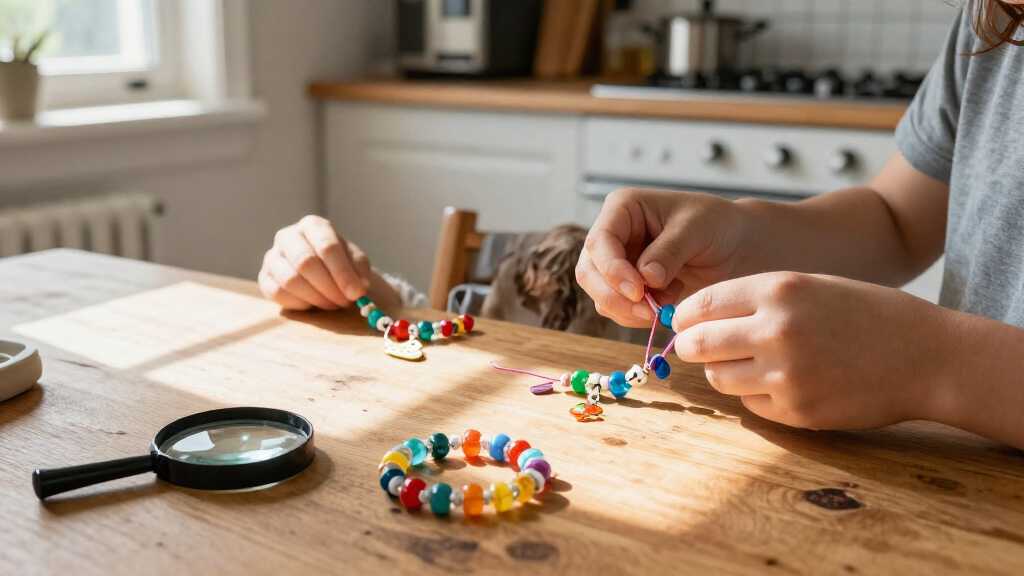
Science jewelry making kits for kids combine hands-on crafts with activities such as growing crystals, digging for gems, or designing bead accessories. My best overall pick is the National Geographic Crystal Growing Kit with 5 Activities, which offers several experiment-led projects rather than focusing on beads alone. The PIBEX Birthstone Dig Kit stands out for kids who want to uncover gems and turn one into a pendant, while the Klever Kits Jewelry Making Kit suits children who mainly want a broad bead-and-design activity. The main tradeoff is between science-led projects, which can require waiting or adult help, and ready-to-start jewelry crafts, which offer more immediate making but less experimentation. Read on for the full breakdown and advice on choosing the right mix for your child.

Prime made for students and young adults
- Fast, free delivery for dorm and study essentials
- Prime Video and Amazon Music included
- Member-only deals
Key Takeaways
- The clearest science-and-craft combination is not always the biggest bead set: crystal-growing and gem-dig kits add discovery, while bead-focused kits offer more immediate design freedom.
- National Geographic’s five-activity crystal kit is the strongest all-round science-led choice because it gives kids more than one experiment to explore.
- PIBEX links a specific discovery to a wearable result: its gem dig and DIY pendant give the activity a clear start-to-finish outcome.
- Several options lean more toward jewelry crafting than science: the Dowsabel, Klever Kits, and AIPRIDY bead sets are better suited to design practice and imaginative play.
- Project pace is a key difference: bead-making can start right away, while crystal growth and excavation involve waiting, setup, or closer adult involvement.
| Dowsabel Bracelet Making Kit with Pony, Polymer Clay, Smile Face, and Letter Beads |  | Best for Open-Ended Bead Designs | Brand: Dowsabel | Recommended age: 6–12 years | Bead contents: About 300 pony beads, 90 polymer clay beads, 350 letter beads, 22 smile beads, and 50 small round beads | VIEW LATEST PRICE | See Our Full Breakdown |
| National Geographic Crystal Growing Kit with 5 Activities |  | Best for Variety in Crystal Science | Brand: Blue Marble | Age range: 8 years and up | Activities: 5 crystal-growing activities | VIEW LATEST PRICE | See Our Full Breakdown |
| BBC Earth Excavate & Discover Gemstone Dig Kit |  | Best for Gemstone Discovery and Keepsakes | Brand: Horizon Group USA | Age range: 6 years and up | Gemstones: Nine stones; listed types include blue quartz, rose quartz, amethyst, jade, agate, citrine, quartz, and black onyx | VIEW LATEST PRICE | See Our Full Breakdown |
| National Geographic Mega Crystal Growing Kit for Kids |  | Best for Display-Worthy Crystal Projects | Brand: National Geographic | Recommended age: 8 years and up | Crystals: 6 colors: blue, red, purple, green, yellow, and glow-in-the-dark | VIEW LATEST PRICE | See Our Full Breakdown |
| Klever Kits Princess Bracelet Making Kit, 650+ Pieces |  | Best for Younger Jewelry Makers | Brand: Klever Kits | Recommended age: 4–9 years | Piece count: 650+ | VIEW LATEST PRICE | See Our Full Breakdown |
| Barbie Crystal Growing Kit for Kids Ages 8+ |  | Best for Crystal Science First | Brand: Blue Marble | Age range: 8 years and up | Crystals: 3: blue, pink, and purple | VIEW LATEST PRICE | See Our Full Breakdown |
| Barbie Crystal Growing Jewelry Kit |  | Best Wearable Crystal Science Kit | Brand: Blue Marble | Age range: 8 years and up | Included jewelry: 4 necklaces and 1 ring | VIEW LATEST PRICE | See Our Full Breakdown |
| AIPRIDY 208-Piece Unicorn and Mermaid Jewelry Making Kit |  | Best for Themed Variety | Brand: AIPRIDY | Age range: 4 years and up | Piece count: 208 | VIEW LATEST PRICE | See Our Full Breakdown |
| Klever Kits Jewelry Making Kit with 350+ Beads and Flower-Shaped Storage Case |  | Best for Organized Bead Crafting | Brand: Klever Kits | Age range: Kid | Number of pieces: 359 | VIEW LATEST PRICE | See Our Full Breakdown |
| PIBEX Birthstone Dig Kit with 12 Gems, DIY Necklace and Crystal Pendant |  | Best for Gemstone Discovery | Brand: PIBEX | Age range: 6–12 years | Number of birthstones: 12 | VIEW LATEST PRICE | See Our Full Breakdown |
| Butterfly EduFields DIY Jewelry Craft Kit for Ages 8–14 |  | Best for Technique Variety | Recommended age: 8 years and up | Craft styles: 8 | Project count: 25+ | VIEW LATEST PRICE | See Our Full Breakdown |
| science jewelry making kits for kid | Brand | Age range | Included components |
|---|---|---|---|
| Dowsabel Bracelet Making Kit w | Dowsabel | — | — |
| National Geographic Crystal Gr | Blue Marble | 8 years and up | Crystal solutions, growing stones, display container, dinosaur mold, tree forms, safety gear, instructions, and Learning Guide |
| BBC Earth Excavate & Discover | Horizon Group USA | 6 years and up | — |
| National Geographic Mega Cryst | National Geographic | — | — |
| Klever Kits Princess Bracelet | Klever Kits | — | — |
| Barbie Crystal Growing Kit for | Blue Marble | 8 years and up | Crystal-growing powder, seed rocks, rose quartz specimen, display stand, magnifying glass, instructions, and learning guide |
| Barbie Crystal Growing Jewelry | Blue Marble | 8 years and up | Materials for growing and wearing five pieces of crystal jewelry, plus instructions |
| AIPRIDY 208-Piece Unicorn and | AIPRIDY | 4 years and up | 90 colored European beads, 22 charms and pendants, 20 metal spacer beads, 4 necklace cords, 7 snake chain bracelets, 2 charm bracelets, 4 silicone rings, and gift box |
| Klever Kits Jewelry Making Kit | Klever Kits | Kid | 350+ colorful beads, 2 charms, 4 short strings, and 3 long strings |
| PIBEX Birthstone Dig Kit with | PIBEX | 6–12 years | — |
| Butterfly EduFields DIY Jewelr | — | — | Beads, charms, silk threads, macramé ropes, crochet hook, loom board, furry wire, clay, gem picker pen, bracelet strips, and storybook |
More Details on Our Top Picks
Dowsabel Bracelet Making Kit with Pony, Polymer Clay, Smile Face, and Letter Beads
Dowsabel’s mix of bead styles makes this the most flexible choice here for children who want to design jewelry rather than grow or excavate a science specimen. Letter, smile-face, pony, and polymer clay beads support personalized bracelets, necklaces, and hair accessories, while the elastic string and woven ropes give kids more than one way to assemble a project. Compared with the BBC Earth Excavate & Discover Gemstone Dig Kit, Dowsabel offers more room for repeated design changes, but it does not teach geology or include natural stones. Its 27-compartment box helps keep the assortment sorted and portable; the tradeoff is that the listed bead quantities are approximate and some selections may be random. This is a craft-first pick, not a science experiment kit.
Pros:- Combines pony, polymer clay, letter, smile-face, and small round beads for varied designs.
- Includes elastic string and woven ropes for multiple assembly styles.
- The 27-compartment box keeps bead types separated for storage and transport.
- Beads can be used for bracelets, necklaces, earrings, and hair accessories.
Cons:- Approximate quantities and random selections make the exact assortment less predictable.
- It focuses on jewelry crafting, with no science experiment or educational guide listed.
Best for: Children ages 6–12 who enjoy personalizing jewelry with letters, bright beads, and several project formats.
Not ideal for: Families seeking a hands-on earth science activity, natural gemstones, or a guided experiment rather than an open-ended craft assortment.
- Brand:Dowsabel
- Recommended age:6–12 years
- Bead contents:About 300 pony beads, 90 polymer clay beads, 350 letter beads, 22 smile beads, and 50 small round beads
- String and rope:6 m elastic string and 4 woven ropes
- Storage:27-grid plastic box
- Materials:Clay, plastic, and polymer
- Item weight:0.33 kg
Our verdict“Choose Dowsabel for a child who wants a broad, reusable bead assortment more than a science-led jewelry project.”
National Geographic Crystal Growing Kit with 5 Activities
Five distinct crystal activities give this kit the widest project variety among the science-focused options here: children can grow a mini crystal, dinosaur, glow-in-the-dark crystal, two crystal trees, and underwater crystals. The included guide and safety gear make it a more structured science activity than the Dowsabel Bracelet Making Kit, which is built around free-form bead design rather than experiments. It also differs from the National Geographic Mega Crystal Growing Kit: this set offers more activity formats, while the Mega emphasizes six colored crystals, real gemstone specimens, and a display stand. The tradeoff is patience—crystals need time to grow, so this is not an immediate finished-jewelry project. It is best treated as an earth-science activity with display-worthy results, not a conventional jewelry-making kit.
Pros:- Includes five different crystal-growing activities in one set.
- Glow-in-the-dark and underwater projects add variety beyond basic crystal forms.
- Includes safety gear, instructions, and an educational guide.
- Multiple molds and forms give children different outcomes to observe and display.
Cons:- Recommended for ages 8 and up, limiting its fit for younger children.
- Crystal growth takes time, so projects do not provide immediate results.
- It is a crystal science kit rather than a jewelry-making kit.
Best for: Families with children ages 8 and up who want several guided crystal-growing projects and can accommodate waiting time.
Not ideal for: Younger children or buyers who want a ready-to-wear jewelry activity with results in one sitting.
- Brand:Blue Marble
- Age range:8 years and up
- Activities:5 crystal-growing activities
- Included components:Crystal solutions, growing stones, display container, dinosaur mold, tree forms, safety gear, instructions, and Learning Guide
- Theme:Earth science
- Dimensions:8.97 × 5.35 × 7.2 inches
- Item weight:2.2 pounds
Our verdict“Pick this for an older child who values varied crystal experiments over making wearable jewelry.”
BBC Earth Excavate & Discover Gemstone Dig Kit
Excavation plus keychain-making gives this kit the clearest bridge between earth science and a wearable-or-carryable keepsake. Children chip nine gemstones from a dig brick, identify their finds with the guide, then use the included supplies to make up to three keychains. That makes it more discovery-led than the Dowsabel Bracelet Making Kit, which offers a larger range of bead-design possibilities but no gemstone excavation. Compared with the National Geographic Crystal Growing Kit with 5 Activities, BBC Earth focuses on uncovering natural specimens rather than waiting for crystals to form. The tradeoff is mess and limited finishing supplies: only three keychains are included for nine finds. It suits children who enjoy hands-on digging, but the activity needs a work area and adult supervision.
Pros:- Includes nine natural gemstones to excavate and identify.
- Keychain supplies let children turn some discoveries into keepsakes.
- Reusable mallet, chisel, and brush support hands-on excavation.
- The poster and guide connect the activity to geology and earth science.
Cons:- Chipping the dig brick can create dust and debris.
- Supplies make three keychains, fewer than the nine gemstones included.
- The finished project is a keychain rather than a traditional bracelet or necklace.
Best for: Children ages 6 and up who like digging, identifying natural rocks, and turning a few finds into keepsakes.
Not ideal for: Families looking for a low-mess activity, enough jewelry supplies for every gemstone, or a quick project without excavation.
- Brand:Horizon Group USA
- Age range:6 years and up
- Gemstones:Nine stones; listed types include blue quartz, rose quartz, amethyst, jade, agate, citrine, quartz, and black onyx
- Keychain supplies:3 key rings, 3 lanyard clips, and 3 bundles of 10-inch, 16-gauge aluminum wire
- Tools:Mallet, chisel, and paintbrush
- Guide:2-in-1 poster and guide
- Educational topics:Earth science, geology, motor skills, STEM, and sustainability
Our verdict“Choose BBC Earth for a child who would rather uncover and identify gemstones than sort beads or grow crystals.”
National Geographic Mega Crystal Growing Kit for Kids
A light-up display and four real specimens make this the strongest pick for children who want their science project to become a lasting collection. The kit grows six colorful crystals, including a glow-in-the-dark option, and the USB-powered stand displays five. Compared with the National Geographic Crystal Growing Kit with 5 Activities, the Mega kit puts more emphasis on presenting finished crystals and includes rose quartz, fluorite, blue calcite, and a quartz geode; the five-activity set offers more different project formats. The silicone chambers and stated 3–4 day growing time provide a clear, bounded project, though it still requires patience. One practical limitation is that the stand holds five crystals while the kit grows six, so a display choice or separate storage is needed.
Pros:- Grows six colorful crystals, including a glow-in-the-dark crystal.
- USB-powered stand gives five finished crystals a dedicated display.
- Includes four real gemstone specimens alongside the growing activities.
- Silicone chambers and a learning guide support a structured project.
Cons:- The display holds five crystals, while the kit grows six.
- Growing takes about 3–4 days rather than producing an immediate finished piece.
- It is a crystal-growing kit, not a jewelry-making kit.
Best for: Families with children ages 8 and up who want a guided crystal-growing project plus a display for finished specimens.
Not ideal for: Buyers who want wearable jewelry, immediate results, or a display that accommodates every crystal grown in the kit.
- Brand:National Geographic
- Recommended age:8 years and up
- Crystals:6 colors: blue, red, purple, green, yellow, and glow-in-the-dark
- Growing time:3–4 days
- Growing chambers:2 silicone chambers
- Display:USB-powered stand; holds 5 crystals
- Real specimens:Rose quartz, fluorite, blue calcite, and quartz geode
- Dimensions and weight:7.87 × 4.92 × 9.84 inches; 1.49 kg
Our verdict“Pick the Mega kit when display and specimen collecting matter more than varied activities or wearable jewelry.”
Klever Kits Princess Bracelet Making Kit, 650+ Pieces
Ready-to-use bands and beginner-friendly formats make this the most approachable jewelry-focused option for younger children in this group. Its metal bracelets, necklace cords, elastic string, charms, and tools let kids try several kinds of projects without relying on one assembly method. The alphabet and glow-in-the-dark beads add personal touches, while the instructions offer more structure than the open-ended Dowsabel Bracelet Making Kit. Compared with the BBC Earth Excavate & Discover Gemstone Dig Kit, this is much closer to conventional bracelet and necklace making, but it trades away the gemstone-identification science component. The princess theme is a clear preference filter, and small craft pieces call for age-appropriate supervision. Although the kit is intended for ages 4–9, it is a craft activity rather than a science experiment.
Pros:- Includes metal bracelets, necklace cords, and elastic string for different project types.
- Alphabet and glow-in-the-dark beads support personalized designs.
- Tools and an instruction booklet add structure for younger makers.
- The 650+ pieces and 17 charms provide a broad craft assortment.
Cons:- The princess theme may not appeal to every child.
- Small craft components require age-appropriate supervision.
- It offers jewelry crafting rather than a science-learning activity.
Best for: Younger children ages 4–9 who enjoy princess-themed accessories and want several guided ways to make bracelets and necklaces.
Not ideal for: Children who dislike princess styling, families seeking geology or crystal experiments, or buyers who need a kit without small components.
- Brand:Klever Kits
- Recommended age:4–9 years
- Piece count:650+
- Charms:17
- Jewelry components:2 gold metal bracelets, 3 necklace cords, and 1 roll of elastic string
- Tools and guide:Pliers, tweezers, and instruction booklet
- Materials:Metal and plastic
- Dimensions and weight:9.05 × 7.48 × 0.86 inches; 0.34 kg
Our verdict“Choose Klever Kits for a younger child who wants themed jewelry projects, not gemstone or crystal science.”
Barbie Crystal Growing Kit for Kids Ages 8+
This kit is the science-led choice in this group: children grow three crystals in different colors, then examine a genuine rose quartz specimen with the included magnifying glass. The learning guide and step-by-step instructions give the activity more geology context than the bead-focused AIPRIDY Unicorn and Mermaid kit, which is built around assembling jewelry rather than growing or studying crystals. That distinction also means this is not a wearable jewelry-making kit; it fits the roundup best for a child whose interest starts with crystals and STEM. The tradeoff is patience: the powder must be mixed with water and the crystals need time to grow. Its display stand showcases only one finished crystal, so it will not present the full set at once.
Pros:- Grows three crystals in blue, pink, and purple for a clear color-based comparison.
- Includes a genuine rose quartz specimen for examining and collecting.
- Step-by-step instructions and a learning guide introduce crystal science and STEM topics.
- Magnifying glass and display stand support examining and showing a finished crystal.
Cons:- Requires mixing powder and water, followed by a wait while the crystals grow.
- Does not make wearable jewelry, unlike the Barbie Crystal Growing Jewelry Kit.
- The display stand is intended to showcase one finished crystal.
Best for: Children ages 8 and up who want to grow and inspect crystals, with a parent looking for a guided geology activity rather than wearable jewelry.
Not ideal for: Kids who mainly want to make necklaces or bracelets to wear, or who prefer a project they can finish in one sitting.
- Brand:Blue Marble
- Age range:8 years and up
- Crystals:3: blue, pink, and purple
- Educational objective:STEM learning
- Included components:Crystal-growing powder, seed rocks, rose quartz specimen, display stand, magnifying glass, instructions, and learning guide
- Dimensions:6.25 x 2.4 x 9.76 inches
- Weight:16 ounces
- Model number:BBCRYSTAL
Our verdict“Choose this for a child more interested in growing and studying crystals than making jewelry to wear.”
Barbie Crystal Growing Jewelry Kit
Among these options, this is the clearest match for science jewelry making: kids grow crystals directly on settings for four necklaces and one ring. That makes the result more personal and wearable than the Barbie Crystal Growing Kit for Kids Ages 8+, which grows display crystals but does not turn them into jewelry. Compared with the AIPRIDY Unicorn and Mermaid kit, this pick adds a crystal-growing experiment instead of relying on ready-to-use beads and charms. The tradeoff is timing: the solution and crystals need time before the jewelry can be assembled, so it is less suited to an immediate craft session. Its appeal is strongest for children who like both science activities and accessories, rather than those seeking a wide assortment of bead styles.
Pros:- Makes five wearable pieces: four necklaces and one ring.
- Combines crystal-growing science with a jewelry-making result.
- Instructions guide children through mixing the solution and growing crystals.
- The finished crystals are grown on jewelry settings rather than made only for display.
Cons:- Crystals need time to grow before the jewelry can be assembled.
- Offers fewer jewelry-making formats than the bead-heavy AIPRIDY Unicorn and Mermaid kit.
- The supplied information does not specify a learning guide or additional geology specimens.
Best for: Children ages 8 and up who want to grow crystals and turn the results into several wearable necklace and ring projects.
Not ideal for: Kids who need a craft they can complete immediately, or who would rather choose from a large variety of beads and charms.
- Brand:Blue Marble
- Age range:8 years and up
- Included jewelry:4 necklaces and 1 ring
- Educational objective:STEM
- Included components:Materials for growing and wearing five pieces of crystal jewelry, plus instructions
- Dimensions:7.24 x 2.37 x 10 inches
- Weight:12.16 ounces
- Model number:RTBBCRYSJEWL
Our verdict“Pick this for an older child who will enjoy waiting for crystals to grow and then wearing the finished jewelry.”
AIPRIDY 208-Piece Unicorn and Mermaid Jewelry Making Kit
This kit favors immediate choice over experimentation: its 208 pieces include colorful beads, charms, necklace cords, and several bracelet bases for mixing up themed designs. Compared with the Barbie Crystal Growing Jewelry Kit, it skips the wait for crystals to form and lets children begin assembling jewelry with the included components. It also offers more design variety than the simpler string-and-bead setup of the Klever Kits Flower-Shaped Storage Case kit, thanks to its unicorn and mermaid charms and multiple jewelry formats. The tradeoff is that this is craft-focused, not crystal science, so it is a weaker fit if the science part of the roundup is the priority. Its listed brass and alloy components may also disappoint buyers seeking jewelry parts made from one material.
Pros:- Includes beads, charms, cords, and bases for necklaces, bracelets, and other beaded designs.
- Unicorn and mermaid theme gives children distinct decorative pieces to mix and match.
- Includes a gift box with a carrying handle.
- Provides a ready-to-assemble alternative to the waiting period required by crystal-growing kits.
Cons:- Does not include a crystal-growing or geology activity.
- Small parts may not be suitable for children under 4 years.
- Listed materials include brass and alloy, which may not suit buyers seeking components made from one material.
Best for: Children ages 4 and up who enjoy unicorn and mermaid themes and want several kinds of bead and charm jewelry to assemble.
Not ideal for: Families specifically seeking crystal-growing science, or buyers who want components made from a single material.
- Brand:AIPRIDY
- Age range:4 years and up
- Piece count:208
- Theme:Unicorn and mermaid
- Included components:90 colored European beads, 22 charms and pendants, 20 metal spacer beads, 4 necklace cords, 7 snake chain bracelets, 2 charm bracelets, 4 silicone rings, and gift box
- Materials:Brass, alloy, glass rhinestone, and resin
- Dimensions:5.12 x 4.72 x 1.89 inches
- Weight:210 g
Our verdict“Choose this for themed, ready-to-make bead jewelry, not for a child whose main goal is learning crystal science.”
Klever Kits Jewelry Making Kit with 350+ Beads and Flower-Shaped Storage Case
The strongest reason to choose this set is its combination of more than 350 beads and a flower-shaped storage case. The included strings support four bracelets and three necklaces, while the case makes it easier to keep pieces together between sessions. Compared with the AIPRIDY Unicorn and Mermaid kit, it has more listed beads but fewer theme-specific charms and jewelry components; compared with the Barbie Crystal Growing Jewelry Kit, it offers immediate stringing rather than growing crystals first. That makes it a practical bead-craft option, but not a true science kit. The supply of strings also caps the number of projects the kit supports without additional materials, and children looking for more advanced jewelry techniques may find its materials and formats limited.
Pros:- More than 350 colorful beads provide a broad selection for simple designs.
- Includes strings for four bracelets and three necklaces.
- Flower-shaped case helps organize and carry the beads.
- Detachable beaded handle can also be worn as a bracelet.
Cons:- Included strings support a limited number of creations unless more are supplied separately.
- Does not include a crystal-growing experiment or geology content.
- Designed for children and may not suit users seeking advanced jewelry-making materials.
Best for: Children who enjoy sorting colorful beads and making a set of bracelets and necklaces, with caregivers who value built-in storage.
Not ideal for: Families seeking crystal science, extensive themed charms, or materials for ongoing advanced jewelry projects.
- Brand:Klever Kits
- Age range:Kid
- Number of pieces:359
- Included components:350+ colorful beads, 2 charms, 4 short strings, and 3 long strings
- Project capacity:Materials for 4 bracelets and 3 necklaces
- Dimensions:8.66 x 7.01 x 1.69 inches
- Weight:0.23 kg
- Warranty:90 days
Our verdict“Pick this for a child who wants organized, straightforward bead projects rather than science-based crystal jewelry.”
PIBEX Birthstone Dig Kit with 12 Gems, DIY Necklace and Crystal Pendant
PIBEX takes a different route from the crystal-growing kits: children excavate 12 birthstones from a dig brick, then use the necklace cord to display a favorite find. The included hammer, chisel, brush, mat, and learning guide make the activity more about hands-on geology than the Barbie Crystal Growing Jewelry Kit, which grows crystals on jewelry settings. It also gives children more gemstone variety than the rose quartz specimen in the Barbie Crystal Growing Kit for Kids Ages 8+. A pre-assembled crystal pendant adds a wearable result without requiring the child to make every component. The tradeoff is cleanup: chipping away at a dig brick can create debris. The cord holds a favorite stone, not all 12 at once, so this suits discovery and display better than a full jewelry collection.
Pros:- Includes 12 listed gemstones, including a real pearl.
- Hammer, chisel, brush, and digging mat support an excavation activity.
- Learning guide connects the dig to observation and STEM skills.
- Includes a necklace cord for a favorite excavated stone and a pre-assembled crystal pendant.
Cons:- Chipping away at the dig brick can create debris.
- The necklace cord is designed to hold a favorite stone rather than all 12 gemstones.
- Excavates existing gemstones rather than teaching children to grow crystals.
Best for: Children ages 6–12 who like excavation activities and want to learn about gemstones while making one favorite find wearable.
Not ideal for: Kids who want to grow crystals themselves, make several pieces of custom jewelry, or avoid a potentially messy digging activity.
- Brand:PIBEX
- Age range:6–12 years
- Number of birthstones:12
- Included gemstones:Garnet, amethyst, aquamarine, zircon, ruby-epidote, pearl, ruby, fluorite, lapis lazuli, opal, citrine, and turquoise
- Included tools:Hammer, chisel, and brush
- Other components:Dig brick, digging mat, full-color learning guide, gemstone net necklace cord, and lucky crystal pendant
- Educational objectives:Exploratory skills, hand-eye coordination, matching, observation, and STEM
- Model number:EC726
Our verdict“Choose this for a child who would rather excavate and identify gemstones than grow crystals or make multiple jewelry pieces.”
Butterfly EduFields DIY Jewelry Craft Kit for Ages 8–14
Best for Technique Variety is the right role for this kit: its 25-plus projects span eight craft styles, from beading and macramé to crochet, weaving, sewing, and clay designs. That breadth gives kids more ways to find a technique they want to practice than a bead-focused option such as the Klever Kits Jewelry Making Kit with 350+ Beads, while the included storybook adds guided, screen-free activities. It also differs from the National Geographic Crystal Growing Kit with 5 Activities, which centers on science experiments rather than a broad set of jewelry-making methods. The tradeoff is that this is a wide-ranging craft kit, not a crystal-growing or geology activity, so it may miss the mark for children mainly interested in hands-on earth science. Its age guidance starts at eight, and the listing specifies no warranty.
Pros:- Eight techniques offer variety beyond bead stringing.
- Supplies support more than 25 jewelry and craft projects.
- Storybook provides step-by-step, screen-free activity guidance.
- Includes tools and materials for several methods, including crochet, weaving, and clay design.
Cons:- The age recommendation of 8 and up excludes younger children.
- Its broad craft focus offers less direct science content than crystal-growing and gemstone-digging kits.
- The listing specifies no warranty.
Best for: Families with children ages 8 and up who want varied, guided jewelry and craft activities to share without relying on screens.
Not ideal for: Buyers seeking crystal-growing or gemstone-digging science activities, or a simple bead-only kit for a younger child.
- Recommended age:8 years and up
- Craft styles:8
- Project count:25+
- Supply count:200+
- Included components:Beads, charms, silk threads, macramé ropes, crochet hook, loom board, furry wire, clay, gem picker pen, bracelet strips, and storybook
- Color:Multicolor
- Model number:564
- Warranty:No warranty
Our verdict“Choose this for an older child who wants guided jewelry-making variety; pick a crystal or gem kit instead if science activities are the main goal.”
How We Picked
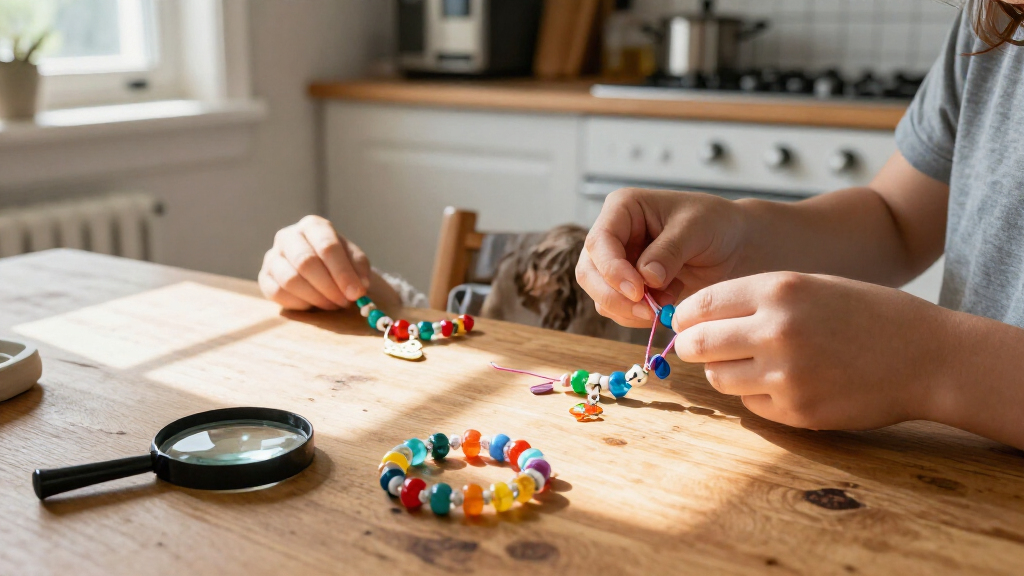
I compared these 11 kits by how well they match the specific promise of science jewelry making: combining a genuine discovery or experiment with a jewelry-making outcome. I gave more weight to kits that connect activities such as crystal growth or gem excavation to wearable projects, then considered the variety of activities, clarity of the finished project, and how much independent participation a child is likely to manage. Bead quantity mattered, but it did not outweigh a meaningful science component.
The ranking also reflects age fit, setup, project pace, and versatility. Kits that can hold a child’s interest across multiple activities rank ahead of sets with a narrower use, while beginner-friendly bead kits remain useful picks for children who prefer immediate crafting. I treated waiting time, adult assistance, and the difference between an experiment kit and a conventional jewelry set as real tradeoffs, not automatic flaws.
Factors to Consider When Choosing Science Jewelry Making Kits For Kids
Before choosing, decide what you want the child to spend most of their time doing: experimenting, discovering gems, or designing jewelry. A kit can include a science-themed name or crystal pieces without offering much experimentation, so match the activity itself to the child’s interests and patience.
Choose the Main Activity, Not Just the Theme
Start by asking whether your child enjoys following a process or prefers making something freely. Crystal-growing and excavation activities give structure and a discovery payoff, while bead sets leave more room for repeated design changes. The common mistake is buying a science-labeled kit for a child who mainly wants an assortment of colors and shapes to arrange. The reverse can happen too: a child fascinated by rocks may find a bead-heavy set short on discovery. For a balanced gift, look for a clear link between the science activity and a wearable result. If that link is weak, decide which half matters more and choose accordingly.
Match Waiting Time to the Child’s Patience
Some science projects unfold over time, while jewelry assembly usually gives a faster sense of progress. That difference affects whether the kit works well for a short activity session or a longer project spread across several days. Children who like checking on changes may enjoy a gradual experiment; those who want to wear a creation quickly may do better with beads or a pendant project. Avoid assuming that an experiment’s finished result will appear immediately just because the kit is marketed as a craft. Check the instructions for preparation and any stated growing or drying time before buying. A mixed kit can help, but only if it offers an activity the child can do while waiting.
Check the Amount of Adult Help Required
Age labels are a starting point, not a promise that a child can complete every step alone. Experiments may call for careful measuring, preparation, or supervision, while small beads can be difficult for younger children to handle. Think about when the kit will be used: a family activity can support more involved steps, but a gift intended for independent play should have a manageable setup. Read the instructions or product details for supervision guidance rather than relying only on the front-of-box age range. For younger makers, favor simple steps and larger, easy-to-handle components. For older kids, a more involved process may be part of the appeal.
Look Beyond the Piece Count
A large bead count can sound generous, but it does not tell you whether the pieces support varied designs or whether the child can finish a wearable project. For science-led sets, the number of experiments and the connection between each activity and jewelry matter more than a headline quantity. Check what the kit actually enables: multiple distinct projects, one pendant, or mainly open-ended decorating. Storage also affects how likely small components are to stay usable after the first session. A case can make cleanup easier, but it does not replace a useful mix of materials. Choose variety of use over a large number that may not suit the child’s preferred designs.
Decide Whether the Finished Jewelry Is the Main Goal
Some children care most about wearing or gifting a finished piece; others value the discovery process even if the jewelry result is simple. If a polished, wearable outcome is the priority, examine how directly the kit supports assembling and finishing the piece. If learning and exploration matter more, a dig or crystal project may be satisfying even when jewelry-making is only one part of the activity. Do not assume every kit creates durable everyday jewelry; craft materials may be better suited to occasional wear or display. Consider whether the child likes personalizing designs, collecting stones, or following a defined project. That preference can matter more than how closely the kit resembles a conventional jewelry set.
Think About Repeat Play and Cleanup
Bead sets often invite repeated redesign, while excavation and crystal activities may be more focused on completing a particular project. This can shape how long the kit stays interesting after the initial activity. Ask whether the child can make new combinations, repeat a process, or display the result in a way that encourages further play. Also account for the work area: small beads need tidy storage, and science activities may need a surface that can handle setup and cleanup. A kit that fits the family’s available space is more likely to be used. When choosing between a single memorable experiment and open-ended crafting, consider which kind of repeat use your child prefers.
Frequently Asked Questions
Which kind of kit is better if my child wants to make jewelry right away?
A bead-focused kit is usually the better fit for immediate making because the child can begin arranging pieces without waiting for an experiment to develop. Science-led kits may involve preparation, observation, or a delay before the result is ready. If the child wants both activities, look for a kit with a separate craft project they can complete while the science portion progresses. Consider whether they enjoy following instructions or inventing their own designs. The best choice depends on whether the immediate goal is a wearable piece or a discovery activity.
Are crystal-growing kits a good choice for a child who wants to wear the result?
They can be a good match when the kit explicitly connects crystal growth to a jewelry project, but not every crystal activity produces a wearable piece. Check what the finished project is meant to be and whether the crystal is used in a pendant or simply displayed. A child who expects several ready-to-wear accessories may prefer a bead set or a dedicated jewelry kit. Crystal projects suit children who value watching a process as much as wearing the outcome. Setting that expectation ahead of time helps prevent a mismatch.
What should I check before buying a kit for a younger child?
Check the stated age guidance, the size of the components, and whether the instructions call for adult supervision. Small beads can be hard for young children to manage and may be unsuitable for children who still put objects in their mouths. Science activities may involve steps that need an adult to prepare or monitor, even when the child can take part. Think about the setting too: a guided family activity can suit a more involved kit than independent play at a kitchen table. Choose based on the child’s handling skills and attention span, not age alone.
Should I choose a gem-dig kit or a bead kit for a child interested in rocks?
A gem-dig kit is the more direct match for a child who enjoys uncovering and examining stones. A bead kit offers more design freedom but may not provide the same sense of discovery or connection to rocks and minerals. If the child also likes making accessories, check whether the dig kit includes a way to turn a find into a pendant or other wearable project. Think about whether they are more excited by collecting specimens or creating a finished design. That preference will help distinguish a discovery-focused gift from a craft-focused one.
How can I tell whether a kit is science-focused or mostly a jewelry craft set?
Look at the activities rather than the product name or decorative theme. A science-focused kit should include a process such as growing crystals or excavating gems, while a conventional craft set centers on arranging and assembling materials. Then check whether the science activity connects to a jewelry project or sits alongside it as a separate feature. If the child expects experiments, a large assortment of beads alone may not meet that expectation. If they mainly want to design accessories, a bead-heavy kit may be the more satisfying choice even if it includes little science.
Conclusion
For the strongest blend of hands-on science and variety, I recommend the National Geographic Crystal Growing Kit with 5 Activities as the best overall pick. The best value for open-ended crafting is the Klever Kits Jewelry Making Kit with 350+ Beads, especially for a child who wants repeated design options more than experiments. For a discovery-led gift with a wearable finish, choose the PIBEX Birthstone Dig Kit as the best specific-purpose option; for a more expansive science-led choice, the National Geographic Mega Crystal Growing Kit is the premium pick to compare. Beginners who want to start making quickly may prefer the Klever Kits Princess Bracelet Making Kit or the Dowsabel Bracelet Making Kit. If your child cares most about crystals, pick a growing kit; if they want to uncover stones, choose a dig kit; if they want to design and wear accessories right away, choose a bead-focused set.