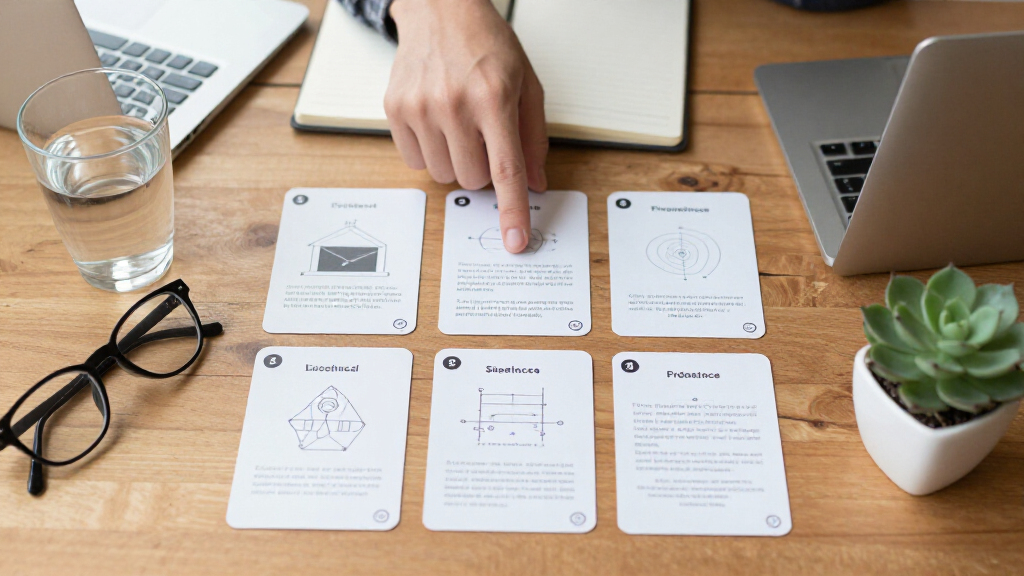

Science reference flashcards work best when they match a specific goal, and that’s the biggest tradeoff in this category: quick-reference laminated guides are compact and durable but shallow, while full flashcard systems like CARDDIA’s Periodic Table deck go deep with atomic data for all 118 elements but demand more study time. My best overall pick is the CARDDIA Periodic Table Educational Flashcards, because color-coded categories and complete element coverage make it equally useful for a middle schooler and a college chemistry student. For standardized exam prep, Barron’s AP Biology Flashcards stand out for aligning closely with the current exam format, and Anatomy Flashcards with 300 precise drawings lead the pack for anyone studying the human body. Teacher certification candidates face a different decision entirely, where flashcard study systems like the TExES Science 4-8 set fill a niche nothing else here covers. Keep reading for the full breakdown of which deck fits which learner.

Prime made for students and young adults
- Fast, free delivery for dorm and study essentials
- Prime Video and Amazon Music included
- Member-only deals
Key Takeaways
- Depth versus speed was the defining split: laminated QuickStudy guides condense an entire subject onto a few pages for instant lookup, while 300-card anatomy and AP decks build retention through active recall over weeks of study.
- CARDDIA earned the top spot because it’s the only brand in this lineup that appears twice (periodic table and astronomy), reflecting consistent card quality, accurate data, and thoughtful visual organization across subjects.
- Exam-targeted flashcards (AP Biology, AP Environmental Science, TExES, Praxis) are poor general reference tools — they’re built around test blueprints, so they skip foundational content the exams assume you already know.
- Durability varies more than price suggests: Duncan‘s periodic table set includes a hard storage case, QuickStudy guides are laminated, while paperback card sets like the AP decks show wear quickly without third-party protection.
- The teacher certification flashcard systems are the most expensive options here and the hardest to justify casually — they only pay off if the specific exam number matches your requirement exactly.
| Duncan Toys Periodic Table Flash Cards with Hard Storage Case |  | Best for Younger Learners | Card Content: Element name, symbol, atomic number, illustrations | Grouping: By element type | Storage: Hard storage case | VIEW LATEST PRICE | See Our Full Breakdown |
| Periodic Table of Elements Laminated Flashcard Science Kit |  | Best Value | Number of Cards: 118 | Material: Matte laminated | Storage: Included storage box | VIEW LATEST PRICE | See Our Full Breakdown |
| Biology: A QuickStudy Laminated Reference Guide | 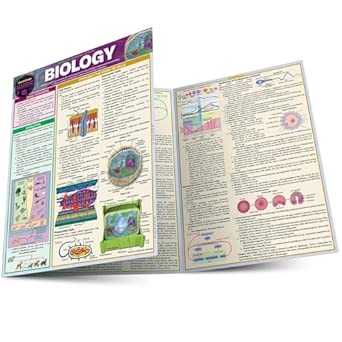 | Best Compact Reference | Format: Laminated single reference guide | Subject: Biology overview | Durability: Laminated, spill-resistant | VIEW LATEST PRICE | See Our Full Breakdown |
| Anatomy Flash Cards: A QuickStudy Reference & Study Tool | 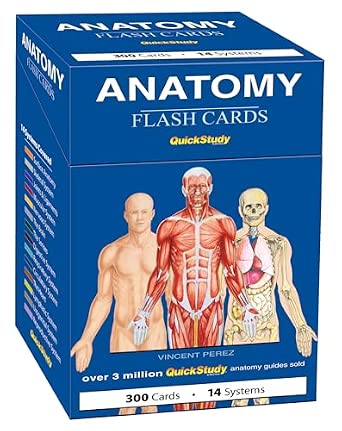 | Best for Exam Prep | Format: Flashcard set | Subject: Human anatomy | Use Case: Quick reference and study | VIEW LATEST PRICE | See Our Full Breakdown |
| CARDDIA Periodic Table Educational Flashcards – 118 Elements with Atomic Data and Color-Coded Categories |  | Best Overall | Number of Cards: 118 | Material: Water-resistant, tear-resistant | Card Back Data: Atomic number, atomic weight, electron configuration | VIEW LATEST PRICE | See Our Full Breakdown |
| AP Biology Flashcards, Third Edition: Up-to-Date Review |  | Best for AP Exam Prep | Format: Physical flashcard set | Edition: Third Edition | Content Focus: AP Biology exam review | VIEW LATEST PRICE | See Our Full Breakdown |
| Anatomy Flashcards: 300 Flashcards with Anatomically Precise Drawings and Exhaustive Descriptions |  | Best for Anatomy Depth | Card Count: 300 flashcards | Illustrations: Anatomically precise drawings | Content Depth: Exhaustive descriptions per structure | VIEW LATEST PRICE | See Our Full Breakdown |
| AP Environmental Science Flashcards, Fourth Edition |  | Best Customizable Study System | Edition: Fourth Edition | Content Focus: AP Environmental Science exam review | Special Feature: Sorting ring for custom study decks | VIEW LATEST PRICE | See Our Full Breakdown |
| CARDDIA Astronomical Objects STEM Educational Flashcards |  | Best for Young Learners | Card Count: 52 cards | Imagery: Full-color NASA images | Material: Durable paper with glossy, water-resistant coating | VIEW LATEST PRICE | See Our Full Breakdown |
| Earth Science: A QuickStudy Laminated Reference Guide |  | Best Quick Reference | Format: Laminated reference guide (fold-out sheet) | Subject: Earth science overview | Durability: Fully laminated, spill-resistant | VIEW LATEST PRICE | See Our Full Breakdown |
| TExES Science 4-8 (116) Flashcard Study System |  | Best for Texas Certification Candidates | Format: Physical flashcard study system | Target Exam: TExES Science 4-8 (116) | Audience: Texas educator certification candidates | VIEW LATEST PRICE | See Our Full Breakdown |
| Praxis Earth and Space Sciences (5572) Flashcard Study System |  | Best for Praxis Earth Science Prep | Format: Physical flashcard study system | Target Exam: Praxis Earth and Space Sciences (5572) | Audience: Teacher certification candidates | VIEW LATEST PRICE | See Our Full Breakdown |
| science reference flashcard | Format |
|---|---|
| Duncan Toys Periodic Table Fla | Physical flashcards |
| Periodic Table of Elements Lam | — |
| Biology: A QuickStudy Laminate | Laminated single reference guide |
| Anatomy Flash Cards: A QuickSt | Flashcard set |
| CARDDIA Periodic Table Educati | — |
| AP Biology Flashcards | Physical flashcard set |
| Anatomy Flashcards: 300 Flashc | Boxed flashcard set |
| AP Environmental Science Flash | Physical flashcard set with ring |
| CARDDIA Astronomical Objects S | — |
| Earth Science: A QuickStudy La | Laminated reference guide (fold-out sheet) |
| TExES Science 4-8 | Physical flashcard study system |
| Praxis Earth and Space Science | Physical flashcard study system |
More Details on Our Top Picks
Duncan Toys Periodic Table Flash Cards with Hard Storage Case
What sets this Duncan set apart from denser options like the CARDDIA Periodic Table Flashcards is its approachability. Each card pairs the element name, symbol, and atomic number with real-life examples and illustrations, which grounds abstract chemistry in things kids actually recognize. Compared to the 118-card laminated kit, this one is grouped by element type, so a beginner can work through metals or noble gases as manageable clusters rather than facing the full table at once.
The tradeoff is depth. There’s no electron configuration or atomic weight data, and the publisher doesn’t even state the card count, so serious students will outgrow it. The hard storage case is a genuine plus for backpack life, though — a step up from flimsier boxed sets.
Pros:- Illustrated real-life examples make abstract elements relatable for kids
- Grouping by element type breaks the table into digestible sections
- Hard storage case survives backpacks and frequent handling
- Approachable entry point before tackling full 118-element sets
Cons:- No stated card count, making completeness hard to verify before buying
- Lacks atomic weight, electron configuration, and other data exam-prep students need
Best for: Elementary and middle school students, or homeschooling parents introducing chemistry for the first time
Not ideal for: High schoolers preparing for exams — the lack of atomic data and unspecified card count makes it too thin for test prep
- Card Content:Element name, symbol, atomic number, illustrations
- Grouping:By element type
- Storage:Hard storage case
- Learning Extras:Real-life example illustrations
- Focus:Periodic table introduction
- Format:Physical flashcards
Our verdict“A friendly on-ramp to the periodic table for younger learners, not a study tool for anyone past introductory chemistry.”
Periodic Table of Elements Laminated Flashcard Science Kit
This 118-card kit earns the value slot by covering the entire periodic table plus cross-disciplinary science concepts — chemistry, biology, and physics — for less than many single-subject sets. The matte laminated finish is the quiet differentiator here: unlike glossy cards that turn into fingerprint magnets during group study, these stay readable through hundreds of handling cycles, and they wipe clean after classroom use.
Compared with the CARDDIA set, you give up the bonus reference sheet and water-resistant build, and the color coding here leans more decorative than pedagogically precise. But compared to a single laminated sheet like Biology: A QuickStudy Laminated Reference Guide, you get interactivity and self-quizzing that flat guides can’t match.
Pros:- Full 118-element coverage plus multi-subject science content in one kit
- Matte lamination resists dirt and fingerprints through heavy classroom use
- Color-coded cards speed up element identification
- Storage box included, keeping the large set organized
Cons:- No digital or interactive supplements for screen-oriented learners
- Color coding is less precise than CARDDIA’s category system
Best for: Budget-conscious teachers and homeschool families covering multiple science subjects with one purchase
Not ideal for: Very young children — the complexity and sheer card count can overwhelm early learners
- Number of Cards:118
- Material:Matte laminated
- Storage:Included storage box
- Subjects:Chemistry, biology, physics
- Suitable For:All learning levels
- Identification:Color-coded cards
Our verdict“The most content per dollar in this lineup — a smart pick for classrooms that need durability and breadth over polish.”
Biology: A QuickStudy Laminated Reference Guide
Sometimes you don’t need 118 cards — you need one durable sheet that summarizes an entire course. That’s the entire premise of this QuickStudy guide, and it executes it well. The lamination holds up to backpack abuse, coffee spills, and late-night cramming sessions where boxed sets like the Periodic Table Laminated Flashcard Science Kit would already be scattered across a desk.
The obvious tradeoff is format: there’s no self-quizzing, no card-flipping, no spaced repetition. Where the AP Biology Flashcards, Third Edition builds recall through active practice, this guide builds recognition through repeated exposure. For a student who already knows the material and just needs triggers — definitions, diagrams, processes — it’s remarkably efficient. For someone learning biology from scratch, it will feel like reading a poster.
Pros:- Entire biology overview condensed into one portable, glanceable format
- Laminated surface survives daily backpack and desk use
- Faster to consult than shuffling through a card deck
- Inexpensive add-on to any existing study routine
Cons:- No interactive or self-quizzing element, so recall practice is limited
- Depth is shallow by design — advanced topics get compressed or skipped
Best for: Students who already grasp the material and want a durable, pocket-friendly summary for rapid review before exams
Not ideal for: Learners who need active recall practice or detailed explanations — a single sheet can’t teach, only remind
- Format:Laminated single reference guide
- Subject:Biology overview
- Durability:Laminated, spill-resistant
- Use Case:Quick reference and exam review
- Audience:Students and educators
- Portability:Fits standard notebooks and folders
Our verdict“A summary sheet, not a study system — ideal as a last-mile review tool rather than a primary way to learn biology.”
Anatomy Flash Cards: A QuickStudy Reference & Study Tool
This QuickStudy card set occupies a useful middle ground: more interactive than a flat sheet like Biology: A QuickStudy Laminated Reference Guide, but far lighter to carry than the 300-card Anatomy Flashcards set elsewhere in this roundup. For a nursing student or pre-med undergrad shuttling between lectures and clinicals, that portability-to-content ratio is the whole argument.
The cards deliver concise anatomical information reinforced by visual aids, which suits rapid-fire review of structures and terminology. The honest limitation: concision cuts both ways. Where the exhaustive 300-card set explains relationships and clinical relevance, these cards assume you’ve already learned the material and just need to keep it sharp. Think of this as a maintenance tool, not a first-pass textbook replacement.
Pros:- Genuine flashcard format enables active recall, unlike flat reference sheets
- Compact enough for commute study and clinical rotations
- Visual aids support spatial memorization of structures
- Trusted QuickStudy editorial consistency across their science line
Cons:- Explanations are minimal, which frustrates learners who need the ‘why’ behind structures
- Coverage thins out at advanced or specialized topics
Best for: Nursing, pre-med, and allied health students who need portable review cards for keeping anatomy knowledge sharp
Not ideal for: Students learning anatomy for the first time — the terse format skips the explanatory depth beginners require
- Format:Flashcard set
- Subject:Human anatomy
- Use Case:Quick reference and study
- Audience:Students and medical professionals
- Portability:Lightweight card format
- Content Style:Conise entries with visual aids
Our verdict“The right pick for reviewing anatomy on the go, as long as you already have a textbook doing the heavy lifting.”
CARDDIA Periodic Table Educational Flashcards – 118 Elements with Atomic Data and Color-Coded Categories
This CARDDIA set takes the top spot because it’s the most complete physical package here: 118 elements including recent additions, clean front designs for quizzing, and backs loaded with atomic number, weight, and electron configuration. Compared to the Duncan Toys set, it’s a full grade level ahead in data density; compared to the laminated science kit, its color coding is more precisely tied to element categories, which actually aids memory rather than just decoration.
The build quality justifies the premium: water-resistant, tear-resistant cards and a lifetime manufacturer warranty mean this survives years of use. The bonus periodic table reference sheet ties the deck together for quick lookups. The gaps are real, though — no digital companion app, and advanced chemistry students will find the depth stops short of orbital theory or reaction chemistry.
Pros:- Complete 118-element coverage, including the newest additions
- Detailed backs with atomic number, weight, and electron configuration
- Water-resistant, tear-resistant cards backed by a lifetime warranty
- Bonus periodic table sheet for at-a-glance reference
Cons:- No digital or app-based companion for interactive study
- Too basic for upper-level chemistry coursework
Best for: Middle school through early college students who want a durable, complete periodic table deck that lasts for years
Not ideal for: Advanced chemistry students or digital-first learners — the content stops at foundational data and offers no interactive supplement
- Number of Cards:118
- Material:Water-resistant, tear-resistant
- Card Back Data:Atomic number, atomic weight, electron configuration
- Organization:Color-coded by element category
- Included Components:Periodic table reference sheet
- Recommended Age:6 years and up
- Weight:182 g
- Warranty:Lifetime manufacturer warranty
Our verdict“The most durable and data-rich periodic table deck in this lineup — the one to buy if you only buy one.”
AP Biology Flashcards, Third Edition: Up-to-Date Review
AP Biology Flashcards, Third Edition is the strongest choice in this lineup for students with a specific, high-stakes goal: scoring well on the AP Bio exam. Where the CARDDIA Astronomical Objects cards aim for broad curiosity-driven learning, this set is tightly aligned with the current exam framework, so every card maps to something that can actually earn points. The updated third edition matters here — older flashcard sets still reference discontinued units, and studying those wastes valuable review time.
The tradeoff is scope. Unlike the Anatomy Flashcards set with 300 visually rich cards, this is a text-driven review tool with no illustrations, which weakens it for visual learners tackling processes like cellular respiration. It also assumes you already know the material; it reinforces rather than teaches. Compared with the Biology: A QuickStudy Laminated Reference Guide, you get deeper coverage but less portability per dollar spent studying.
Pros:- Content updated to match the current AP Biology exam framework
- Covers the full AP curriculum in one portable set
- Card format suits fragmented study sessions like commutes or study halls
- More exam-focused than general reference alternatives
Cons:- Text-heavy format offers little support for visual learners
- Functions as review only, not as a primary learning resource
Best for: AP Biology students in the final weeks before the exam who need targeted, standards-aligned review
Not ideal for: Students learning biology for the first time — the cards reinforce rather than explain concepts from scratch
- Format:Physical flashcard set
- Edition:Third Edition
- Content Focus:AP Biology exam review
- Alignment:Current AP exam standards
- Best Use:Test preparation and self-quizzing
- Learning Style Fit:Text-based recall practice
Our verdict“Buy this if the AP Biology exam is on your calendar and you need efficient, curriculum-matched review — skip it if you want a general-purpose science reference.”
Anatomy Flashcards: 300 Flashcards with Anatomically Precise Drawings and Exhaustive Descriptions
With 300 cards pairing precise anatomical drawings with exhaustive descriptions, this set delivers the kind of depth no laminated sheet can match. The Anatomy Flash Cards: A QuickStudy Reference & Study Tool works fine as a cram-sheet, but this box set functions as a genuine study system — you can work through body systems card by card, test yourself on structures, and read detailed explanations on the reverse. That makes it the better pick for nursing, pre-med, and allied health students who need to truly memorize anatomy, not just glance at it.
The flip side of ‘exhaustive’ is workload. Three hundred dense cards demand a real time commitment, and unlike the lighter CARDDIA Astronomical Objects deck, this is not something a curious middle schooler flips through casually. The detail level also exceeds what a general biology student needs — if you’re prepping for AP Bio, the AP Biology Flashcards set is the better fit.
Pros:- Large 300-card set covering the full body system by system
- Anatomically precise drawings support visual memorization
- Detailed descriptions go beyond labels to explain function and relationships
- Durable enough to survive a full semester of heavy use
Cons:- Requires a serious time investment to work through the full set
- Far more depth than hobbyists or younger students need
Best for: Nursing, pre-med, and allied health students who need systematic anatomy memorization
Not ideal for: Casual learners or general science students — the clinical detail is overkill and the set is heavy going
- Card Count:300 flashcards
- Illustrations:Anatomically precise drawings
- Content Depth:Exhaustive descriptions per structure
- Audience Level:Students and professionals
- Coverage:Full human anatomy by body system
- Format:Boxed flashcard set
Our verdict“This is the pick for students who will be tested on anatomy in detail — anyone studying for general interest should choose something lighter.”
AP Environmental Science Flashcards, Fourth Edition
AP Environmental Science Flashcards, Fourth Edition earns its spot with one feature nothing else in this roundup offers: a sorting ring for custom study sessions. Being able to pull weak-topic cards into a focused mini-deck changes how you study — instead of passively flipping through everything, you build a targeted drill set that shrinks as you improve. Neither the AP Biology Flashcards nor the CARDDIA decks give you that level of control over session structure.
Content-wise, the fourth edition keeps pace with the current APES exam, which matters because the course framework has shifted meaningfully in recent years. The drawback is transparency: the publisher provides little detail on card count or formatting, so you’re buying partly on reputation. And like the AP Bio set, it’s a review tool — a student who skipped the coursework will find cards without context. Compared with the Earth Science QuickStudy guide, you get interactivity instead of a quick glance-and-go reference.
Pros:- Sorting ring allows custom, weakness-targeted study sessions
- Fourth edition content matched to the current APES exam
- Full-course review coverage in a portable format
- More interactive than static laminated reference guides
Cons:- Publisher provides minimal detail on card quantity and format
- Assumes prior familiarity with course content
Best for: APES students who want to build custom drill decks targeting their weakest units
Not ideal for: Buyers who want full product details before purchasing — card count and format are underspecified
- Edition:Fourth Edition
- Content Focus:AP Environmental Science exam review
- Special Feature:Sorting ring for custom study decks
- Alignment:Current APES exam standards
- Format:Physical flashcard set with ring
- Best Use:Targeted exam drill sessions
Our verdict“The sorting ring makes this the most adaptable study system in the roundup — ideal for APES students who know their weak spots and want to drill them directly.”
CARDDIA Astronomical Objects STEM Educational Flashcards
This is the roundup’s clearest pick for younger scientists. The CARDDIA Astronomical Objects deck is rated for ages 6 and up, built on durable, water-resistant, glossy-coated stock — a practical difference from paper-heavy academic sets like the Anatomy Flashcards, which would not survive juice spills or backpack abuse. The full-color NASA imagery of planets, nebulae, and galaxies does real work here: it sparks curiosity in a way text-only cards never will, and the included universe infographic gives kids a big-picture anchor.
The tradeoff is depth. Descriptions stay deliberately brief, so an older student or amateur astronomer will outgrow the set quickly — for that audience, the Earth Science QuickStudy guide or a text-based exam deck packs in far more substance. It also covers astronomy only, not general science. Think of this as an engagement tool rather than a curriculum: it teaches kids that space is worth caring about, then hands them off to deeper resources.
Pros:- Genuine NASA full-color imagery makes each card visually striking
- Water- and tear-resistant coating survives young hands and spills
- Playing-card size makes the deck genuinely portable for travel and car rides
- Includes a universe infographic for big-picture context
Cons:- Descriptions are basic and short on scientific depth
- Content will be outgrown by advanced or older learners quickly
Best for: Parents and elementary teachers introducing kids aged 6+ to astronomy in a durable, hands-on format
Not ideal for: Teens and adults wanting substantive astronomy content — descriptions stay at surface level
- Card Count:52 cards
- Imagery:Full-color NASA images
- Material:Durable paper with glossy, water-resistant coating
- Card Size:Standard playing card size
- Extras:Universe infographic reference sheet
- Recommended Age:6 years and up
- Weight:89 g
Our verdict“The best gateway into science in this lineup — buy it for a curious kid, not for anyone who needs exam-level detail.”
Earth Science: A QuickStudy Laminated Reference Guide
Sometimes you don’t need 300 cards — you need the answer in ten seconds. The Earth Science QuickStudy Laminated Reference Guide condenses the field’s key facts into a durable, three-hole-punchable sheet you can slip into a binder and consult instantly. Where the CARDDIA Astronomical Objects deck teaches through flipping and quizzing, this guide works in reverse: it’s for lookup, not memorization. The lamination means it shrugs off backpack wear far better than loose flashcard sets.
Be realistic about what a laminated sheet can hold. Explanations are compressed to near-outline level, so a student wrestling with plate tectonics for the first time will need a textbook or teacher alongside it. Its sibling, the Biology: A QuickStudy Laminated Reference Guide, shares the same strength and same ceiling — great as a companion, thin as a standalone. For deep exam prep, the AP Environmental Science Flashcards with their sorting ring offer far more active study value at a higher effort cost.
Pros:- Laminated format is spill-proof and binder-ready
- Condensed coverage of core earth science topics on one sheet
- Instant lookup beats flipping through a flashcard deck
- Extremely cheap compared with full flashcard sets
Cons:- Explanations are too compressed to teach concepts from scratch
- Cannot substitute for a textbook or full course review
Best for: High school and intro college students who want a durable cheat-sheet for quick lookups during homework
Not ideal for: Students needing full explanations — the compressed format assumes you’ve already learned the material
- Format:Laminated reference guide (fold-out sheet)
- Subject:Earth science overview
- Durability:Fully laminated, spill-resistant
- Portability:Binder-compatible compact format
- Depth:Concise facts and key concepts
- Best Use:Quick reference during homework and review
Our verdict“A smart, inexpensive companion for quick recall — just don’t mistake a reference sheet for a study system.”
TExES Science 4-8 (116) Flashcard Study System
Unlike the general-reference picks in this roundup, such as the CARDDIA Periodic Table Educational Flashcards, this system exists for one narrow purpose: getting future Texas middle-school science teachers through the TExES 116 exam. That single-exam focus is its greatest strength and its biggest limitation. The cards are organized around the actual test framework, so study time maps directly to what will appear on exam day rather than to a broad curriculum. Compared with the AP Biology Flashcards, Third Edition, which assumes a classroom-taught student refreshing known material, this set functions more like a self-contained drilling tool for career changers who may be years removed from their last science course. The tradeoff is depth: flashcard brevity means complex pedagogy and content standards get compressed, and there is no digital companion or detailed answer explanation, so gaps require a separate study guide.
Pros:- Aligned specifically to the TExES 116 test framework, so study time maps to exam content
- Compact and portable format fits review into short windows like commutes
- Practice-question format builds recall speed needed under timed exam conditions
- Well suited to career changers returning to science content after years away
Cons:- Flashcard brevity cannot fully cover complex exam subtopics, requiring a supplementary study guide
- No digital or online component, unlike more interactive prep options
- Answer explanations are thin, so wrong answers may not teach the underlying concept
Best for: Aspiring Texas teachers preparing specifically for the TExES Science 4-8 (116) certification exam who want a portable drilling supplement
Not ideal for: Anyone studying outside Texas or seeking a general science reference — the exam-specific scope makes it nearly useless for other purposes
- Format:Physical flashcard study system
- Target Exam:TExES Science 4-8 (116)
- Audience:Texas educator certification candidates
- Content Type:Practice questions and concept review
- Portability:Compact card format for on-the-go study
- Digital Component:None included
- Best Used With:A full-length study guide and practice exams
Our verdict“Buy this only if the TExES 116 exam is on your calendar — its exam-locked scope is the whole point, and everything else is a bonus.”
Praxis Earth and Space Sciences (5572) Flashcard Study System
This set carves out a different niche than the CARDDIA Astronomical Objects STEM Educational Flashcards, which teaches astronomy concepts to curious learners of any level. Here the goal is passing the Praxis 5572 exam, and every card is built around that test’s content domains — geology, meteorology, oceanography, and astronomy bundled into one certification-focused deck. Compared with the Earth Science: A QuickStudy Laminated Reference Guide, which condenses the subject into a few dense reference sheets, this format forces active recall, which is generally better for retention before a high-stakes exam. The tradeoff is transparency: cards deliver answers without detailed explanations, so a wrong assumption can go uncorrected unless you pair the deck with a textbook or official study companion. It is also strictly a supplement — no test strategy, no full-length practice exams.
Pros:- Covers the full breadth of Praxis 5572 domains, from geology to astronomy, in one deck
- Flashcard recall format is more effective for retention than passive rereading
- Practice-question framing mirrors the exam’s demand for applied knowledge
- Portable enough for daily short study sessions leading up to test day
Cons:- No detailed explanations for answers, so misunderstandings can persist unchecked
- Functions only as a supplement and cannot replace a study guide or full practice tests
- Flashcard compression oversimplifies quantitative topics like radiometric dating and atmospheric physics
Best for: Teacher candidates preparing for the Praxis Earth and Space Sciences (5572) exam who already know the material and need structured recall drilling
Not ideal for: Learners who need concept explanations from the ground up — the minimal answer rationales will leave true beginners confused rather than taught
- Format:Physical flashcard study system
- Target Exam:Praxis Earth and Space Sciences (5572)
- Audience:Teacher certification candidates
- Content Type:Practice test questions and review material
- Subjects Covered:Geology, meteorology, oceanography, astronomy
- Answer Explanations:Minimal; no detailed rationales
- Portability:Card format suited to short study sessions
Our verdict“A focused drilling tool for Praxis 5572 candidates who have the concepts down and need to sharpen recall — not a standalone path to passing.”
How We Picked
I evaluated each set against four buyer-relevant criteria: content accuracy and depth, usability of the card format, durability for the intended study timeline, and value relative to the closest competing option. Depth was judged not by raw card count but by whether the content actually serves the likely buyer — a periodic table deck was scored on data completeness and visual coding, while an AP prep deck was scored on alignment with the current exam structure. Usability covered card size, readability, organization, and whether the set includes storage or indexing aids.
The ranking reflects a simple principle: versatile sets ranked higher than narrowly targeted ones, all else being equal. A deck a student can use across multiple years and courses beats an exam-specific set with a single use window. That’s why CARDDIA and the multi-subject laminated guides sit above the certification flashcard systems, despite those systems being more expensive to produce. Exam-targeted products were instead ranked head-to-head within their own niche, on how well their content maps to the real test.
Factors to Consider When Choosing Science Reference Flashcards
The right science flashcard set depends less on quality — most of these are competently made — and more on matching the format to how you actually study. These are the factors that most often trip buyers up.Reference Tool vs. Study System
The single most common mistake is buying the wrong format for the job. A laminated reference guide works like a cheat sheet you consult while doing homework — fast, but passive, and it won’t build long-term memory. A true flashcard deck forces active recall, which research consistently favors for retention, but takes real time to work through. If you need to memorize 118 elements or anatomical structures, cards win. If you just need to check a formula or periodic trend mid-assignment, a laminated guide is cheaper and faster. Many students actually benefit from owning one of each — a deck for memorization and a laminated sheet for desk-side lookup.
Match the Exam, Not Just the Subject
Exam-specific products live and die by alignment. AP Biology and AP Environmental Science decks are revised on a schedule tied to College Board curriculum changes, so buying a previous edition to save money can mean drilling content that’s no longer tested. Certification systems like the TExES Science 4-8 (116) and Praxis Earth and Space Sciences (5572) sets are even more exact: verify the exam number and current test blueprint before purchasing, because these sets cost two to three times more than general decks and have zero resale value if the number doesn’t match. When in doubt, check the testing agency’s website for the current exam framework and compare content domains against the box description.
Card Count and Data Density
More cards isn’t automatically better — density per card matters as much as quantity. A 118-card periodic table deck with one element per card supports clean spaced repetition, while condensed decks packing multiple elements per card make self-testing awkward. For anatomy, 300 cards is roughly the ceiling before a set becomes unwieldy to shuffle and rotate through; beyond that, look for tabbed or numbered organization so you can focus on one body region at a time. Consider your study sessions too: if you study in short bursts, large sets with logical subdivisions beat small sets that try to cover everything at once.
Durability and Storage
Physical wear determines how long your investment lasts, and manufacturers handle it very differently. Laminated guides and laminated cards shrug off spills and backpack abuse indefinitely. Paperback-bound card books like the AP decks keep cards organized but tear easily once you remove cards for drilling, so a small box or binder rings are a smart add-on. The hard storage case that ships with Duncan’s periodic table set is a genuine differentiator, not a gimmick — loose card decks without a case tend to lose cards within a semester. Budget a few dollars for rubber bands, index-card boxes, or hole-punched rings if your chosen set doesn’t include storage.
Audience and Reading Level
Science flashcards span a wide reading range, and mismatched level is a frequent complaint in this category. Elementary and middle school learners need visual coding, minimal text, and real-world context — which is why color-coded category systems work so well for the periodic table. High school AP students need terminology and process-level detail matching exam language. Certification candidates and college students can handle dense technical descriptions, and dense cards actually serve them better per dollar. Check the publisher’s stated grade range, but treat it as a rough guide and skim the content scope, since some sets labeled broadly actually target a narrow band.
Price Per Year of Use
Value in this category is measured in years of usefulness, not upfront cost. A twenty-dollar periodic table deck used from middle school through college chemistry costs less per year than a cheaper guide outgrown in one semester. Exam flashcards have a hard expiration date — the day you pass the test — so they’re only worth premium prices if they genuinely raise your score odds. Generic reference guides sit in between: cheap enough to buy on impulse, useful enough to keep. Before paying certification-system prices, check whether free online question banks cover the same material; for content-heavy memorization like anatomy, physical cards still outperform most free alternatives for focused study.
Frequently Asked Questions
Are laminated reference guides as effective as flashcards for studying science?
Not for memorization, no — but they serve a different purpose and both formats have a place. Flashcards work through active recall, where retrieving information from memory strengthens it far more than rereading does. Laminated guides like the QuickStudy series are passive references: excellent for checking a formula, unit conversion, or periodic trend while problem-solving, but weak for building recall from scratch. If you’re preparing for an exam that requires retrieving facts under pressure, buy cards. If you need a durable desk companion for ongoing coursework, the laminated guide is the better spend. Students with both a memorization workload and daily problem sets often get the most from pairing one of each.
Should I buy an older edition of AP science flashcards to save money?
It depends on how recently the exam changed, and that’s worth checking before you buy. AP Biology and AP Environmental Science curricula get revised periodically, and older editions may drill concepts that were removed or reweighted — which wastes study time on content that won’t earn points. The Third Edition AP Biology set and Fourth Edition AP Environmental Science set reflect more current course frameworks than their predecessors, and that alignment is a real scoring advantage. If the revision was minor, a discounted older edition covering the same core content domains can still work. Compare the table of contents against the current course and exam description on the College Board site; if the big units match, the savings are probably safe.
Are the teacher certification flashcard systems worth the higher price?
They can be, but only under specific conditions, and the price gap is substantial — often triple the cost of a general science deck. Sets like the TExES Science 4-8 (116) and Praxis Earth and Space Sciences (5572) systems are built around the published test framework, so their value comes from organizing broad, multi-domain content into the exact structure the exam uses. If you’ve been out of the science classroom for years and need to rebuild wide-ranging knowledge fast, that structure justifies the cost. If you know your content well and mainly need test-format practice, free question banks and the official study companion may serve you better. Confirm the exam number matches your state’s requirement before ordering, because these sets have no use outside their specific test.
What’s the best science flashcard set for a middle school student?
For that age group, visual organization matters more than raw content volume, and a couple of sets in this lineup are built exactly for it. The CARDDIA Periodic Table deck works well because color-coded element categories give younger students a mental structure to hang new facts on, and one-element-per-card formatting keeps study sessions manageable. Duncan’s periodic table set is comparable in content but its hard storage case is a real advantage for a student whose backpack is hard on supplies. The CARDDIA astronomy deck is another strong fit, since astronomical objects are naturally visual and spark curiosity at that age. Skip the anatomy and certification sets for middle schoolers — the description density and reading level target older learners.
How many anatomy flashcards do I actually need for a high school or intro college course?
Three hundred cards — the size of the largest anatomy set here — covers a full A&P course at the college level, which is more than most high school and introductory courses require. For a high school anatomy elective, that set works but you’ll use well under half of it, and a smaller option like the QuickStudy anatomy cards may cover your actual curriculum at a fraction of the price. The tradeoff is straightforward: larger sets with anatomically precise drawings and thorough descriptions are an investment that carries into nursing, pre-med, or advanced coursework, while compact sets serve a single course and get outgrown. If you plan to continue in health sciences, buy the big set once. If anatomy is a one-off requirement, don’t pay for depth you’ll never drill.
Conclusion
For best overall, the CARDDIA Periodic Table Educational Flashcards deliver the widest usefulness — accurate atomic data, color-coded categories, and a format that works from middle school through college chemistry. The best value pick is the QuickStudy laminated reference guides (Biology, Anatomy, and Earth Science), which cost little, last indefinitely, and cover an entire subject for quick lookup. For best premium, the 300-card Anatomy Flashcards set justifies its price with precise drawings and exhaustive descriptions that carry students into professional health science coursework.
Best for beginners goes to the Duncan Toys Periodic Table Flash Cards, whose hard case and approachable presentation suit younger students and first-time flashcard users. For specific needs: AP students should match the AP Biology or AP Environmental Science deck to their exam, aspiring astronomers will love the CARDDIA Astronomical Objects deck, and certification candidates should choose between the TExES 4-8 and Praxis 5572 systems only after confirming their exam number. Match the set to the goal, and every option here can do its job well.
Halloween Picks
halloween
As an affiliate, we earn on qualifying purchases.