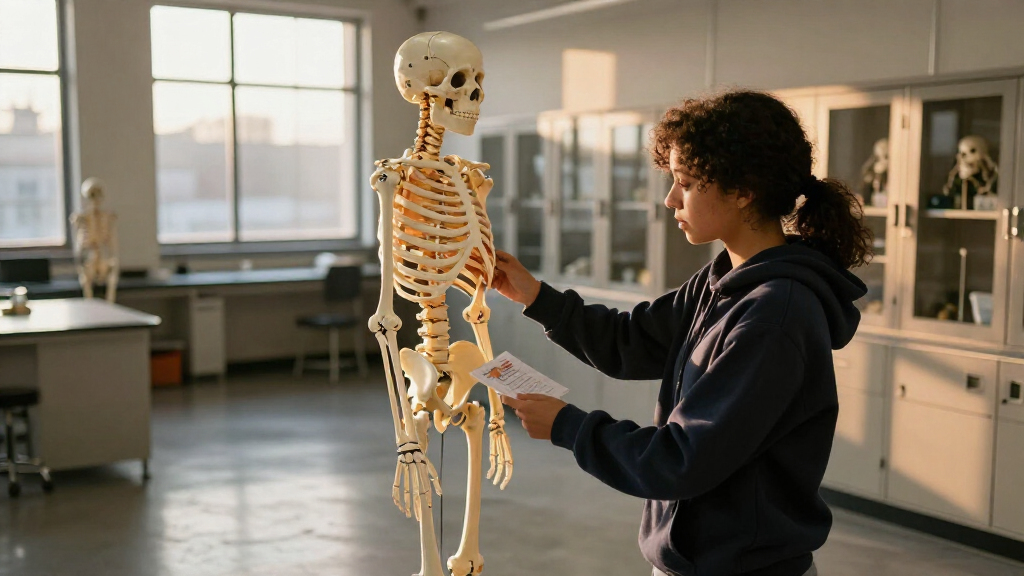

Choosing the right human skeleton model for students depends heavily on your study space and the depth of anatomical detail you need. The Axis Scientific Life Size Skeleton Model stands out as the Best Overall for serious pre-med and nursing students due to its accurate proportions and removable parts. For those with limited desk space, the Axis Scientific Mini Human Skeleton Model offers professional-grade articulation in a compact footprint. Meanwhile, the GobiDex Human Body Skeleton Model Kit provides a unique hands-on assembly experience for younger learners or visual kinesthetic learners. Most students face a tradeoff between life-size realism, which aids in understanding scale, and portability, which fits into small dorm rooms or shared apartments. Read on to see how these options compare in build quality, educational value, and ease of use.

Prime made for students and young adults
- Fast, free delivery for dorm and study essentials
- Prime Video and Amazon Music included
- Member-only deals
Key Takeaways
- Life-size models (approx. 70 inches) provide superior spatial awareness for studying organ placement and organ-to-bone relationships compared to mini models.
- Mini models (under 20 inches) often sacrifice bone thickness and joint stability, making them better for reference than for hands-on manipulation.
- Models with nervous system inclusions add significant value for neuroscience and biology students but increase fragility and price.
- Assembly-required kits offer better engagement for younger students but risk breakage during construction, making them less ideal for quick exam prep.
- Rolling stands are a major convenience feature for life-size models, allowing easy movement around a room for full-body study sessions.


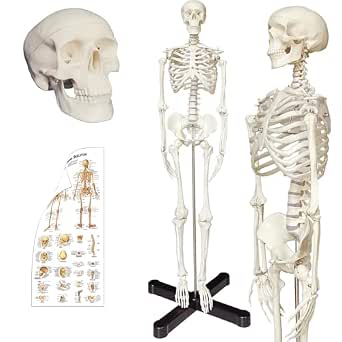


| human skeleton models for student | Height | Material | Weight |
|---|---|---|---|
| Breesky Human Skeleton Model f | 17.7 inches | Plastic | 1.1 pounds |
| 17.72 Inch Mini Skeleton Anato | — | Hard PVC | 1.08 pounds |
| Disarticulated Human Skeleton | 67 inches | PVC | 8.07 kg |
| 70.8" Life-Size Human Skeleton | 70.8 inches | PVC | 23.3 pounds |
| NLShan Human Skeleton Model fo | 17.7 inches | Non-toxic PVC | 1.08 pounds |
| Breesky Scientific Human Skele | 33.4 inches | Plastic with Metal Stand | — |
| breesky Human Skeleton Model f | 70.8 inches | PVC | — |
| Human Skeleton Model Mini 33.5 | 33.5 inches | PVC, ABS, SST | 2.2 pounds |
| NLShan Life-Size Human Skeleto | 70.8 inches | — | 21.6 pounds |
| Human Skeleton Model for Anato | 70.8 inches | Non-Toxic PVC | 22.4 pounds |
| GobiDex Human Body Skeleton Mo | 12.6 inches | Plastic | — |
| 70.8-inch Human Anatomy Skelet | 70.8 inches | Durable PVC | 20 pounds |
| Axis Scientific Mini Human Ske | 31 inches | Metal | 5 pounds |
| Axis Scientific Life Size Skel | 5 feet 6 inches | Medical-grade PVC | 24.6 pounds |
More Details on Our Top Picks
Breesky Human Skeleton Model for Anatomy: 17.7-inch with Movable Arms and Legs
This model is compact and fits easily on crowded student desks, unlike the Disarticulated Human Skeleton Model which demands floor space. The movable arms and legs allow for basic pose demonstrations, making it useful for introductory biology classes. However, the removable skull cap offers limited interior visibility compared to larger models with detailed nervous systems. It serves as a gentle introduction to skeletal structures without overwhelming beginners with complex anatomical details. While it lacks the life-size realism of premium options, its portability makes it ideal for students who need to study in tight quarters or shared living spaces.Pros:- Fits easily on small desks or shelves
- Movable limbs allow basic pose adjustments
- Lightweight and easy to transport
Cons:- Lacks detailed internal anatomy features
- Small size limits visibility of fine bone structures
- Skull interior details are minimal
Best for: High school students or beginners with limited desk space who need a basic visual aid.
Not ideal for: Medical students requiring detailed internal anatomy or nerve pathway visualization.
- Height:17.7 inches
- Base Dimensions:4.75″ x 4.75″
- Weight:1.1 pounds
- Movable Parts:Arms and legs
- Skull Feature:Removable cap
- Material:Plastic
Our verdict“Choose this if you need a portable, basic skeleton for introductory study without taking up much room.”
17.72 Inch Mini Skeleton Anatomy Model with Movable Arms and Legs
This option stands out for its durable PVC construction, which resists wear better than some cheaper plastic alternatives. It functions effectively as both an educational tool and a seasonal decoration, a versatility the Breesky 17.7-inch model lacks in its marketing. The eco-friendly material provides peace of mind for families, though the anatomical depth remains similar to other miniatures. Compared to the 70.8″ Life-Size Model, this mini version sacrifices detailed nervous system features for affordability and ease of storage. It is a pragmatic choice for those who want a realistic look without the bulk or high cost of professional-grade equipment.Pros:- Durable, eco-friendly PVC material
- Suitable for both study and decoration
- Easy to assemble and disassemble
Cons:- No internal organ or nerve details
- Size restricts detailed anatomical study
- Primarily decorative rather than clinical
Best for: Teachers or parents needing a durable, dual-purpose model for classrooms or home decor.
Not ideal for: Serious anatomy students who require full-size joint articulation and internal detail.
- Dimensions:4.72 x 4.72 x 17.72 inches
- Weight:1.08 pounds
- Material:Hard PVC
- Movable Parts:Arms and legs
- Age Range:All ages
- Assembly:Easy assembly
Our verdict“This is the right pick if you want a sturdy, multi-use skeleton that doubles as a display piece.”
Disarticulated Human Skeleton Model for Anatomy 67 inch High, Full Size
Unlike the 70.8″ Life-Size Model which includes a rolling stand and nervous system, this disarticulated model focuses purely on bone structure. The included laminated poster helps identify individual bones, making it excellent for memorization exercises. However, the lack of articulated joints means you cannot demonstrate movement or posture, limiting its utility for kinesiology students. It is significantly heavier than the miniatures, requiring dedicated floor space. This model is best suited for those who need a static reference for drawing or bone identification rather than a dynamic study tool for medical procedures.Pros:- Full-size representation for accurate scale
- Includes detailed bone identification poster
- Disarticulated parts allow close-up bone study
Cons:- No joint movement for pose demonstration
- Assembly of ribs requires specific tools
- Cannot demonstrate functional anatomy
Best for: Art students and anatomy learners who need to identify individual bones via static reference.
Not ideal for: Students studying joint movement, posture, or nervous system connections.
- Height:67 inches
- Material:PVC
- Weight:8.07 kg
- Type:Disarticulated
- Included:Laminated poster
- Usage:Indoor/Outdoor
Our verdict“Select this if your primary goal is memorizing bone names and shapes rather than studying movement.”
70.8″ Life-Size Human Skeleton Model with Nervous System & Charts
This model is superior for comprehensive anatomy study due to its inclusion of the nervous system and carotid arteries. Compared to the Disarticulated 67-inch model, it offers movable joints and a rolling stand, enhancing both functionality and portability. The detachable teeth and removable skull cap provide deeper access to internal structures, which is critical for medical students. However, its heavy weight and complex assembly make it less suitable for quick setups. This is a serious investment for those who need a professional-grade reference that goes beyond basic skeletal structure.Pros:- Includes detailed nervous system and arteries
- Movable joints and removable skull cap
- Comes with a portable rolling stand
Cons:- Heavy weight complicates initial setup
- Large footprint requires significant space
- Assembly is more complex than miniatures
Best for: Medical or nursing students needing detailed visualization of nerves and arteries alongside bones.
Not ideal for: Beginners or those with limited storage space who find large, heavy models cumbersome.
- Height:70.8 inches
- Weight:23.3 pounds
- Material:PVC
- Features:Nervous system, movable joints
- Stand:Rolling stand included
- Extras:Dust-proof cover, charts
Our verdict“This is the ideal choice for advanced students who need a complete, life-size anatomical reference.”
NLShan Human Skeleton Model for Anatomy: 17.7-inch Scientific Model with Movable Arms, Legs & Display Stand
This model offers advanced articulation at the shoulders, elbows, wrists, knees, and ankles, surpassing the basic limb movement of the Breesky 17.7-inch model. The sturdy display stand ensures stability, which is often a weak point in smaller skeletons. While it shares the compact size of other miniatures, the non-toxic PVC and detailed craftsmanship make it feel more premium. It does not include the nervous system details found in the 70.8″ Life-Size Model, but it provides a better balance of portability and functional realism for studying joint mechanics.Pros:- Detailed articulation in multiple joints
- Includes a sturdy, stable display stand
- Non-toxic, environmentally friendly material
Cons:- Small scale limits overall anatomical context
- No internal organ or nerve details
- Similar footprint to other miniatures
Best for: Students who need precise joint movement demonstrations in a small, stable format.
Not ideal for: Those needing full-body nervous system visualization or life-scale proportions.
- Height:17.7 inches
- Base Size:4.75 x 4.75 inches
- Weight:1.08 pounds
- Material:Non-toxic PVC
- Articulation:Shoulders, elbows, wrists, knees, ankles
- Extras:Display stand, study guide
Our verdict“Choose this if you prioritize realistic joint movement and stability over internal anatomical details.”
Breesky Scientific Human Skeleton Model for Anatomy, 33.4” Skeleton with Metal Stand
This 33.4-inch model occupies a useful middle ground between tiny desk toys and bulky life-size figures. While it lacks the full-scale realism of the NLShan Life-Size Human Skeleton Model, its metal stand provides superior stability on a desk compared to plastic-based competitors. The removable limbs allow for modular study, making it easier to isolate specific joints than fixed-arm models. However, the plastic construction means it may not withstand heavy handling by young students as well as more robust, industrial-grade options. It stands out for its balance of size and portability, fitting comfortably on a standard lab table without dominating the space.
Pros:- Sturdy metal stand prevents tipping during study
- Removable arms and legs facilitate modular learning
- Compact footprint fits easily on standard desks
Cons:- Plastic components may degrade with frequent disassembly
- Smaller scale limits detail visibility for deep anatomical study
Best for: High school science teachers or home study spaces with limited desk surface area.
Not ideal for: Medical students needing full-scale anatomical proportions for clinical reference.
- Height:33.4 inches
- Material:Plastic with Metal Stand
- Articulation:Removable Arms & Legs
- Age Range:Adult
- Assembly:Easy Assemble/Disassemble
- Model Number:85cm-3
Our verdict“This model is the ideal compromise for educators who want articulated study features without the bulk of a life-size figure.”
breesky Human Skeleton Model for Anatomy – Life Size Medical Human Skeleton Model with Nervous System
Offering 70.8 inches of life-size accuracy, this model serves as a strong alternative to premium medical-grade skeletons. It includes three educational posters and a rolling stand, adding value that bare-bones competitors often exclude. Compared to the Human Skeleton Model for Anatomy (B08X4Y99QG), the build quality feels similar, but the inclusion of a nervous system representation aids in holistic study. The PVC material is easy to wipe clean, a practical benefit for shared classroom environments. While it lacks the premium finish of high-end anatomical models, its functional completeness makes it a smart choice for budget-conscious institutions.
Pros:- Includes three reference posters for visual aid
- Rolling stand enhances mobility in shared classrooms
- Life-size scale provides accurate spatial reference
Cons:- PVC material may feel less substantial than resin alternatives
- Assembly of 206 parts can be time-consuming
Best for: Community colleges and private tutoring centers needing full-size models on a budget.
Not ideal for: Universities requiring museum-quality detailing for advanced pathology classes.
- Height:70.8 inches
- Bone Count:206 Articulated Bones
- Material:PVC
- Stand Type:Rolling Stand with 5 Wheels
- Included Extras:3 Educational Posters
- Features:Nervous System Representation
Our verdict“This model delivers essential life-size features and mobility tools without the premium price tag of medical-grade equipment.”
Human Skeleton Model Mini 33.5″ Compact Desktop Size Anatomical Chart for Student Home Study
At just 2.2 pounds, this mini model is significantly lighter than the Breesky Scientific Human Skeleton Model, making it ideal for tight spaces or travel. Its compact 33.5-inch height allows for easy storage in a drawer or on a small shelf, a feature larger models lack. The detachable parts encourage active learning, though the smaller scale means fine details are harder to see than on the NLShan Life-Size option. It is best viewed as a supplementary tool rather than a primary study aid. This model shines for students who need a portable reference for quick review sessions between classes.
Pros:- Extremely lightweight and portable
- Small footprint fits crowded desks
- Detachable parts support interactive study
Cons:- Small scale hides fine anatomical details
- Lacks detailed assembly instructions in some batches
Best for: Students with limited desk space or those who need a portable study aid.
Not ideal for: Educators needing a central display piece for group instruction.
- Height:33.5 inches
- Weight:2.2 pounds
- Dimensions:8 x 7 x 33.5 inches
- Material:PVC, ABS, SST
- Model Number:TakeTex-5
- Usage:Desktop Display
Our verdict“This lightweight mini model is perfect for students who prioritize portability and space-saving over detailed anatomical depth.”
NLShan Life-Size Human Skeleton Model with Nervous System and Rolling Stand
Cast from a real human specimen, this model offers a level of realism that plastic-molded alternatives like the breesky Life Size Model cannot match. The detachable skull cap allows for internal study, adding depth to the learning experience. At 21.6 pounds, it feels substantial and durable, resisting the wobble common in lighter PVC models. However, its weight makes initial setup a two-person job, a drawback compared to lighter desktop options. This model is designed for serious academic study, where accuracy in bone texture and proportion is paramount for medical and chiropractic students.
Pros:- Cast from real human specimens for high fidelity
- Detachable skull cap enables internal anatomy study
- Heavy-duty construction ensures long-term durability
Cons:- Heavy weight complicates assembly and relocation
- Higher price point compared to PVC molded models
Best for: Medical, chiropractic, and physical therapy students requiring specimen-accurate detail.
Not ideal for: Home users or small classrooms where heavy lifting and large floor space are constraints.
- Height:70.8 inches
- Weight:21.6 pounds
- Bone Count:206 Articulated Bones
- Material Source:Cast from Real Human Specimen
- Stand:5-Wheel Rolling Stand
- Manufacturer:NLShan
Our verdict“This model is the top choice for advanced students who require specimen-level accuracy and robust build quality.”
Human Skeleton Model for Anatomy – Life Size Medical Human Skeleton with Nervous System
Designed with non-toxic PVC, this model prioritizes safety and ease of maintenance, making it suitable for public spaces like hospitals and schools. The rolling stand is robust enough to handle frequent movement between classrooms, outperforming static stands found on the Breesky Mini Model. While it shares the 70.8-inch height and 206 bones with other life-size options, its emphasis on educational posters provides immediate context for learners. The material is less realistic than the NLShan cast models, but it is far easier to clean and resistant to chemical disinfectants. This makes it a pragmatic choice for high-traffic educational environments.
Pros:- Non-toxic material safe for shared public spaces
- Durable PVC resists damage and is easy to disinfect
- Includes 3 posters for immediate educational context
Cons:- 22.4-pound weight is cumbersome for solo transport
- PVC finish lacks the texture of real bone
Best for: Public schools, hospitals, and universities needing durable, easy-to-clean models.
Not ideal for: Private collectors or students seeking the highest possible anatomical realism.
- Height:70.8 inches
- Number of Bones:206
- Material:Non-Toxic PVC
- Stand:Rolling Stand Included
- Included Extras:3 Educational Posters
- Weight:22.4 pounds
Our verdict“This model is the most practical choice for institutions that prioritize hygiene, durability, and mobility over material realism.”
GobiDex Human Body Skeleton Model Kit
This model stands out for engagement over precision. Unlike the Axis Scientific Mini Human Skeleton, which prioritizes anatomical accuracy for high schoolers, the GobiDex kit focuses on visual appeal through glow-in-the-dark bones that captivate children aged 8 and up. The assembly process itself serves as a lesson, helping kids understand how bones connect rather than just observing a static figure. However, the tradeoff is significant: the anatomical details are simplified, making it unsuitable for advanced medical study. It is a playful introduction to biology, not a rigorous academic tool, so older students seeking detailed skeletal landmarks will likely find it too basic.
Pros:- Glow-in-the-dark feature maintains high engagement for younger students
- Assembly process reinforces understanding of bone connectivity
- Colorful manual provides age-appropriate explanations of organs and muscles
Cons:- Anatomical accuracy is simplified and lacks medical-grade detail
- Small parts pose a choking hazard for children under the recommended age
- Plastic construction feels less durable than resin or PVC professional models
Best for: Children aged 8–12 who need a fun, interactive introduction to basic human anatomy through hands-on assembly.
Not ideal for: High school or college anatomy students who require accurate bone proportions and detailed muscular or nervous system representation.
- Height:12.6 inches
- Material:Plastic
- Age Range:8-16 years
- Piece Count:40 pieces
- Special Feature:Glow-in-the-dark bones
- Assembly Type:Kit with manual
Our verdict“Choose this kit if you want to spark curiosity in young children through play, but skip it if you need a serious study aid for older students.”
70.8-inch Human Anatomy Skeleton Model with Muscles
This model differentiates itself by integrating muscles, ligaments, and the nervous system directly onto the skeleton, a feature absent in standard bone-only models like the Axis Scientific Life Size Skeleton. This holistic view helps students understand how soft tissue interacts with the skeletal framework, which is critical for physical therapy or sports science majors. The PVC construction is durable enough for frequent handling in clinical settings. However, the complexity comes with a cost: the model is heavy and intricate, making it difficult to store or move in smaller classrooms. The added soft tissue details also require more careful cleaning and maintenance compared to simpler bone structures.
Pros:- Includes muscles and nervous system for a comprehensive anatomical view
- Durable PVC material withstands frequent handling in professional settings
- Rolling stand allows for easy positioning during group demonstrations
Cons:- 20-pound weight makes it cumbersome to transport or store frequently
- Complex assembly of soft tissue components requires careful handling
- Higher maintenance needs compared to bone-only models due to intricate details
Best for: Medical or physical therapy students who need to visualize the relationship between bones, muscles, and nerves simultaneously.
Not ideal for: General biology classrooms or home study environments where space is limited and only skeletal structure is required.
- Height:70.8 inches
- Weight:20 pounds
- Material:Durable PVC
- Included Systems:Muscles, Ligaments, Nervous System
- Stand Type:Metal with wheels
- Removable Parts:Skull cap, jaw, teeth, limbs
Our verdict“Ideal for advanced students studying soft tissue interactions, but too bulky and complex for basic anatomy introductions.”
Axis Scientific Mini Human Skeleton Model
Compared to the full-size Axis Scientific Life Size Skeleton, this 31-inch model offers a space-saving compromise that fits easily on a desk or small shelf. It retains key educational features, such as fully articulated joints and removable limbs, allowing students to study joint mechanics without needing a large floor plan. The inclusion of a metal stand ensures stability, which is often lacking in cheaper mini models. However, the reduced scale means some smaller bones are harder to identify or manipulate. While excellent for home study or small tutoring sessions, it lacks the presence and detailed labeling of larger models, making it less effective for large classroom demonstrations where visibility is key.
Pros:- Compact 31-inch size fits easily on desks or shelves
- Fully articulated joints allow for realistic movement study
- Sturdy metal stand provides stable display without tipping
- Includes a study manual with labeled anatomical landmarks
Cons:- Smaller scale makes fine details harder to see or manipulate
- Manual may lack depth for advanced medical coursework
- Less visually imposing for large group presentations
Best for: Students with limited desk space who need a portable, accurate model for home study or small tutoring sessions.
Not ideal for: Large lecture halls where visibility from the back row is necessary, or users needing full-size proportional reference.
- Height:31 inches
- Weight:5 pounds
- Material:Metal
- Articulation:Fully articulated joints
- Included Manual:Full-color study manual
- Warranty:3 years
Our verdict“A smart choice for space-conscious students who refuse to sacrifice articulation and accuracy for size.”
Axis Scientific Life Size Skeleton Model
This model is the industry standard for anatomy classrooms, offering a true-to-life 5’6″ scale that allows students to compare their own body proportions directly. Unlike the 70.8-inch Human Anatomy Skeleton which includes soft tissues, this model focuses exclusively on the 206 bones, providing a cleaner, less cluttered view for skeletal system mastery. The inclusion of three study guides and labeling stickers turns the model into an interactive assessment tool, a feature missing in many basic competitors. The tradeoff is its substantial weight and footprint; at nearly 25 pounds, it requires a dedicated space and is difficult to move without the rolling stand. It is a long-term investment for institutions, not a casual home accessory.
Pros:- Life-size scale allows for direct body proportion comparison
- Includes three study guides and labeling stickers for interactive learning
- Medical-grade PVC ensures longevity and resistance to yellowing
- Rolling stand facilitates easy movement during class activities
Cons:- Heavy at 24.6 pounds, requiring significant space and effort to move
- Lacks muscular and nervous system details found in hybrid models
- Higher initial cost compared to miniature or kit-based alternatives
Best for: High school and college anatomy instructors needing a durable, life-size reference for teaching skeletal structure and identification.
Not ideal for: Home users with small apartments or students who prefer a model with muscular and nervous system overlays.
- Height:5 feet 6 inches
- Weight:24.6 pounds
- Bone Count:206 bones
- Material:Medical-grade PVC
- Stand Type:Pelvic-mounted rolling stand
- Included Accessories:3 study guides, labeling stickers
Our verdict“The definitive choice for serious anatomy education, offering unmatched accuracy and durability for institutional use.”

How We Picked
To curate this list of human skeleton models for students, I evaluated each product based on anatomical accuracy, material durability, and educational utility. I prioritized models that meet medical educational standards, ensuring that bone shapes, joint connections, and numbering (where applicable) align with standard anatomy textbooks. Material quality was assessed by looking for PVC or resin constructions that resist yellowing and snapping, a common issue with cheaper plastic variants.
I also weighed usability factors such as articulation range, stability on provided stands, and the clarity of included educational charts. The ranking reflects a balance between value and performance, placing models that offer the best return on investment for a student’s budget higher than purely decorative or overly expensive clinical-grade models. Special attention was paid to the distinction between miniature models suitable for desk review and life-size models necessary for understanding human scale.
Factors to Consider When Choosing Human Skeleton Models For Students
Selecting a skeleton model involves more than just picking a size. You must consider how you study, where you store the model, and what level of detail your coursework demands. This guide breaks down the critical factors to help you avoid common pitfalls.
Size and Scale: Mini vs. Life-Size
The most immediate decision is scale. Mini models (17-33 inches) are excellent for desk-bound review and fit easily into small spaces. However, they often distort proportional relationships; a skull on a mini model may appear too large relative to the spine compared to reality. Life-size models (67-70+ inches) provide an accurate sense of human scale, which is vital for understanding how organs fit within the thoracic and abdominal cavities. If you are studying for clinical rotations or advanced anatomy, the spatial awareness gained from a life-size model is irreplaceable. Conversely, if you are in high school or taking introductory biology, a mini model is sufficient and far less cumbersome.
Articulation and Removability
Not all skeletons are built the same. Some are static, meaning joints are glued or fixed, which limits utility for studying movement. Articulated models allow you to pose the skeleton, which is essential for understanding muscle attachment points and range of motion. Higher-end models offer removable parts—such as the skull cap, brain, or individual bones—which facilitate deeper study of internal structures. When comparing options, check if the limbs detach from the torso. If they do not, you cannot study the scapula or pelvis in isolation, which is a significant handicap for detailed anatomy exams.
Material Durability and Maintenance
Student budgets are tight, so longevity matters. Most models are made from PVC or hard resin. Cheaper plastics tend to be brittle, especially around thin structures like the fibula or finger bones. Look for models with thicker bone walls or those that use metal wiring for joint stability. A common mistake is buying a model with loose joints out of the box; these will sag over time and become frustrating to use. If you choose a life-size model, ensure it comes with a sturdy stand. A wobbly base can lead to tipping and breakage, turning a long-term investment into a one-time purchase.
Educational Inclusions and Charts
Many models come with educational charts or booklets. While these can be helpful for beginners, they are often generic summaries. Do not rely on them as your primary study material. Instead, look for models that include numbered bones or color-coded systems (like the nervous system). Color-coding helps visually distinguish between axial and appendicular skeletons, or separates muscular from skeletal structures. If the model includes a nervous system overlay, verify that the nerves are painted on rather than molded in 3D, as 3D nerves on mini models are prone to snapping off during handling.
Assembly Complexity and Time Investment
Some models are fully assembled upon arrival, while others are disarticulated kits. For busy students, a fully assembled model is generally preferred because it saves hours of assembly time. However, assembly kits can offer a better understanding of bone connectivity as you physically connect the pieces. The risk is breakage during assembly; forcing a peg into a hole can snap the plastic. If you choose a kit, ensure it comes with clear instructions and glue if required. For most medical students, the time spent assembling a kit is better spent studying, so I recommend pre-assembled models unless you are a visual learner who benefits from the construction process.
Frequently Asked Questions
Do I really need a life-size skeleton model for anatomy class?
For introductory biology or high school anatomy, a life-size model is not strictly necessary. A high-quality mini model can adequately teach bone names and basic connections. However, for pre-med, nursing, or physical therapy programs, a life-size model is highly recommended. The spatial relationship between the spine, ribcage, and pelvis is difficult to grasp from a small scale. Understanding the actual size of the organs relative to the bones is critical for clinical applications, such as identifying landmarks for injections or understanding surgical access points. If you are on a tight budget, a 33-inch model is a good middle ground.
Are mini skeleton models accurate enough for medical study?
Mini models are generally anatomically accurate in terms of shape and connection, but they suffer from proportional distortion. To make small bones like those in the hand or foot visible, manufacturers often exaggerate their size relative to the rest of the body. This can lead to misconceptions about scale. Furthermore, mini models often lack fine details such as foramina (holes) and tuberosities (bumps where muscles attach). For gross anatomy exams, these details are frequently tested. Therefore, mini models are best used as a reference tool for quick review, not as the sole source for detailed anatomical study.
What is the difference between a model with and without a nervous system?
A model with a nervous system includes painted or molded representations of the brain, spinal cord, and major peripheral nerves. This is beneficial for neuroscience and physiology students who need to visualize nerve pathways. On standard models, the spine is hollow, which is accurate for the bone but hides the spinal cord. If you are studying orthopedics or musculoskeletal issues, the nervous system is less critical and may add unnecessary clutter. However, if you are studying neurology or anesthesiology, the added context of nerve placement is worth the extra cost and fragility.
How do I clean and maintain a skeleton model to prevent yellowing?
Most student models are made from PVC, which can yellow over time due to exposure to UV light and air. To prevent this, keep the model out of direct sunlight. Cleaning should be done with dry or slightly damp microfiber cloths. Avoid using harsh chemicals, alcohol, or abrasive sponges, as these can strip the paint on color-coded sections or create micro-scratches that trap dirt. If the joints become loose, you can use a small amount of super glue or epoxy to tighten them, but be careful not to restrict movement. Regular dusting prevents the need for aggressive cleaning later.
Is a rolling stand worth the extra cost for a student?
If you are purchasing a life-size model, a rolling stand is almost always worth the investment. Life-size models are heavy and awkward to move. A rolling stand allows you to rotate the model easily to study different angles without lifting or tilting it, which reduces the risk of joint breakage. It also lets you move the model out of the way when you need floor space. For mini models, a fixed stand is usually sufficient. If your budget is tight, you can often buy a separate tripod stand later, but ensure the model has a compatible mounting hole in the base.
Conclusion
Choosing the right human skeleton model for students comes down to matching the model’s features to your specific curriculum and living situation. For the Best Overall experience, the Axis Scientific Life Size Skeleton Model delivers the accuracy and durability required for serious medical study. Students on a budget who still need a reliable reference should look at the Axis Scientific Mini Human Skeleton Model, which offers Best Value without compromising on articulation. If you are just starting out in biology or need a Beginner friendly option, the Breesky Human Skeleton Model provides a solid, no-frills introduction. For those who need Premium detail with nervous system visualization, the 70.8″ Life-Size Human Skeleton Model with Nervous System is the superior choice. Finally, for Compact living spaces or quick review, the Human Skeleton Model Mini 33.5″ strikes a nice balance between visibility and footprint. Evaluate your space, your exam requirements, and your budget to make the final decision.
Halloween Picks
halloween
As an affiliate, we earn on qualifying purchases.