The best chemistry set for most kids is the National Geographic Amazing Chemistry Set with 100+ Experiments, because it balances a huge experiment library, real lab tools, and clear instructions at a mid-range commitment level. If budget is the priority, the UNGLINGA 70-Experiment Science Kit delivers the most experiments per dollar, while the Doctor Jupiter My First Science Kit is the standout choice for preschoolers who aren’t ready for chemistry proper. The main tradeoffs in this category come down to experiment volume versus depth, one-and-done kits versus sets with real lab equipment, and gimmick-driven fun versus genuine STEM learning. Kids under 8 usually need simpler, messier, more visual kits, while older kids benefit from structured experiments that teach actual scientific method. Read on for the full ranked breakdown of all 15 sets.

Prime made for students and young adults
- Fast, free delivery for dorm and study essentials
- Prime Video and Amazon Music included
- Member-only deals
Key Takeaways
- National Geographic dominates the category with seven of the 15 picks, but its kits vary widely — the Amazing Chemistry Set and Mega Science Lab are genuine chemistry, while the Magic and Science Magic kits lean on performance tricks over lab skills.
- Experiment-count inflation is real: a 150-experiment kit like UNGLINGA‘s often repeats variations of the same base reaction, so the 66-experiment Discovery kit can deliver more genuinely distinct activities.
- Only one kit in the lineup, the Thames & Kosmos Ooze Labs Chemistry Station, includes a proper workstation design, which matters most for repeat use rather than a single exciting afternoon.
- Age labels matter more than price here: the Doctor Jupiter Ages 4+ kit is almost entirely different in kind from the 8+ sets, focusing on sensory exploration instead of chemical reactions.
- Refills and consumables are the hidden cost — baking-soda-and-vinegar-based kits stay cheap to keep running, while sets relying on proprietary tablets or powders can effectively retire once supplies run out.




| chemistry sets for kid | Brand | Age Range |
|---|---|---|
| National Geographic Gross Scie | National Geographic | 8–12 years |
| National Geographic Gross Scie | National Geographic | 8–12 years |
| Doctor Jupiter Ultimate Scienc | Doctor Jupiter | 8+ years |
| Discovery Super Reactions Scie | Discovery | 8+ years |
| National Geographic Junior Che | National Geographic | 4 years and up |
| UNGLINGA 70-Experiment Science | UNGLINGA | — |
| National Geographic Magic Chem | National Geographic | 8-12 years |
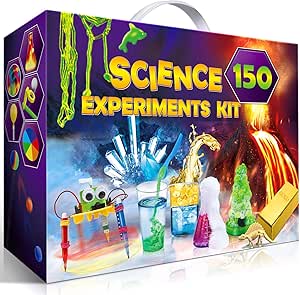
| UNGLINGA 150 Experiments Scien | UNGLINGA | 8 years and up |
| National Geographic Amazing Ch | Blue Marble / National Geographic | 8 years and up |
| Doctor Jupiter My First Scienc | Doctor Jupiter | 4 years and up |
| National Geographic Mega Scien | Blue Marble | 8 years and up |
| National Geographic Science Ma | Blue Marble (National Geographic) | 8 years and up |
| National Geographic Chemistry | National Geographic | — |
| Kids’ Science Kit with 80 Expe | Kuovei | — |
| Thames & Kosmos Ooze Labs Chem | Thames & Kosmos | 72 to 300 months (6+ years) |
More Details on Our Top Picks
National Geographic Gross Science Kit Chemistry Toy
Not every kid falls in love with science on the first try, and this is where the gross-factor approach earns its spot. With six included experiments like boiling boogers and dissecting a brain, plus ten bonus activities using household items, this kit trades breadth for pure kid appeal. Compared with the National Geographic Gross Science Kit with 45 Experiments, this smaller set feels deliberately focused — it is designed to hook a child who has resisted traditional science kits, not to sustain months of experiments.
The tradeoff is simple: fewer activities means shorter shelf life. Families who want long-term value will prefer the larger 45-experiment version or the Doctor Jupiter Ultimate Kit, which offers dramatically more content for similar effort.
Pros:- Gross themes make chemistry concepts genuinely memorable for skeptical kids
- Bonus booklet extends play with 10 free household-item activities
- Backed by an award-winning manufacturer with US-based support
- Real scientific concepts hidden inside the yucky packaging
Cons:- Only six experiments use included materials, the smallest count in this lineup
- Narrow 8–12 age range limits sibling sharing
Best for: Parents of kids aged 8–12 who find standard science kits boring and need a ‘gross-out’ hook to spark interest in chemistry
Not ideal for: Families wanting long-term value — six included experiments will be finished within a weekend or two
- Brand:National Geographic
- Manufacturer:Blue Marble
- Age Range:8–12 years
- Included Experiments:6
- Bonus Activities:10 (household items)
- Recognition:Toy of the Year Award
Our verdict“This is the gateway kit for kids who say science is boring — just expect to graduate to a bigger set once they’re hooked.”
National Geographic Gross Science Kit with 45 Experiments for Kids Ages 8–12
Think of this as the full-sized version of the smaller Gross Science Kit: same yucky appeal, roughly seven times the experiment count. Fifteen experiments use included materials, and a bonus booklet adds thirty more built around polymers, chemical reactions, and pH science, with illustrated instructions kids can follow without constant adult hand-holding.
The honest caveat: only a third of the 45 experiments come with supplies in the box, so the headline number oversells what you can do on day one. Compared with the Discovery Super Reactions Kit, which fronts more physical tools and guided activities, this set leans harder on the bonus booklet — a reasonable trade if your pantry is already stocked with vinegar and baking soda.
Pros:- 45 total experiments deliver strong variety for the category
- Illustrated instructions are genuinely kid-friendly
- Introduces real STEM topics like polymers and pH science
- Gross themes keep engagement high across many sessions
Cons:- Only 15 experiments use included materials
- Bonus experiments assume a stocked kitchen of common supplies
Best for: Budget-conscious families with well-stocked kitchens who want maximum gross-themed experiment variety for 8–12 year olds
Not ideal for: Households wanting everything in the box — two-thirds of the experiments require sourcing household items yourself
- Brand:National Geographic
- Age Range:8–12 years
- Total Experiments:45
- Included-Material Experiments:15
- Bonus Experiments:30 (household items)
- Topics Covered:Polymers, chemical reactions, pH science
- Instructions:Illustrated, kid-friendly
Our verdict“The better-value choice over the six-experiment version — as long as you’re willing to raid the pantry for the bonus activities.”
Doctor Jupiter Ultimate Science Experiments Kit for Kids Ages 8+
This is the pick that best balances volume, structure, and practical design. With over 135 experiments included in the box — not locked behind a household-items booklet like the National Geographic 45-Experiment Kit — plus 90+ bonus activities, this set can realistically sustain months of weekend science. The leak-proof chemical bottles are a genuinely practical touch that most competitors skip, meaning storage between sessions does not become a disaster.
The step-by-step illustrated instructions also make it the strongest choice for parent-child bonding, since adults can guide without prep work. The tradeoffs: younger children will still need active supervision despite the 8+ label, and some bonus experiments assume household items you may not have. Still, no other kit in this lineup matches its out-of-the-box density.
Pros:- 135+ experiments use included materials, far exceeding most rivals
- Leak-proof bottles make storage and cleanup practical
- Illustrated instructions work for both kids and guiding parents
- 90+ bonus activities extend value well beyond the box
Cons:- Requires adult supervision despite the 8+ age label
- Some bonus experiments depend on specific household items
Best for: Families who want the most complete out-of-the-box experience and enough experiments to last an entire school year
Not ideal for: Parents expecting fully independent play for 8-year-olds — supervision is still needed for many activities
- Brand:Doctor Jupiter
- Age Range:8+ years
- Included Experiments:135+
- Bonus Experiments:90+ (household items)
- Estimated Learning Hours:100+
- Packaging:Leak-proof chemical bottles
- Instructions:Step-by-step with illustrations
Our verdict“If you want one kit that covers chemistry for the long haul, this is the most complete package in the roundup.”
Discovery Super Reactions Science Kit – 66 Experiments STEM Lab for Kids
Where most kits in this roundup lead with experiment counts, this one leads with equipment: test tubes, a volcano mold, measuring cups, and paint pots that make the experience feel like a real bench setup rather than a craft box. The 26 guided activities come with ingredients included — citric acid, slime mix, red cabbage powder, glow paint — so kids can start immediately, while 40 DIY projects reward creativity later.
Compared with the Doctor Jupiter Ultimate Kit, it offers fewer included experiments but a more tactile lab-style feel that suits kids who want to play scientist, not just follow recipes. The red cabbage powder is a nice touch for genuine pH-indicator chemistry. The catch: adult supervision is expected throughout, and the DIY half of the content relies on your pantry.
Pros:- Includes real lab tools like test tubes and a volcano mold
- 26 guided activities have all ingredients in the box
- Red cabbage powder enables genuine pH-indicator chemistry
- 40 DIY projects extend the kit after guided ones run out
Cons:- Adult supervision required for essentially all experiments
- 40 of the 66 activities require sourcing household items
Best for: Kids who want the feel of a real laboratory with proper tools and immediately usable ingredients for the first session
Not ideal for: Households seeking independent entertainment — every activity expects an adult nearby
- Brand:Discovery
- Age Range:8+ years
- Total Experiments:66
- Guided Activities:26
- DIY Bonus Activities:40
- Included Tools:Test tubes, volcano mold, measuring cups, paint pots
- Included Ingredients:Citric acid, slime mix, red cabbage powder, baking soda, glow paint
- Supervision:Adult supervision recommended
Our verdict“The best choice for a child who wants authentic lab equipment and hands-on guided experiments — with a parent participating.”
National Geographic Junior Chemistry Set, 50 Experiments
Every other kit in this roundup starts at age 8, which leaves out an entire audience of curious four-to-seven-year-olds. This set fills that gap with 50 age-appropriate experiments and more than 20 child-safe tools, including goggles and test tubes sized for small hands, with illustrated instructions a pre-reader can follow alongside a parent.
The comparison that matters most is against the 8+ sets like the National Geographic Gross Science Kit: this one deliberately avoids intense chemical reactions and gross-out themes in favor of gentler, safer activities. That safety-first design is also its limitation — an older sibling will find these experiments too simple within an afternoon. It runs largely on household items too, so expect to participate in supply gathering as well as supervision.
Pros:- Only major option in this lineup rated for ages 4 and up
- 20+ child-safe tools including goggles and test tubes
- 50 experiments provide plenty of variety for young attention spans
- Illustrated instructions work for pre-readers with parental help
Cons:- Experiments are too simple for kids at the top of the age range
- Heavy reliance on household items rather than included supplies
Best for: Parents of children aged 4–7 who want a safe, gentle first introduction to hands-on science before graduating to 8+ kits
Not ideal for: Kids 8 and up — the experiments are deliberately simple and will be outgrown quickly
- Brand:National Geographic
- Manufacturer:Blue Marble
- Age Range:4 years and up
- Experiments:50
- Lab Tools:20+ child-safe tools
- Included Components:Test tubes, goggles, and other lab tools
- Educational Objective:STEM
- Model Number:NGJRCHEMT
Our verdict“The clear choice for preschool scientists — just plan to move to an 8+ kit within a couple of years.”
UNGLINGA 70-Experiment Science Kit for Kids
Sitting between the Doctor Jupiter preschool kit and the sprawling UNGLINGA 150-experiment set, this 70-experiment kit hits a sweet spot for first-time buyers. The variety is genuine: crystal growing, balloon rockets, fruit circuits, and a classic volcano give kids a taste of chemistry alongside physics basics, which keeps a curious 8-year-old from getting bored after a weekend. Compared with the National Geographic Magic Chemistry Set, this option trades theatrical flair for breadth — ten tricks versus seventy activities means far more rainy afternoons of content. The illustrated guide explains the science behind each step rather than just the steps themselves, which matters if the goal is learning, not just spectacle. The tradeoff is modest: ingredients are everyday-safe, so none of the reactions are dramatic, and a parent should expect to supervise several experiments.
Pros:- 70 experiments offer strong long-term value for repeat play
- Genuine variety across chemistry and physics activities
- Illustrated guide explains the science, not just the steps
- Safe, child-friendly ingredients
Cons:- Some experiments require adult supervision
- Reactions are tame compared with flashier kits like the National Geographic magic sets
Best for: Parents buying a first science kit for an 8-10 year old who wants variety without committing to a 150-experiment mega set
Not ideal for: Households where an adult isn’t available to help — many experiments realistically need supervision
- Brand:UNGLINGA
- Number of Experiments:70
- Recommended Age:8 years and up
- Educational Focus:STEM, chemistry
- Activity Highlights:Crystal growing, volcano, balloon rockets, fruit circuits
- Guide:Illustrated experiment manual with science explanations
- Model Number:HZDZKH030
Our verdict“This is the pick for families who want dependable variety and real educational payoff at a manageable scope.”
National Geographic Magic Chemistry Set with 10 Tricks for Kids Ages 8-12
Not every child wants to be a scientist — some want to be a magician who happens to know chemistry. This set is built entirely around that impulse: ten chemistry-based tricks, a magic wand, and white gloves turn a science lesson into a show for the family. Compared with the UNGLINGA 70-experiment kit, the content here is narrower by design, but the payoff is different — the included props and costume accessories give kids a reason to repeat and rehearse each trick, which quietly reinforces the underlying science. Everything needed is in the box, so there’s no last-minute hunt for vinegar or food coloring. The honest tradeoff: ten tricks is a small library, and a motivated kid may exhaust them within a couple of weeks. The 8-12 age window is also firm, since the trick mechanics assume that reading and dexterity level.
Pros:- All tools included with no extra shopping required
- Combines magic performance with genuine chemistry lessons
- Wand and gloves add role-play value that extends engagement
- Illustrated guide includes fascinating facts behind each trick
Cons:- Only 10 activities compared with 70+ in similarly priced rivals
- Narrow 8-12 age range limits sibling sharing
Best for: Kids ages 8-12 who love performing for family and friends and learn best through showmanship
Not ideal for: Families seeking long-term experiment variety — ten tricks run out much faster than the 70- or 100-experiment alternatives
- Brand:National Geographic
- Manufacturer:Blue Marble
- Age Range:8-12 years
- Number of Experiments:10 magic tricks
- Included Items:Magic wand, white gloves, experiment guide, all experiment tools
- Award:Toy Association’s Toy of the Year Award
Our verdict“Choose this when the goal is delight and performance rather than a long-running experiment library.”
UNGLINGA 150 Experiments Science Kit for Kids
When the question is how much content a single box can hold, this set is the answer — 150 experiments spanning chemistry, physics, and earth science, dwarfing its own 70-experiment sibling. What separates it from cheaper high-count kits is the inclusion of real lab tools and safety goggles, which gives kids the feeling of working at an actual station rather than following a craft book. Compared with the National Geographic Amazing Chemistry Set, where only 15 experiments come with kit materials, this set supplies components for its activities directly — though parents should still expect to raid the pantry for a few household items. The scale cuts both ways: 150 components across months of use demand organizational discipline that many 8-year-olds don’t have, and the manual, while clear, is a lot of book for a beginner. This set makes the most sense as a second kit, or for a family with multiple kids sharing.
Pros:- 150 experiments across multiple scientific disciplines
- Includes lab tools and safety goggles for an authentic experience
- Well-illustrated manual supports independent learning
- Excellent cost-per-experiment ratio over time
Cons:- Some experiments require household items not included
- Large component count is hard for younger kids to organize and track
Best for: Families with multiple children or a serious young scientist who will actually work through months of experiments
Not ideal for: Younger or less organized kids — the sheer component count and manual size can overwhelm independent play
- Brand:UNGLINGA
- Age Range:8 years and up
- Number of Experiments:150
- Educational Objective:Creative skills, STEM
- Included Components:Science experiment tools, materials, safety goggles
- Guide:Illustrated step-by-step manual
- Manufacturer Part Number:HZDZKH038
Our verdict“The clear choice for maximum long-term content — provided the child has the patience and organization to use it all.”
National Geographic Amazing Chemistry Set with 100+ Experiments for Ages 8–12
This set earns its place on the strength of its hardware: real test tubes, beakers, and pipettes that kids will recognize from actual laboratories, which changes how seriously they take the work. That’s the main distinction from the UNGLINGA kits, which lean on activity variety but generic tools — here, the equipment itself is the educational hook. The package includes materials for 15 core experiments like growing a crystal tree and making color-changing solutions, plus a guide to 85 more using household items. That structure is honest but worth understanding before buying: unlike the UNGLINGA 150-experiment set, most of the advertised experiments aren’t fully supplied in the box. If a parent is happy to provide vinegar, baking soda, and food coloring, the effective experiment count is enormous; if not, this is really a 15-experiment kit with a nice lab station attached.
Pros:- Includes genuine lab tools: test tubes, beakers, and pipettes
- 15 complete kit-based experiments with materials included
- 85 bonus experiments extend value using common household items
- Strong STEM focus with polished National Geographic guide
Cons:- Only 15 experiments include kit materials; the rest require household supplies
- Smaller ready-to-go activity count than the UNGLINGA alternatives
Best for: Kids who want authentic lab equipment and parents who don’t mind supplementing with pantry staples
Not ideal for: Buyers expecting 100+ fully stocked experiments — only 15 come with kit materials
- Brand:Blue Marble / National Geographic
- Age Range:8 years and up
- Experiments:15 kit-based plus 85 bonus household experiments
- Included Tools:Test tubes, beakers, pipettes
- Activity Highlights:Crystal tree growing, color-changing solutions
- Educational Objective:STEM
- Model Number:NGMEGACHEMAR
Our verdict“The best pick for a child who wants to feel like a real chemist, as long as parents accept a supply-it-yourself approach for bonus experiments.”
Doctor Jupiter My First Science Experiments Kit for Kids Ages 4+
Every other kit in this roundup starts at age 8, which leaves out an entire cohort of four-to-seven-year-olds who are arguably the most curious humans in the house. This set closes that gap with over 50 experiments scaled to small hands — oobleck, underwater volcanoes, and similar tactile crowd-pleasers — plus ASTM F963-17 certification that gives parents of very young children a documented safety baseline. Compared with the UNGLINGA 70-experiment kit, the activities here are simpler and messier by design, prioritizing wonder over precision; there are no beakers-and-pipettes drills like the National Geographic Amazing Chemistry Set offers. The illustrated manuals are written for pre-readers to follow with a parent, and the kit’s screen-free positioning makes it a solid rainy-day alternative to tablets. The honest limitation: kids on the older end of 8+ will find the experiments babyish, so this is a starter kit, not a keepsake.
Pros:- Age-appropriate entry point starting at 4 years old
- 50+ experiments provide extended engagement
- Meets ASTM F963-17 U.S. safety standards
- Clear illustrated manuals suited to pre-readers working with a parent
Cons:- Experiments are too simplified for older siblings or kids 8+
- Messy tactile activities require hands-on parental involvement
Best for: Parents of 4-7 year olds who want a safe, supervised introduction to science before age-8 kits become appropriate
Not ideal for: Kids 8 and older — the simplified experiments won’t hold their attention compared with standard chemistry sets
- Brand:Doctor Jupiter
- Age Range:4 years and up
- Number of Experiments:50+
- Safety Standard:ASTM F963-17
- Educational Focus:STEM, screen-free learning
- Activity Highlights:Oobleck, underwater volcanoes
- Guide:Step-by-step illustrated instruction manuals
Our verdict“The right first science kit for preschoolers — buy it for the wonder, then graduate to an age-8 set later.”
National Geographic Mega Science Lab: 75 Experiments for Kids Ages 8–12
Most chemistry sets on this list stay inside one lane, but this option spreads across chemistry, Earth science, and science magic in a single box, which makes it the smartest starting point for a kid whose interests aren’t settled yet. Compared with the National Geographic Science Magic Kit, which leans heavily on performance-style tricks, this one balances reactions with real rock, mineral, and fossil specimens — a genuinely different kind of hands-on learning. The 75-experiment count includes 30 activities that use household items, so the fun outlasts the supplied chemicals. The tradeoff: because it splits its budget three ways, none of the individual tracks goes especially deep. A child who already knows they love pure chemistry will get more focused content from a dedicated set.
Pros:- Three science themes in one kit for variety
- Real rock, mineral, and fossil specimens add tangible learning
- 30 bonus household-item experiments extend the kit’s life
- Builds observation and critical thinking across disciplines
Cons:- Depth is limited in each individual subject
- Supplied chemicals will run out faster than the 75-experiment total suggests
Best for: Parents buying for kids ages 8–12 who like science broadly and want the widest variety of activities per box
Not ideal for: Kids already hooked specifically on chemistry reactions, since a third of the content is Earth science and magic rather than lab work
- Brand:Blue Marble
- Age Range:8 years and up
- Number of Experiments:75
- Experiment Areas:Earth science, chemistry, science magic
- Educational Objectives:Critical thinking, observation skills, STEM
- Included Components:Earth science kit, chemistry kit, science magic kit, experiment guide
Our verdict“This is the pick for a first serious science kit when you want breadth over specialization.”
National Geographic Science Magic Kit with 100+ Experiments for Kids 8-12
This kit wins by making chemistry a stage act: the 20 included magic experiments are built to be shown off, and a bonus booklet adds over 85 more tricks using everyday items. Where the Mega Science Lab offers breadth across disciplines, this one doubles down on spectacle — ideal for a kid who learns best when there’s an audience of family members gasping at the result. The Toy of the Year award credential reflects its entertainment-first design, and that’s exactly the point: kids who resist “educational” gifts will engage anyway. The tradeoff is real, though. Actual chemistry content is lighter here than in a dedicated set, and the recommended 8+ age floor excludes younger siblings who might want to join in.
Pros:- 100+ experiments and tricks for long-lasting play
- Award-winning design recognized by the toy industry
- Blends STEM concepts with performance, boosting reluctant learners’ engagement
- Bonus booklet extends value with household materials
Cons:- Chemistry depth is shallower than dedicated lab kits
- Age 8+ recommendation leaves younger children out
Best for: Showy, social kids ages 8+ who love performing for family and need science packaged as entertainment
Not ideal for: Buyers wanting rigorous chemistry learning — the magic framing means fewer genuine lab-style reactions per kit
- Brand:Blue Marble (National Geographic)
- Age Range:8 years and up
- Number of Experiments:100+
- Included Components:Materials for 20 magic experiments, bonus booklet with 85+ additional experiments
- Model Number:NGMEGAMAGIC
- Manufacturer:JMW Sales, Inc.
Our verdict“Choose this when your goal is getting a skeptical kid excited about science through showmanship.”
National Geographic Chemistry Set with 45 Experiments for Kids Ages 8+
Unlike the mixed-theme Mega Science Lab, this set keeps things purely chemical: volcano builds, geysers, and a rocket launch give kids the dramatic reactions they picture when they hear “chemistry set.” The illustrated instructions are a genuine strength here — they walk children through the scientific process and safe lab habits, not just the steps to a fun result. Compared with the Kuovei 80-Experiment Kit, the experiment count is smaller, but the National Geographic guide quality and brand reliability give parents more confidence in the materials inside. One honest caveat: the listing’s experiment count conflicts between 45 and 100+, so buyers should expect the smaller figure and treat anything extra as a bonus rather than a promise.
Pros:- Focused entirely on chemistry rather than mixed disciplines
- Illustrated, kid-friendly instructions teach the scientific process
- Includes memorable marquee experiments like rocket launching
- Trusted brand with consistent material quality
Cons:- Conflicting experiment counts in the listing create expectation risk
- Fewer experiments than similarly positioned competitors
Best for: Families who want a dependable, single-subject chemistry introduction with classic reaction-based experiments
Not ideal for: Value maximizers counting experiments per dollar — other kits in this roundup deliver more activities for similar spend
- Brand:National Geographic
- Recommended Age:8 years and up
- Number of Experiments:45
- Educational Objective:STEM
- Set Name:Stunning Chemistry Set
- Instruction Style:Illustrated, kid-friendly guide
Our verdict“This makes the most sense for buyers who prioritize focused chemistry learning and instruction quality over sheer experiment volume.”
Kids’ Science Kit with 80 Experiments
The standout difference here is the age floor: while National Geographic kits start at 8, this set is rated from 36 months, making it the accessible choice for preschoolers and early elementary kids who want to do what their older siblings are doing. The included goggles and gloves are more than a nice touch — they teach lab safety habits from the very first experiment, something most competitors in this roundup don’t package in. With 80 experiments like rainbow rain and volcano eruptions, plus guidance cards that explain the science behind each one, it holds its own against bigger names. Compared with the Doctor Jupiter My First Science Kit, it offers more experiments, though the materials are simpler and the chemical reactions less dramatic. Adult supervision is required, so this is a co-play kit, not an independent one.
Pros:- Wide 36-month to 12-year age range makes it sibling-friendly
- Goggles and gloves included to build safety habits early
- 80 experiments with guidance cards explaining the science
- True lab-style accessories like test tubes, petri dishes, and droppers
Cons:- Requires constant adult supervision
- Reaction quality and drama lag behind premium chemistry sets
Best for: Parents of kids roughly 4–8 who want an early, safety-equipped introduction to hands-on science
Not ideal for: Older kids ages 9+ who will find the experiments too simple and the materials basic
- Brand:Kuovei
- Experiments:80
- Recommended Age:36 months–12 years
- Educational Objective:Science
- Included Components:Goggles, chemical materials, petri dishes, measuring cups, test tubes, gloves, droppers, and other supplies
- Manufacturer Part Number:MYJ886-A
Our verdict“If your scientist is younger than 8, this is the kit that lets them join the fun without the age gate.”
Thames & Kosmos Ooze Labs Chemistry Station Science Experiment Kit
Every other kit here is a box of supplies; this one is a physical lab station with 57 pieces, clip-on experiment cards, and vessels that make a child feel like a real chemist rather than a kid following a booklet. That role-play quality is why it earns its spot despite a smaller experiment count — roughly 20 versus 45 in the National Geographic Chemistry Set. Thames & Kosmos brings a pedigree from the serious science-kit world, and it shows in the 16-page full-color manual that explains the why behind slime, fizzing reactions, chromatography, and pH tests. Parents will appreciate the non-hazardous, borax-free chemicals. The tradeoffs: fewer experiments than most rivals, and some activities still need extra household materials, so the box isn’t fully self-contained.
Pros:- Dedicated lab station with clip-on experiment cards creates real immersion
- Non-hazardous, borax-free chemicals for parental peace of mind
- 16-page illustrated manual explains actual chemistry concepts
- Quality apparatus like vessels and lab tools outlasts disposable kits
Cons:- Only about 20 experiments, far fewer than competitors
- Some activities require additional household materials
Best for: Kids who want an authentic at-home lab setup and parents who value curriculum-grade manuals and safe chemicals
Not ideal for: Experiment-count shoppers — 20 activities is modest next to 75–100+ alternatives at similar sizes
- Brand:Thames & Kosmos
- Experiments:Approximately 20
- Pieces:57
- Age Range:72 to 300 months (6+ years)
- Chemicals:Non-hazardous; no borax
- Included Materials:Lab station, experiment cards, vessels, lab tools, chemicals, and 16-page manual
Our verdict“Buy this for the child who wants to feel like a working scientist, not just complete a checklist of reactions.”

How We Picked
I evaluated each kit across five factors: experiment quality and variety (whether the activities are genuinely distinct or repeated variations), instructional clarity (whether a kid could follow along with minimal adult help), equipment and reusability (real lab tools versus disposable packets), age-appropriate safety and supervision needs, and long-term value (what happens after the first weekend). Kits that teach scientific reasoning — hypothesis, observation, conclusion — ranked above kits that produce a single visual spectacle and are done.
The ranking also reflects a deliberate spread of buyer situations. A household with an 8-year-old who wants daily experiments needs a different kit than a grandparent buying a one-off gift, so the list includes a preschool pick, a budget workhorse, a premium workstation option, and a middle-of-road overall winner rather than stacking fifteen versions of the same product. Where two kits looked similar on paper, the tiebreaker was usually whether the included materials support repeat play or quietly run out after a handful of experiments.
Factors to Consider When Choosing Chemistry Sets For Kids
Before choosing a specific kit, it helps to understand what actually separates a great chemistry set from an expensive afternoon of bubbles. These are the factors that shaped the ranking — and the mistakes I see buyers make most often.Match the Kit to the Child’s Actual Age, Not the Box Age
Manufacturers label kits conservatively, and a set marked “8+” often assumes strong reading comprehension and fine motor control that many 8-year-olds are still developing. The real dividing line in this category is between observation-based kits for ages 4–7, which are mostly mixing, color changes, and sensory play, and procedure-based kits for 8+, which require measuring, sequencing steps, and patience. Buying up a level rarely works — frustration kills interest in science faster than a too-easy kit does. A better strategy is to buy at or slightly below the labeled age and let the child grow into it. For kids straddling the line, the Doctor Jupiter Ages 4+ kit and the National Geographic Junior set both bridge the gap better than jumping straight to a 100-experiment kit.
Experiment Count Is the Most Misleading Number on the Box
A kit advertising 150 experiments may contain 20 genuine activities with 130 minor variations — a different color of the same slime, or the same reaction in a different container. What matters more is how many distinct scientific concepts the kit teaches and how long each experiment holds attention. A 45-experiment kit with well-designed, distinct activities often outperforms a 150-experiment kit built on repetition. When comparing, look at the included materials list: a kit with a wide variety of chemicals and tools almost always indicates more genuinely different experiments than a kit with three powders and a lot of instruction pages. Ignore the big number on the front and read what’s actually in the box.
Consumables Determine Whether the Kit Lasts a Month or a Weekend
This is the factor most buyers discover too late. Many kits in this category rely on common household ingredients — baking soda, vinegar, food coloring — which means refills cost pennies and the kit keeps working indefinitely. Others depend on proprietary tablets, powders, or specialty papers that cannot be easily replaced once used up, turning a reusable lab set into shelf clutter. Before buying, check whether the experiments can be repeated with grocery-store supplies. Kits built around generic reactions offer far better long-term value even when the upfront cost is similar, because the equipment outlives the included consumables.
Real Equipment Versus Disposable Packets
Some kits ship with actual lab gear — beakers, test tubes, stands, measuring scoops — that a child can keep using for years with their own supplies. Others are essentially pre-portioned packets plus a plastic tray, designed for a fixed number of runs and nothing more. Neither approach is wrong, but they serve different buyers: packet kits make great gifts and one-off experiences, while equipment-based kits make better long-term investments for a child who shows sustained interest. The Thames & Kosmos Chemistry Station sits at the equipment end of this spectrum, which is part of why it carries a premium price. If your child has already blown through two science kits, equipment is what you want next.
Gimmick Kits Versus Chemistry Kits
Magic-themed kits are enormously popular and genuinely fun, but parents should know what they’re buying. A kit framed around performing tricks for an audience prioritizes presentation and surprise over scientific understanding, and the experiments are often designed to be shown rather than investigated. A traditional chemistry kit, by contrast, emphasizes mixing, measuring, observing, and recording — less theatrical, more educational. The best outcome depends on the child: a performative kid who loves showing off may learn more from a magic kit than from a dry lab manual, because engagement is the prerequisite for learning. But if the goal is building a foundation for school science, straight chemistry kits deliver more per dollar.
Plan for Supervision and Mess Before You Buy
Nearly every kit in this category requires some adult involvement, but the degree varies enormously — from “glance over occasionally” to “you are the lab assistant for the next hour.” Kits involving reactions that foam, stain, or produce gas need a protected surface, and food-coloring-based experiments will mark clothing and grout. Honest buyers should also consider their own tolerance: a kit that stays in the closet because a parent dreads the cleanup has zero educational value regardless of quality. Smaller, contained kits with built-in workstations or tray designs reduce this friction, which is an underappreciated reason the workstation-style options rank well for repeat use. Decide where and when experiments will happen before the box arrives.
Frequently Asked Questions
Are chemistry sets for kids actually safe, or do I need to worry about the chemicals?
The kits in this roundup are all designed around household-safe ingredients — baking soda, citric acid, vinegar, cornstarch, and food-grade dyes — rather than the genuinely hazardous chemicals found in vintage chemistry sets. The realistic safety concerns are minor but real: eye splashes, skin irritation from powders, staining from dyes, and accidental ingestion by younger siblings. Safety goggles are included with some kits and worth adding to any that lack them. The bigger safety variable is supervision, since most mishaps come from unsupervised mixing or a child improvising experiments with kitchen chemicals rather than anything included in the box. Treat these kits as a supervised activity for under-10s and you can set the safety question aside.
What age is the right age to start with a chemistry set?
Around age 4 is a reasonable entry point with a sensory-style kit like the Doctor Jupiter Ages 4+ option, where the activities are really structured play rather than chemistry. The traditional 8+ kits assume a child can read instructions, measure carefully, and wait between steps — skills that consolidate around second or third grade. Starting a 5-year-old on an 8+ kit usually results in the parent doing the experiment while the child watches, which is fine occasionally but doesn’t build much independence. The best approach is a junior kit first, then a full chemistry set once the child is asking for “real experiments.” Interest level matters more than age on paper: a motivated 7-year-old will get more from a big kit than a reluctant 9-year-old.
Do these kits run out of supplies quickly, and can I refill them?
Yes, most kits will exhaust their included consumables within weeks of regular use, and refilleability varies more than any other factor in this category. Kits built on baking soda, vinegar, cornstarch, and food coloring can be replenished at a grocery store for a few dollars and effectively last forever. Kits that rely on proprietary tablets or pre-mixed powders are harder — some brands sell official refill packs, but others leave you with empty equipment and no path forward. Before buying, scan the experiment list for anything with a brand-specific name, since that’s usually a sign of a non-replaceable component. If repeat use matters to you, favor kits whose instructions read like recipes using common ingredients.
Is a big 100+ experiment kit better than a smaller 45-experiment one?
Not necessarily, and this is the most common buying mistake in the category. Large kits frequently pad their count with near-duplicate variations, while smaller kits often curate genuinely distinct experiments with better explanations. A well-designed 45-experiment set can occupy a child for months, while a padded 150-experiment set can feel repetitive by week two. The better question is how many different types of activities the kit includes — reactions, growing crystals, polymers, color chemistry — rather than the headline number. Larger kits do win on gift appeal and on households with multiple kids sharing one box, so they’re not a bad choice, just not automatically a better one.
Which kit is best if my child already did a science kit and wants more?
Once a child has exhausted a general-purpose kit, the upgrade path splits into two directions. If they loved the reactions and mixing, move toward equipment-driven options like the Thames & Kosmos Ooze Labs Chemistry Station, which behaves like a reusable lab rather than a consumable activity box. If they were more captivated by the showmanship — foaming volcanoes, color changes — a magic-framed kit like the National Geographic Science Magic Kit extends the fun while still teaching the underlying chemistry. What to avoid is buying the same type of beginner kit again from a different brand, since the experiments will overlap heavily and the child will notice. At this stage, quality of instruction and depth of explanation matter more than quantity, because an interested kid will actually read them.
Conclusion
For most families, the National Geographic Amazing Chemistry Set with 100+ Experiments is the best overall pick — it combines volume, real lab tools, and instructions a child can follow without constant adult coaching. Buyers on a budget should look hard at the UNGLINGA 70-Experiment Science Kit, which covers the fundamentals at a lower commitment, while the UNGLINGA 150-Experiment kit suits households with multiple kids or a child who devours experiments. For the premium buyer who wants lasting equipment rather than consumable packets, the Thames & Kosmos Ooze Labs Chemistry Station is the clear choice, with a real workstation that keeps working after the included supplies are gone.
Beginners and younger children have two good entry points: the Doctor Jupiter My First Science Kit for ages 4+ and the National Geographic Junior Chemistry Set for early elementary kids who aren’t ready for a full 100-experiment commitment. For specific needs, the National Geographic Magic Chemistry Set is the right call for a performative child who learns by showing off, and the Gross Science Kits are perfect for reluctant scientists who need an irresistible hook before they’ll admit chemistry is interesting. Whatever you choose, plan for the mess, keep refills in mind, and match the kit to your child’s reading level — the best chemistry set is the one that actually gets opened more than once.
Fall Picks
fall essentials
As an affiliate, we earn on qualifying purchases.