Choosing the right preschool handwriting practice workbooks can define your child’s early writing confidence. The Magic Grooved Writing Practice Books stand out as the best overall pick because they provide tactile feedback that corrects pen grip without frustration. For parents seeking durability, the Reusable Grooved Handwriting Practice Set offers a mess-free alternative to paper, while Channie’s Easy Peasy Alphabet Tracing Book excels for gentle, guided progression. The main tradeoff in this category is between reusability and structured curriculum; some sets prioritize endless practice with special pens, while others offer traditional paper-based lesson plans. Continue reading to see how these options stack up against each other based on age appropriateness and skill level.

Prime made for students and young adults
- Fast, free delivery for dorm and study essentials
- Prime Video and Amazon Music included
- Member-only deals
Key Takeaways
- Tactile grooves significantly reduce frustration for beginners compared to flat tracing lines.
- Reusable sets require specific dry-erase markers that may need separate replacement purchases.
- Paper-based workbooks often provide better context for letter formation through storytelling or images.
- Age ranges 3–5 benefit most from large-motor pattern activities before fine-motor letter tracing.
- Premium branded sets like Learning Without Tears offer developmental sequencing that generic workbooks lack.
| Magic Grooved Writing Practice Books for Kids Ages 3–8 |  | Best All-In-One Reusable Set | Workbook Count: 6 (Numbers, Math, Alphabet, Phrases, Drawing) | Included Accessories: 6 Pens, 3 Pencil Grips, 2 Sticker Sheets | Page Material: Laminated, Waterproof, Tear-Resistant | VIEW LATEST PRICE | See Our Full Breakdown |
| Channie’s Easy Peasy Alphabet Tracing Book for Kids Ages 3–5 |  | Best for Structured Letter Formation | Age Range: 3–5 Years | Page Size: 8.5 x 11 Inches | Material: 100% Recycled Content | VIEW LATEST PRICE | See Our Full Breakdown |
| Reusable Grooved Handwriting Practice Set for Kids |  | Best Value Compact Kit | Book Count: 4 (Letters, Numbers, Arithmetic, Drawing) | Ink Refills: 30 | Included Accessories: 4 Pen Grips, Storage Pouch | VIEW LATEST PRICE | See Our Full Breakdown |
| Carson Dellosa Trace Letters Preschool Workbook | 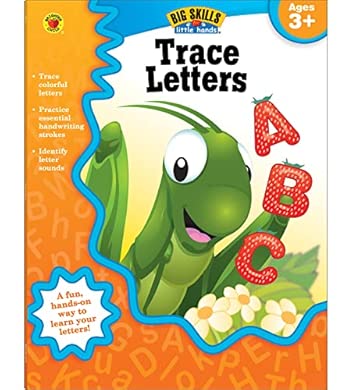 | Best for Phonics Integration | Age Range: 3–5 Years | Subject Focus: Alphabet, Phonics, Handwriting | Format: Paper Workbook | VIEW LATEST PRICE | See Our Full Breakdown |
| Timetome Magic Grooved Writing Practice Books for Kids |  | Best for Deep Groove Guidance | Book Count: 6 (Numbers, Math, Letters, Phrases, Drawing) | Pen Count: 6 | Grip Count: 3 | VIEW LATEST PRICE | See Our Full Breakdown |
| Trace Letters: Alphabet Handwriting Practice Workbook for Kids |  | Best Integrated Curriculum | Format: Paperback Workbook | Subjects: Alphabet Handwriting, Sight Words | Intended Age: 3–5 Years | VIEW LATEST PRICE | See Our Full Breakdown |
| My First Handwriting Workbook for Kids |  | Best for Foundational Structure | Subjects: Lowercase, Capital, Numbers, Sight Words | Practice Type: Line Tracing | Intended Grade: PreK, Kindergarten | VIEW LATEST PRICE | See Our Full Breakdown |
| My First Book of Patterns: Pencil Control Practice Book for Kids |  | Best Pre-Writing Foundation | Subject: Pencil Control, Patterns | Audience: Children, Pre-Writing Stage | Practice Type: Pattern Writing | VIEW LATEST PRICE | See Our Full Breakdown |
| Reusable Grooved Handwriting Practice Books for Kids Ages 3–10 |  | Best Reusable Value Set | Age Range: 3–10 Years | Workbook Count: 8 | Activities: 64 | VIEW LATEST PRICE | See Our Full Breakdown |
| Preschool Handwriting Practice Workbook |  | Best Basic Entry Point | Subject: Preschool Handwriting | Audience: Preschoolers | Format: Workbook | VIEW LATEST PRICE | See Our Full Breakdown |
| Carson Dellosa Trace With Me: Letter Tracing Workbook for Kids |  | Best for Structured Classroom Alignment | Brand: Carson Dellosa | Age Range: 3–5 years | Subject Focus: Letter tracing and handwriting | VIEW LATEST PRICE | See Our Full Breakdown |
| Learning Without Tears My First School Book Pre-K Workbook |  | Best Comprehensive Skill Builder | Brand: Handwriting Without Tears | Age Range: 4 years and up | Dimensions: 10.8 x 8.3 x 0.25 inches | VIEW LATEST PRICE | See Our Full Breakdown |
| Reusable Magic Ink Handwriting Copybooks for Kids, 4-Book Set |  | Best Value for High Volume Practice | Brand: CosyCorner | Set Contents: 4 Books (Letters, Numbers, Math, Drawing) | Reusability: Ink fades in ~30 minutes | VIEW LATEST PRICE | See Our Full Breakdown |
| Big Handwriting Practice Workbook for Kids |  | Best for Foundational Pen Control | Title: Big Handwriting Practice Workbook for Kids | ASIN: 1400353017 | Primary Focus: Pen control and handwriting | VIEW LATEST PRICE | See Our Full Breakdown |
| ABC Tracing Workbook: A–Z Alphabet Letter Tracing Activities for Kids |  | Best for Pure Alphabet Repetition | Content: A–Z uppercase and lowercase tracing | Age Range: 3–5 years | Format: Workbook | VIEW LATEST PRICE | See Our Full Breakdown |
| preschool handwriting practice workbook | Age Range | Format |
|---|---|---|
| Magic Grooved Writing Practice | 3–8 Years | — |
| Channie’s Easy Peasy Alphabet | 3–5 Years | — |
| Reusable Grooved Handwriting P | — | — |
| Carson Dellosa Trace Letters P | 3–5 Years | Paper Workbook |
| Timetome Magic Grooved Writing | 3–8 Years | — |
| Trace Letters: Alphabet Handwr | — | Paperback Workbook |
| My First Handwriting Workbook | — | Workbook |
| My First Book of Patterns: Pen | — | Practice Book |
| Reusable Grooved Handwriting P | 3–10 Years | — |
| Preschool Handwriting Practice | — | Workbook |
| Carson Dellosa Trace With Me: | 3–5 years | Paperback Workbook |
| Learning Without Tears My Firs | 4 years and up | — |
| Reusable Magic Ink Handwriting | — | — |
| Big Handwriting Practice Workb | — | Workbook |
| ABC Tracing Workbook: A–Z Alph | 3–5 years | Workbook |
More Details on Our Top Picks
Magic Grooved Writing Practice Books for Kids Ages 3–8
This set stands out for its breadth of content, covering everything from basic math to drawing, which makes it a strong contender for families wanting a single solution for multiple early learning skills. Unlike the Channie’s Easy Peasy Alphabet Tracing Book, which focuses strictly on letter formation, this kit introduces arithmetic and phrase writing, offering a more holistic educational tool. The inclusion of reward stickers is a thoughtful touch for motivation, though the wide age range of 3 to 8 years means the difficulty curve varies significantly. Parents should be aware that the disappearing ink mechanism requires waiting time between sessions, which might frustrate younger children who want to practice immediately. It is a robust choice for households that need variety, but it lacks the focused, traditional paper-and-pencil feel of dedicated workbooks.
Pros:- Includes six diverse workbooks covering math, letters, and drawing
- Comes with ergonomic pencil grips and reward stickers
- Waterproof and tear-resistant laminated pages support long-term use
- Grooved paths physically guide stroke formation for beginners
Cons:- Disappearing ink requires a waiting period before pages can be reused
- Age recommendation spans a wide 3–8 year range, leading to uneven difficulty
- Plastic materials may lack the tactile feedback of paper for some learners
Best for: Parents seeking a versatile, reusable kit that combines handwriting, math, and art in one package.
Not ideal for: Families preferring traditional paper practice or those who want immediate reuse without waiting for ink to fade.
- Workbook Count:6 (Numbers, Math, Alphabet, Phrases, Drawing)
- Included Accessories:6 Pens, 3 Pencil Grips, 2 Sticker Sheets
- Page Material:Laminated, Waterproof, Tear-Resistant
- Ink Type:Disappearing, Non-Toxic, Odor-Free
- Age Range:3–8 Years
- Item Weight:1.83 Pounds
- Dimensions:11.02 x 8.31 x 1.73 Inches
Our verdict“This is the ideal choice for households that want a durable, multi-subject reusable system rather than single-topic paper books.”
Channie’s Easy Peasy Alphabet Tracing Book for Kids Ages 3–5
This workbook is the gold standard for focused alphabet instruction, utilizing color-coded blocks to teach proper letter size and spacing. Compared to the Magic Grooved Writing Practice Books, this option provides a traditional, paper-based experience that many educators prefer for developing fine motor control without digital or plastic intermediaries. The 39 distinct sections allow for manageable daily lessons, preventing overwhelm. However, it is strictly limited to ages 3–5, meaning it will not serve older siblings or children who are ahead of the curve. The content is dense, and while effective, it lacks the gamification elements found in reusable sets like the Timetome Magic Grooved Writing Practice Books. It is best suited for parents who prioritize precise penmanship fundamentals over broad activity variety.
Pros:- Color-coded guides teach precise letter height and width
- Includes both uppercase and lowercase practice
- Lightweight and easy to transport for on-the-go practice
- Structured layout supports short, daily practice sessions
Cons:- Limited to ages 3–5, with no advanced content
- Single-subject focus excludes numbers or creative drawing
- Paper format is not reusable or wipeable
Best for: Parents and teachers focused exclusively on mastering uppercase and lowercase letter formation with strict spacing guides.
Not ideal for: Children over age 5 or those who need motivation through games, stickers, or varied subjects like math.
- Age Range:3–5 Years
- Page Size:8.5 x 11 Inches
- Material:100% Recycled Content
- Binding:Soft Cover
- Content Sections:39
- Weight:5.6 Ounces
- Focus Area:Alphabet, Numbers, Words, Sentences
Our verdict“Choose this if your primary goal is rigorous, traditional handwriting drills for preschoolers rather than general activity engagement.”
Reusable Grooved Handwriting Practice Set for Kids
This set offers a compact and portable solution for handwriting practice, weighing just over a pound. It includes 30 ink refills, a significant advantage over competitors like the Timetome Magic Grooved Writing Practice Books, which do not specify refill quantities in the same manner. The inclusion of a storage pouch makes it easy to keep the pens and books together, reducing the chance of losing small parts. However, the ink takes up to 30 minutes to disappear, which is slower than some faster-drying alternatives and can disrupt the flow of practice for impatient children. While it covers four core themes, it lacks the drawing depth or advanced math progression found in larger sets. It is a practical pick for travel or small spaces, but the slower ink fade time is a notable tradeoff.
Pros:- Includes 30 ink refills for extended use
- Compact size and storage pouch enhance portability
- Grooved pages assist with stroke guidance
- Covers letters, numbers, arithmetic, and drawing
Cons:- Ink takes up to 30 minutes to fade completely
- Fewer books (4) compared to larger 6-book sets
- Basic design lacks motivational elements like stickers
Best for: Families looking for a portable, budget-friendly reusable set with ample ink refills for travel.
Not ideal for: Children who become frustrated by waiting times between writing sessions or those needing advanced math content.
- Book Count:4 (Letters, Numbers, Arithmetic, Drawing)
- Ink Refills:30
- Included Accessories:4 Pen Grips, Storage Pouch
- Age Recommendation:3 Years and Up
- Item Weight:1.01 Pounds
- Dimensions:10.12 x 7.01 x 1.5 Inches
- Lead Hardness:HB
Our verdict“This is the best choice for on-the-go practice where portability and refill availability are more important than rapid reuse.”
Carson Dellosa Trace Letters Preschool Workbook
This workbook distinguishes itself by combining letter tracing with sound recognition, bridging the gap between handwriting and early reading. Unlike the Channie’s Easy Peasy Alphabet Tracing Book, which focuses on visual spacing, this title integrates phonics, helping children associate the shape of the letter with its sound. It is a traditional paper workbook, offering the tactile feedback that reusable plastic pages cannot replicate. However, its scope is narrowly focused on the alphabet, excluding numbers or math entirely. This makes it less versatile than the Magic Grooved Writing Practice Books, but more targeted for parents who want to reinforce phonics alongside motor skills. It is a solid choice for PreK learners who need a structured, low-distraction environment to learn letter-sound relationships.
Pros:- Integrates phonics and sound recognition with tracing
- Traditional paper format aids fine motor development
- Designed specifically for PreK and kindergarten levels
- Clear instructions for parents and educators
Cons:- Lacks number or math practice content
- Not reusable, requiring frequent repurchases
- Limited creative drawing or open-ended activities
Best for: Parents who want to teach letter sounds and handwriting simultaneously in a traditional paper format.
Not ideal for: Families seeking a multi-subject kit or reusable pages that reduce long-term paper costs.
- Age Range:3–5 Years
- Subject Focus:Alphabet, Phonics, Handwriting
- Format:Paper Workbook
- Grade Level:PreK, Kindergarten
- Brand:Carson Dellosa
- Activity Type:Tracing, Sound Recognition
- Target Skill:Early Literacy, Motor Control
Our verdict“Pick this workbook if you prioritize phonics and early literacy connections over general handwriting variety.”
Timetome Magic Grooved Writing Practice Books for Kids
This set features deep 3D grooves that physically constrain the pen, making it highly effective for children who struggle with staying on the line. Compared to the Reusable Grooved Handwriting Practice Set, the Timetome kit offers six books instead of four, providing a broader range of subjects including phrases and two drawing books. The 20–30 minute fade time is similar to competitors, but the depth of the grooves offers superior tactile feedback for developing muscle memory. However, like other reusable sets, it relies on disappearing ink, which can be messy if the pen is used on non-laminated surfaces. It is an excellent tool for structured stroke practice, but parents should be prepared for the waiting time between sessions. It sits comfortably between the basic utility of the compact sets and the extensive variety of the largest kits.
Pros:- Deep grooves provide strong physical guidance for tracing
- Includes six diverse workbooks for varied practice
- Comes with three pen grips to support proper hand posture
- Non-toxic, disappearing ink reduces waste
Cons:- Pages require 20–30 minutes to reset for reuse
- Limited to ages 3–8, excluding older or younger toddlers
- Plastic pages may not appeal to traditionalists
Best for: Children who need strong physical guidance to keep their pen within lines and develop consistent stroke depth.
Not ideal for: Users who want immediate page reuse or those who prefer the tactile feel of traditional paper.
- Book Count:6 (Numbers, Math, Letters, Phrases, Drawing)
- Pen Count:6
- Grip Count:3
- Ink Fade Time:20–30 Minutes
- Age Range:3–8 Years
- Brand:Timetome
- Feature:Deep 3D Grooves, Reusable
Our verdict“This is the optimal choice for learners who benefit from physical barriers to guide their handwriting strokes.”
Trace Letters: Alphabet Handwriting Practice Workbook for Kids
This workbook stands out by blending letter tracing with sight word practice, addressing two foundational literacy skills in a single volume. Unlike the My First Handwriting Workbook, which focuses heavily on structural line tracing, this option pushes children toward early reading recognition alongside writing mechanics. It is specifically calibrated for ages 3–5, ensuring the difficulty curve matches preschool developmental stages. However, the lack of detailed content clarification regarding math or additional subjects creates uncertainty for parents seeking a broad activity book. If you prioritize literacy over broad subject coverage, this focused approach reduces overwhelm, but those needing a multi-subject sampler may find the scope too narrow.Pros:- Combines letter formation with sight word recognition
- Strictly age-aligned for preschool and kindergarten readiness
- Reduces the need for separate literacy and writing resources
Cons:- Unclear if it includes promised math or word content
- Lacks detailed descriptions of page layout or exercise variety
Best for: Parents who want to reinforce sight word recognition simultaneously with handwriting drills
Not ideal for: Educators looking for a broad multi-subject sampler including math or science activities
- Format:Paperback Workbook
- Subjects:Alphabet Handwriting, Sight Words
- Intended Age:3–5 Years
- Audience:Preschool, Kindergarten
- Practice Type:Letter Tracing, Word Recognition
Our verdict“Choose this if you want a dual-purpose literacy and writing tool for preschoolers.”
My First Handwriting Workbook for Kids
This option excels at building structural handwriting discipline through dedicated line-tracing exercises for lowercase, capital, and numeric characters. Compared to the Trace Letters workbook, it offers a more rigorous mechanical approach, separating letter types and adding number practice explicitly. This makes it ideal for children who struggle with letter orientation or spacing. The inclusion of sight words ensures literacy isn’t ignored, but the primary focus remains on motor control and form. The tradeoff is a potentially repetitive structure that might bore advanced learners who need more creative or varied activities to stay engaged.Pros:- Separates lowercase and capital letter practice
- Includes dedicated number tracing sections
- Strong focus on line-tracing for motor control
Cons:- Less emphasis on creative or open-ended activities
- May feel repetitive for children with strong fine motor skills
Best for: Children who need strict practice on letter orientation and number formation
Not ideal for: Advanced preschoolers who find repetitive tracing exercises tedious
- Subjects:Lowercase, Capital, Numbers, Sight Words
- Practice Type:Line Tracing
- Intended Grade:PreK, Kindergarten
- Format:Workbook
- Focus:Structural Handwriting Discipline
Our verdict“This workbook is the right choice for mastering the mechanics of letters and numbers.”
My First Book of Patterns: Pencil Control Practice Book for Kids
Before mastering letters, children must master pencil control, and this book targets that pre-writing motor skill exclusively. Unlike the Reusable Grooved Handwriting Practice Books, which jumps straight into letters and math, this resource isolates pattern tracing to build hand stability and eye-hand coordination. It is an excellent preparatory step for children who grip pencils too tightly or struggle with straight lines. However, the lack of detailed information on exercise variety means it may feel monotonous if not paired with other resources. It serves as a specialized tool rather than a comprehensive curriculum, requiring supplementation for actual letter practice.Pros:- Focuses exclusively on foundational pencil control
- Builds eye-hand coordination before letter formation
- Reduces frustration for children with weak fine motor skills
Cons:- Does not include actual letter or number tracing
- Limited information on the variety of patterns provided
Best for: Toddlers and early preschoolers who need to build basic pencil grip and control
Not ideal for: Children who are already tracing letters confidently and need advanced practice
- Subject:Pencil Control, Patterns
- Audience:Children, Pre-Writing Stage
- Practice Type:Pattern Writing
- Format:Practice Book
- Skill Focus:Fine Motor Development
Our verdict“Use this as a preparatory step to build the hand strength needed for writing.”
Reusable Grooved Handwriting Practice Books for Kids Ages 3–10
This set redefines value through its reusable, screen-free design, featuring eight double-sided workbooks with disappearing ink. Unlike the paper-based My First Handwriting Workbook, which is a one-time use resource, this system allows for repeated practice, reinforcing muscle memory through repetition. The inclusion of silicone pencil grips and grooved pages provides tactile feedback that standard paper workbooks cannot match. However, the wide age range (3–10) means the content may be too basic for older children or too complex for toddlers. The fading ink also prevents parents from reviewing completed work, focusing purely on the act of writing rather than the result.Pros:- Reusable pages with disappearing ink support repeated practice
- Includes silicone grips to correct pencil hold
- Broad topic coverage from letters to basic math
Cons:- Work cannot be kept as ink fades quickly
- Age range is too broad for targeted skill building
Best for: Families seeking sustainable, repeated practice with built-in motor aid accessories
Not ideal for: Children who need to keep completed work for portfolios or teacher review
- Age Range:3–10 Years
- Workbook Count:8
- Activities:64
- Accessories:2 Pens, 10 Refills, 4 Grips
- Design:Grooved, Double-Sided, Spiral
- Dimensions:10.2 x 7.32 x 0.2 inches
Our verdict“This set is ideal for high-volume practice without the waste of paper workbooks.”
Preschool Handwriting Practice Workbook
This workbook represents a straightforward, no-frills approach to preschool handwriting. Without detailed specifications or additional accessories, it serves as a baseline resource for parents who want to start writing practice without committing to complex sets like the Reusable Grooved Handwriting Practice Books. It is likely most suitable for families who prefer standard paper and pencil methods and want to test their child’s interest before investing in specialized tools. The lack of provided details is a significant drawback, as parents cannot assess the difficulty level or specific curriculum alignment beforehand. It is a gamble on simplicity, offering potential ease of use but lacking the transparency of more detailed competitors.Pros:- Simplicity reduces decision fatigue for parents
- Likely lower cost than accessory-heavy sets
- Standard format familiar to most preschoolers
Cons:- No detailed content or curriculum information provided
- Cannot verify difficulty level or specific skills covered
Best for: Parents wanting to test handwriting interest with minimal upfront investment
Not ideal for: Educators who need to know specific curriculum alignment or page counts
- Subject:Preschool Handwriting
- Audience:Preschoolers
- Format:Workbook
- Content Details:Not Specified
- Accessories:None Listed
Our verdict“Select this only if you prefer a simple, unspecified paper workbook to start.”
Carson Dellosa Trace With Me: Letter Tracing Workbook for Kids
This workbook stands out for its alignment with early childhood standards, making it a reliable choice for parents who want to reinforce what is being taught in pre-K settings. Compared to the ABC Tracing Workbook, which focuses heavily on repetitive letter drills, this resource integrates broader handwriting readiness skills suitable for ages 3–5. The layout is designed to build confidence gradually, avoiding the frustration that can come from jumping straight into complex letters. However, it lacks the multi-subject integration found in the Learning Without Tears My First School Book, meaning you may need to supplement with other materials for number or shape practice. It is a solid, no-nonsense tool for pure letter formation.
Pros:- Aligned with pre-K educational standards
- Clear, uncluttered tracing guides for young children
- Builds foundational stroke control before complex letters
- Age-appropriate design for ages 3–5
Cons:- Limited scope compared to multi-subject workbooks
- Lacks engaging illustrations or thematic stories
- May feel repetitive for quick learners
Best for: Parents seeking a workbook that mirrors pre-K curriculum standards for letter formation.
Not ideal for: Families looking for a single book that covers math, shapes, and letters equally.
- Brand:Carson Dellosa
- Age Range:3–5 years
- Subject Focus:Letter tracing and handwriting
- Format:Paperback Workbook
- Skill Level:Pre-K and Kindergarten readiness
- Primary Activity:Guided letter tracing
Our verdict“Choose this if you want a focused, standards-based approach to letter tracing without unnecessary distractions.”
Learning Without Tears My First School Book Pre-K Workbook
This option excels at holistic fine motor development, blending pre-writing strokes, shapes, and colors with early letter and number awareness. Unlike the Big Handwriting Practice Workbook, which focuses narrowly on pen control, this book prepares children for school readiness by addressing multiple cognitive and physical skills simultaneously. The fading tracing lines are a standout feature, gradually removing support to encourage independent writing. While it is slightly more advanced than the Carson Dellosa Trace With Me, targeting ages 4 and up, it provides a smoother transition into kindergarten-level expectations. The tradeoff is a higher entry age, which may not suit children just starting to hold a crayon.
Pros:- Integrates fine motor skills with cognitive learning
- Fading lines promote gradual independence
- Covers shapes, colors, numbers, and letters
- Proven methodology for school readiness
Cons:- Minimum age recommendation of 4 may exclude younger learners
- Less focus on pure letter repetition than specialized tracers
- Requires more parental guidance for multi-step activities
Best for: Children aged 4+ who need a balanced mix of pre-writing, shapes, and letter introduction.
Not ideal for: Younger preschoolers (age 3) who may find the cognitive load too high.
- Brand:Handwriting Without Tears
- Age Range:4 years and up
- Dimensions:10.8 x 8.3 x 0.25 inches
- Weight:9.6 ounces
- Key Feature:Fading tracing lines
- Subjects:Pre-writing, shapes, colors, letters, numbers
- Manufacturer Part:MFSB-20
Our verdict“Ideal for parents who want one workbook that builds hand strength and school readiness together.”
Reusable Magic Ink Handwriting Copybooks for Kids, 4-Book Set
This set redefines value by offering reusable pages that fade after about 30 minutes, allowing for endless practice without buying new workbooks. Compared to the ABC Tracing Workbook, which is a one-time use paper product, this set includes grooved templates and a silicone pen aid to correct grip issues early on. The inclusion of four different books (letters, numbers, math, drawing) provides variety that single-focus books lack. However, the wait time for ink to fade can disrupt daily practice routines if you do not have multiple pages in rotation. It is a practical choice for families who want to minimize paper waste and maximize repetition.
Pros:- Reusable pages reduce long-term costs and waste
- Includes silicone grip aid for proper pen holding
- Grooved templates provide tactile feedback
- Covers letters, numbers, math, and drawing
Cons:- Ink takes approximately 30 minutes to fade
- Matte paper finish may not suit all pen types
- Requires management of multiple books for continuous practice
Best for: Families prioritizing sustainability and high-frequency practice opportunities.
Not ideal for: Parents who prefer immediate page-turning without waiting for ink to disappear.
- Brand:CosyCorner
- Set Contents:4 Books (Letters, Numbers, Math, Drawing)
- Reusability:Ink fades in ~30 minutes
- Included Tool:Silicone handwriting aid
- Sheet Size:8.4 inches
- Total Weight:15.8 ounces
- Template Type:Grooved
Our verdict“A smart pick for eco-conscious parents who want durable, multi-subject practice tools.”
Big Handwriting Practice Workbook for Kids
This workbook prioritizes pen control and basic motor skills before introducing complex letter shapes, making it a strong precursor to standard tracing books. Unlike the Learning Without Tears My First School Book, which jumps into shapes and colors, this resource focuses intensely on the physical mechanics of writing. It is particularly useful for children who struggle with pencil grip or hand stability. The tradeoff is a lack of detailed public specifications regarding page count or material quality, which can make it harder to assess durability compared to the Carson Dellosa options. It serves as a specialized tool for refining the act of writing itself.
Pros:- Focuses on fundamental pen control skills
- Simplifies the learning curve for struggling writers
- Large print and spacing for young hands
- Reduces frustration by isolating motor skills
Cons:- Lacks detailed material and page count information
- Less engaging than themed or illustrated workbooks
- Narrow focus excludes numbers and shapes
Best for: Children who need extra practice with pencil grip and stroke control before letter tracing.
Not ideal for: Parents looking for a comprehensive alphabet or number curriculum.
- Title:Big Handwriting Practice Workbook for Kids
- ASIN:1400353017
- Primary Focus:Pen control and handwriting
- Activity Type:Letter tracing and writing exercises
- Target Audience:Children
- Format:Workbook
Our verdict“Best for addressing specific motor skill deficits before moving to full letter formation.”
ABC Tracing Workbook: A–Z Alphabet Letter Tracing Activities for Kids
This workbook is dedicated entirely to A–Z uppercase and lowercase tracing, offering a straightforward path for memorizing letter forms. Compared to the Carson Dellosa Trace With Me, which incorporates broader handwriting readiness, this book is strictly about alphabet recognition and formation. It is an excellent supplement for children who know how to hold a pen but need to drill letter shapes. The downside is its lack of variety; it does not include numbers, shapes, or pre-writing strokes, making it less suitable as a standalone school readiness tool than the Learning Without Tears option. It is best used as a targeted drill book rather than a primary curriculum.
Pros:- Covers full alphabet including uppercase and lowercase
- Simple, distraction-free layout for focused practice
- Ideal for reinforcing letter recognition
- Low barrier to entry for beginners
Cons:- No content for numbers, shapes, or fine motor drills
- Can become monotonous without parental variation
- Lacks progressive difficulty adjustments
Best for: Children who need intensive repetition to master uppercase and lowercase letter shapes.
Not ideal for: Families seeking a single, all-in-one workbook for diverse preschool skills.
- Content:A–Z uppercase and lowercase tracing
- Age Range:3–5 years
- Format:Workbook
- Focus Area:Alphabet Letter Tracing
- Skill Type:Handwriting practice
- Target Group:Beginning writers
Our verdict“A focused drill tool for mastering the alphabet, best used alongside broader skill builders.”

How We Picked
I evaluated these products based on three primary criteria: developmental appropriateness, engagement factor, and longevity of use. First, I looked at whether the activities align with standard pediatric occupational therapy milestones for preschoolers, ensuring that fine motor skills are not pushed before gross motor readiness. Second, I considered how each workbook maintains a child’s interest—does it use color, gamification, or variety to prevent boredom? Finally, I weighed the cost-per-use. A reusable set might have a higher upfront cost but lasts longer than a single-use paper book, whereas a high-quality paper book might offer better educational depth per page.
| preschool handwriting practice workbook | Format |
|---|---|
| Magic Grooved Writing Practice | — |
| Channie’s Easy Peasy Alphabet | — |
| Reusable Grooved Handwriting P | — |
| Carson Dellosa Trace Letters P | Paper Workbook |
| Timetome Magic Grooved Writing | — |
| Trace Letters: Alphabet Handwr | Paperback Workbook |
| My First Handwriting Workbook | Workbook |
| My First Book of Patterns: Pen | Practice Book |
| Reusable Grooved Handwriting P | — |
| Preschool Handwriting Practice | Workbook |
| Carson Dellosa Trace With Me: | Paperback Workbook |
| Learning Without Tears My Firs | — |
| Reusable Magic Ink Handwriting | — |
| Big Handwriting Practice Workb | Workbook |
| ABC Tracing Workbook: A–Z Alph | Workbook |
Factors to Consider When Choosing Preschool Handwriting Practice Workbooks
Selecting a handwriting workbook is not just about picking a book with letters; it is about matching the tool to your child’s current motor skill level and learning style.Understand the Difference Between Tracing and Copying
Many parents confuse tracing with copying, but these are distinct developmental stages. Tracing helps a child learn the path of the letter and muscle memory, while copying requires them to observe a model and reproduce it independently. Most preschoolers start with tracing and move to copying only when their fine motor control improves. If you buy a workbook that asks for copying too early, your child may develop bad habits or refuse to write. Look for products that clearly label which stage they support, or choose a hybrid like Carson Dellosa that offers both with guidance.
Evaluate the Grip and Tool Compatibility
The pen or marker included with the workbook matters as much as the book itself. Triangular pencils or chunky markers encourage a tripod grip, which is the standard for legible writing. Some reusable sets come with flat, circular markers that can actually reinforce a fist grip if not monitored. If the set does not include ergonomic tools, I recommend purchasing separate triangular pencils. This small adjustment can prevent the need for corrective therapy later and makes the physical act of writing less tiring for small hands.
Assess the Progression Logic
A good workbook follows a logical sequence, such as vertical lines, horizontal lines, curves, and then letters. Randomly scattered letters can confuse a child who is still learning directional awareness. Learning Without Tears is known for strict developmental sequencing, whereas generic Amazon brands may just list A through Z without pedagogical structure. If your child struggles with directionality (mirror writing), prioritize a workbook with explicit directional arrows and step-by-step breakdowns rather than simple outline tracing.
Consider the Reusability vs. Paper Balance
Reusable sets are excellent for repetition, allowing a child to practice a difficult letter ten times without wasting paper. However, they often lack the context of words or stories that paper books provide. Paper books offer a sense of completion and accomplishment that plastic boards cannot replicate. A balanced approach might involve using a reusable set for drill and practice of specific tricky letters, while using a paper workbook for structured lessons and ‘take home’ pride. Do not rely solely on one format if you want a well-rounded skill set.
Check for Visual Clarity and Font Choice
The font used in the workbook should be clear and consistent. Some cheap printings use fonts that are too thin or have confusing serifs that make it hard for a child to see where the letter starts and ends. Dyslexia-friendly fonts or simple sans-serif fonts are often easier for young eyes to process. Additionally, check if the paper is thick enough to prevent bleed-through if you use markers. Thin paper can cause frustration if ink soaks through, ruining the next page and distracting from the lesson.
Frequently Asked Questions
At what age should I start using handwriting workbooks?
Most children are ready for formal tracing between ages 3 and 4, but this varies widely based on fine motor development. Before introducing letter workbooks, ensure your child has mastered basic pencil control through coloring, mazes, and pattern tracing. If a child grips the pencil tightly or struggles to stay within lines during simple coloring, focus on pre-writing pattern books first. Pushing letter formation too early can lead to hand fatigue and negative associations with writing. Wait until they show interest and sufficient hand strength before moving to alphabet tracing.Are reusable grooved workbooks better than traditional paper ones?
Reusable grooved workbooks offer tactile feedback that physically guides the pen, which is highly beneficial for correcting grip and learning letter shapes. They are also cost-effective over time and reduce waste. However, traditional paper workbooks often provide better educational context, such as associating letters with images and words, and allow for a wider variety of activities like cutting or pasting. Reusable sets are best for repetitive drill practice of specific letters, while paper books are better for comprehensive lessons and building a portfolio of work. Using both together often yields the best results.How do I know if my child needs occupational therapy instead of a workbook?
If your child experiences significant pain, refuses to write entirely, or cannot hold a pencil after consistent practice, consult a pediatrician or occupational therapist. While workbooks help with skill building, they cannot address underlying physiological issues like low muscle tone or joint hypermobility. Signs of a potential issue include extreme frustration, trembling hands, or an inability to copy simple shapes by age 4. In these cases, a workbook might add pressure rather than help. Early intervention through professional guidance is more effective than forcing practice with standard educational materials.Should I focus on uppercase or lowercase letters first?
Many educators recommend starting with uppercase (capital) letters because they are composed of simpler lines and curves, whereas lowercase letters often involve more complex directional changes and descenders. However, some children find lowercase easier because they see them more frequently in books. The key is consistency; do not mix them in the same session until the child is comfortable with one set. Channie’s and similar brands often start with uppercase for this reason. Once the child can form uppercase letters confidently, introduce lowercase as a separate ‘new skill’ to avoid confusion.How often should a preschooler practice handwriting?
Short, frequent sessions are more effective than long, infrequent ones. Aim for 5 to 10 minutes of focused practice a few times a week. Preschoolers have limited attention spans and fine motor endurance, so forcing longer sessions leads to fatigue and sloppy habits. Stop the session while the child is still engaged and having fun, rather than when they are tired or frustrated. Consistency builds muscle memory better than intensity. Treat it as a playful activity rather than a chore to maintain a positive attitude toward learning.Conclusion
For most families, the Magic Grooved Writing Practice Books provide the best balance of tactile guidance and ease of use, making them the Best Overall choice for building initial confidence. If you are on a tight budget or want a no-mess option, the Reusable Grooved Handwriting Practice Set is the Best Value due to its long lifespan. For parents who prefer a structured, curriculum-aligned approach, Learning Without Tears My First School Book is the Best Premium option, offering expert-led developmental sequencing. Beginners who need a gentle introduction should start with Channie’s Easy Peasy Alphabet Tracing Book, which breaks down steps into manageable chunks. Ultimately, the right workbook depends on whether your child needs physical guidance (grooves) or visual structure (paper), so consider your child’s specific motor skill needs before purchasing.
As an affiliate, we earn on qualifying purchases.Halloween Picks

6-Foot Jason Voorhees Animatronic Halloween Decoration

JOYIN 5-Foot Halloween Animatronic Drinking Skeleton

Kalolary 11 ft Halloween Inflatable Archway Ghost House Tunnel