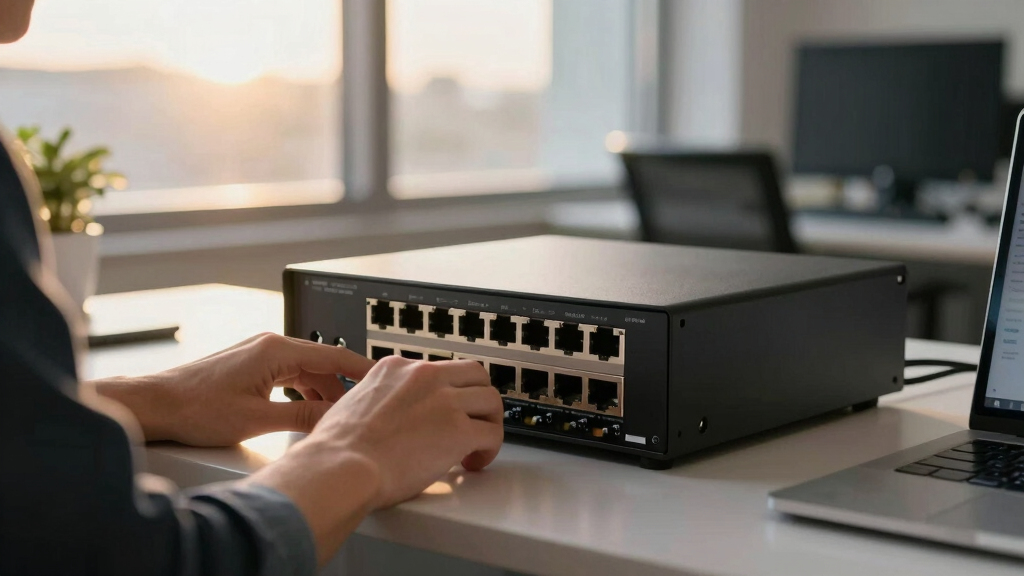

When searching for the best firewall appliance with multi gig, performance and scalability are key factors. The SonicWall NSa4700 Gen7 stands out as the overall top pick for its robust throughput and extensive security features. The Zyxel USGFLEX200H offers excellent value for smaller networks, while some SonicWall models balance speed with user-friendly management. The main tradeoffs involve balancing raw performance against ease of deployment and price. Keep reading for a detailed breakdown of each option and to find the right fit for your network.
Key Takeaways
- The top performers deliver multi-gig throughput while maintaining strong security features, making them ideal for high-demand environments.
- Value-oriented models often sacrifice some advanced features but provide solid multi-gig performance for smaller or less complex setups.
- Ease of management and user interface quality vary widely, impacting deployment speed and ongoing maintenance—these are crucial considerations.
- The tradeoff between speed and security remains central; some models prioritize throughput, while others focus on comprehensive threat protection.
- Future-proofing features like multi-gig ports and scalability options are common in higher-tier models, but they come with higher costs.
| SonicWall NSa4700 Gen7 Firewall |  | Best Overall for Large Enterprises | Firewall Throughput: 18 Gbps | Threat Prevention Throughput: 9.5 Gbps | Concurrent Connections: up to 4 million | VIEW LATEST PRICE | See Our Full Breakdown |
| SonicWall TZ570W Wireless Gen7 Firewall |  | Best for SMBs with Wireless Needs | Throughput: 3.0 Gbps | Wireless: 802.11ac Wave 2 | PoE: Yes | VIEW LATEST PRICE | See Our Full Breakdown |
| Zyxel USGFLEX200H Cyber Security Firewall |  | Best for Small to Medium Networks on a Budget | Firewall Throughput: 6,500 Mbps | IPS Throughput: 2,500 Mbps | VPN Throughput: 1,200 Mbps | VIEW LATEST PRICE | See Our Full Breakdown |
| SonicWall TZ570 Gen7 Firewall |  | Best for SMBs and Branch Offices | Model: TZ570 | Generation: 7th | Interfaces: 10 GbE / Multi-Gig | VIEW LATEST PRICE | See Our Full Breakdown |
| SonicWall TZ470 Gen 7 Firewall |  | Best for Mid-Sized Businesses and Branches | Firewall Throughput: up to 3.5 Gbps | Concurrent Connections: over 1 million | Interfaces: Multi-Gigabit Ethernet, SFP+ | VIEW LATEST PRICE | See Our Full Breakdown |
| SonicWall TZ670 Gen7 Firewall Wi-Fi Security Appliance |  | Best Overall for High-Performance Distributed Networks | Firewall Throughput: 5 Gbps | Threat Prevention: 2.5 Gbps | Concurrent Connections: 1.5 million | VIEW LATEST PRICE | See Our Full Breakdown |
| SonicWall TZ470 SecureUpgradePlus 3-Year Essential Edition Firewall |  | Best for Mid-Sized Businesses Needing Complete Security & Future-Proofing | Throughput: up to 3.5 Gbps | Concurrent Connections: over 1 million | Protection Service: 3-Year Essential Protection Service Suite (EPSS) | VIEW LATEST PRICE | See Our Full Breakdown |
More Details on Our Top Picks
SonicWall NSa4700 Gen7 Firewall
The SonicWall NSa4700 Gen7 stands out as the top choice for large organizations requiring multi-gig throughput and advanced security. Its 18 Gbps firewall capacity easily surpasses smaller models like the TZ570, making it ideal for data centers or multi-site enterprises. The inclusion of features like sandboxing and RTDMI offers robust threat prevention, but the lack of included subscription services can add to ongoing costs. While complex to set up, its high availability and redundant power options ensure resilience in mission-critical environments. This appliance is best suited for enterprises that prioritize raw performance and extensive security capabilities over simplicity or lower price points.
Pros:- Unmatched 18 Gbps throughput for enterprise-scale networks
- Advanced threat prevention with sandboxing and RTDMI
- Supports multiple 10 GbE SFP+ and 1 GbE ports for scalable connectivity
- High availability with redundant power supplies
Cons:- No included subscription services, adding to total cost
- Setup complexity requiring specialized expertise
Best for: Large organizations with high-bandwidth needs and extensive security requirements
Not ideal for: Small businesses or organizations seeking plug-and-play solutions with minimal setup
- Firewall Throughput:18 Gbps
- Threat Prevention Throughput:9.5 Gbps
- Concurrent Connections:up to 4 million
- Ports:Multiple 10 GbE SFP+ and 1 GbE ports
- Power Options:Redundant power supplies
- High Availability:Supported
Bottom line: This appliance is ideal for large enterprises needing maximum throughput and security, despite its price and complexity.
SonicWall TZ570W Wireless Gen7 Firewall
The SonicWall TZ570W combines solid multi-gigabit security with integrated Wi-Fi, making it a strong choice for SMB networks that need both wired and wireless protection. With a throughput of 3.0 Gbps, it comfortably handles most small to medium business traffic, and the built-in Wi-Fi (802.11ac Wave 2) reduces deployment complexity compared to separate wireless solutions. Compared to the TZ470, its wireless capabilities make it more versatile, but it may fall short in scale for larger enterprises with higher throughput demands. Its complex setup and lack of included subscriptions are notable tradeoffs, but for SMBs seeking a unified wired and wireless security solution, it’s a compelling option.
Pros:- High-speed multi-gigabit performance for combined wired/wireless security
- Integrated Wi-Fi reduces deployment time and cost
- Supports SD-WAN, VPN, and DPI-SSL for comprehensive threat protection
- Up to 1.25 million connections
Cons:- No included service subscription, leading to additional costs
- Setup can be complex for less technical users
Best for: SMBs looking to secure both wired and wireless networks with high performance
Not ideal for: Large enterprises requiring multi-gig throughput for data centers or large-scale deployments
- Throughput:3.0 Gbps
- Wireless:802.11ac Wave 2
- PoE:Yes
- Connections:Up to 1.25 million
- Features:SD-WAN, VPN, threat protection, DPI-SSL
- Power:PoE support
Bottom line: This model suits SMBs that need reliable, high-performance wireless and wired security in a single device, with some setup and ongoing costs to consider.
Zyxel USGFLEX200H Cyber Security Firewall
The Zyxel USGFLEX200H offers a fanless, quiet design combined with multi-gigabit ports, making it a practical choice for small to medium-sized networks that require reliable security without excessive complexity. Its 6.5 Gbps firewall throughput is lower than the SonicWall NSa4700 but sufficient for many SMBs, especially those prioritizing silent operation and centralized management through Nebula. Compared with the SonicWall TZ470, it excels in quiet operation but may lack some advanced features and scalability needed for larger or more security-intensive environments. The need for optional licenses and the somewhat challenging setup make it less appealing for beginners, but its affordability and ease of integration for smaller setups remain advantages.
Pros:- Fanless, silent operation for quiet environments
- Multi-gigabit ports support high-speed data transfer
- Supports centralized management via Nebula
- Rack-mountable for flexible deployment
Cons:- Full security features require additional licenses
- Setup may be complex for those unfamiliar with network appliances
Best for: Small to medium-sized networks requiring quiet operation and centralized management
Not ideal for: Large networks or environments with high security complexity needing advanced features
- Firewall Throughput:6,500 Mbps
- IPS Throughput:2,500 Mbps
- VPN Throughput:1,200 Mbps
- Ports:6 x 1G, 2 x 2.5G RJ-45
- Maximum Users:100
- Concurrent Sessions:600,000
Bottom line: This firewall is well-suited for smaller environments seeking quiet, reliable security with centralized control, though it may need extra licensing for full features.
SonicWall TZ570 Gen7 Firewall
The SonicWall TZ570 Gen7 offers a balanced combination of performance and security tailored for SMBs and branch offices. With up to 4 Gbps firewall throughput, it handles demanding remote or distributed networks effectively, especially compared to the TZ470. Features like RTDMI, DPI-SSL, and IPS provide strong threat protection, while its support for SD-WAN and VPN makes it flexible for hybrid cloud environments. The need for technical expertise to set up and manage advanced features can be a hurdle for less experienced users. Still, its high throughput and comprehensive security make it a compelling choice for organizations with growing remote or branch network needs.
Pros:- High firewall throughput of up to 4 Gbps
- Advanced threat protection with RTDMI and DPI-SSL
- Supports SD-WAN, VPN, and centralized management
- Scalable for growing remote sites
Cons:- No included subscription services, increasing ongoing costs
- Requires technical knowledge to fully utilize features
Best for: SMBs and branch offices needing high throughput and advanced threat protection
Not ideal for: Very small networks or organizations seeking simple, plug-and-play solutions
- Model:TZ570
- Generation:7th
- Interfaces:10 GbE / Multi-Gig
- Firewall Throughput:up to 4 Gbps
- Concurrent Connections:1.25 million
- Threat Protection:RTDMI, DPI-SSL, IPS, Capture ATP
Bottom line: Ideal for SMBs or branch offices requiring robust performance and security with scalable management, despite setup complexity.
SonicWall TZ470 Gen 7 Firewall
The SonicWall TZ470 Gen 7 strikes a balance between high performance and ease of deployment for mid-sized businesses and branch offices. Its 3.5 Gbps throughput handles bandwidth-hungry applications with confidence, and over one million concurrent connections support multiple users and devices. Features like advanced threat prevention, SD-WAN, VPN, and TLS 1.3 decryption enhance security and remote connectivity. While lacking the raw throughput of higher-end models like the NSa4700, it offers a more budget-conscious, straightforward solution for growing networks. The absence of included subscriptions and the need for additional licensing are tradeoffs, but for environments that don’t require enterprise-scale capacity, it provides solid value.
Pros:- Up to 3.5 Gbps firewall throughput for bandwidth-heavy environments
- Supports over one million concurrent connections
- Includes SD-WAN, VPN, and TLS 1.3 decryption for secure remote access
- Future-proof multi-gigabit Ethernet interfaces
Cons:- No included service subscriptions, leading to additional costs
- Setup may be complex for users unfamiliar with network appliances
Best for: Mid-sized businesses and branch offices needing high performance with straightforward setup
Not ideal for: Large enterprises or high-security environments requiring multi-gig throughput at scale
- Firewall Throughput:up to 3.5 Gbps
- Concurrent Connections:over 1 million
- Interfaces:Multi-Gigabit Ethernet, SFP+
- Threat Prevention:Capture ATP, RTDMI
- Features:SD-WAN, VPN, TLS 1.3 decryption
Bottom line: This firewall offers high performance and security for mid-sized networks, with some licensing and setup considerations.
SonicWall TZ670 Gen7 Firewall Wi-Fi Security Appliance
The SonicWall TZ670 Gen7 stands out as the top choice for organizations needing robust multi-gigabit throughput combined with advanced threat prevention. Its 5 Gbps firewall throughput and 2.5 Gbps threat prevention capabilities make it well-suited for bandwidth-heavy applications and distributed enterprise environments. Unlike the TZ470, which offers solid performance for mid-sized setups, the TZ670 provides greater scalability for larger, more complex networks demanding higher capacity and security. The device’s 10 GbE interfaces support high-capacity uplinks, but this comes with the tradeoff of higher complexity and cost, especially since it doesn’t include a service subscription, adding ongoing expenses. Overall, this appliance is ideal for midsize to large organizations that need scalable, high-performance security without compromise, but smaller offices with simpler needs should look elsewhere to avoid unnecessary complexity.
Pros:- High multi-gigabit throughput supports bandwidth-intensive applications
- Advanced security suite with RTDMI, IPS, anti-malware, and sandboxing
- Supports high-capacity WAN links with 10 GbE interfaces
- Scalable for distributed enterprise deployments
Cons:- No included subscription service, leading to additional costs
- Complex setup and management may be daunting for smaller teams
Best for: Mid-sized to large distributed organizations requiring scalable, multi-gigabit security infrastructure
Not ideal for: Small businesses or single-location offices with limited IT resources and simpler security needs
- Firewall Throughput:5 Gbps
- Threat Prevention:2.5 Gbps
- Concurrent Connections:1.5 million
- Interfaces:10 GbE
- Support:No service subscription included
- Form Factor:Desktop
Bottom line: This model is best suited for large or distributed organizations seeking top-tier, scalable performance and security, willing to manage the complexity.
SonicWall TZ470 SecureUpgradePlus 3-Year Essential Edition Firewall
The SonicWall TZ470 offers a compelling blend of high throughput—up to 3.5 Gbps—and comprehensive security features, making it suitable for mid-sized businesses and branch offices. Compared to the TZ670, which excels in high-capacity, large-scale environments, the TZ470 provides a more straightforward setup with enough power for demanding networks. Its included Essential Protection Service Suite ensures anti-virus, intrusion prevention, and sandboxing, but this requires a subscription, adding ongoing costs. The device’s multi-gig interfaces support high-capacity traffic, yet its complexity might pose challenges for small teams without dedicated IT support. The SecureUpgradePlus program enhances longevity, but the need for subscriptions could be a barrier for cost-sensitive buyers. Overall, this unit offers a good balance of performance and security for growing mid-sized firms that want a future-proofed, secure network without the enterprise-level complexity.
Pros:- High firewall throughput suitable for demanding environments
- Includes comprehensive security features like sandboxing and anti-malware
- Supports multi-gig interfaces for high-capacity traffic
- Device upgrade program for future-proofing and extended lifespan
Cons:- Requires ongoing subscription for full security features
- Setup and configuration may be complex for less experienced teams
Best for: Mid-sized businesses and branch offices needing a reliable, scalable firewall with comprehensive security features
Not ideal for: Small businesses or offices with limited IT support looking for a simple, low-cost solution
- Throughput:up to 3.5 Gbps
- Concurrent Connections:over 1 million
- Protection Service:3-Year Essential Protection Service Suite (EPSS)
- Interfaces:Multi-Gigabit
- Target Audience:Mid-sized businesses and branch networks
- Form Factor:Desktop
Bottom line: This firewall makes the most sense for mid-sized organizations seeking a high-capacity, secure, and upgradeable solution that balances performance and future growth.
How We Picked
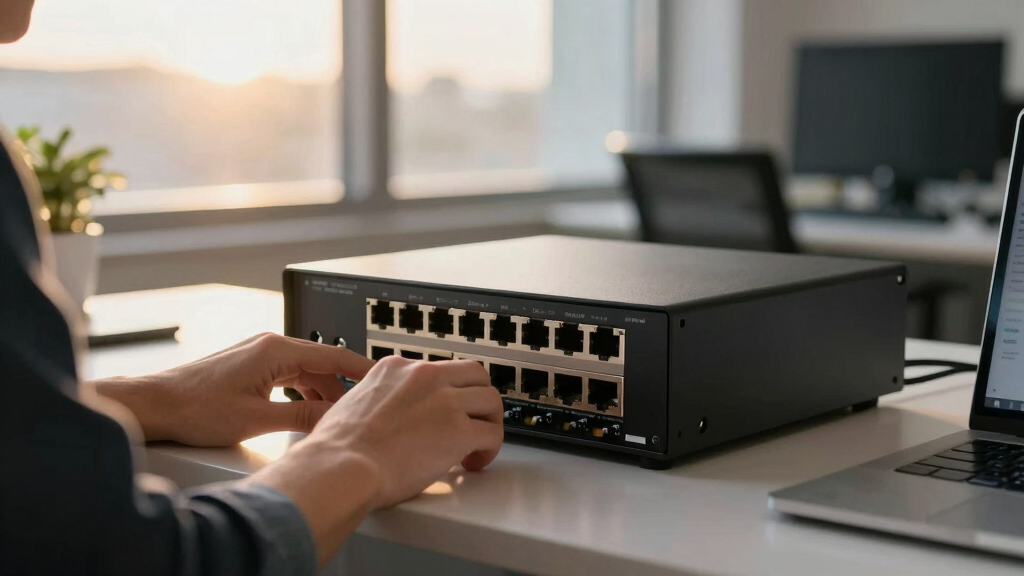
Our evaluation focused on performance benchmarks, specifically multi-gig throughput capabilities essential for high-speed networks. We examined build quality, reliability, and security features to ensure the appliances can handle modern threats without bottlenecks. Usability and management tools were also key, as a firewall’s effectiveness depends on ease of configuration and ongoing maintenance. We ranked products by balancing performance with value, considering both initial cost and long-term operational expenses. The top picks stand out for delivering high throughput while remaining manageable for different user types, from small businesses to enterprise environments.Factors to Consider When Choosing Best Firewall Appliance With Multi Gig
Choosing the best firewall appliance with multi-gig ports requires understanding several key factors. Beyond raw speed, you should consider security features, scalability, ease of management, and compatibility with your existing network. Making the wrong choice can result in bottlenecks, overspending, or inadequate protection. Here are the main factors to keep in mind to make an informed decision.Performance and Throughput
Multi-gig ports are designed to handle high data volumes, but actual throughput depends on the appliance’s processor and architecture. Always look for real-world performance benchmarks, not just specifications. Overestimating capacity can lead to network slowdowns, especially during peak usage. Keep in mind that higher throughput models tend to be more expensive, so evaluate your actual bandwidth needs carefully to avoid overspending.
Security Features
Beyond speed, the core purpose of a firewall is security. Look for appliances that offer advanced threat detection, intrusion prevention, VPN support, and integrated security services. Some models include AI-based threat analysis or sandboxing, which can significantly enhance protection. Be aware that adding security features often impacts performance, so find a balanced solution that meets your throughput requirements without sacrificing security quality.
Ease of Management
An intuitive management interface saves time and reduces errors during setup and ongoing operations. Features like centralized dashboards, automated updates, and clear reporting are valuable. Some appliances support cloud-based management, easing remote administration. Overly complex interfaces can slow deployment and increase maintenance costs, especially if your team lacks specialized security expertise.
Scalability and Future-Proofing
Networks grow, and security threats evolve. Opt for appliances that support modular upgrades, additional ports, or advanced features like SD-WAN integration. Multi-gig ports are a good start, but ensure the device can handle future bandwidth increases and new security protocols. Investing in scalable hardware helps avoid costly replacements down the line, but it may come with a higher initial price.
Cost and Total Cost of Ownership
While high-performance appliances tend to be more expensive upfront, consider long-term expenses like licensing, support contracts, and maintenance. Cheaper models may lack essential features or require upgrades sooner, adding hidden costs. Balancing initial investment with ongoing operational costs is key to selecting a solution that offers true value over time.
Frequently Asked Questions
Will a multi-gig port improve my network speed if my internet connection is slower?
Having a multi-gig port doesn’t automatically increase your internet speed if your connection is slower. It primarily benefits internal network data transfer and reduces bottlenecks when handling large data loads within your LAN. For internet access, your ISP plan dictates the maximum speed, but a multi-gig port ensures your network can fully utilize faster internal data flows and future upgrades.
How do I know if my existing hardware supports multi-gig speeds?
Check your current switches, cables, and network cards for compatibility with multi-gig standards like 2.5G, 5G, or 10G Ethernet. Not all hardware supports these speeds, so upgrading may be necessary for full utilization. Compatibility is crucial because bottlenecks often occur at the hardware level, limiting the benefits of a multi-gig firewall appliance.
Are higher-priced appliances worth the extra investment?
Higher-priced models often deliver better performance, more security features, and greater scalability. If your network demands high throughput, advanced threat detection, or future expansion, investing more upfront can be justified. However, for small or less critical networks, a mid-range appliance may provide sufficient protection without overspending. Always evaluate your specific needs against the appliance’s features.
Can these firewalls handle VPN and remote access securely?
Most multi-gig firewalls support VPN and remote access features, but performance can vary. Ensure the appliance’s VPN throughput matches your expected remote user load to avoid slow connections. Security protocols and ease of configuration also matter; some models include integrated VPN solutions that simplify setup while maintaining strong encryption standards.
What should I consider if I plan to upgrade my network in the future?
Look for appliances that support modular upgrades, higher port speeds, and emerging protocols. Compatibility with future network hardware, such as 25G or 40G ports, helps protect your investment. Additionally, check whether the device supports cloud management or SD-WAN features that facilitate future scaling, avoiding costly replacements down the line.
Conclusion
For small businesses or those new to high-speed networks, the Zyxel USGFLEX200H offers solid multi-gig performance at a budget-friendly price, making it a great starting point. Larger enterprises or high-demand environments should consider the SonicWall NSa4700 Gen7 for its robust throughput and security capabilities, though it comes at a higher cost. Premium buyers seeking maximum scalability and future-proofing might lean toward models with modular ports and advanced features. Beginners will benefit from appliances with intuitive management tools, while advanced users need appliances that balance speed with extensive security options. Your choice depends on your network size, security needs, and budget—matching these factors will lead to the best fit.