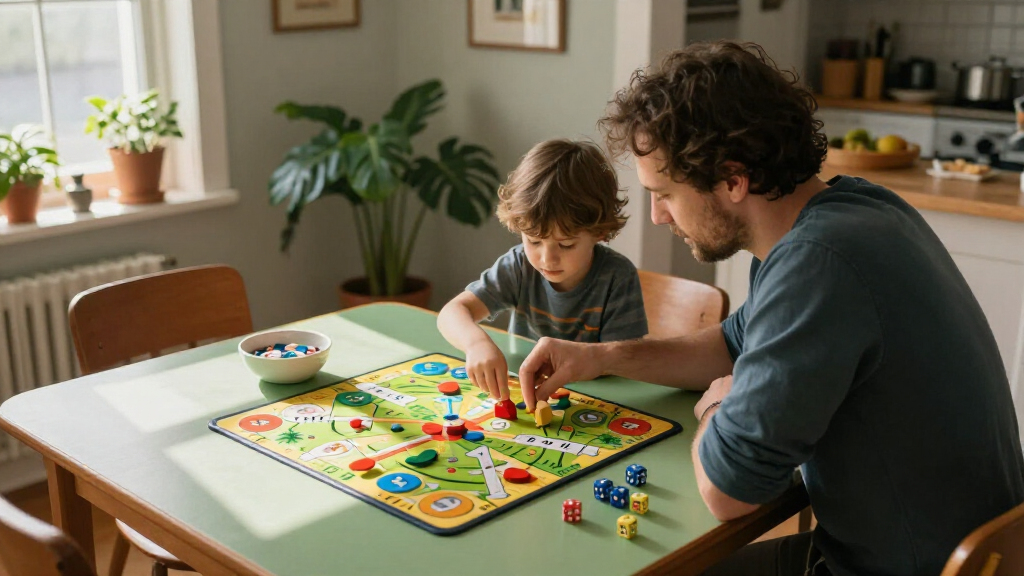
For families choosing educational board games for kids, ThinkFun Zingo! is my best overall pick because its quick matching rounds make early word practice easy to share. Scholastic Race Across the USA stands out for geography, while Number Hunter gives younger players a focused way to practice math. The main tradeoff is between games that teach one skill directly and broader games that build language, memory, strategy, or social confidence through play. Age fit, reading demands, and how much adult help a child needs can matter as much as the subject. Read on for the full comparison and recommendations by learner and play style.

Get school and study supplies delivered free — and shop member deals
- Fast, free delivery on millions of items
- Access to Prime Big Deal Days deals on October 6–7
- Prime Video, Amazon Music and more included
Key Takeaways
- Zingo! leads for broad family appeal: its picture-and-word matching format makes it easier to bring young players into a shared game than options built around heavier reading or subject knowledge.
- Race Across the USA is the clearest geography pick: it focuses on U.S. places and map knowledge, while Scrabble Junior and Sentence Search prioritize literacy.
- Age and reading readiness change the best choice: Alphabet Matching and Hi Ho Cherry-O suit early learners, whereas geography, spelling, and strategy games call for more developed skills.
- Skill focus varies more than format: Number Hunter targets math practice, Junior Learning targets social skills, and SEQUENCE for Kids pairs matching with planning.
- Focused games trade breadth for easier practice: a single-skill game can support a specific learning goal, while a broader family game may be easier to keep in regular rotation.
| Skillmatics Sentence Search Educational Board Game |  | Best for Sentence Building | Brand: Skillmatics | Age range: 5–8 years | Word tiles: 120+ color-coded tiles | VIEW LATEST PRICE | See Our Full Breakdown |
| Hasbro Gaming Scrabble Junior Board Game |  | Best for Growing Spellers | Brand: Hasbro Gaming | Age range: 5+ years | Players: 2–4 | VIEW LATEST PRICE | See Our Full Breakdown |
| Scholastic Race Across the USA Geography Board Game for Kids, Ages 8+ |  | Best for Geography Practice | Recommended age: 8+ | Game type: Geography board game | Objective: Visit six states, answer questions, and return to your home state | VIEW LATEST PRICE | See Our Full Breakdown |
| ThinkFun Zingo! Board Game |  | Best for Pre-Readers | Brand: ThinkFun | Age range: 4–10 years | Players: 2–7 | VIEW LATEST PRICE | See Our Full Breakdown |
| Junior Learning Social Skills Board Games for Kids Ages 5–8 |  | Best for Social-Emotional Learning | Age range: 5–8 years | Number of games: 4 | Included components: 6 counters, a spinner, a die, and an answer sheet | VIEW LATEST PRICE | See Our Full Breakdown |
| Number Hunter Math Board Game for Kids Ages 5–7 |  | Best for Early Math Practice | Brand: Clever Fox Play | Players: 2–5 | Recommended age: 5 years and up | VIEW LATEST PRICE | See Our Full Breakdown |
| Chuckle & Roar Alphabet Matching Memory Game for Kids Ages 3+ |  | Best for First Letter Practice | Age range: 3–5 years | Players: Solo or group | Material: Cardboard tiles | VIEW LATEST PRICE | See Our Full Breakdown |
| Jax SEQUENCE for Kids Strategy Board Game |  | Best for Early Strategy | Brand: Jax | Age range: 3–6 years | Players: 2–4 | VIEW LATEST PRICE | See Our Full Breakdown |
| Hasbro Gaming Hi Ho Cherry-O Board Game | 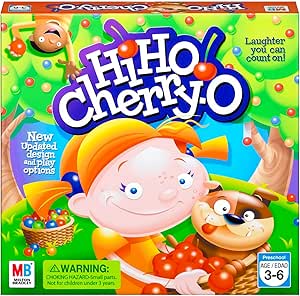 | Best for Preschool Counting | Brand: Hasbro Gaming | Age range: 3 years and up | Players: 2–4 | VIEW LATEST PRICE | See Our Full Breakdown |
| educational board games for kid | Age range | Brand | Players | Included components |
|---|---|---|---|---|
| Skillmatics Sentence Search Ed | 5–8 years | Skillmatics | — | — |
| Hasbro Gaming Scrabble Junior | 5+ years | Hasbro Gaming | 2–4 | — |
| Scholastic Race Across the USA | — | — | — | — |
| ThinkFun Zingo! Board Game | 4–10 years | ThinkFun | 2–7 | 6 double-sided Zingo! cards, 72 double-sided tiles, Parent’s Guide, and Zingo! Zinger |
| Junior Learning Social Skills | 5–8 years | — | — | 6 counters, a spinner, a die, and an answer sheet |
| Number Hunter Math Board Game | — | Clever Fox Play | 2–5 | Game board, 5 game pieces, 2 number dice, 1 operation die, 50 challenge cards, game rules |
| Chuckle & Roar Alphabet Matchi | 3–5 years | — | Solo or group | — |
| Jax SEQUENCE for Kids Strategy | 3–6 years | Jax | 2–4 | Folding game board, 42 playing cards, 84 playing chips, instructions |
| Hasbro Gaming Hi Ho Cherry-O B | 3 years and up | Hasbro Gaming | 2–4 | Game board, spinner, 4 fruit baskets, 40 fruit pieces, instructions |
More Details on Our Top Picks
Skillmatics Sentence Search Educational Board Game
Skillmatics Sentence Search is the most direct pick here for children ready to move beyond recognizing letters and start building complete sentences. Its color-coded word tiles and wooden sentence builders turn grammar practice into a hands-on activity, while the large tile selection leaves room for varied combinations. Compared with Scrabble Junior, which progresses from matching letters to forming words, this game puts more emphasis on sentence structure and vocabulary from the start. That makes it a stronger fit for guided reading and writing practice, but a less natural choice for children who mainly want a quick, competitive board game. The small tiles also call for supervision around younger siblings, and children at the lower end of the age range may need an adult to explain how to play.
Pros:- Color-coded word tiles make sentence construction more accessible
- Wooden sentence builder tiles add a hands-on grammar activity
- 120+ word tiles support varied vocabulary and sentence combinations
- Designed to practice reading, comprehension, and critical thinking
Cons:- Small tiles can be a choking hazard for children under 5
- Younger players may need adult help understanding the rules
- Its sentence-building focus may feel more like a learning activity than a broad family game
Best for: Families and early-elementary educators seeking hands-on sentence and grammar practice for children ages 5–8
Not ideal for: Homes with children under 5 who may mouth small tiles, or families looking for a fast-paced competitive game with minimal adult guidance
- Brand:Skillmatics
- Age range:5–8 years
- Word tiles:120+ color-coded tiles
- Sentence builder tiles:20 wooden tiles
- Other included components:2 cloth bags and instruction manual
- Tile dimensions:1.3 x 1 inches
- Model number:SKILL1134SS
Our verdict“Choose Sentence Search for hands-on grammar and sentence practice, especially when an adult can guide younger players.”
Hasbro Gaming Scrabble Junior Board Game
Scrabble Junior earns its place by giving children a clear path from letter recognition to making their own words. On one side of the board, players match letter tiles to printed words and pictures; flip it over for the more open-ended word-building game. That two-stage setup makes it more adaptable than ThinkFun Zingo!, which centers on quick matching and pre-reading, but children who are not ready to spell may find the advanced side a stretch. With space for 2–4 players and 105 letter tiles, it can bring siblings or a small group into the same activity. The tradeoff is that the matching side offers less freedom than open word play, while the product information does not list a manufacturer warranty.
Pros:- Two-sided board provides an easier matching mode and a more advanced word-building mode
- Supports spelling and vocabulary practice
- Includes 105 letter tiles for repeated play
- Accommodates 2–4 players
Cons:- The advanced side may be difficult for early readers who still need picture and word prompts
- The matching side is more structured than open-ended spelling play
- No manufacturer warranty is specified in the product information
Best for: Families with children ages 5 and up who want one spelling game that can grow from letter matching into independent word building
Not ideal for: Children who are not yet comfortable recognizing letters, or groups larger than four players
- Brand:Hasbro Gaming
- Age range:5+ years
- Players:2–4
- Contents:Double-sided gameboard, 4 tokens, 105 letter tiles, and game guide
- Game mechanics:Word-building and progression
- Educational objective:Spelling and vocabulary
- Batteries:Not required
- Language:English
Our verdict“Pick Scrabble Junior if you want a spelling game that can move from guided matching to making words independently.”
Scholastic Race Across the USA Geography Board Game for Kids, Ages 8+
Race Across the USA gives geography a clear goal: visit six states, answer questions, then get back home. Its grade-level question difficulty makes it a better choice than a fixed-level trivia activity when children at different school stages are playing together. It also differs from Junior Learning Social Skills Board Games, which practices interpersonal concepts through several game formats rather than focusing on facts about places. Here, learning is tied to a race, so children who enjoy answering questions and tracking progress have a reason to stay engaged. That structure may be less appealing to players who prefer creative or cooperative activities, and the supplied details do not say how many can play or how long a game lasts. Buyers should also expect geography questions to be central to the experience.
Pros:- Race objective gives geography questions a clear purpose
- Question difficulty is tailored to each player’s grade level
- Designed for family, classroom, and group play
- Combines learning about states with route and progress tracking
Cons:- Players need to answer geography questions to advance
- Player count is not specified in the provided product information
- Playtime is not specified in the provided product information
Best for: Families, teachers, and mixed-grade groups with children ages 8 and up who enjoy geography questions and race-style play
Not ideal for: Children who dislike quiz questions, or organizers who need confirmed player-count and playtime details before choosing a game
- Recommended age:8+
- Game type:Geography board game
- Objective:Visit six states, answer questions, and return to your home state
- Question difficulty:Tailored to each player’s grade level
- Learning focus:U.S. geography
- Play format:Race with geography questions
Our verdict“Choose Race Across the USA for grade-adjusted geography practice with a competitive race structure, provided quiz play suits the group.”
ThinkFun Zingo! Board Game
Zingo! is the most approachable language game in this group for children who are still building early reading skills. A Zinger device dispenses tiles, giving turns a lively rhythm while players match what they draw to their cards. The double-sided cards and tiles offer different skill levels, and the game supports up to seven players—more than Scrabble Junior, which is designed for two to four. That makes Zingo! better suited to a classroom or larger family group, though it focuses on matching and language recognition rather than the sentence construction of Skillmatics Sentence Search. Its age range of 4–10 also covers a broad span, but older children seeking sustained spelling challenges may outgrow the core matching play. No manufacturer warranty is listed.
Pros:- Zinger device makes tile distribution part of the play
- Double-sided cards and tiles accommodate different skill levels
- Supports pre-reading, language, and matching practice
- Accommodates 2–7 players
Cons:- Matching play offers less spelling and sentence-building practice than Scrabble Junior or Sentence Search
- Older children may find the core activity too simple
- No manufacturer warranty is specified in the product information
Best for: Parents and teachers looking for a quick-start pre-reading and language game for children ages 4–10, including groups of up to seven
Not ideal for: Older children seeking advanced spelling or sentence-writing practice, or buyers who require a listed manufacturer warranty
- Brand:ThinkFun
- Age range:4–10 years
- Players:2–7
- Included components:6 double-sided Zingo! cards, 72 double-sided tiles, Parent’s Guide, and Zingo! Zinger
- Material:Plastic
- Theme:Reading
- Model number:97700
Our verdict“Choose Zingo! for accessible, group-friendly pre-reading play rather than advanced spelling or grammar work.”
Junior Learning Social Skills Board Games for Kids Ages 5–8
Junior Learning Social Skills Board Games stands apart from the word and geography games here by focusing on how children relate to others. Its four games cover empathy, friendship, manners, and emotional understanding, with action and sentence-building activities that give families or teachers several ways to practice those topics. Compared with Race Across the USA, which builds knowledge through grade-level geography questions, this set is aimed at discussion and social understanding rather than factual recall. The mix of formats can suit classroom or home use, but the stated age range is limited to 5–8, so older siblings may not find the activities as engaging. The included component list is modest, and the product details do not identify player count or playtime, which makes group planning less certain.
Pros:- Covers four social-emotional learning areas
- Includes four games with different formats
- Action and sentence-building activities support varied ways to participate
- Designed for both home and classroom settings
Cons:- The stated age range of 5–8 may limit appeal for older children
- Player count is not specified in the provided product information
- Playtime is not specified in the provided product information
Best for: Parents and early-elementary teachers seeking guided practice in empathy, friendship, manners, and emotional understanding for ages 5–8
Not ideal for: Families wanting a broad-age game for older children, or organizers who need specified player-count and playtime information
- Age range:5–8 years
- Number of games:4
- Included components:6 counters, a spinner, a die, and an answer sheet
- Skills:Empathy, friendship, manners, and emotional understanding
- Suggested grade level:Grades 1–2
- Play settings:Home and classroom
Our verdict“Choose this set for early-elementary social-emotional practice, not for a broad-age trivia or spelling game.”
Number Hunter Math Board Game for Kids Ages 5–7
Number Hunter is the strongest fit here for children ready to practice more than counting. Addition, subtraction, and even-or-odd challenges give each turn a learning goal, while 50 challenge cards add variety beyond rolling dice and moving pieces. Compared with Hi Ho Cherry-O, which keeps math at a preschool counting level, this game offers a step up for early elementary learners. The 20-minute play time suits a short family or classroom session, and up to five players can join. The tradeoff is that its math focus makes it less appealing for children who want word or strategy play, and the 2–5 player format leaves solo learners out. It also asks children to handle several kinds of dice and challenges, which may need adult guidance at first.
Pros:- Practices addition, subtraction, and even-or-odd recognition in one activity
- 50 challenge cards provide varied prompts during play
- Supports family, classroom, and homeschool group play
- 20-minute playing time fits a short learning session
Cons:- Requires at least two players, so it does not support solo play
- Several dice and challenge types may require adult help for younger players
- The math-centered format offers less variety for children seeking other subjects
Best for: Families, homeschoolers, and early-grade teachers seeking a screen-free group game for children practicing basic operations and number patterns.
Not ideal for: Children who want to play alone, or families seeking a broad mix of literacy, geography, and math activities in one game.
- Brand:Clever Fox Play
- Players:2–5
- Recommended age:5 years and up
- Skills:Addition, subtraction, even and odd numbers
- Playing time:20 minutes
- Included components:Game board, 5 game pieces, 2 number dice, 1 operation die, 50 challenge cards, game rules
- Materials:Non-toxic, child-safe materials
- Language:English
Our verdict“Choose Number Hunter for a small group of early learners ready to move beyond basic counting into simple operations.”
Chuckle & Roar Alphabet Matching Memory Game for Kids Ages 3+
For preschoolers beginning to recognize letters, Chuckle & Roar Alphabet Matching makes the task concrete: children search for pairs that connect uppercase and lowercase forms, then practice memory as they recall where tiles are placed. Its solo or group play gives it an advantage over Number Hunter, which requires at least two players. Cardboard tiles and a travel-friendly format also make it easier to bring along than a larger board-and-piece game such as Hi Ho Cherry-O. The learning scope is deliberately narrow, though: it focuses on alphabet matching, memory, and concentration rather than spelling, counting, or strategy. That makes it a useful early-literacy activity, but children who already know their letters may outgrow the challenge sooner than they would a game with broader or advancing tasks.
Pros:- Pairs uppercase and lowercase letter recognition with memory practice
- Can be played independently or with a group
- Portable format suits travel and classroom use
- Sturdy cardboard tiles are designed for little hands
Cons:- Learning activities are limited to letter matching and memory
- May offer too little challenge for children who already know the alphabet
- Cardboard tiles may not suit buyers seeking hard plastic game pieces
Best for: Caregivers and preschool teachers looking for a portable, low-reading-pressure activity to introduce uppercase and lowercase letter pairs.
Not ideal for: Children who already recognize letter pairs or buyers seeking practice with spelling, phonics, math, or more varied gameplay.
- Age range:3–5 years
- Players:Solo or group
- Material:Cardboard tiles
- Learning focus:Uppercase and lowercase letter matching, memory, and concentration
- Play settings:Home, classroom, or travel
- Tile design:Sturdy tiles designed for little hands
Our verdict“Pick this for a young learner who needs simple, portable letter-pair practice and may sometimes play alone.”
Jax SEQUENCE for Kids Strategy Board Game
SEQUENCE for Kids is the best choice in this group for introducing turn-by-turn planning without requiring children to read. Players match animal cards to board spaces and try to make a line of four, so they practice spotting options and thinking about what a move may allow next. That gives it a different learning emphasis from Number Hunter, which drills math skills, and Chuckle & Roar Alphabet Matching, which centers on recall and letter recognition. Unicorn and Dragon wild cards add choices that can change a plan mid-game. The drawback is that the strategy is more about matching and placement than academic practice, and the small chips and cards need care around younger siblings. With two to four players, it also cannot fill a solo-play need.
Pros:- No reading is needed to take part
- Matching and four-in-a-row play encourage planning and logical thinking
- Unicorn and Dragon wild cards add variation to player choices
- Folding board and included cards and chips provide a complete group game
Cons:- Does not teach a specific academic subject such as math or letter recognition
- Small cards and chips require supervision around children under three
- Supports two to four players, not independent play
Best for: Families with children ages 3–6 who want a reading-free group game that builds simple planning and logical thinking.
Not ideal for: Solo players, children seeking direct math or literacy drills, and households where small game pieces cannot be kept away from children under three.
- Brand:Jax
- Age range:3–6 years
- Players:2–4
- Game type:Strategy board game
- Dimensions:10.5 x 2 x 0.04 inches
- Weight:1.5 lbs
- Material:Plastic
- Included components:Folding game board, 42 playing cards, 84 playing chips, instructions
Our verdict“Choose SEQUENCE for Kids when your priority is accessible early strategy rather than direct subject practice.”
Hasbro Gaming Hi Ho Cherry-O Board Game
Hi Ho Cherry-O keeps the learning goal easy to see: children pick pretend fruit, count pieces, and fill a basket. Its straightforward race to collect ten works well for preschoolers who are still getting comfortable with numbers, while the 15-minute play time suits short attention spans. Compared with Number Hunter, this is the simpler math option: it emphasizes counting, with addition and subtraction practice emerging through the fruit-picking play, rather than presenting operation and even-or-odd challenges. The familiar, uncomplicated format is also easier to explain than SEQUENCE for Kids, which asks players to plan moves. The tradeoff is limited depth; older children may tire of repeating the same basic loop. Small fruit pieces also call for care around younger siblings.
Pros:- Practices counting through a clear, hands-on goal
- Simple rules help preschoolers join play quickly
- 15-minute playing time suits shorter play sessions
- Fruit baskets and pieces make quantities visible as children count
Cons:- Repeated fruit-picking turns may feel predictable to older children
- Small fruit pieces pose a choking risk for younger siblings
- Offers less math variety than Number Hunter’s operation and number challenges
Best for: Families with preschoolers who want a short, simple first game for counting and basic number practice.
Not ideal for: Older children seeking more varied challenges, or households where small fruit pieces could be reached by children under three.
- Brand:Hasbro Gaming
- Age range:3 years and up
- Players:2–4
- Playing time:15 minutes
- Genre:Educational, board game
- Included components:Game board, spinner, 4 fruit baskets, 40 fruit pieces, instructions
- Manufacturer:Hasbro
- Model number:44703
Our verdict“Pick Hi Ho Cherry-O as a first counting game for preschoolers, but choose Number Hunter for children ready for broader math challenges.”
How We Picked
I compared these games by the skill each one actually asks children to use, how well its stated age range matches its reading or reasoning demands, and whether the rules seem accessible for family play. I also weighed replay potential, the role of adult support, and how clearly a game’s format connects to its learning goal. A game can be educational without feeling like a lesson; I favored options where the learning activity is built into the turn-taking and decisions.
The ranking gives priority to approachable play with useful learning value, then separates games by the needs they serve. Zingo! ranks first for its accessible blend of language practice and quick participation. More specialized picks rank higher for their particular audience rather than for broad appeal: Race Across the USA for geography, Number Hunter for early math, and Junior Learning for social skills. I placed games with narrower subject focus or stronger age and reading demands lower for families seeking one flexible choice, not because their learning aim is less useful.
| educational board games for kid | Brand |
|---|---|
| Skillmatics Sentence Search Ed | Skillmatics |
| Hasbro Gaming Scrabble Junior | Hasbro Gaming |
| Scholastic Race Across the USA | — |
| ThinkFun Zingo! Board Game | ThinkFun |
| Junior Learning Social Skills | — |
| Number Hunter Math Board Game | Clever Fox Play |
| Chuckle & Roar Alphabet Matchi | — |
| Jax SEQUENCE for Kids Strategy | Jax |
| Hasbro Gaming Hi Ho Cherry-O B | Hasbro Gaming |
Factors to Consider When Choosing Educational Board Games For Kids
Before choosing from these educational board games for kids, match the game to the child’s current abilities and the kind of play your household will actually repeat. These broader checks can help prevent a game from being too easy, too demanding, or too dependent on adult coaching.
Match the Learning Goal to the Child’s Current Skills
Start with what the child is ready to practice, not only the subject you hope to reinforce. A child learning letter recognition may get more from picture matching than from a spelling game that assumes independent reading. For math, check whether the game asks for counting, number recognition, or calculation; those are different steps in learning. Age labels are useful guides, but children of the same age can have very different confidence levels. A game slightly below a child’s skill level can build fluency, while a harder one can be rewarding if an adult can coach without taking over. Avoid buying a game solely because it covers a school subject.
Check Reading and Adult-Support Demands
Reading load can shape the whole experience, even when the listed subject is geography or strategy. Look for whether children must read cards and instructions themselves or can participate through pictures, matching, and spoken prompts. If a game needs an adult to explain each turn, ask whether that help is realistic during the times your family expects to play. Some guidance can make a new skill less intimidating; constant intervention can make a game feel more like homework. For mixed-age groups, choose rules that let younger players join without an older sibling doing every reading task. A manageable first session is often a better sign of fit than an ambitious learning target.
Choose Between Focused Practice and Broad Play
A focused game is a practical choice when a child wants more practice with a particular skill, such as early math or spelling. Its tradeoff is that interest may fade once that skill feels familiar, or if the child does not enjoy that subject. Broader games can combine memory, vocabulary, planning, or conversation, which may help them suit more family occasions. They may offer less concentrated practice in any one school topic. Think about whether your priority is supporting a current learning goal or finding a game that different players will keep choosing. Do not assume that a game with more subjects automatically teaches each one more effectively.
Consider Group Size, Pace, and Turn-Taking
A game’s learning value matters less if its pace leaves a child waiting too long or gives one player most of the decisions. Think about how many people usually play and whether the game keeps children involved between turns. Quick matching and simple turn structures can help younger players stay engaged, while older children may welcome more planning and competition. If siblings have very different abilities, look for a format where success does not depend entirely on reading speed or advanced knowledge. Cooperative play can reduce pressure, while competitive play may motivate some children and frustrate others. Choose for the group you have, not an imagined ideal game night.
Look Beyond the Box for Repeat-Play Fit
Replay value depends on more than how many components a game contains. Ask whether rounds change enough to keep children curious, whether the rules are easy to remember, and whether the game can be reset without an adult doing most of the work. Small pieces may be harder to manage with very young children, while a game with a longer setup can be a poor match for short play windows. Storage and cleanup influence how often a family reaches for a game, especially when several games share one shelf. A simpler option that is easy to start can see more use than a more elaborate one. Prioritize the format your household can return to regularly.
Frequently Asked Questions
Which game is the best starting point for a child who is new to board games?
I would start with Zingo! for a child who can take part in picture-and-word matching but is not ready for longer rules or extended turns. It gives families a more accessible entry point than spelling or geography games that rely on more developed reading and knowledge. For a younger child still learning letters, Alphabet Matching may be a closer fit. The right starting game depends on whether the child recognizes pictures, letters, or words with confidence. Keep the first session short and let the child learn the routine before adding extra teaching.
Are these games suitable for children with different ages or skill levels?
Some may work across a broader family group, but age range alone does not guarantee that everyone will have an equal role. A younger child might match pictures while an older one reads or plans, yet that can leave the younger player relying on help. Pick a game where children can make meaningful choices at their own level, and allow adults to offer hints without giving away answers. If the skill gap is large, taking turns as teams can make play feel fairer. Check the game’s reading and reasoning demands against each child, not just the youngest player’s age.
Should I choose a game that targets a school subject or one that teaches broader skills?
Choose a subject-focused game when your child is interested in that topic or wants repeated practice with a specific skill. Number Hunter and Race Across the USA offer clearer math and geography directions than a general matching or strategy game. Broader choices may be a better household fit if you want language, memory, planning, or turn-taking to come up naturally during play. Neither approach is automatically more educational: a child is more likely to benefit from a game they will willingly play again. Consider the child’s motivation alongside the skill you want to support.
Can board games replace worksheets or other learning practice?
These games can add enjoyable repetition, but I would treat them as a complement to other learning rather than a substitute for lessons or practice a child needs. A game offers a social setting and a reason to use a skill, while worksheets or guided activities may provide more consistent repetition or feedback. Pay attention to what the child actually practices during turns; a game’s educational theme does not mean every round builds the intended skill equally. If a specific learning goal matters, connect the play to a brief conversation afterward. Keep that follow-up relaxed so the game still feels like play.
How do I avoid buying a game that is too difficult for my child?
Look past the age label and check what a player must do on a typical turn: read text, recognize symbols, calculate, recall facts, or plan several moves. If the child cannot manage the central task with light guidance, the game may be frustrating even when its listed age seems appropriate. For a gift, choose a format with familiar actions, such as matching or counting, when you are unsure of the child’s current skills. You can also ask a caregiver what the child enjoys and what they can do independently. A game that allows hints or easier ways to participate is a safer choice than one built around a single demanding skill.
Conclusion
My best overall recommendation is ThinkFun Zingo! for families who want accessible word practice and an easy entry point to shared play. For a best value-style pick focused on early learners, I’d choose Chuckle & Roar Alphabet Matching when letter and picture recognition is the main goal; for concentrated math practice, choose Number Hunter instead. The best premium-style choice for a specialized learning need is Scholastic Race Across the USA for children ready to explore geography, while Scrabble Junior is the stronger literacy alternative. For beginners, start with Zingo! or Alphabet Matching based on reading readiness; for specific needs, pick Number Hunter for math, Junior Learning for social skills, or SEQUENCE for Kids for matching and planning. Choose the game whose central action fits the child today, rather than the one with the broadest educational promise.
Halloween Picks
halloween
As an affiliate, we earn on qualifying purchases.