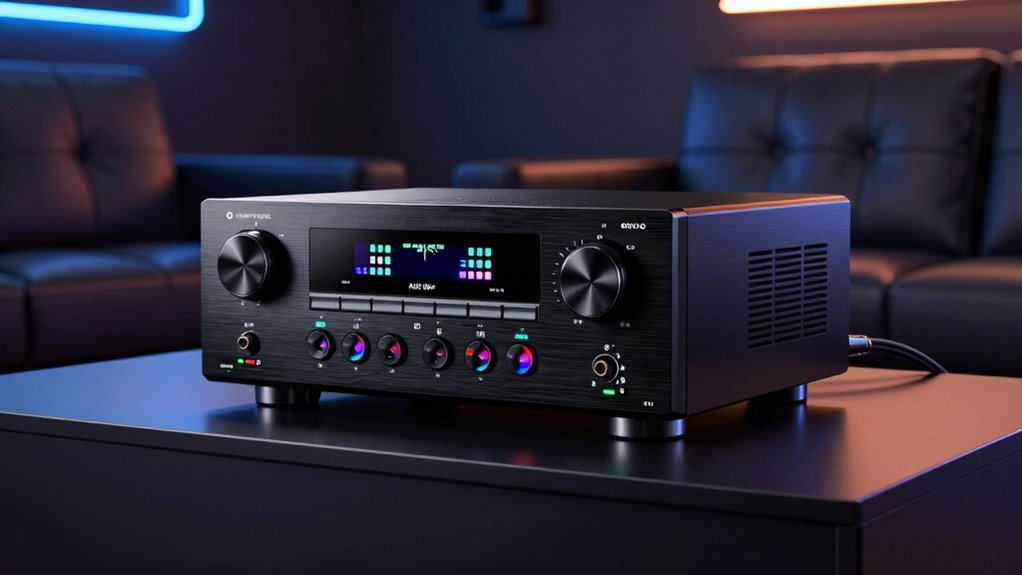

When searching for a 92 channel AV receiver, you’re looking at a centerpiece for a high-end home theater or a large custom audio setup. The best models balance power, connectivity, and future-proof features like 8K support and advanced audio formats. The Denon AVR-S970H stands out as the overall top pick, offering robust performance and versatile features. For those on a tighter budget, the Yamaha RX-V385 provides reliable 5.1 surround sound with essential features. Meanwhile, the TX-NR7100 offers premium 9.2 channel power with THX certification for audiophiles. The main tradeoffs involve balancing price against power, connectivity options, and future compatibility. Continue reading for the full breakdown of these top contenders.

Prime made for students and young adults
- Fast, free delivery for dorm and study essentials
- Prime Video and Amazon Music included
- Member-only deals
Key Takeaways
- Higher channel counts like 9.2 or 12.0 are ideal for large, immersive home theater setups.
- Connectivity features such as HDMI 2.1 and eARC are increasingly important for compatibility with new devices.
- Power output varies significantly; more watts per channel generally means louder, clearer sound at high volume.
- Future-proofing with 8K support and Dolby Atmos makes higher-end models more future-ready.
- Price differences often reflect build quality, additional features, and the number of channels—prioritize based on your specific needs.


More Details on Our Top Picks
Denon AVR-S970H 7.2 Channel 8K UHD AV Receiver (90W x 7), Wi-Fi, Bluetooth
This model stands out for its comprehensive support for the latest video standards, including 8K/60Hz pass-through and HDR formats like Dolby Vision. Its ability to deliver immersive 3D audio with Dolby Atmos and DTS:X makes it ideal for serious home theater setups. Compared with the Denon AVR-S570BT, it offers richer video processing and better multi-channel audio, but at a higher price and larger footprint. The multiple HDMI inputs and wireless streaming options enhance flexibility, although setup can be complex for newcomers. This pick makes the most sense for users seeking top-tier performance without compromise.
Pros:- Supports 8K/60Hz pass-through and upscaling for high-quality video
- Immersive 3D audio with Dolby Atmos and DTS:X
- Multiple HDMI inputs and wireless streaming options
Cons:- Complex setup that may challenge beginners
- Premium price point may be prohibitive for budget-conscious buyers
- Large size requires ample installation space
Best for: Home theater enthusiasts who want premium audio-visual quality and future-proof connectivity.
Not ideal for: Casual viewers or small spaces where simplicity and compact size are priorities.
- Channels:7.2
- Power Output:90W per channel
- HDMI Inputs:8 (6 In/2 Out)
- HDMI Version:8K/60Hz pass-through, eARC
- HDR Formats:Dolby Vision, HDR10, HDR10+, HLG
- Wireless Connectivity:Wi-Fi, Bluetooth
Our verdict“Best suited for dedicated home theater setups where high performance and future-proof features are essential.”
Pyle 9.1 Channel AV Receiver with HDMI 2.1, Bluetooth, and Subwoofer Output
This receiver excels in delivering expansive surround sound with 9.1 channels and deep bass support, making it ideal for large, immersive setups. Its support for HDMI 2.1’s 8K/4K pass-through ensures compatibility with the latest video standards, surpassing the 7.2 options like the Denon AVR-S970H in channel count. However, its setup can be technically demanding, and no price info makes it harder to evaluate value. This choice is perfect for those seeking maximum channel expansion and detailed sound, provided they can handle the installation complexity.
Pros:- Immersive 9.1 surround sound with deep bass
- Supports latest 8K/4K HDMI pass-through
- Multiple connectivity options including Bluetooth and various inputs
- Built-in DSP for optimized audio performance
Cons:- Setup may require technical expertise
- No pricing details available, which could be a barrier
- Potentially higher power consumption
Best for: Home theater hobbyists who prioritize maximum surround sound and advanced video features.
Not ideal for: Casual users who prefer straightforward, plug-and-play solutions or smaller spaces.
- Channels:9.1
- Video Support:8K/4K HDMI pass-through
- Connectivity:Bluetooth, HDMI, optical, coaxial, USB, analog
- Amplification:Class D
Our verdict“A strong fit for users demanding expansive sound and cutting-edge video support, willing to tackle a complex setup.”
Sony STRDH190 2-Ch Home Stereo Receiver with Phono Inputs & Bluetooth
This compact stereo receiver offers 100W per channel, making it suitable for high-quality two-channel listening, especially with its built-in phono input for turntable enthusiasts. Compared to multi-channel options like the Yamaha RX300A, it lacks surround sound features but compensates with straightforward usability and a small footprint. Its limited to stereo sound, so it’s less suitable for home theater setups, but it excels in delivering powerful, high-resolution audio for music lovers. Basic interface and no Wi-Fi streaming restrict its appeal to those seeking simplicity and focused audio performance.
Pros:- Wireless Bluetooth streaming for easy music playback
- Phono input for turntable connection
- Compact, low-profile design fits into standard cabinets
- High 100W per channel output
Cons:- Limited to 2 channels, lacks surround sound
- Basic interface without advanced features
- No Wi-Fi for streaming services
Best for: Music lovers or small-space users seeking high-powered stereo sound with minimal fuss.
Not ideal for: Home theater fans wanting surround sound or multi-room features, or those seeking streaming via Wi-Fi.
- Maximum Output Power:100W x 2
- Connector Type:Bluetooth, Phono input, RCA, 3.5mm
- Speaker Impedance:6–16 ohms
- Dimensions:5 ¼ inches tall
Our verdict“Ideal for stereo music enthusiasts who want powerful sound in a compact and simple package.”
Yamaha RX300A 5.2-Channel Home Theater AV Receiver with Dolby Atmos, 4K HDMI, Bluetooth
This receiver is well-suited for users new to immersive sound, supporting Dolby Atmos and DTS Virtual:X for a more engaging experience. Its support for 4K120/8K HDMI and HDR formats makes it comparable to 7.2 systems like the Denon AVR-S970H, but it is limited to 5.2 channels, which may restrict audio complexity for advanced users. The simple setup with on-screen calibration simplifies installation, but the limited channel count and complex features may overwhelm beginners. It offers a solid entry point into immersive audio while sacrificing expandability.
Pros:- Supports Dolby Atmos and DTS Virtual:X for immersive sound
- High-quality 4K and 8K video support
- Easy setup with on-screen calibration
Cons:- Limited to 5.2 channels, less surround flexibility
- Complex features might be overwhelming for novices
- Requires compatible speakers for best performance
Best for: Entry-level home theater users interested in Dolby Atmos but not yet ready for complex multi-channel setups.
Not ideal for: Advanced audiophiles seeking higher channel counts or custom speaker configurations.
- Channels:5.2
- Power Output:70W
- HDMI Support:4K120/8K HDMI, eARC
- Sound Technologies:Dolby Atmos, DTS Virtual:X
Our verdict“A good choice for beginners wanting immersive audio without the complexity of larger systems.”
Denon AVR-S570BT 5.2 Channel AV Receiver – 8K Ultra HD Audio & Video
This receiver offers a balanced mix of affordability and modern features, supporting 8K HDMI inputs and HDR formats like Dolby Vision, similar to the Denon AVR-S970H but with fewer channels. Its 70W per channel power output makes it suitable for medium-sized rooms, and its straightforward setup via on-screen guides appeals to less tech-savvy users. Compared to the higher-channel models like the Pyle 9.1, it sacrifices surround sound expansion but remains a capable choice for those upgrading to 8K on a budget. It’s perfect for users who want 8K compatibility without the extra channels or advanced features of premium models.
Pros:- Supports 8K HDMI for future-proof high-quality video
- Immersive audio with Dolby TrueHD and DTS-HD Master
- Easy setup with on-screen GUI
- Supports HDR, Dolby Vision, and gaming features
Cons:- Limited to 5.2 channels, less surround flexibility
- No built-in Wi-Fi, relies on Bluetooth for wireless streaming
- Basic design without advanced customization options
Best for: Budget-conscious buyers looking to upgrade to 8K video support without needing extensive surround sound.
Not ideal for: Large or dedicated home theater environments needing extensive channel configurations or high power.
- Channels:5.2
- Power:70W x 5
- HDMI Inputs:4 HDMI 2.1 8K
- Supported Formats:HDR, Dolby Vision, HDR10+, DTS-HD
Our verdict“An affordable stepping stone into 8K AV, ideal for smaller to medium rooms with straightforward needs.”
Pyle 7.1-Channel Hi-Fi Bluetooth Stereo Amplifier – 2000 Watt AV Home Theater Receiver with Radio, USB, RCA, HDMI, Microphone Inputs, Supports 4K UHD TV, 3D, Blu-Ray
This Pyle model stands out for its exceptional power output, boasting 2000 watts peak that can easily fill a large living room or basement with immersive sound. Unlike the more refined Denon AVR-X1700H, which emphasizes clarity and multi-room features, the Pyle prioritizes raw volume and versatility, supporting a wide range of inputs including Bluetooth, HDMI, and even microphone jacks—ideal for parties or karaoke. However, its size can be a drawback for smaller spaces, and the lack of Wi-Fi limits its connectivity options. Setup may be daunting for beginners unfamiliar with audio systems, but its raw power makes it appealing for those who need loud, versatile sound without worrying about finesse.
Pros:- Exceptional 2000-watt peak power suitable for large rooms
- Supports multiple sources including Bluetooth, HDMI, and radio
- Includes microphone inputs with independent controls
Cons:- Large size demands significant space and mounting considerations
- Complex setup that may confuse beginners
- No built-in Wi-Fi or advanced streaming features
Best for: Buyers seeking high-volume, multi-input power for large, open spaces where loudness and versatility matter most.
Not ideal for: Small apartments or users prioritizing sleek design and Wi-Fi streaming, as the Pyle is bulky and lacks wireless connectivity.
- Power:2000 Watts peak
- Channels:7.1
- Impedance:4-16 ohms
- Supports:4K UHD TV, 3D, Blu-Ray
- Inputs:USB, RCA, HDMI, optical, coaxial, microphone
- Display:VFD
Our verdict“This receiver is best for those who need serious power and input flexibility in large spaces, willing to accept setup complexity.”
Onkyo TX–NR5100 7.2-Channel 8K Smart AV Receiver – Black
The Onkyo TX–NR5100 makes a compelling case for those looking to invest in a future-proof home theater, supporting 8K resolution alongside advanced gaming features like HDMI 2.1, VRR, and ALLM—features not found on the Sony STRDH590. Compared to the more straightforward Sony, this receiver supports high-bitrate audio formats such as Dolby Atmos and DTS:X, making it a better choice for immersive sound. Its complex setup and high price can be hurdles for casual users, but for dedicated home theater fans or gamers who want the latest standards, it delivers detailed visuals and surround sound wrapped in a sleek package.
Pros:- Supports 8K resolution for future-proofing
- Enhanced gaming experience with HDMI 2.1, VRR, and ALLM
- Supports high-bitrate audio formats like Dolby Atmos and DTS:X
Cons:- Complex setup requiring compatible equipment and knowledge
- Higher price point than more basic models
- Requires compatible TV and devices to fully utilize features
Best for: Tech-savvy buyers seeking 8K support and advanced gaming features for a cutting-edge home theater experience.
Not ideal for: Entry-level users or those with budget constraints, as the setup complexity and cost may be prohibitive.
- Channels:7.2
- Resolution Support:8K
- Connectivity:HDMI 2.1, eARC
- Features:VRR, ALLM, QFT
- Audio Formats:Dolby Atmos, DTS:X
Our verdict“Perfect for enthusiasts prioritizing 8K support and gaming, willing to handle a more intricate setup and higher investment.”
Sony STRDH590 5.2 Channel Surround Sound Home Theater Receiver
The Sony STRDH590 offers a straightforward 5.2-channel setup that’s ideal for those new to home theater, delivering solid cinematic sound with support for 4K HDR and HDCP 2.2. Compared to the Yamaha RX-V385, it provides a similar feature set but with Sony’s reliable build quality and virtual surround sound via S Force PRO. Its limited channels and lack of Wi-Fi make it less suitable for expanding or multi-room setups, but it balances affordability with decent performance. Setup and calibration are necessary to achieve the best sound, but for users focused on simple, effective home entertainment, this receiver hits the mark without overspending.
Pros:- Delivers immersive virtual surround sound with S Force PRO
- Supports 4K HDR and HDCP 2.2 for high-quality video pass-through
- Multiple HDMI inputs for versatile connectivity
Cons:- Build quality details are limited, potentially affecting durability
- No Wi-Fi or multi-room streaming options
- Requires calibration for optimal sound performance
Best for: Beginners or budget-conscious users looking for an easy, effective way to upgrade their home theater without complexity.
Not ideal for: Aficionados wanting extensive channels or wireless multi-room streaming, as its features are more limited.
- Channels:5.2
- Power Output:725W
- Supported Video:4K HDR, HDCP 2.2
- HDMI Ports:4 in / 1 out
- Connectivity:Bluetooth, HDMI
Our verdict“A solid choice for entry-level users seeking affordable, reliable surround sound with straightforward features.”
Denon AVR-X1700H 7.2 Channel AV Receiver – 80W/Channel, Built-in HEOS
The Denon AVR-X1700H emphasizes a balance between high-end features and user-friendly setup, supporting 8K/60Hz and 4K/120Hz for crisp visuals. Compared to the Onkyo TX–NR5100, it offers slightly less raw power at 80W per channel but compensates with built-in HEOS for seamless multi-room streaming and a straightforward voice control interface. Its numerous HDMI inputs and support for Dolby Atmos and DTS:X make it a versatile centerpiece for a modern home theater. The setup can be complex for beginners, and its higher price reflects its advanced features. For those wanting a future-ready AV receiver with robust streaming and multi-room options, this is a compelling choice.
Pros:- Supports 8K/60Hz and 4K/120Hz pass-through for high-quality visuals
- Built-in HEOS for easy multi-room music streaming
- Supports Dolby Atmos and DTS:X for immersive sound
Cons:- Setup can be intricate for those unfamiliar with AV setups
- Higher cost relative to simpler models
- Limited HDMI outputs compared to some competitors
Best for: Users seeking a flexible, multi-room capable AV receiver with high-resolution support and user-friendly streaming options.
Not ideal for: Users who prioritize raw power over multi-room features or have a tight budget, as the price can be a limiting factor.
- Channels:7.2
- Power per Channel:80W
- HDMI Inputs:6
- Supports:8K/60Hz, 4K/120Hz, Dolby Atmos, DTS:X
- Streaming:Built-in HEOS
Our verdict“Ideal for those wanting advanced video and multi-room streaming capabilities in a user-friendly package.”
Yamaha RX-V385 5.1-Channel 4K Ultra HD AV Receiver with Bluetooth
The Yamaha RX-V385 offers a simple yet capable 5.1-channel setup that’s well-suited for smaller rooms or budget-conscious buyers. It supports the latest 4K HDR formats, including Dolby Vision, and includes Bluetooth for wireless audio streaming—features comparable to the Sony STRDH590 but with Yamaha’s auto-calibration technology, YPAO, for better sound tuning. While it doesn’t support higher channel counts or Wi-Fi, it provides solid performance for users who want a straightforward upgrade. Its compact size and focus on essential features make it less suitable for large rooms or multi-zone setups, but for standard home theaters, it offers reliable, balanced sound at an accessible price.
Pros:- Supports 4K HDR, Dolby Vision, and HDCP 2.2 for high-quality video
- Bluetooth streaming for wireless audio
- YPAO auto-calibration ensures better sound quality
Cons:- Limited to 5.1 channels, restricting surround sound options
- No Wi-Fi connectivity limits streaming options
- Basic feature set compared to higher-end models
Best for: Small space owners or newcomers seeking an affordable, easy-to-use AV receiver with good video support and Bluetooth streaming.
Not ideal for: Power users or those wanting multi-zone audio or extensive channels, as its 5.1 configuration limits expansion.
- Channels:5.1
- Video Support:4K Ultra HD, HDR10, Dolby Vision
- Connectivity:Bluetooth, HDMI 2.1
- Auto-calibration:YPAO
- Power:Unknown
Our verdict“A practical choice for small rooms or budget buyers who want reliable 4K support and simple operation.”
TX-NR7100 9.2-Channel THX Certified AV Receiver
The TX-NR7100 stands out for its comprehensive feature set that balances immersive sound with advanced video capabilities, making it ideal for dedicated home theater enthusiasts. Unlike the Onkyo TX-NR6100, which offers solid 7.2 channels and powerful THX certification, the TX-NR7100 adds Dirac Live room correction and supports 8K/4K HDMI transfer at 40 Gbps, catering to those who want the latest in gaming and video quality. The setup can be complex, especially with its calibration options, requiring some technical knowledge, and its premium features come with a higher price tag that might be a barrier for casual users. Nevertheless, for users seeking state-of-the-art room calibration, seamless streaming, and immersive Dolby Atmos sound, this model delivers on all fronts, making it the top choice for serious home theater fans.
Pros:- Advanced Dirac Live room calibration for precise sound tuning
- Supports 8K/4K HDMI transfer with HDMI 2.1 features for gaming and high-res content
- Built-in streaming options including Spotify, TIDAL, Deezer, and compatibility with Sonos
Cons:- Setup complexity may be daunting for less tech-savvy users
- Higher price point compared to less feature-rich models
- Calibration may require additional microphones or apps for optimal results
Best for: Audiophiles and home theater enthusiasts who want top-tier sound, extensive connectivity, and future-proof video support
Not ideal for: Casual users or those new to AV setup who prefer simple plug-and-play solutions or have a tighter budget
- Channels:9.2
- THX Certified:Yes
- HDMI Out Options:3
- HDMI Transfer Speed:40 Gbps
- Supports 8K/4K:Yes
- Room Correction:Dirac Live
- Built-in Streaming:Spotify, TIDAL, Deezer, TuneIn, Pandora
Our verdict“This receiver is best suited for those who prioritize high-end sound calibration and future-proof video features, despite its complexity and cost.”
Onkyo TX-NR6100 7.2 Channel THX Certified Network AV Receiver – Black
The TX-NR6100 offers a compelling mix of power and simplicity, making it well-suited for serious gamers and home theater users who want robust audio performance and reliable high-resolution video. Compared with the TX-NR7100, which emphasizes advanced room calibration and extensive streaming options, the 6100 trims some features but compensates with a powerful 210-watt per channel output and multiple HDMI 2.1 ports supporting 8K@60Hz and 4K@120Hz. Its setup is straightforward enough for users familiar with home audio, but could challenge beginners. While it lacks some streaming integrations and advanced calibration features, it delivers high-quality Dolby Atmos and DTS:X sound and smooth gaming performance, making it ideal for dedicated gaming rooms or home theaters that prioritize raw power and video performance over the latest calibration tech.
Pros:- High power output of 210 watts per channel for loud, dynamic sound
- Supports 8K HDMI 2.1 with multiple ports for high-resolution gaming and video
- THX certification guarantees sound performance quality
Cons:- Setup can be challenging for those unfamiliar with AV systems
- Limited streaming integrations compared to higher-end models
- Relatively high power consumption may impact energy costs
Best for: Power users, gamers, and home theater fans who want high wattage and straightforward 8K support without the complexity of advanced room calibration
Not ideal for: Beginners or users seeking the most refined room calibration or extensive streaming options
- Power Output:210 watts per channel
- Channels:7.2
- HDMI Ports:8
- HDMI Version:HDMI 2.1
- Supported Resolutions:8K at 60Hz, 4K at 120Hz
- Audio Formats:DTS:X, Dolby Atmos
- Connectivity:Bluetooth, Wi-Fi
Our verdict“This receiver is best suited for users who prioritize raw power, gaming features, and straightforward 8K support over advanced room calibration or extensive streaming options.”

How We Picked
These AV receivers were selected based on a combination of performance, connectivity, build quality, and value. Priority was given to models offering at least 92 channels or the closest available configuration, with a focus on those supporting the latest video and audio standards like 8K, Dolby Atmos, and HDMI 2.1. We also considered user-friendliness, brand reputation, and future compatibility to ensure the options cater to both enthusiasts and casual users. The ranking reflects a balance between price and features, emphasizing models that deliver reliable performance in large or complex setups while avoiding overly niche or obscure options.Factors to Consider When Choosing 92 Channel Av Receiver
Choosing a 92 channel AV receiver involves weighing several factors that influence both your current setup and future expandability. Beyond raw specifications, understanding how features interact with your space, devices, and audio preferences can help you avoid costly mistakes. This section covers key considerations to guide your decision and ensure you select a receiver that truly meets your needs.Channel Count and Power Output
While a higher number of channels enables more immersive surround sound, it also typically comes with increased cost and complexity. For large rooms or multi-zone setups, 9.2 or 12.0 channel models make sense, as they can handle multiple speakers and deliver more precise sound placement. However, for smaller rooms or simpler setups, a 7.2 or 5.2 channel receiver might be sufficient and more budget-friendly. Pay attention to wattage per channel; more power generally translates into clearer audio at higher volumes, but ensure your speakers can handle the output to avoid distortion or damage.
Connectivity and Future-Proofing
Modern AV receivers should support HDMI 2.1, eARC, and 8K video output to stay compatible with the latest TVs, gaming consoles, and streaming devices. If you’re planning a high-end setup with multiple sources, look for models with extensive HDMI inputs and support for features like HDCP 2.3 or VRR. Wireless connectivity options such as Wi-Fi, Bluetooth, and streaming services increase convenience and flexibility. Considering future upgrades now can save you from needing a replacement in a few years, especially as audio and video standards evolve rapidly.
Build Quality and Ease of Use
Durability and intuitive controls matter for long-term satisfaction. Higher-end models tend to have better construction, more stable firmware, and easier setup procedures. Look for models with clear on-screen displays, comprehensive app controls, and straightforward calibration tools. Remember, a complex interface can be frustrating, so prioritize models that balance advanced features with user-friendliness. Proper ventilation and quality components also contribute to longevity and consistent performance.
Price and Value
While higher-channel count models with advanced features command premium prices, they aren’t necessary for everyone. Determine your core needs—if you only need surround sound for a medium-sized room, a more affordable 7.2 model could suffice. Conversely, audiophiles or large home theaters might justify investing in premium models with THX certification and extensive processing capabilities. Always compare features against price to identify the best value, and consider whether you can upgrade components later instead of overspending upfront.
Frequently Asked Questions
Is a 92 channel AV receiver necessary for my home theater?
Not necessarily. Most home theaters can achieve excellent sound with fewer channels, like 5.2 or 7.2 configurations. A 92 channel receiver is primarily useful for very large rooms or multi-zone setups where multiple speakers and precise sound placement are desired. If you have a smaller space or limited budget, a lower-channel model will still deliver immersive surround sound without the extra complexity or cost.
Can I use a 92 channel AV receiver with my existing speakers?
Yes, but compatibility depends on your current speaker setup. These receivers are designed to handle numerous speakers, but ensure your speakers match the power and impedance ratings supported. For smaller or less powerful speakers, running all channels at maximum power can cause distortion or damage. It’s often better to use only the channels you need, especially if your current system doesn’t support full 92-channel output.
What features are most important when choosing a 92 channel AV receiver?
Prioritize support for the latest video standards like 8K HDMI, eARC, and HDMI 2.1 to future-proof your setup. Dolby Atmos and DTS:X support are essential for immersive audio. Connectivity options like multiple HDMI inputs, Wi-Fi, Bluetooth, and streaming services add flexibility. Also, consider ease of setup and calibration tools—these make configuration smoother and more accurate, especially given the complexity of large channel setups.
Is THX certification worth paying extra for?
THX certification can offer assurance of rigorous quality standards and optimized sound performance, which is valuable for audiophiles or dedicated home theaters. Certified models often include advanced processing features and better build quality. However, non-certified models can still provide excellent sound and features at a lower price. Decide based on your priorities—if ultimate audio fidelity and build quality are paramount, THX models are a good investment.
How important is future-proofing in a high-channel AV receiver?
Future-proofing is quite important if you want your system to stay relevant as technology evolves. Features like 8K support, HDMI 2.1, and advanced audio codecs help ensure compatibility with new devices and content. While these features might increase the initial cost, they can save money in the long run by delaying the need for upgrades. For large, long-term setups, prioritizing future-proof features makes sense, especially if you plan to upgrade your display or sources soon.
Conclusion
For most users, the Denon AVR-S970H stands out as the best overall choice thanks to its robust feature set and reliable performance. Budget-conscious buyers will appreciate the Yamaha RX-V385 for its simplicity and value, perfect for smaller setups or newcomers. Audiophiles or those with premium home theaters should consider the TX-NR7100 for its superior power and certification. If you’re looking for a high-channel model for large, complex setups, prioritize the Denon AVR-X1700H or Onkyo TX-NR6100. Ultimately, your choice should align with your room size, audio needs, and future plans to create an immersive home theater experience.
Halloween Picks
halloween
As an affiliate, we earn on qualifying purchases.