If you’re looking for the best AV receivers for 4K 120Hz in 2026, I recommend checking out options like the Onkyo TX-NR7100, Denon AVR-X1700H, and Yamaha RX-V6A. These models offer HDMI 2.1 support, VRR, ALLM, and 8K/4K pass-through, ensuring smooth gaming and high-quality video. They also feature immersive audio with Dolby Atmos and DTS:X, plus smart connectivity. Keep exploring, and you’ll discover which one fits your setup perfectly.
Key Takeaways
- Highlights of AV receivers with HDMI 2.1 support for 4K 120Hz, 8K, and high dynamic range in 2026.
- Features like VRR, QFT, and ALLM for seamless gaming and high-performance playback.
- Compatibility with Dolby Atmos, DTS:X, and multi-room streaming technologies.
- Emphasis on future-proof connectivity options, multiple HDMI 2.1 ports, and advanced calibration tools.
- Top models from brands like Onkyo, Denon, and Yamaha offering immersive sound and easy setup.
| Onkyo TX-NR7100 9.2-Channel AV Receiver | 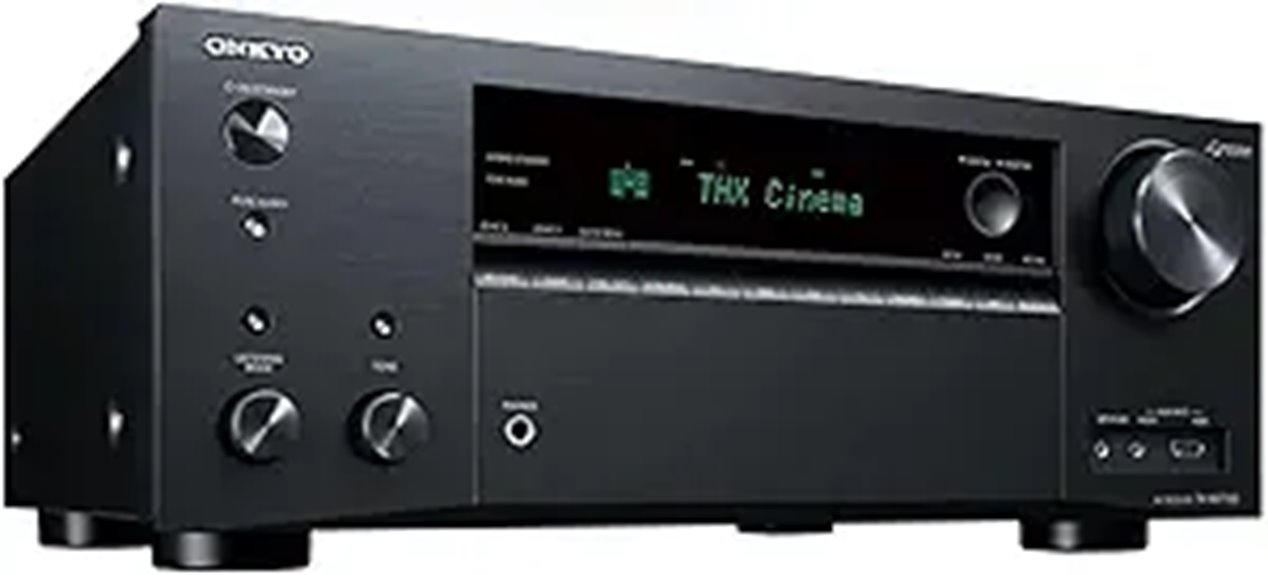 | Best Immersive Sound | HDMI Version: HDMI 2.1 | 8K Support: Yes | Surround Sound Formats: Dolby Atmos, DTS:X | VIEW LATEST PRICE | See Our Full Breakdown |
| Denon AVR-X1700H 7.2 Channel AV Receiver with HDMI | 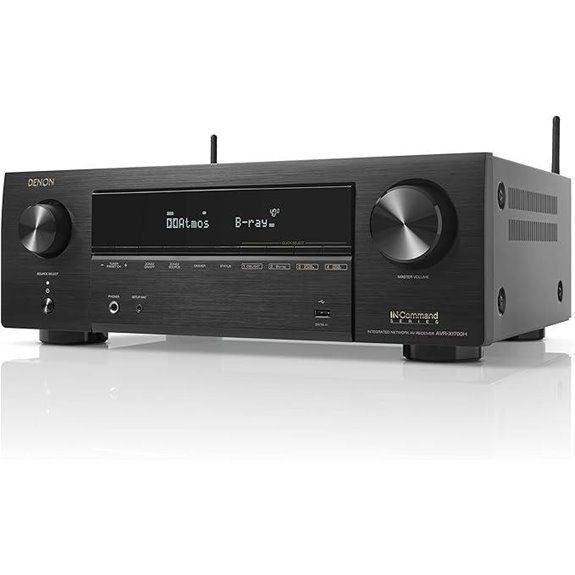 | Best User-Friendly Setup | HDMI Version: HDMI 2.1 | 8K Support: Yes | Surround Sound Formats: Dolby Atmos, DTS:X, DTS Virtual:X | VIEW LATEST PRICE | See Our Full Breakdown |
| Onkyo 7.2-Channel 8K/60 Home Theater AV Receiver | 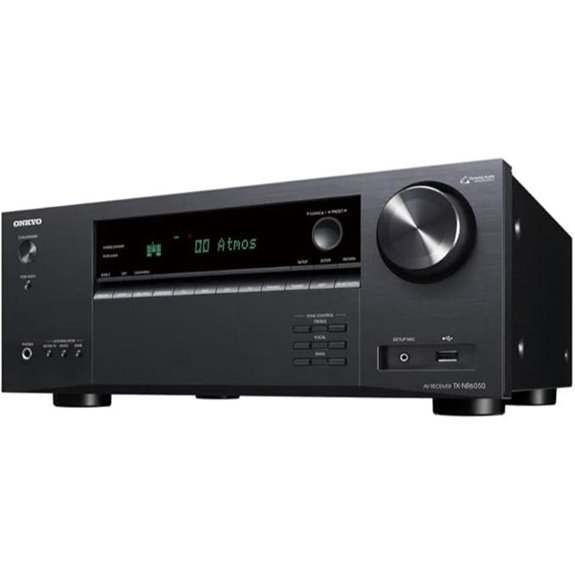 | Best Gaming-Ready | HDMI Version: HDMI 2.1 | 8K Support: Yes | Surround Sound Formats: Dolby Atmos, DTS:X, Dolby Atmos Height Virtualizer | VIEW LATEST PRICE | See Our Full Breakdown |
| Denon AVR-S770H 7.2 Channel 8K HDMI Home Theater Receiver | 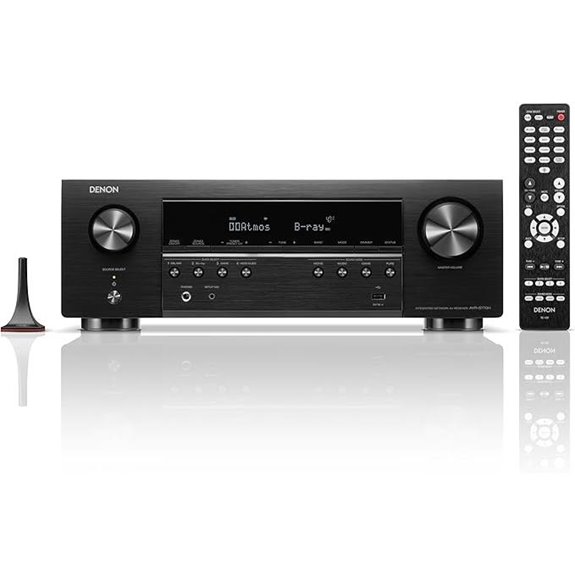 | Best All-Rounder | HDMI Version: HDMI 2.1 | 8K Support: Yes | Surround Sound Formats: Dolby Atmos, DTS:X, Dolby Height Virtualization | VIEW LATEST PRICE | See Our Full Breakdown |
| YAMAHA RX-V6A 7.2-Channel AV Receiver with MusicCast | 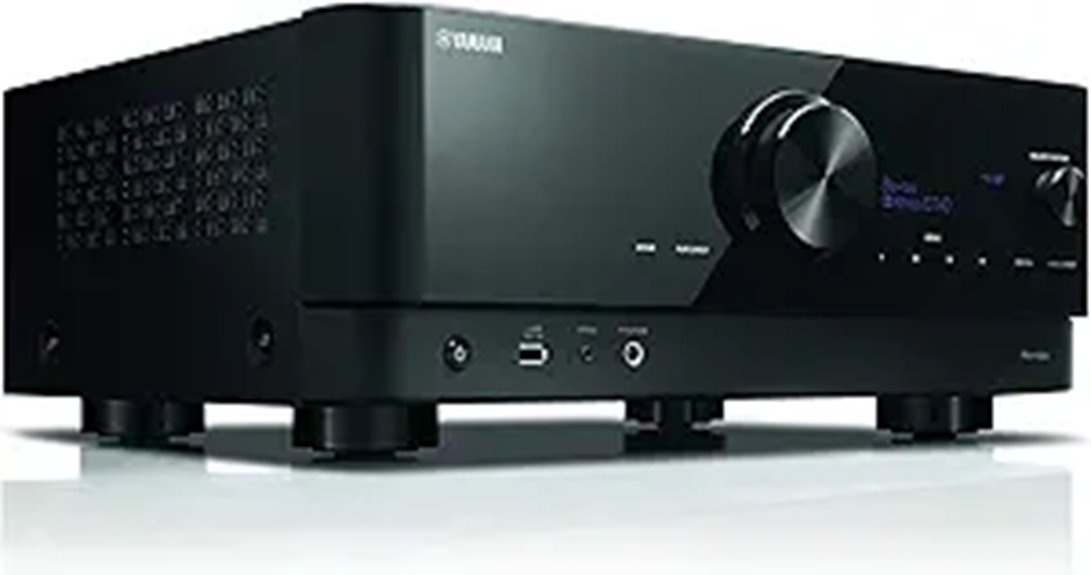 | Best Multi-Room Integration | HDMI Version: HDMI 2.1 | 8K Support: Yes | Surround Sound Formats: Dolby Atmos, DTS:X, Dolby Height Virtualization | VIEW LATEST PRICE | See Our Full Breakdown |
| Denon AVR-S760H 7.2 Channel 8K AV Receiver | 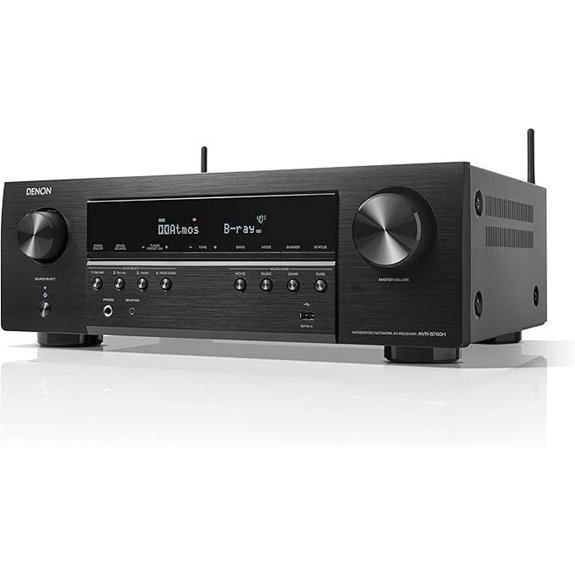 | Best Visual Clarity | HDMI Version: HDMI 2.1 | 8K Support: Yes | Surround Sound Formats: Dolby Atmos, DTS:X, DTS Virtual:X | VIEW LATEST PRICE | See Our Full Breakdown |
| Onkyo TX-NR6100 7.2 Channel 8K Smart AV Receiver | 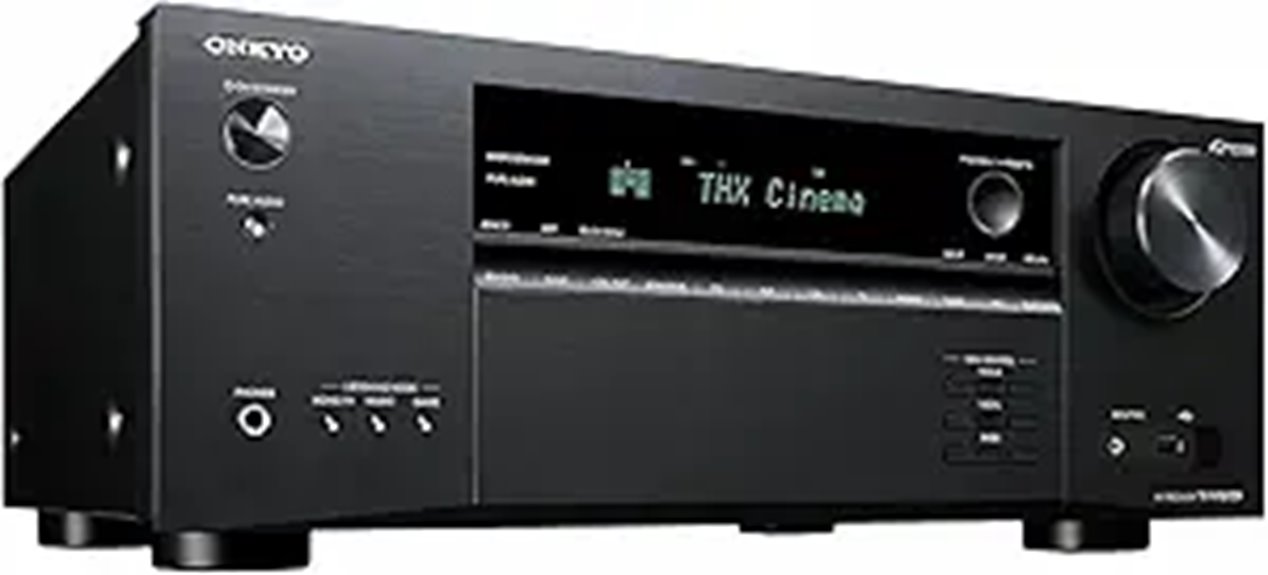 | Best Ecosystem Compatibility | HDMI Version: HDMI 2.1 | 8K Support: Yes | Surround Sound Formats: Dolby Atmos, DTS:X, Dolby Atmos Height Virtualizer | VIEW LATEST PRICE | See Our Full Breakdown |

More Details on Our Top Picks
-

Denon AVR-X1700H 7.2 Channel AV Receiver - 80W/Channel, Advanced 8K HDMI Video w/eARC, Dolby Atmos, DTS:X, Built-in HEOS, Amazon Alexa Voice Control
HIGH-PERFORMANCE 7-CHANNEL AMPLIFIER WITH NEXT-GEN MOVIE IMMERSION - Enjoy Denon sound in movies, games, and music with full...
As an affiliate, we earn on qualifying purchases.
Onkyo TX-NR7100 9.2-Channel AV Receiver
If you’re looking for an AV receiver that combines top-tier immersive sound with cutting-edge gaming features, the Onkyo TX-NR7100 is an excellent choice. Its Dirac Live room calibration automatically adjusts sound for precise, balanced audio, whether you’re using a wired mic or a PC app. With Dolby Atmos and DTS:X, effects move seamlessly around your space, while Dolby Atmos Height Virtualizer adds virtual height effects. It supports uncompressed 8K/4K HDMI transfer, VRR, and low-latency modes, making it perfect for gaming and future-proofing your home theater setup. Plus, its compatibility with streaming services and Sonos integration ensures versatile, high-quality entertainment.
- HDMI Version:HDMI 2.1
- 8K Support:Yes
- Surround Sound Formats:Dolby Atmos, DTS:X
- Streaming Services:Spotify, TIDAL, Deezer, Pandora
- Voice Control:Yes
- Multi-Room Audio:DTS Play-Fi, Sonos Compatible
- Additional Feature:Dirac Live room calibration
- Additional Feature:Dolby Atmos Height Virtualizer
- Additional Feature:Sonos Certified Compatibility
-

Onkyo TX-NR6050 7.2-Channel Network Home Theater Smart AV Receiver 8K/60, 4K/120Hz
SMOOTH, CLEAR HDMI 2.1 WITH 8K: With HDMI 2.1 with 8K and eARC your system is ready for...
As an affiliate, we earn on qualifying purchases.
Denon AVR-X1700H 7.2 Channel AV Receiver with HDMI
The Denon AVR-X1700H is an excellent choice for home theater enthusiasts seeking a versatile 7.2 channel receiver that supports 4K 120Hz pass-through. It delivers 80W per channel with advanced 8K HDMI processing, including three dedicated 8K inputs and support for 8K/60Hz and 4K/120Hz signals. It offers full compatibility with HDR formats like Dolby Vision and HDR10+ and supports immersive audio formats such as Dolby Atmos and DTS:X. Plus, it provides multi-room streaming via Wi-Fi, AirPlay 2, and Bluetooth, along with user-friendly setup and voice control options, making it a powerful, flexible addition to any modern home theater system.
- HDMI Version:HDMI 2.1
- 8K Support:Yes
- Surround Sound Formats:Dolby Atmos, DTS:X, DTS Virtual:X
- Streaming Services:Spotify, Pandora, Amazon Music HD
- Voice Control:Yes
- Multi-Room Audio:HEOS, AirPlay 2, Bluetooth
- Additional Feature:Award-winning quick setup guide
- Additional Feature:External and IP control
- Additional Feature:Supports multiple digital and analog inputs
-

Denon AVR-S770H 7.2 Ch Home Theater Receiver - 8K UHD HDMI Receiver (75W X 7), Wireless Streaming via Built-in HEOS, Wi-Fi, Dolby TrueHD, DTS Neural:X & DTS:X Surround Sound, Bluetooth Amplifier
HI-RESOLUTION 3D AUDIO & CINEMATIC 8K VIDEO - With 8K/60Hz and 4K/120 passthrough, the Denon AVR-S770H AV receiver...
As an affiliate, we earn on qualifying purchases.
Onkyo 7.2-Channel 8K/60 Home Theater AV Receiver
For serious home theater enthusiasts and gamers seeking seamless high-resolution visuals, the Onkyo 7.2-Channel 8K/60 Home Theater AV Receiver stands out with its support for HDMI 2.1 features like 8K/60Hz and 4K/120Hz pass-through. It delivers stunning, sharp visuals with four times the pixels of 4K, perfect for immersive viewing and fast-paced gaming. With VRR, ALLM, and QFT, it minimizes lag, stuttering, and tearing for smoother gameplay. Plus, it offers rich 7.2-channel audio, streaming options, and smart home compatibility, making it a versatile choice for elevating your entertainment system.
- HDMI Version:HDMI 2.1
- 8K Support:Yes
- Surround Sound Formats:Dolby Atmos, DTS:X, Dolby Atmos Height Virtualizer
- Streaming Services:Spotify, TIDAL, Deezer, Pandora
- Voice Control:Yes
- Multi-Room Audio:Built-in streaming, multi-room capable
- Additional Feature:Built-in streaming services
- Additional Feature:Smart home ecosystem support
- Additional Feature:Designed for gaming enhancements
Denon AVR-S770H 7.2 Channel 8K HDMI Home Theater Receiver
Designed for serious home theater enthusiasts, the Denon AVR-S770H stands out with its powerful 7.2 channel setup and support for 8K/60Hz and 4K/120Hz pass-through. It delivers stunning 8K picture quality and supports HDR10+, Dolby Vision, HLG, and Dynamic HDR for vibrant visuals. With VRR, ALLM, and QFT, gaming feels seamless and lag-free. The receiver offers immersive audio with Dolby Atmos and DTS:X, plus multiple HDMI ports—including three dedicated 8K inputs. Built-in Wi-Fi, Bluetooth, and HEOS enable wireless streaming of music from popular services. Its user-friendly interface, voice control, and room calibration make it a top choice for a complete home theater experience.
- HDMI Version:HDMI 2.1
- 8K Support:Yes
- Surround Sound Formats:Dolby Atmos, DTS:X, Dolby Height Virtualization
- Streaming Services:Pandora, Spotify, TIDAL, Deezer
- Voice Control:Yes
- Multi-Room Audio:HEOS, Wi-Fi, Bluetooth
- Additional Feature:Audyssey Room Correction
- Additional Feature:Dual Subwoofer Outputs
- Additional Feature:User-friendly setup interface
YAMAHA RX-V6A 7.2-Channel AV Receiver with MusicCast
Looking for a versatile AV receiver that seamlessly handles the latest 4K 120Hz content? The Yamaha RX-V6A 7.2-Channel with MusicCast fits the bill perfectly. It features HDMI 2.1 with HDCP 2.3, supporting 4K60, 4K120AB, and 8K60B pass-through, ensuring crisp, smooth visuals. With Wi-Fi, Bluetooth, AirPlay 2, and voice control via Alexa, Google Assistant, and Siri, it’s easy to connect and control. The receiver supports Dolby Atmos, DTS:X, and HDR formats like Dolby Vision. Plus, its YPAO calibration optimizes sound for any room, providing immersive audio tailored to your space.
- HDMI Version:HDMI 2.1
- 8K Support:Yes
- Surround Sound Formats:Dolby Atmos, DTS:X, Dolby Height Virtualization
- Streaming Services:Pandora, Spotify, TIDAL, Deezer, Amazon Music HD
- Voice Control:Yes
- Multi-Room Audio:MusicCast, Wi-Fi, Bluetooth, AirPlay 2
- Additional Feature:YPAO room calibration
- Additional Feature:MusicCast multi-room system
- Additional Feature:Supports multiple voice assistants
Denon AVR-S760H 7.2 Channel 8K AV Receiver
The Denon AVR-S760H stands out as an excellent choice for home theater enthusiasts seeking top-tier 8K video support and immersive audio. It supports 8K upscaling and features three dedicated 8K inputs for smooth pass-through at 60Hz or 4K at 120Hz, perfect for modern gaming and streaming. With HDR10, Dolby Vision, and HLG, visuals are vibrant and clear. The receiver delivers 75W per channel in a 7.2 configuration and supports advanced audio formats like Dolby Atmos and DTS:X, creating a truly immersive sound experience. Its smart connectivity, including Wi-Fi, AirPlay, and voice control, makes integration effortless and user-friendly.
- HDMI Version:HDMI 2.1
- 8K Support:Yes
- Surround Sound Formats:Dolby Atmos, DTS:X, DTS Virtual:X
- Streaming Services:Pandora, Spotify, TIDAL, Deezer
- Voice Control:Yes
- Multi-Room Audio:HEOS, Wi-Fi, Bluetooth
- Additional Feature:Advanced upscaling technology
- Additional Feature:Supports multi-room wireless streaming
- Additional Feature:Compact, modern design
Onkyo TX-NR6100 7.2 Channel 8K Smart AV Receiver
If you’re seeking an AV receiver that seamlessly integrates immersive sound with advanced gaming and multi-room capabilities, the Onkyo TX-NR6100 stands out. It works effortlessly with Sonos, allowing you to control it through the Sonos app and expand your multi-room setup. Its support for Dolby Atmos and DTS:X delivers cinematic sound, while the Dolby Atmos Height Virtualizer enhances immersion without extra speakers. With THX certification and four listening modes, it maintains high audio fidelity. The HDMI features support 8K60 resolution, 4K/120Hz pass-through, VRR, and ALLM, making it perfect for gaming and multi-room entertainment alike.
- HDMI Version:HDMI 2.1
- 8K Support:Yes
- Surround Sound Formats:Dolby Atmos, DTS:X, Dolby Atmos Height Virtualizer
- Streaming Services:Pandora, Spotify, TIDAL, Deezer, Amazon Music HD
- Voice Control:Yes
- Multi-Room Audio:Sonos Compatible, multi-room HDMI zones
- Additional Feature:THX certification
- Additional Feature:Multiple HDMI zone support
- Additional Feature:Ultimate gaming features
Factors to Consider When Choosing an AV Receiver for 4K 120Hz

When selecting an AV receiver for 4K 120Hz, I focus on key features like HDMI 2.1 support and video processing capabilities to guarantee smooth, high-quality visuals. I also consider gaming features and multi-room streaming options to match my entertainment setup, along with room calibration tools for ideal sound. These factors help me find a receiver that delivers both performance and flexibility.
HDMI 2.1 Support
Choosing an AV receiver with HDMI 2.1 support is essential for enjoying 4K at 120Hz, as it guarantees you get the smoothest gaming and viewing experience. HDMI 2.1 enables 4K resolution at 120Hz, ensuring ultra-smooth motion, and includes features like VRR, ALLM, and QFT that reduce lag and stuttering. It also supports uncompressed 8K video at 60Hz, future-proofing your setup for upcoming content. With bandwidth up to 48 Gbps, HDMI 2.1 delivers enhanced audio and video quality simultaneously, making your entertainment more immersive. Plus, eARC allows lossless audio transmission from your TV to the receiver, improving sound quality without extra equipment. Prioritizing HDMI 2.1 support guarantees you’re ready for current and future high-resolution, high-frame-rate content.
Video Processing Capabilities
Video processing capabilities play an essential role in maximizing your AV receiver’s performance with 4K 120Hz content. Supporting HDMI 2.1 is just the start; advanced features like VRR and QFT ensure smooth gameplay by reducing lag and tearing. These technologies synchronize the display’s refresh rate with the source, delivering fluid visuals. HDR formats such as Dolby Vision, HDR10+, and HLG enhance color accuracy and contrast, making visuals more vibrant and detailed during high-refresh-rate playback. The receiver should also have dedicated 8K inputs and outputs to handle the high data transfer rates required for 4K 120Hz. While upscaling and virtualization can improve lower-resolution sources, native 4K 120Hz support offers the most accurate and seamless experience, making these video processing features critical in your choice.
Gaming Features Integration
To guarantee your AV receiver enhances gaming performance at 4K 120Hz, it must support key HDMI 2.1 features like VRR, QFT, and ALLM. These features ensure smoother gameplay with minimal stutter and input lag. Compatibility with 4K120Hz pass-through allows fast-moving content to be displayed sharply and responsively. VRR (Variable Refresh Rate) syncs the display’s refresh rate with your GPU’s frame rate, reducing tearing and stuttering. QFT (Quick Frame Transport) minimizes latency, ensuring quicker response times. ALLM (Auto Low Latency Mode) automatically switches your system to low latency mode for ideal gaming. Supporting these features future-proofs your setup, making sure your AV receiver can handle current and upcoming gaming consoles with high-performance requirements.
Multi-Room Streaming Options
When selecting an AV receiver for 4K 120Hz setups, it’s vital to evaluate its multi-room streaming capabilities to guarantee seamless audio distribution across multiple zones. Look for support of protocols like HEOS, MusicCast, or DTS Play-Fi, which enable smooth multi-zone audio. Compatibility with popular streaming services such as Spotify, TIDAL, Deezer, and Pandora ensures diverse listening options in different rooms. Wireless connectivity options like Wi-Fi, Bluetooth, or AirPlay 2 are essential for easy, flexible music sharing. Additionally, features that allow independent sources and volume controls for each zone provide a customizable experience. Finally, verify that the receiver supports multi-room control apps and integrations, making management straightforward and efficient across multiple audio zones.
Calibration and Room Tuning
Choosing an AV receiver with advanced calibration and room tuning features can substantially enhance your 4K 120Hz setup. Accurate room calibration guarantees ideal sound quality by adjusting speaker levels, distances, and EQ tailored to your space’s acoustics. Many receivers include automatic room correction technologies like Dirac Live or YPAO, which use microphone measurements to fine-tune audio output. Proper room tuning minimizes echo, bass boom, and uneven sound distribution, creating a balanced listening environment. These advanced systems can compensate for speaker placement and room irregularities, delivering more precise and immersive audio. Regular recalibration after rearranging speakers or making room modifications helps maintain consistent performance. Prioritizing these features ensures you get the best possible audio experience alongside your high-refresh-rate video.
Connectivity and Ports
Having the right connectivity options is essential for opening the full potential of a 4K 120Hz setup. You’ll want multiple HDMI 2.1 ports with enough bandwidth to handle high-resolution, high-refresh-rate signals. I recommend at least two HDMI 2.1 inputs for gaming consoles and streaming devices, plus an output to connect to your TV. Make sure these ports support features like eARC, VRR, ALLM, and QFT for seamless compatibility with modern gaming and streaming tech. Proper port placement and clear labeling make setup and future upgrades easier. Also, verify that the HDMI specifications include 8K/60Hz and 4K/120Hz pass-through, so your receiver can handle 4K 120Hz content without signal loss. This guarantees your setup remains future-proof and fully functional.
Frequently Asked Questions
Which AV Receiver Offers the Best Future-Proofing for 4K 120HZ Content?
If I want the best future-proofing for 4k 120Hz content, I’d go with a receiver that supports HDMI 2.1 and eARC, like the latest models from Denon or Marantz. These receivers are built to handle higher bandwidths and advanced gaming features, ensuring compatibility as technology advances. I’d also look for ones with multiple HDMI 2.1 inputs, robust processing power, and future firmware updates to stay ahead.
How Do HDMI 2.1 Features Impact AV Receiver Performance at 4K 120HZ?
Imagine HDMI 2.1 as a wide, fast highway for your signals. It boosts AV receiver performance at 4K 120Hz by providing higher bandwidth, reducing lag, and supporting advanced features like VRR and eARC. This means smoother gameplay, sharper images, and better sound quality. Without HDMI 2.1, your setup might have difficulty with the latest content, so choosing a receiver with this tech guarantees you’re ready for future high-quality entertainment.
Are There Any Compatibility Issues With Latest Gaming Consoles on These Receivers?
Yes, compatibility issues can pop up with the latest gaming consoles, especially if the AV receiver doesn’t fully support HDMI 2.1 features like 4K120Hz or eARC. I always double-check that my receiver has the latest firmware updates and supports all necessary HDMI 2.1 specs. This way, I avoid lag, disconnects, or limited resolution, ensuring smooth gaming and audio experiences.
What Is the Typical Price Range for Top-Tier 4K 120HZ AV Receivers in 2026?
Think of top-tier 4k 120Hz AV receivers as the crown jewels of home theater gear. In 2026, they typically range from $2,000 to $4,000, depending on features like HDMI 2.1 support, immersive audio, and smart integrations. While prices can seem steep, investing in a flagship model guarantees you get the latest tech, future-proofing your setup for gaming, movies, and beyond.
How Do Room Size and Acoustics Influence AV Receiver Selection for 4K 120HZ?
Room size and acoustics are critical factors when choosing an AV receiver for 4k 120Hz. I consider larger rooms need more powerful receivers with higher wattage to fill the space, ensuring clear sound. Acoustic treatments help improve sound quality by reducing echoes and dead spots. I also look for receivers with room calibration features that adapt sound settings automatically, making sure I get the best experience regardless of my room’s size or acoustics.
Conclusion
Choosing the right AV receiver is like finding the perfect conductor for your home theater symphony. With options tailored for 4K 120Hz, you’ll elevate your viewing experience to new heights. Remember, it’s not just about features, but how seamlessly they come together to create a cinematic masterpiece in your living room. So, pick wisely, and let your entertainment system sing in perfect harmony.