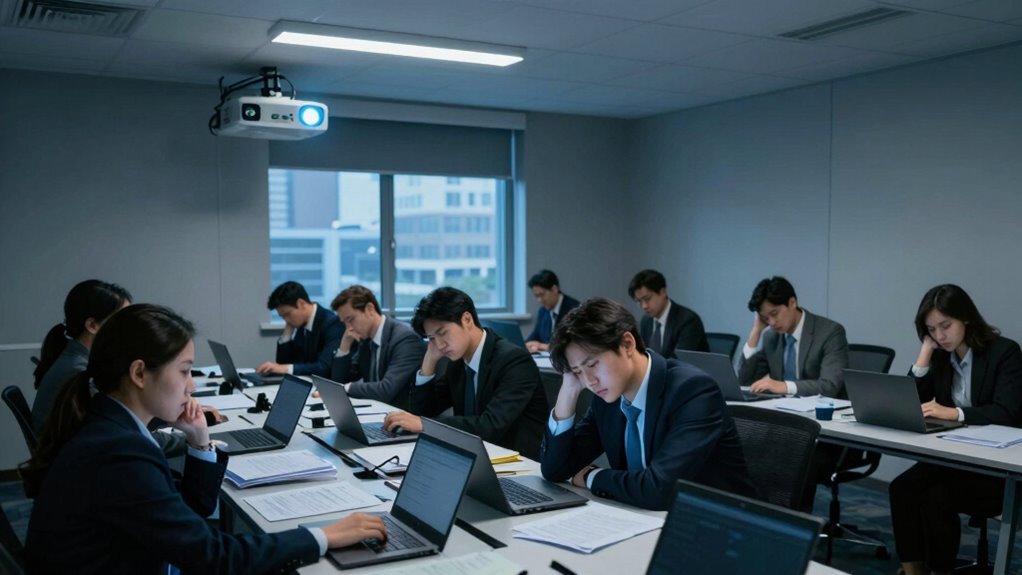

Meetings feel draining because they often lack a clear purpose, making it hard for you to stay engaged. Repetitive topics and indecisiveness create mental overload, while virtual formats add fatigue due to endless screen time and missing physical cues. Poor structure and aimless discussions lead to boredom and frustration. When expectations aren’t clear and participation feels pointless, your energy drains quickly. If you want to understand how to make meetings more energizing, there’s more to discover ahead.

Prime made for students and young adults
- Fast, free delivery for dorm and study essentials
- Prime Video and Amazon Music included
- Member-only deals
Key Takeaways
- Meetings often lack clear purpose and structure, causing confusion and mental fatigue.
- Repetitive discussions and unresolved decisions lead to boredom and disengagement.
- Virtual formats increase cognitive load due to screen fatigue and limited non-verbal cues.
- Overloading topics and conflicting opinions create decision paralysis, draining mental resources.
- Poor engagement and unproductive conversations diminish motivation and cause exhaustion.
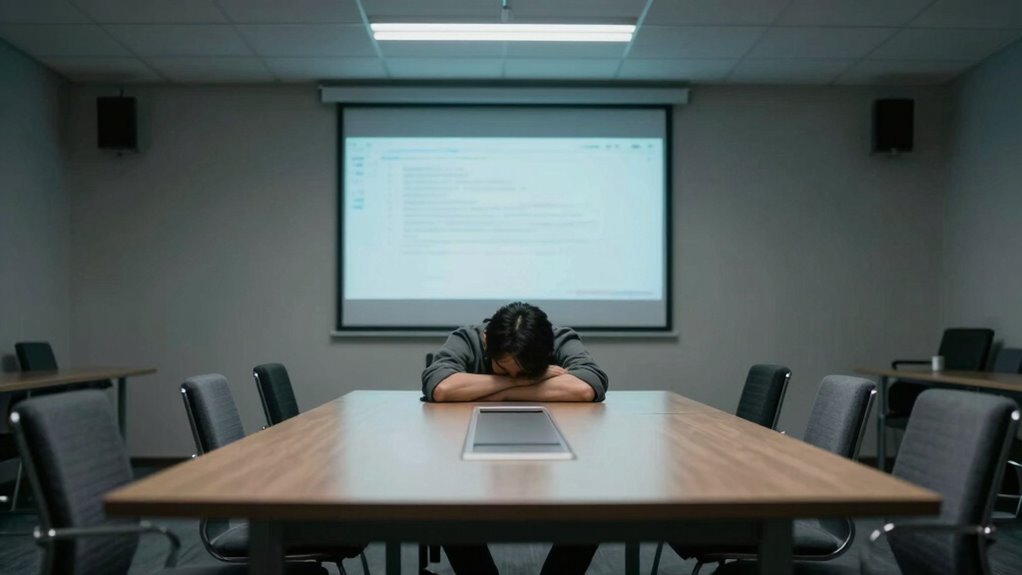
Many people find meetings draining because they often feel unproductive or repetitive, leaving you mentally exhausted rather than energized. This fatigue isn’t just about sitting in front of a screen or listening to others talk; it’s also about the mental toll these gatherings take. Virtual fatigue, or “Zoom fatigue,” hits hard because staring at a screen for hours drains your energy faster than in-person meetings. The constant focus required to follow conversations, manage technical glitches, and stay engaged wears you down. Plus, the lack of physical cues makes it harder to connect naturally, leading to feelings of disconnection and fatigue.
Another major factor behind this drain is decision paralysis. When meetings involve too many topics, conflicting opinions, or unclear agendas, you can feel overwhelmed. Decision paralysis stalls progress because you’re stuck trying to weigh options, consider everyone’s input, or figure out the next step. Instead of feeling like you’re making headway, you get caught in a cycle of indecision, which saps your motivation and leaves you feeling mentally drained. This paralysis often results from poorly structured meetings where objectives aren’t clear or where dominant voices overshadow quieter participants, making it harder for everyone to contribute meaningfully. As a result, you spend more energy trying to keep up rather than moving forward.
The problem isn’t just the length of the meeting but how it’s conducted. When meetings drag on without tangible outcomes, your focus wanes, and your mental energy diminishes. The repetitive nature of some meetings—covering the same topics repeatedly or revisiting decisions—contributes to a sense of stagnation. You might find yourself disengaged, checking your email, or drifting away mentally, which only deepens your exhaustion. Additionally, if meetings are scheduled too frequently or without purpose, they become a source of frustration and burnout. Recognizing the importance of effective communication can help prevent these issues by ensuring everyone understands the purpose and expectations of each gathering. Furthermore, incorporating structured agendas can significantly improve engagement and productivity during meetings. Understanding the impact of meeting structure can also promote more efficient and less draining interactions.
Popular right now

Dyson V8 Cordless Vacuum

Shark AI Ultra Robot Vacuum with Self-Empty Base

Philips 4400 Series Fully Automatic Espresso Machine with LatteGo Milk System
As an affiliate, we earn on qualifying purchases.
Frequently Asked Questions
How Can I Make Meetings More Engaging?
To make meetings more engaging, you should create interactive agendas that involve everyone and keep discussions focused. Incorporate visual aids like charts, slides, or videos to make content more appealing and easier to understand. Encourage participation by asking questions and inviting input. Keep the meeting concise, and break it into segments with different activities. These strategies help maintain energy, foster collaboration, and prevent meetings from feeling draining or tedious.
What Are Alternative Ways to Communicate Without Meetings?
You can replace meetings with asynchronous updates through project management tools like Slack or Trello, where team members share progress at their own pace. Digital collaboration platforms enable real-time document sharing and commenting, reducing the need for constant meetings. By streamlining communication this way, you save time, increase productivity, and give everyone flexibility to contribute when it suits them best.
Why Do Some Meetings Seem Unproductive?
Ever wonder why some meetings feel like a never-ending sitcom? It’s because of meeting overload and ineffective agendas that turn productive time into chaos. You sit through vague discussions, unprepared attendees, and pointless tangents, leaving you drained and unfulfilled. When agendas lack focus, everyone wastes time on irrelevant topics. The key? Clear goals and strict timekeeping. Otherwise, you’ll keep suffering through these draining, unproductive gatherings.
How Does Meeting Frequency Impact Employee Well-Being?
Meeting overload can substantially impact your well-being by causing stress escalation. When you attend too many meetings, you feel overwhelmed, reducing your focus and energy for important tasks. This constant cycle of meeting fatigue may increase anxiety and decrease productivity. To protect your health, it’s vital to set boundaries around meeting frequency, prioritize essential gatherings, and make sure breaks between sessions to avoid burnout and maintain overall well-being.
What Tools Can Reduce Meeting Fatigue?
Did you know that 70% of employees say meetings are unproductive? To cut down on fatigue, try using tools like video conferencing platforms with virtual collaboration features, which streamline communication. Implement time management apps that set clear agendas and time limits for meetings. These tools help you stay focused, reduce unnecessary discussions, and make meetings more efficient, so you conserve energy and stay engaged throughout.
Conclusion
So, the next time meetings leave you feeling a bit out of sync, remember it’s not just the clock ticking away. Sometimes, they’re simply a gentle reminder to pause, reflect, and realign your focus. Embrace these moments as opportunities to fine-tune your priorities, rather than viewing them as draining drains on your energy. With a little patience and perspective, you might find these gatherings become more of a nourishing pause than a draining drain.