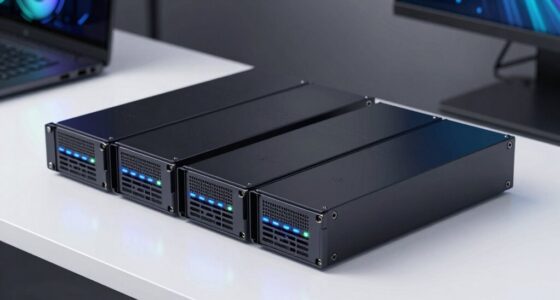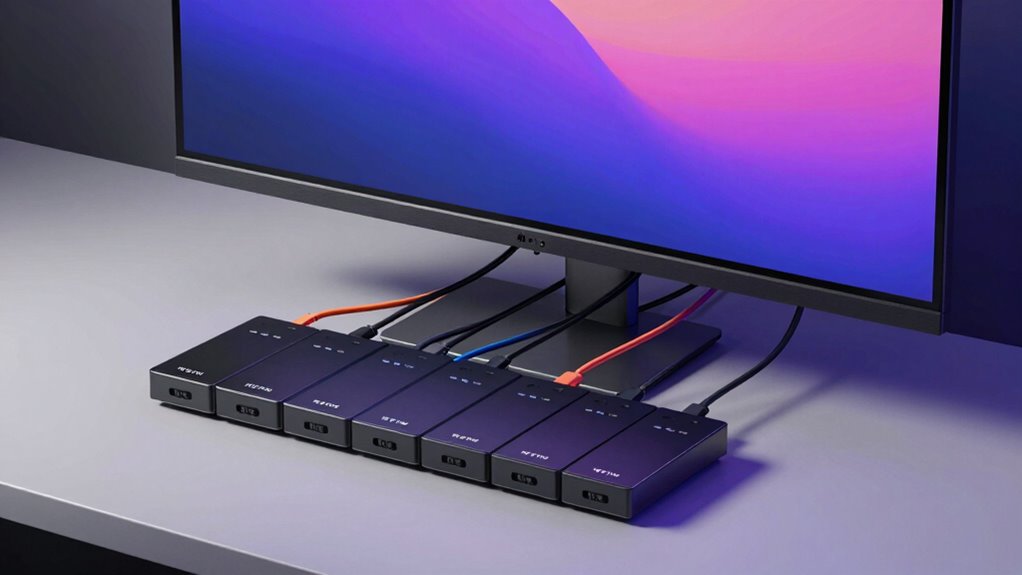

Finding a reliable KVM switch for 4K 120Hz can be challenging due to the high bandwidth demands and compatibility issues. The MINIX K1 USB-C KVM Switch stands out as the best overall choice for its sleek design and robust support for 4K@120Hz with HDR and 100W charging. For users needing multi-monitor setups, the TESmart HDMI KVM Switch offers three monitors at 4K@60Hz, though it drops to 60Hz at higher resolutions. Meanwhile, the HDMI KVM Switch 2 Monitors 2 Computers provides a good balance of performance and affordability at 4K@120Hz. Read on to see how these and other options compare, along with key considerations to help you make the best choice for your setup.

Prime made for students and young adults
- Fast, free delivery for dorm and study essentials
- Prime Video and Amazon Music included
- Member-only deals
Key Takeaways
- High bandwidth support is essential for 4K 120Hz performance, and not all switches deliver consistently at this rate.
- Multi-monitor setups require specific features like multiple DisplayPort or HDMI outputs, which can significantly influence price and complexity.
- Built-in features like EDID simulation and USB hubs add convenience but may also increase the cost and complexity of the switch.
- Compatibility with various operating systems and devices varies; USB-C support is increasingly important for modern setups.
- Tradeoffs often involve balancing performance, number of ports, and additional features like audio, Ethernet, or remote switching.


| kvm switch for 4k 120hz | USB Ports | Resolution Support | Compatibility |
|---|---|---|---|
| 8 Port DisplayPort KVM Switch | 4 USB 3.0 | — | — |
| 8K@60Hz 4K@120Hz DisplayPort K | 4 USB 3.0 | 8K@60Hz, 4K@120Hz | Windows, macOS, Linux |
| 4K@144Hz Dual Monitor KVM Swit | 4 | up to 4K@144Hz and 8K@60Hz | Backward compatible with USB 2.0 and 1.1 |
| 4K@120Hz Dual Monitor KVM Swit | 4 USB 3.0 | up to 3840×2160@120Hz | Windows, Mac OS, Linux, Unix |
| MINIX K1 USB-C KVM Switch for | — | — | Windows 10/11, macOS, Linux, Android |
| TESmart HDMI KVM Switch 3 Moni | — | — | — |
| HDMI KVM Switch 2 Monitors 2 C | 4 USB 3.0 ports (5Gbps) | 8K@60Hz, 4K@120Hz | — |
More Details on Our Top Picks
8 Port DisplayPort KVM Switch 4K@60Hz EDID Simulation with USB 3.0, Audio, RS232, Wired Remote, and Power Adapter
This 8-port DisplayPort KVM switch excels at managing multiple computers in environments where 4K@60Hz is sufficient. Compared with the 4K@144Hz Dual Monitor KVM Switch, it offers more ports but trades off the higher refresh rate. Its EDID simulation ensures smooth display switching, which is vital in multi-computer setups, while the USB 3.0 ports enable fast peripheral sharing. However, it requires an external power supply, which can add clutter, and setup complexity might challenge less experienced users. For those needing control over many devices with broad OS compatibility, this model makes a compelling choice, but it’s less suited for users prioritizing higher refresh rates or simpler setups.
Pros:- Supports ultra HD 4K@60Hz resolution for clear display quality
- Controls up to 8 computers with multiple switching options
- Includes USB 3.0 ports for fast data transfer and peripheral sharing
- Plug and play compatibility across multiple OS
Cons:- Requires external power supply, adding clutter
- Remote control length may limit flexibility in larger setups
- Setup can be complex for users unfamiliar with KVM configurations
Best for: IT professionals and small office environments with multiple computers and a need for broad device compatibility.
Not ideal for: Gamers or creative professionals requiring 4K at higher than 60Hz, due to its limitation to 4K@60Hz.
- Number of Ports:8
- DisplayPort Support:Yes
- Resolution:4K@60Hz
- USB Ports:4 USB 3.0
- Power Supply:12V/2A
- Control Modes:Panel button, wired remote, RS232
Our verdict“This switch is ideal for users managing many computers who need reliable, multi-platform support at 4K@60Hz, but not for high-refresh gaming or creative workflows demanding higher resolutions.”
8K@60Hz 4K@120Hz DisplayPort KVM Switch for 2 Monitors and 2 Computers
This dual-monitor switch supports an impressive range of resolutions, including 8K@60Hz and 4K@120Hz, making it suitable for demanding professional workflows. Unlike the 4K@144Hz Dual Monitor KVM Switch, it offers slightly lower refresh rates but supports higher resolutions, which benefits users working with ultra-high-definition content. Its control options include front-panel push buttons and external control kits, providing flexibility. The absence of hotkey switching could be limiting for power users seeking quick toggling, and it requires compatible high-quality cables to reach its maximum capabilities. For users who need to work across high-res displays without sacrificing resolution, this model offers a balanced solution, but it’s less ideal for those who prioritize rapid switching or higher refresh rates.
Pros:- Supports ultra-high-definition resolutions up to 8K@60Hz and 4K@120Hz
- Controls two computers with dual monitors for increased productivity
- Includes four USB 3.0 ports for peripheral sharing
- Plug-and-play setup with multiple switching options
Cons:- No hotkey switching support, limiting quick toggling
- Requires high-quality cables for optimal performance
- Limited to two computers and two monitors
Best for: High-end content creators and professionals working with 8K or 4K@120Hz workflows who need dual monitors and flexible control options.
Not ideal for: Casual users or gamers needing rapid switching or higher refresh rates beyond 120Hz, due to lack of hotkey support.
- Resolution Support:8K@60Hz, 4K@120Hz
- Number of Monitors:2
- Number of Computers:2
- USB Ports:4 USB 3.0
- Switching Methods:Front push buttons, external control kit
- Compatibility:Windows, macOS, Linux
Our verdict“Best suited for professionals needing multi-high-res display control with flexible switching options but not for quick-access hotkeys or more than two devices.”
4K@144Hz Dual Monitor KVM Switch for 2 Computers with USB 3.0 and DisplayPort
This KVM switch delivers support for 4K@144Hz and 8K@60Hz, making it ideal for gamers and video editors who need smooth motion and high resolution. Unlike the 4K@120Hz Dual Monitor KVM Switch, it offers a higher refresh rate, which can make a noticeable difference in fast-paced gaming or high-frame-rate editing. Switching is available via button or remote, providing easy access during intense sessions, but the requirement for two DisplayPort cables per computer could complicate setup, especially if cables are not included. It also lacks hotkey support, which might be a drawback for advanced users. This model suits those prioritizing maximum refresh rate and resolution for demanding applications, but less so for users seeking simplicity or cable flexibility.
Pros:- Supports 4K@144Hz and 8K@60Hz for high-performance visuals
- Easy switching via button and remote control
- Supports sharing multiple USB devices
- Plug-and-play with no driver installation needed
Cons:- Requires two DisplayPort cables per computer, which may not be included
- No hotkey switching support
- Cable setup can be cumbersome
Best for: Gamers and multimedia professionals needing maximum refresh rate and high-resolution support for fast-moving visuals.
Not ideal for: Office users or casual consumers who do not require ultra-high refresh rates, as it may be overkill and more complex to set up.
- Resolution Support:up to 4K@144Hz and 8K@60Hz
- Monitor Count:2
- Computer Count:2
- USB Ports:4
- Switching Methods:Button, remote
- Compatibility:Backward compatible with USB 2.0 and 1.1
Our verdict“This switch is best for gamers and professionals prioritizing the highest refresh rate at 4K, though setup complexity may be a concern.”
4K@120Hz Dual Monitor KVM Switch for 2 Computers with USB 3.0 and HDMI Support
This HDMI-based KVM switch supports 4K@120Hz, suitable for users with HDMI workflows seeking crisp image quality. Compared to DisplayPort options like the 8 Port DisplayPort KVM Switch, it is more compatible with HDMI-only setups but may require specific hardware to reach 120Hz at 4K. Its multiple switching options, including panel button and wired controller, suit users who prefer flexible control, yet it does not support hotkey toggling. Power supply stability and OS compatibility are solid, but users must ensure their HDMI cables and hardware support 4K@120Hz for optimal results. This model fits HDMI-centric setups seeking reliable 4K@120Hz performance without the need for DisplayPort cables.
Pros:- Supports 4K@120Hz for crisp, smooth visuals
- Flexible control options including panel button and wired remote
- Broad OS compatibility
- Stable power supply ensures consistent operation
Cons:- Requires compatible HDMI cables and hardware for 120Hz at 4K
- No hotkey switching support
- Limited to HDMI input, not DisplayPort
Best for: Content creators and professionals with HDMI environments who need dependable 4K@120Hz output and flexible controls.
Not ideal for: Users with existing DisplayPort setups or those requiring ultra-high refresh rates above 120Hz, as HDMI limitations may apply.
- Resolution Support:up to 3840×2160@120Hz
- Monitor Count:2
- Computer Count:2
- USB Ports:4 USB 3.0
- Switching Methods:Panel button, wired remote
- Compatibility:Windows, Mac OS, Linux, Unix
Our verdict“Ideal for HDMI-based workflows needing reliable 4K@120Hz visuals with flexible control, but not suited for high-refresh-rate gaming beyond 120Hz.”
MINIX K1 USB-C KVM Switch for 1 Monitor and 2 Computers, 4K@120Hz HDR, 100W PD, Aluminum Design, Compatible with Windows, Mac, Linux, Android
The MINIX K1 offers a sleek, portable solution for controlling two computers with a single monitor, supporting 4K@120Hz HDR and 100W USB-C PD charging. Compared with larger, multi-port switches like the 8 Port DisplayPort KVM Switch, it prioritizes simplicity and mobility, making it ideal for frequent travelers or small workspaces. Its aluminum build adds durability, but the reliance on USB-C and HDMI cables (not included) can complicate setup if compatible hardware isn’t readily available. The sync delay after switching might bother high-speed users, and its single monitor focus limits multitasking across multiple screens. This model suits those needing a compact, high-res solution for portable or space-constrained setups but isn’t built for extensive multi-monitor or high-volume environments.
Pros:- Supports stunning 4K@120Hz HDR visuals
- Built-in 100W USB-C PD for flexible charging
- Compact and lightweight aluminum design
- Compatible with multiple OS including Android
Cons:- Requires specific USB-C and HDMI cables, not included
- Sync delay after switching can be inconvenient
- Limited to controlling a single monitor
Best for: Travelers, remote workers, or users with space constraints requiring a portable, high-resolution KVM solution.
Not ideal for: Power users needing multiple monitors or a more extensive array of ports, as the device only supports one monitor and limited inputs.
- Display Output:4K@120Hz HDR
- Power Delivery:100W USB-C PD
- Ports:2 USB-C, 2 USB-A
- Weight:185 g
- Warranty:1 Year
- Compatibility:Windows 10/11, macOS, Linux, Android
Our verdict“Perfect for portable, high-res control in space-limited environments, but lacks multi-monitor support for heavier multitasking needs.”
TESmart HDMI KVM Switch 3 Monitors 2 Computers 4K@60Hz, USB 3.0, Triple Monitor, HDMI, EDID Support, 1G Ethernet, Hotkey, Audio & Microphone
This TESmart KVM excels for users needing to manage multiple displays, supporting three monitors at 4K@60Hz, which is ideal for professional workflows that require extensive screen real estate. Compared with the 8K@60Hz 4K@120Hz DisplayPort KVM Switch, it offers broader multi-monitor support but doesn’t push beyond 60Hz on HDMI, limiting high-refresh gaming or fast-paced creative tasks. Its EDID emulation ensures consistent, flicker-free display output, a significant advantage over less sophisticated models. The inclusion of USB 3.0 and audio/microphone support makes it a versatile hub for peripherals. However, the setup can be somewhat involved due to multiple cables, and it’s limited to two computers, so larger setups need to look elsewhere. This switch makes the most sense for professionals who prioritize multiple high-quality displays over the highest refresh rates.
Pros:- Supports three 4K@60Hz monitors for extensive workspace
- EDID emulation ensures consistent display quality
- Multiple switching options including hotkeys and remote control
- Includes USB 3.0 and audio/microphone support for peripherals
Cons:- Limited to two computers, not suitable for larger setups
- Setup involves multiple cables and may be complex for beginners
Best for: Creative professionals and traders who need three 4K displays at stable 60Hz for detailed work.
Not ideal for: Gamers or streamers requiring high-refresh-rate gaming at 120Hz or higher, as this device maxes at 60Hz per output.
- Resolution:4K@60Hz
- HDMI Version:HDMI 2.0
- USB:USB 3.2 Gen 1
- Ethernet:1G Ethernet
- Input Ports:2 HDMI sources
- Output Ports:3 HDMI monitors
- Audio:L/R audio output, microphone support
- Switching Options:Hotkeys, front panel, mouse wheel, IR remote
Our verdict“This switch is ideal for users who need stable multi-monitor setups at 4K@60Hz and don’t require higher refresh rates.”
HDMI KVM Switch 2 Monitors 2 Computers – 8K@60Hz, 4K@120Hz, 4 Port USB 3.0 Hub, Wired Remote, Plug & Play
This HDMI KVM switch stands out for its support of 8K@60Hz and 4K@120Hz, making it suitable for demanding tasks like high-end gaming, 3D rendering, or video editing, where ultra-sharp visuals are a priority. Unlike the TESmart 3-monitor model, it offers higher refresh rates at 4K, catering specifically to gamers and creative professionals who need fast, fluid visuals. Its plug-and-play setup with a wired remote simplifies switching, and the 4-port USB 3.0 hub adds valuable connectivity for peripherals and charging. The main tradeoff is that it requires an external power supply, which could be inconvenient for portable or minimalist setups. Also, it supports only two computers with dual monitors, so users with larger systems will need a different solution. This switch makes the most sense for users who prioritize top-tier resolution and high refresh rates without sacrificing peripheral connectivity.
Pros:- Supports ultra high-resolution displays up to 8K@60Hz and 4K@120Hz
- Easy plug-and-play with wired remote control
- Includes a 4-port USB 3.0 hub with smart charging
- Metal housing for durability
Cons:- Requires external power supply, adding to setup complexity
- Limited to two computers and dual monitors, not scalable for larger systems
Best for: High-end gamers, video editors, or 3D artists demanding ultra-high resolution and rapid refresh rates on dual screens.
Not ideal for: Basic office users or those with smaller setups, since it’s bulkier and designed for demanding visual performance.
- Resolution Support:8K@60Hz, 4K@120Hz
- Number of Monitors:2
- Number of Computers:2
- USB Ports:4 USB 3.0 ports (5Gbps)
- Power Supply:5V/2A adapter
- Chipset:Genesys Logic GL3510
- Housing Material:Metal
Our verdict“This switch is best suited for users who need the highest resolution and refresh rates for gaming or professional creative work on dual displays.”

How We Picked
These products were evaluated based on their ability to reliably support 4K at 120Hz, build quality, and feature set. Performance at high resolutions and refresh rates was prioritized, along with compatibility with multi-monitor configurations. Ease of use, connection options, and additional functionalities such as USB hubs or audio support were also considered. The ranking reflects a balance between performance, value, and versatility, aiming to help buyers find options suited to various needs and budgets.| kvm switch for 4k 120hz | Compatibility |
|---|---|
| 8 Port DisplayPort KVM Switch | — |
| 8K@60Hz 4K@120Hz DisplayPort K | Windows, macOS, Linux |
| 4K@144Hz Dual Monitor KVM Swit | Backward compatible with USB 2.0 and 1.1 |
| 4K@120Hz Dual Monitor KVM Swit | Windows, Mac OS, Linux, Unix |
| MINIX K1 USB-C KVM Switch for | Windows 10/11, macOS, Linux, Android |
| TESmart HDMI KVM Switch 3 Moni | — |
| HDMI KVM Switch 2 Monitors 2 C | — |
Factors to Consider When Choosing Kvm Switch For 4k 120hz
Choosing the right KVM switch for 4K 120Hz involves understanding several critical factors. Buyers should prioritize bandwidth and compatibility to ensure smooth performance at high resolutions and refresh rates. Additional features like multi-monitor support, USB hubs, and audio can enhance usability but may also increase complexity and cost. It’s important to match the switch’s capabilities with your specific setup, whether single or multi-monitor, gaming or professional use. Consider future-proofing by selecting models that support emerging standards and higher resolutions, even if your current hardware doesn’t demand it.Bandwidth and Signal Support
The core requirement for a 4K 120Hz KVM switch is sufficient bandwidth, typically at least 18 Gbps to handle DisplayPort 1.4 or HDMI 2.0 signals. Cheaper switches often max out at 4K@60Hz, so verify the specifications carefully. Higher bandwidth support ensures smooth, tear-free video without artifacts, especially if you plan to use HDR or high-bit-depth color. Investing in a switch with proven support for 4K@120Hz can prevent compatibility issues and frustration down the line.Multi-Monitor Compatibility
If your setup involves multiple monitors, look for switches that explicitly support dual or triple displays at 4K@120Hz. Not all switches can handle multiple outputs at this resolution and refresh rate, which means you may need specialized hardware. Multi-monitor support often involves additional ports—such as multiple DisplayPort or HDMI inputs—and may introduce increased complexity or cost. Consider your current and future needs carefully to avoid bottlenecks or the need to upgrade prematurely.Connectivity Options and Compatibility
Your devices’ connection types heavily influence your choice. USB-C support offers a streamlined setup for modern laptops and desktops, combining video, data, and power in a single cable. HDMI is more common but may limit refresh rates at high resolutions unless HDMI 2.1 is supported. Also, check whether the switch supports your operating system and peripheral devices, especially if you rely on specific USB devices or audio equipment. Compatibility ensures seamless switching and reliable performance.Additional Features and Ease of Use
Features like USB hubs, audio switching, remote controls, and EDID management add convenience but can raise the price. Consider whether these extras align with your workflow—if you need quick switching or multi-device integration, prioritize models with dedicated remote controls or hotkeys. Ease of installation and configuration is equally important; a straightforward setup reduces frustration and downtime, especially in busy work environments.Future-Proofing and Cost Tradeoffs
Investing in a switch that supports higher resolutions, refresh rates, and newer standards like HDMI 2.1 or DisplayPort 1.4 can extend the lifespan of your setup. However, these models tend to come at a premium. Balance your current needs with potential future upgrades—buying a slightly more capable switch now can save money and effort later. Also, be wary of overly complex switches that may require frequent firmware updates or have limited support.Frequently Asked Questions
Can a KVM switch support 4K 120Hz with HDR?
Yes, but only if the switch explicitly states support for HDMI 2.1 or DisplayPort 1.4, which are designed to handle 4K at 120Hz with HDR. Many switches marketed for 4K@60Hz need firmware updates or may not reliably support 120Hz at high color depths, leading to potential flickering or reduced performance. Always verify the specifications and user reviews to ensure HDR support at your desired refresh rate.Will using a KVM switch introduce input lag or reduce performance?
A well-designed KVM switch should have minimal impact on input lag, but poor-quality models can cause noticeable delays, especially at high resolutions and refresh rates. Factors influencing lag include bandwidth support, signal processing, and cable quality. For gaming or professional applications, choosing a switch with dedicated high-bandwidth features and low latency design is essential to avoid performance bottlenecks.Is USB-C KVM switching better than HDMI or DisplayPort options?
USB-C offers a more streamlined connection, combining video, data, and power in a single cable, which simplifies setups and reduces clutter. It’s especially advantageous for modern laptops and devices supporting Thunderbolt or USB-C alt modes. However, USB-C switches can be more expensive and sometimes less mature in terms of multi-monitor support compared to HDMI or DisplayPort switches. Your choice depends on device compatibility and your specific connectivity needs.Are multi-monitor KVM switches at 4K 120Hz more expensive?
Generally, yes. Supporting multiple high-resolution displays at 120Hz requires more advanced hardware, multiple outputs, and often higher bandwidth standards, all of which increase cost. These switches tend to be targeted at professional or enthusiast users who need multi-monitor setups for gaming, content creation, or productivity. Weigh this added expense against your actual needs to determine if multi-monitor support justifies the investment.Can I use a 4K 120Hz KVM switch with older computers?
Compatibility depends on your computer’s graphics card and port support. Older systems may not support the high bandwidth required for 4K@120Hz, even if the switch does. In such cases, you might need to upgrade your GPU or use lower resolutions and refresh rates. Always check your device’s specifications and the switch’s supported standards before purchase to avoid mismatch issues.Conclusion
For buyers seeking the best all-around performance, the MINIX K1 USB-C KVM Switch offers excellent support for 4K@120Hz with modern features. Those prioritizing multi-monitor setups at a more accessible price point will find the HDMI KVM Switch 2 Monitors 2 Computers a solid choice. Professionals or gamers who need the highest reliability and future-proofing might consider premium options like the 8K@60Hz 4K@120Hz DisplayPort KVM Switch. Beginners or casual users should focus on ease of use and compatibility, opting for simpler models that still meet their resolution needs. Assess your setup, budget, and future plans to match the right switch to your needs.Halloween Picks
halloween
As an affiliate, we earn on qualifying purchases.