If you’re looking for a managed switch for your home network, you’re likely balancing performance with ease of setup and budget. The best overall pick, Goalake 16-Port Gigabit Managed Switch, offers robust features suited for small homes and home offices. For those prioritizing simple setup, unmanaged options like the NETGEAR GS308 stand out, but they lack advanced management features. The key tradeoffs involve balancing cost, manageability, and future-proofing—more features typically mean higher costs and complexity. Continue reading for a detailed breakdown of the top options and which one fits your specific home network needs.

Prime made for students and young adults
- Fast, free delivery for dorm and study essentials
- Prime Video and Amazon Music included
- Member-only deals
Key Takeaways
- Managed switches with PoE support are ideal for integrating IP cameras and VoIP phones in home setups.
- The best picks balance manageability with ease of use—advanced features don’t always mean better for novices.
- Higher port counts and multi-gigabit speeds offer future-proofing but come at a premium price.
- Fanless models excel in quiet operation, making them suitable for home environments.
- Brands like NETGEAR and TP-Link dominate this category with reliable options at various price points.
| TP-Link 8 Port Gigabit Ethernet Network Switch – Unmanaged, Fanless, Metal Housing |  | Best Budget Unmanaged Switch for Noise-Free Home Use | Number of Ports: 8 | Port Type: RJ45 | Data Transfer Rate: 1000 Mbps | VIEW ON AMAZON | See Our Full Breakdown |
| NETGEAR 8-Port Gigabit Ethernet Unmanaged Network Switch (GS308) | 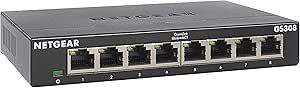 | Best Compact Metal Switch for Easy Home Expansion | Number of Ports: 8 | Data Transfer Rate: 1 Gbps | Case Material: Metal | VIEW ON AMAZON | See Our Full Breakdown |
| NETGEAR 8-Port Gigabit Ethernet Easy Smart Managed Network Switch (GS308E) |  | Best Managed Switch for Small Home Networks with VLAN & QoS | Number of Ports: 8 | Managed: Yes | VLAN Support: Yes | VIEW ON AMAZON | See Our Full Breakdown |
| TP-Link 16 Port Gigabit Switch – Managed, Plug & Play, Desktop/Wall-Mount, Metal Housing |  | Best Managed Switch for Growing Home Networks | Number of Ports: 16 | Port Speed: Gigabit (10/100/1000 Mbps) | Management: Managed via web interface | VIEW ON AMAZON | See Our Full Breakdown |
| Goalake 16-Port Gigabit Managed Switch for Small Business & Home Office |  | Best High-Feature Managed Switch for Small Networks | Number of Ports: 16 | Port Speed: Gigabit Ethernet | Management: Managed with app and web interface | VIEW ON AMAZON | See Our Full Breakdown |
| NETGEAR 8 Port PoE Gigabit Ethernet Easy Smart Managed Switch (GS308EP) |  | Best for Compact, Power-over-Ethernet Setups | Number of Ports: 8 | Port Speed: 1.0Gbps | PoE Support: Yes | VIEW ON AMAZON | See Our Full Breakdown |
| TP-Link 8 Port Gigabit Switch – Easy Smart Managed, Plug & Play, Desktop/Wall-Mount, Metal with Shielded Ports |  | Best for Advanced Network Features in Small Setups | Number of Ports: 8 | Port Type: Gigabit Ethernet | Management: Smart Managed | VIEW ON AMAZON | See Our Full Breakdown |
| 8 Port Gigabit PoE Switch with 2 Gigabit Uplink, 120W Built-in Power, Managed, Fanless, Metal, Plug and Play |  | Best for High-Power PoE and Small Business Security Devices | Number of Ports: 8 | Uplink Ports: 2 Gigabit | PoE Power Budget: 120W | VIEW ON AMAZON | See Our Full Breakdown |
| Omada ES210X-M2, 8 Port 2.5G Easy Managed Switch |  | Best for High-Speed, Cloud-Managed Networks | Number of Ports: 8 | Port Speed: 2.5 Gbps | Uplink Ports: 2 x 10 Gbps SFP+ | VIEW ON AMAZON | See Our Full Breakdown |
| NETGEAR 5-Port Gigabit Ethernet Easy Smart Managed Network Switch (GS305E) |  | Best for Basic Small Office Networks | Number of Ports: 5 | Port Speed: 1.0Gbps | Management: Easy Smart Managed | VIEW ON AMAZON | See Our Full Breakdown |
| TRENDnet 10-Port Multi-Gig Web Smart Switch, TEG-3102WS |  | Best for Advanced Home Networks Requiring Flexible Multi-Gig Support | Ports: 8 x 2.5GBASE-T, 2 x 10G SFP+ | Switching Capacity: 80Gbps | Compatibility: IEEE 802.3bz, IEEE 802.3ae | VIEW ON AMAZON | See Our Full Breakdown |
| managed switch for home network | Number of Ports | Management | Mounting Options |
|---|---|---|---|
| TP-Link 8 Port Gigabit Etherne | 8 | — | — |
| NETGEAR 8-Port Gigabit Etherne | 8 | — | Desktop or Wall |
| NETGEAR 8-Port Gigabit Etherne | 8 | — | — |
| TP-Link 16 Port Gigabit Switch | 16 | Managed via web interface | Desktop or Wall |
| Goalake 16-Port Gigabit Manage | 16 | Managed with app and web interface | Desktop or wall-mount |
| NETGEAR 8 Port PoE Gigabit Eth | 8 | Easy Smart Managed | Desktop or wall-mount |
| TP-Link 8 Port Gigabit Switch | 8 | Smart Managed | — |
| 8 Port Gigabit PoE Switch with | 8 | Managed | Desktop/Wall Mount |
| Omada ES210X-M2 | 8 | Cloud-based via Omada SDN | — |
| NETGEAR 5-Port Gigabit Etherne | 5 | Easy Smart Managed | Desktop or wall |
| TRENDnet 10-Port Multi-Gig Web | — | Web GUI, VLAN, QoS, access control | — |
More Details on Our Top Picks
TP-Link 8 Port Gigabit Ethernet Network Switch – Unmanaged, Fanless, Metal Housing
This TP-Link 8-port Gigabit switch offers a straightforward, plug-and-play setup, making it ideal for those seeking reliable wired connections without hassle. Its fanless design means it operates silently, perfect for quiet home offices or media rooms. Compared with the NETGEAR GS308, it shares similar durability and ease of use but lacks mounting flexibility. Its unmanaged nature means it’s simple but lacks advanced features, which might be limiting for future network growth. The metal housing boosts durability and energy efficiency, translating to long-term savings. The absence of managed features makes it less suitable for users wanting VLAN or QoS controls. This switch suits users prioritizing silence and simplicity over advanced network controls.
Pros:- Easy plug-and-play setup with no configuration needed
- Silent fanless operation ideal for noise-sensitive environments
- Durable metal construction for long-term reliability
- Energy-efficient, low power consumption
Cons:- Limited to unmanaged switch functionality, no VLAN or QoS support
- No options for advanced network management or monitoring
Best for: Home users who need a reliable, silent switch with no configuration effort
Not ideal for: Power users or small offices requiring VLAN segmentation or advanced management
- Number of Ports:8
- Port Type:RJ45
- Data Transfer Rate:1000 Mbps
- Power Consumption:2.77 watts
- Material:Metal
- Operating System:Unmanaged
- Dimensions:6.2″L x 4″W x 1″H
Our verdict“This switch is best for home users seeking a simple, silent addition to their network without the need for management features.”
NETGEAR 8-Port Gigabit Ethernet Unmanaged Network Switch (GS308)
The NETGEAR GS308 shines through its compact design and straightforward setup, making it perfect for expanding home networks without clutter. Its metal case ensures durability and heat dissipation, comparable to TP-Link’s model but with a slightly more versatile mounting option—either on desk or wall. While it offers the same unmanaged plug-and-play ease, it lacks any management features, limiting future network customization. Its compact size and silent operation make it suitable for small spaces, but its basic feature set may not satisfy users wanting VLANs or traffic prioritization. The design’s simplicity is a plus for ease but can be a drawback if you need advanced control. This switch fits well for users who want a small, sturdy, no-fuss wired hub.
Pros:- Plug-and-play setup with no configuration needed
- Compact, durable metal case with versatile mounting options
- Silent operation suitable for quiet environments
- Energy-efficient performance
Cons:- Limited to unmanaged switch functionality
- Lack of advanced features like VLAN or traffic prioritization
Best for: Home users needing a durable, space-saving switch with straightforward connectivity
Not ideal for: Those planning to implement VLANs or QoS in their home network
- Number of Ports:8
- Data Transfer Rate:1 Gbps
- Case Material:Metal
- Dimensions:6.22″L x 4.02″W x 1.02″H
- Mounting Options:Desktop or Wall
- Power Source:AC Adapter
Our verdict“This switch is ideal for users wanting a durable, space-efficient wired expansion without management complexity.”
NETGEAR 8-Port Gigabit Ethernet Easy Smart Managed Network Switch (GS308E)
The NETGEAR GS308E offers a manageable solution for users wanting basic network control without complexity. Its web GUI provides easy access to VLANs, QoS, and security features, setting it apart from purely unmanaged options like TP-Link’s or NETGEAR’s GS308. The silent, fanless design keeps operation quiet, and its durable metal casing assures longevity. However, with only 8 ports, it’s less scalable than larger switches like the TP-Link 16-port model. Its management features require some familiarity with network concepts, making it less suitable for complete beginners. The included features are a strong advantage for users seeking more control but could be overkill for simple setups. This switch is well-suited for users who want manageable features in a small, quiet package.
Pros:- Easy setup via web GUI with management features
- Supports VLANs, QoS, and network security controls
- Silent operation with durable metal housing
- Compact size suitable for small spaces
Cons:- Limited to 8 ports, less scalable for larger networks
- Requires some network knowledge to configure effectively
- No included power supply
Best for: Home or small office users who want basic management, VLAN, and QoS features
Not ideal for: Users seeking extensive port capacity or plug-and-play simplicity without configuration
- Number of Ports:8
- Managed:Yes
- VLAN Support:Yes
- QoS Support:Yes
- Material:Metal
- Dimensions:Approx. 4″W x 2″H
Our verdict“This switch fits users who want manageable control over small networks without sacrificing silence or durability.”
TP-Link 16 Port Gigabit Switch – Managed, Plug & Play, Desktop/Wall-Mount, Metal Housing
This 16-port TP-Link switch expands network capacity while maintaining ease of use, making it suitable for users needing more ports without complex setup. Its managed features like VLAN, QoS, and LAG support provide flexibility comparable to the Goalake switch but with a more familiar interface. The plug-and-play setup simplifies initial deployment, but configuring advanced options requires network knowledge. Its durable metal housing and flexible mounting options make it suitable for both home and small business environments. Compared with the Goalake model, it offers similar management capabilities but might be slightly more user-friendly for those less experienced with network configuration. Its main drawback is the lack of an included power supply, which could add inconvenience. This switch is ideal for users needing more ports and management options in a familiar setup.
Pros:- Easy plug-and-play setup with managed features
- Supports VLAN, QoS, LAG, and other advanced features
- Durable metal case with flexible mounting options
- Supports Green energy technology
Cons:- No included power supply, requiring an additional purchase
- Basic managed features may be complex for complete beginners
Best for: Growing home networks or small offices that want manageable features with larger port capacity
Not ideal for: Users with minimal networking needs or those unwilling to handle configuration tasks
- Number of Ports:16
- Port Speed:Gigabit (10/100/1000 Mbps)
- Management:Managed via web interface
- Mounting Options:Desktop or Wall
- Housing Material:Metal
- Features:QoS, VLAN, IGMP, LAG
Our verdict“This switch makes sense for users expanding their network and seeking manageable controls without sacrificing ease of use.”
Goalake 16-Port Gigabit Managed Switch for Small Business & Home Office
The Goalake 16-port switch offers extensive management features like VLAN, QoS, storm control, and remote access, appealing to users who need advanced control over their network. Its fanless, metal design ensures silent operation, similar to the TP-Link 16-port model but with more comprehensive features. Setup is straightforward via app or web interface, appealing to those comfortable with network management. However, its complexity might be overwhelming for casual home users who only need basic connectivity. The broad feature set makes it a good fit for small businesses or tech-savvy home users, but lack of PoE support limits some applications. Compared to the TP-Link 16-port switch, it provides more control but requires more effort to configure. This switch suits technically inclined users seeking robust management tools in a silent, durable package.
Pros:- Supports VLAN, QoS, storm control, and remote management
- Fanless, durable metal design for silent operation
- Plug-and-play setup via app or web interface
- Includes comprehensive protection features
Cons:- No PoE support, limiting some device compatibility
- More complex setup process may intimidate casual users
Best for: Small business owners or home office users needing advanced network management and security
Not ideal for: Home users seeking simple plug-and-play solutions without management complexity
- Number of Ports:16
- Port Speed:Gigabit Ethernet
- Management:Managed with app and web interface
- Design:Fanless, metal
- Features:VLAN, QoS, storm control, port mirroring
- Mounting Options:Desktop or wall-mount
Our verdict“This switch is ideal for users needing detailed control and security features in a silent, robust package.”
NETGEAR 8 Port PoE Gigabit Ethernet Easy Smart Managed Switch (GS308EP)
This switch stands out for its compact, fanless design combined with PoE+ support, making it an ideal choice for small offices or smart home hubs that need to power IP cameras or access points without extra power supplies. Compared to the NETGEAR GS305E, it offers PoE, but with a lower port count and a 62W power budget, limiting larger device setups. Its simplicity in configuration appeals to users wanting straightforward management, though it lacks advanced features like VLAN stacking or link aggregation. The energy-efficient design ensures silent operation, but the limited PoE budget restricts its scalability for larger or more demanding PoE deployments. Best suited for small-scale PoE needs where silence and ease of use matter most.
Pros:- Easy to configure with intuitive management interface
- Supports PoE+ for powering connected devices
- Silent, fanless operation
- Compact and versatile mounting options
Cons:- Limited to small business use cases
- PoE power budget may be insufficient for larger setups
Best for: Home users or small business owners needing PoE for a few devices in a quiet environment
Not ideal for: Larger networks with high PoE demands or advanced management requirements
- Number of Ports:8
- Port Speed:1.0Gbps
- PoE Support:Yes
- PoE Power Budget:62W
- Management:Easy Smart Managed
- Mounting Options:Desktop or wall-mount
- Energy Efficiency:IEEE 802.3az
Our verdict“This switch fits small PoE deployments where simplicity and silence are priorities over advanced features.”
TP-Link 8 Port Gigabit Switch – Easy Smart Managed, Plug & Play, Desktop/Wall-Mount, Metal with Shielded Ports
This switch is tailored for users who want more control over their network through features like VLAN, QoS, and IGMP snooping, making it a step up from unmanaged models like the NETGEAR GS305E. Its sturdy metal construction and flexible installation options suit environments that demand durability and adaptability. While it offers many Layer 2 features, it requires some familiarity with network management, which might challenge beginners. Unlike simple unmanaged switches, this model enables segmentation and traffic prioritization, but its 8-port limit makes it less suitable for expanding networks. Overall, it’s a solid choice for users needing advanced management without the complexity of enterprise-grade gear.
Pros:- Supports multiple advanced network features like VLAN and QoS
- Sturdy metal construction with flexible installation options
- Easy to manage via web interface and free software
- Supports up to 32 VLANs for segmentation
Cons:- Limited to 8 ports, not scalable for larger networks
- Requires some network knowledge for optimal configuration
Best for: Small business owners or tech-savvy home users wanting detailed control over their network
Not ideal for: Complete beginners or setups that need PoE support or a higher port count
- Number of Ports:8
- Port Type:Gigabit Ethernet
- Management:Smart Managed
- VLAN Support:Yes, up to 32 VLANs
- QoS Support:Yes
- Layer 2 Features:Link Aggregation, Port Mirroring, Loop Prevention
- Installation:Desktop or Wall-Mount
Our verdict“Ideal for users who want detailed control over small networks but are comfortable with some network management.”
8 Port Gigabit PoE Switch with 2 Gigabit Uplink, 120W Built-in Power, Managed, Fanless, Metal, Plug and Play
This switch excels in powering high-power PoE devices like security cameras and access points, thanks to its 120W budget, making it suitable for small networks with multiple IP devices. Unlike the NETGEAR GS308EP, it offers a higher PoE budget and managed features, including VLAN, QoS, and remote management via web or app. Its fanless, durable metal design ensures silent, reliable operation, and its plug-and-play nature simplifies setup. However, this model might be complex for users unfamiliar with network management and is primarily designed for small business or advanced home use. The absence of an included power supply could be a hurdle for some.
Pros:- Supports high-power PoE devices with 120W budget
- Managed switch with VLAN, QoS, and remote management
- Fanless design ensures silent operation and durability
- Easy plug-and-play setup with versatile mounting options
Cons:- May be complex for users unfamiliar with network management
- No included power supply (assumed standard)
- Limited to small-scale deployments
Best for: Small businesses or tech-savvy home users deploying multiple PoE devices needing high power and remote management
Not ideal for: Users seeking a simple, unmanaged switch or those without PoE needs
- Number of Ports:8
- Uplink Ports:2 Gigabit
- PoE Power Budget:120W
- PoE Standards:802.3af/at
- Management:Managed
- Fan:Fanless
- Mounting Options:Desktop/Wall Mount
Our verdict“Best suited for small networks requiring high-power PoE and remote management with minimal noise.”
Omada ES210X-M2, 8 Port 2.5G Easy Managed Switch
This switch is a strong pick for future-proofing high-speed home or small office networks, thanks to its 2.5G ports and dual 10G SFP+ uplinks. Its cloud-based management via TP-Link’s Omada platform appeals to users wanting centralized, remote control over their network, especially for WiFi 6/7 access points or NAS setups. Compared with the Gigabit options, it offers faster speeds and more scalability, but it’s less suitable for users who don’t need 2.5G or cloud management. Its fanless, durable metal construction ensures longevity, though it lacks PoE support, limiting direct device powering. This switch makes the most sense for networks expecting high throughput and easy remote management.
Pros:- Supports 2.5G ports for modern device speeds
- Dual 10G SFP+ uplinks for high scalability
- Fanless, silent operation
- Cloud management via Omada SDN platform
Cons:- Limited to 8 ports, not suitable for large networks
- Requires Omada platform for management
- No PoE support
Best for: Home or small business users needing high-speed connectivity and cloud control for multiple devices
Not ideal for: Users with basic needs or those requiring PoE support for powered devices
- Number of Ports:8
- Port Speed:2.5 Gbps
- Uplink Ports:2 x 10 Gbps SFP+
- Management:Cloud-based via Omada SDN
- Fan:Fanless
- Construction:Metal
Our verdict“Excellent for high-speed, remotely managed networks that need to future-proof their wired backbone.”
NETGEAR 5-Port Gigabit Ethernet Easy Smart Managed Network Switch (GS305E)
This compact switch offers essential management features like VLAN and QoS in a simple, fanless design, making it suitable for small networks that prioritize quiet operation and easy setup. Compared to larger models like the TP-Link 8 Port, its fewer ports limit expansion, but it’s perfect for tight spaces or basic needs. Its energy-efficient operation and flexible mounting make it convenient, but it doesn’t support PoE, which restricts its use for powering devices like cameras or access points. This switch makes the most sense for users who want straightforward management without the complexity of advanced features.
Pros:- Easy to configure with intuitive management interface
- Silent operation due to fanless design
- Energy-efficient, reducing power use
- Flexible mounting options
Cons:- Limited to 5 ports, not scalable for larger needs
- No PoE support
Best for: Small offices or home environments needing simple, managed gigabit connections
Not ideal for: Networks requiring PoE or higher port density
- Number of Ports:5
- Port Speed:1.0Gbps
- Management:Easy Smart Managed
- Design:Fanless, compact metal
- Energy Efficiency:IEEE 802.3az
- Mounting Options:Desktop or wall
Our verdict“A good choice for small, straightforward managed networks with limited ports and no PoE needs.”
TRENDnet 10-Port Multi-Gig Web Smart Switch, TEG-3102WS
This switch stands out for its combination of eight 2.5G ports and two 10G SFP+ slots, making it an excellent choice for home users looking to upgrade beyond standard gigabit speeds. Compared with the TP-Link 8 Port Gigabit Switch, it offers significantly faster connections but requires compatible cabling and more careful planning. Its web-based management provides an intuitive way to set up VLANs, QoS, and access controls, which is ideal for tech-savvy users or those expanding into multi-device setups. However, the lack of PoE support means it’s less suited for powering network devices directly, and the lifetime protection applies only in the U.S. and Canada. The durable metal housing and high switching capacity of 80Gbps make it reliable for future-proofing demanding home networks.
Pros:- Supports multi-gig speeds with 2.5G and 10G SFP+ ports
- Easy web-based management for VLANs, QoS, and access control
- Durable metal housing with high switching capacity (80Gbps)
- Lifetime protection (U.S. and Canada)
Cons:- No PoE support, limiting device powering options
- Requires compatible cabling for optimal 2.5G speeds
- Lifetime protection limited to North America
Best for: Home users who want a flexible, multi-gigabit upgrade with advanced traffic management.
Not ideal for: Home users seeking plug-and-play simplicity or PoE support for IP cameras and other powered devices.
- Ports:8 x 2.5GBASE-T, 2 x 10G SFP+
- Switching Capacity:80Gbps
- Compatibility:IEEE 802.3bz, IEEE 802.3ae
- Housing:Metal
- Protection:Lifetime manufacturer protection (U.S. and Canada)
- Management:Web GUI, VLAN, QoS, access control
Our verdict“This switch is best suited for home users who need multi-gig support and detailed network control, but it’s less ideal for those wanting simple, PoE-enabled plug-and-play devices.”

How We Picked
To determine the best managed switches for home networks, I focused on key criteria relevant to home users, including performance, manageability, build quality, ease of setup, and value. I prioritized products that provide reliable gigabit or multi-gigabit speeds, with particular attention to those supporting PoE for future expansion. Ease of use was essential, especially for users new to network management, so plug-and-play features and intuitive interfaces mattered. I also considered the longevity and brand reputation, ranking models that balance advanced features with affordability and simplicity. Products were ordered based on their overall versatility, feature set, and suitability for typical home network scenarios.| managed switch for home network | Mounting Options |
|---|---|
| TP-Link 8 Port Gigabit Etherne | — |
| NETGEAR 8-Port Gigabit Etherne | Desktop or Wall |
| NETGEAR 8-Port Gigabit Etherne | — |
| TP-Link 16 Port Gigabit Switch | Desktop or Wall |
| Goalake 16-Port Gigabit Manage | Desktop or wall-mount |
| NETGEAR 8 Port PoE Gigabit Eth | Desktop or wall-mount |
| TP-Link 8 Port Gigabit Switch | — |
| 8 Port Gigabit PoE Switch with | Desktop/Wall Mount |
| Omada ES210X-M2 | — |
| NETGEAR 5-Port Gigabit Etherne | Desktop or wall |
| TRENDnet 10-Port Multi-Gig Web | — |
Factors to Consider When Choosing Managed Switch For Home Network
Choosing the right managed switch for your home network involves understanding several key factors. While features like port count and speed are important, you should also consider manageability, power options, and future scalability. A well-chosen switch can improve your network’s performance and security, but selecting the wrong model might lead to unnecessary complexity or cost. Here’s a breakdown of what to think about before making a decision.Port Count and Speed
Assess how many devices you’ll connect and whether you need multi-gigabit speeds. While an 8-port switch may suffice for small setups, larger homes or those with multiple smart devices might benefit from 16 or more ports. Multi-gigabit ports (2.5G, 5G, or 10G) can future-proof your network, especially if you plan to upgrade devices or stream high-bandwidth content. Remember, more ports and higher speeds typically come with increased costs, so match your choice to your actual needs.
Manageability and Features
Managed switches offer tools like VLANs, QoS, and monitoring, which improve network security and performance. However, these features can add complexity. For casual home users, simple web-based interfaces or plug-and-play management might be enough, while power users or small offices benefit from advanced options. Be wary of overly complicated setups if you’re not familiar with networking, as this can lead to configuration errors or security issues.
Power over Ethernet (PoE)
PoE support allows your switch to power devices like IP cameras and VoIP phones directly through Ethernet cables, reducing clutter and the need for extra power supplies. If your home setup includes PoE devices, choosing a switch with PoE support can simplify installation. However, PoE models tend to be more expensive, and not all home users need this feature, so evaluate whether it aligns with your current or future device plans.
Build Quality and Noise
Since most home environments prefer quiet operation, fanless switches are preferable. Metal housings typically offer durability and better heat dissipation, extending the lifespan of the device. Conversely, cheaper plastic models might be noisier or less durable. Consider where you’ll place your switch; if it’s in a shared or quiet space, noise levels should influence your choice.
Budget and Future-Proofing
While investing in a higher-tier managed switch can provide long-term benefits, it may also be more than what your current setup requires. Balance your budget with needs for scalability—if you foresee expanding your network, opting for a model with more ports or multi-gigabit support can prevent an early upgrade. Conversely, for basic needs, a simpler, less expensive switch might suffice and save you money.
Frequently Asked Questions
Is a managed switch necessary for a home network?
For most typical home setups, an unmanaged switch provides sufficient connectivity without complexity. However, if you want features like VLANs, traffic prioritization, or remote management, a managed switch becomes advantageous. It also offers better security and the ability to fine-tune your network, which is beneficial if you have multiple smart devices, a home office, or future expansion plans.
Can a managed switch improve my home network’s speed?
Yes, especially if your current switch is outdated or limited to 100Mbps ports. Managed switches often support gigabit or multi-gigabit speeds, which can reduce bottlenecks and improve overall performance. Additionally, features like QoS can prioritize bandwidth for streaming or gaming, leading to a more responsive experience. However, the actual speed gain depends on your internet plan and connected devices.
Are PoE switches worth the extra cost for home use?
If you plan to install IP cameras, VoIP phones, or wireless access points that require power over Ethernet, PoE switches simplify wiring and reduce clutter. For typical home users without these devices, PoE might not justify the additional expense. Consider your current device ecosystem and future plans before investing in PoE support.
What is the difference between an unmanaged and a managed switch?
An unmanaged switch offers basic connectivity without configuration options, making it simple and cost-effective. Managed switches provide tools to control traffic, segment networks, and enhance security through features like VLANs and QoS. The tradeoff is increased complexity and cost, so choose based on whether your home network needs advanced control or just reliable connectivity.
How important is brand reputation when choosing a managed switch?
Brand reputation often correlates with reliability, firmware support, and customer service. Reputable brands like NETGEAR, TP-Link, and Omada tend to offer more consistent quality and firmware updates, which can extend the lifespan of your device. For home use, prioritizing well-known brands reduces the risk of compatibility issues and ensures better long-term support.
Conclusion
For most home users, the Goalake 16-Port Gigabit Managed Switch strikes a good balance between features, ease of use, and future-proofing, making it the best overall choice. Those on a tighter budget seeking simplicity might opt for a plug-and-play unmanaged model like the NETGEAR GS308. Power users or small offices aiming for advanced control should consider higher-end options like the Omada ES210X-M2. Beginners or casual users will appreciate models with straightforward interfaces, while tech-savvy homeowners can benefit from multi-gigabit or PoE-capable switches for expanded capabilities. Select based on your current setup, future plans, and comfort with network management.