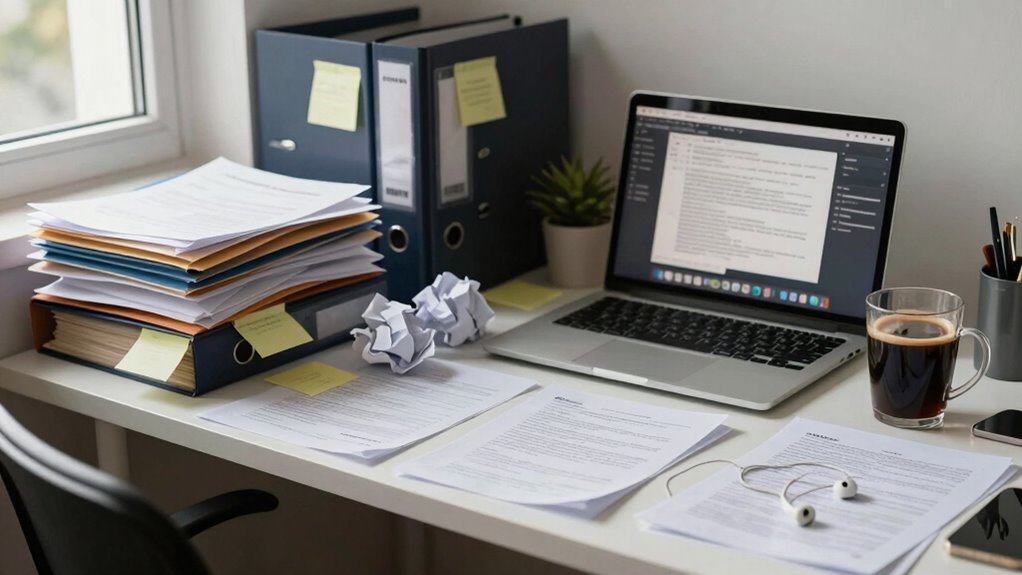

Clutter from paper documents creates ongoing frustrations in your home office by making it hard to find important files quickly and causing physical chaos. When you don’t have a proper system for storing or digitalizing papers, stacks of receipts, bills, and notes pile up, wasting your time and increasing stress. This disorganized environment hampers productivity and adds to your frustration. Keep going to discover practical ways to clear this clutter and regain control of your space.

Prime made for students and young adults
- Fast, free delivery for dorm and study essentials
- Prime Video and Amazon Music included
- Member-only deals
Key Takeaways
- Excess paper clutter causes difficulty finding important documents, leading to frustration and wasted time in the home office.
- Lack of a proper filing system results in disorganized papers that hinder productivity and increase stress.
- Physical storage limits can cause documents to pile up, creating chaos and reducing workspace efficiency.
- Inconsistent paper retention routines lead to accumulated clutter and difficulty in maintaining an organized environment.
- Relying solely on physical documents increases the risk of loss, making quick retrieval and secure storage challenging.
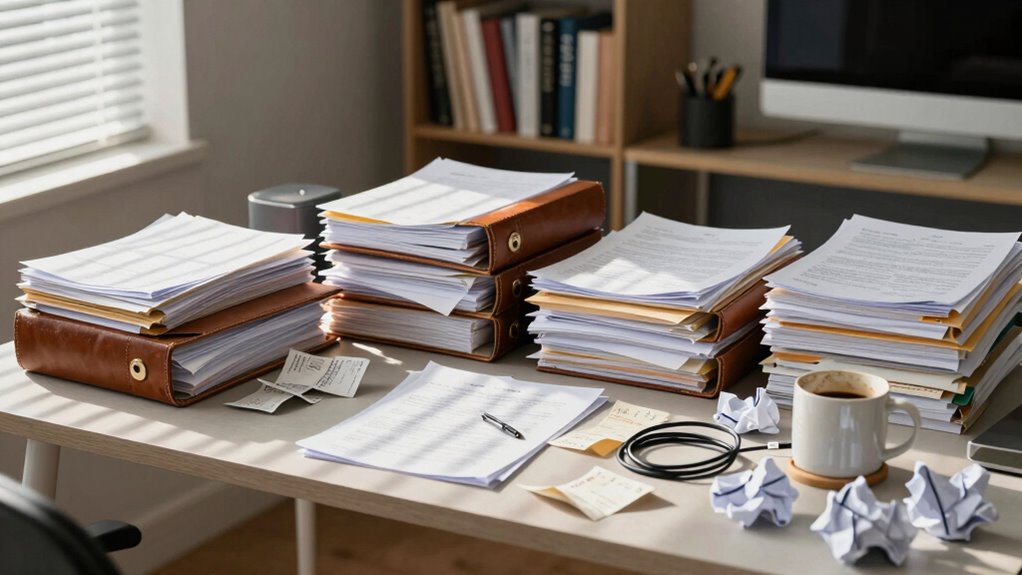
Many home offices struggle with managing paper documents, leading to clutter and wasted time searching for important files. You might find yourself drowning in stacks of receipts, bills, and personal documents, making it difficult to locate what you need quickly. This chaos hampers productivity and creates frustration. The solution begins with digital organization. Converting paper files into digital formats allows you to access everything from your computer or device without digging through piles. Scanning important documents and saving them in clearly labeled folders can streamline your workflow. Digital organization reduces physical clutter and makes updating or sharing files easier. Implementing digital storage solutions** helps keep your files secure and organized, minimizing the risk of losing important papers. However, digital organization isn’t enough if your storage solutions aren’t effective. You need a system that keeps your physical papers orderly and accessible. Invest in storage solutions designed for document management, such as filing cabinets, file boxes, or desktop folders. Use labeled folders for different categories—bills, medical records, warranties, tax documents—so you can find what you need at a glance. Vertical filing cabinets save space and keep files upright, preventing clutter from spilling over. For smaller items, like receipts or notes, consider desktop file organizers that sit within arm’s reach. Establish a routine for maintaining these storage solutions, like weekly or monthly cleanouts, to prevent accumulation of unnecessary papers. Proper organization plays a crucial role in maintaining a clutter-free workspace. Incorporating effective filing systems into your routine can significantly improve your ability to locate documents quickly and reduce stress. Creating a consistent routine for managing paperwork ensures that clutter does not build up over time. Additionally, integrating digital and physical organization creates a cohesive system. For example, once you scan a paper document, you can discard the physical copy or store it in a designated archive folder. This minimizes physical space and keeps your workspace tidy. Consistently naming and categorizing digital files ensures you won’t waste time searching for important documents later. Additionally, backing up digital files on cloud services or external drives guards against data loss. This way, even if your physical or digital files are misplaced, you have a secure backup**.
Ultimately, managing your paper retention problem requires intentional effort and consistent habits. By adopting effective digital organization practices and choosing appropriate storage solutions, you’ll transform your home office from a chaotic space into an organized, efficient environment. The time and stress saved will be well worth the initial effort, making your workspace more productive and less frustrating. When you streamline how you handle paper documents, you create a smoother workflow and reclaim valuable space, enabling you to focus on what truly matters.
As an affiliate, we earn on qualifying purchases.
Frequently Asked Questions
How Can I Digitize My Paper Documents Effectively?
To digitize your paper documents effectively, start by scanning them with a high-quality scanner or mobile app. Organize files digitally and back them up regularly to cloud storage for easy access. Guarantee digital security by using strong passwords and encryption. Regularly update your security measures and avoid storing sensitive info on unsecured platforms. This way, you maintain easy access, protect your data, and reduce clutter efficiently.
What Are the Legal Requirements for Document Retention at Home?
Think of your home office as a vault where legal compliance and privacy concerns guard your documents. You must retain financial records, tax documents, and legal papers for specific periods—often 3 to 7 years—depending on local laws. Keep digital copies secure and organized, and avoid sharing sensitive info unnecessarily. Staying compliant guarantees you avoid fines and protects your privacy, creating a secure environment for your important documents.
How Often Should I Review and Purge Stored Papers?
You should review and purge your stored papers at least once a year to maintain effective organizational habits. Regularly update your filing systems to guarantee important documents are easily accessible, and discard outdated or unnecessary papers. Keeping a consistent schedule helps prevent clutter and confusion, making it easier to locate essential documents when needed. Setting reminders and establishing a routine will keep your home office organized and efficient.
What Are the Best Storage Solutions for Limited Space?
You should opt for creative shelving and compact filing solutions to maximize limited space. Use wall-mounted shelves to free up desk area, and choose vertical storage to keep papers organized without clutter. Compact filing cabinets or stackable trays help contain documents neatly. These strategies let you keep essential papers accessible, while maintaining a tidy, efficient workspace. Embrace innovative storage options to make the most of your limited home office space.
How Do Paper Retention Issues Impact Productivity?
Paper clutter can subtly slow you down, making it harder to find important documents quickly. Poor filing organization wastes time, causes frustration, and diverts your focus from essential tasks. When papers pile up, your productivity diminishes as you spend extra minutes searching or sorting. Keeping a well-structured filing system helps streamline your workflow, minimizes distractions, and guarantees you stay efficient, even amidst limited space.
As an affiliate, we earn on qualifying purchases.
Conclusion
You might be surprised to learn that 78% of remote workers struggle with managing paper clutter, leading to frustration and wasted time. Addressing your paper retention problem can markedly improve your home office efficiency and reduce stress. By implementing simple organization strategies, you’ll free up space and mental clarity. Don’t let paper chaos hold you back—take control now and create a more productive, clutter-free workspace that works for you.
As an affiliate, we earn on qualifying purchases.
labeled file folders for home office
As an affiliate, we earn on qualifying purchases.
As an affiliate, we earn on qualifying purchases.
Fall Picks
fall essentials
As an affiliate, we earn on qualifying purchases.