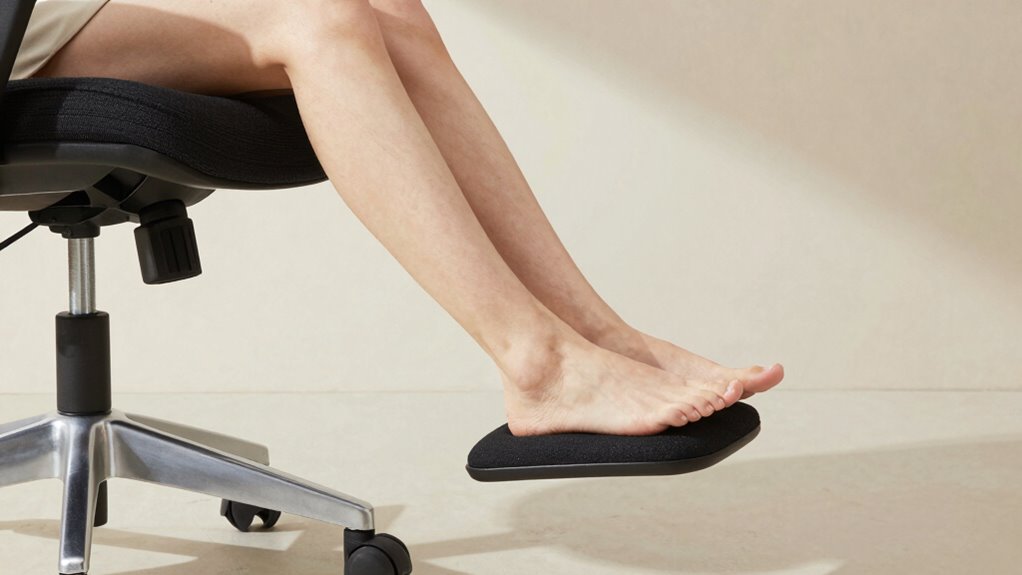
Using a footrest can boost your comfort and posture if your feet don’t naturally rest flat or if you experience lower back or leg strain. It helps keep your hips and knees aligned and reduces pressure. However, if your chair already supports proper foot positioning, a footrest may be unnecessary or even cause poor posture if misused. To learn more about when a footrest truly helps or hurts you, keep exploring the details.
Key Takeaways
- A footrest benefits those with chairs that don’t allow feet to rest flat at 90°, improving posture.
- Using a footrest incorrectly, such as elevating legs excessively, can cause hip tilt and poor alignment.
- When chair height already supports proper foot placement, a footrest may be unnecessary and could hinder posture.
- Material quality affects comfort; cushioned footrests help long-term support, while rigid ones provide stability.
- Personal comfort, body feedback, and workspace setup determine if a footrest enhances or impairs ergonomic health.

When it comes to ergonomic comfort while sitting, the choice between using a footrest or not can substantially impact your posture and overall well-being. If you’re spending hours at a desk, maintaining proper ergonomic posture is essential to prevent discomfort and long-term health issues. A footrest can help align your hips, knees, and ankles correctly, reducing strain on your lower back and legs. However, if misused or unnecessary, it can also lead to discomfort or poor posture habits. The key lies in understanding when a footrest truly benefits you and how to select the right materials for maximum comfort.
Using a footrest encourages a more natural sitting position by elevating your feet, which can alleviate pressure on your lower back and improve circulation. When your feet are supported at the correct height, your hips stay in a neutral position, promoting better ergonomic posture. This support prevents you from slouching or leaning forward, both common causes of back pain. The choice of footrest materials matters too. Soft foam or cushioned surfaces offer comfort for extended periods, while rigid materials like plastic or wood provide stability. Some footrests come with adjustable height settings, allowing you to customize your support based on your desk height and leg length. A well-chosen footrest made of quality materials guarantees it remains comfortable and durable over time, making it a worthwhile investment.
Elevate your feet with a supportive footrest for better posture and lasting comfort during long work hours.
That said, a footrest isn’t always necessary or beneficial. If your chair height already allows your feet to rest flat on the floor with your knees at a 90-degree angle, adding a footrest could elevate your legs excessively, causing your hips to tilt and creating strain. Over-reliance on a footrest can sometimes lead to poor ergonomic posture, especially if it shifts your pelvis into an unnatural position. In such cases, it might be better to adjust your chair height or use a footstool that allows for more natural positioning. Remember, the goal is to keep your feet supported comfortably without forcing your body into an awkward posture.
Additionally, choosing a footrest made of appropriate materials can significantly enhance comfort and durability during long sitting sessions. Ultimately, whether you use a footrest depends on your individual needs and workspace setup. Pay attention to how your body feels after long periods of sitting. If you notice discomfort or strain in your lower back, legs, or hips, experimenting with a footrest made of suitable materials might help. But if your current setup supports your feet and keeps your posture aligned, adding one may not be necessary. The right choice promotes ergonomic posture, enhances comfort, and prevents fatigue, ensuring you stay productive and healthy throughout your workday.
Frequently Asked Questions
Can a Footrest Improve Posture for Long-Term Ergonomic Health?
Yes, a footrest can improve your posture for long-term ergonomic health. It provides ankle support, helping you maintain proper leg alignment, which reduces strain on your lower back. Additionally, using a footrest enhances circulation in your legs and feet, preventing discomfort and swelling during extended sitting periods. Just make sure your footrest is adjustable and positioned correctly to maximize its benefits for your posture and overall comfort.
Are There Specific Activities Where a Footrest Is Unnecessary?
Think of your workspace as a stage where not every act needs a footrest. For activities like typing or reading, a footrest provides activity-specific comfort and support, but when you’re doing tasks that require movement or standing, it’s unnecessary. If your work involves quick shifts or standing, a footrest might even hinder your activity-specific support. Trust your body’s signals to determine when a footrest helps or simply gets in the way.
How Do Footrest Heights Affect Comfort and Support?
You’ll find that footrest heights greatly impact comfort and support by providing better ankle support and promoting ideal leg elevation. When the footrest is too high, it can strain your legs and hips, causing discomfort. Conversely, a footrest that’s too low offers minimal support. Adjust the height so your feet rest flat, your knees are slightly higher than your hips, and your ankles stay supported, ensuring maximum comfort and proper posture.
Is a Footrest Beneficial for People With Certain Medical Conditions?
A footrest can be beneficial if you have medical conditions like circulatory issues, joint pain, or back problems. It offers ergonomic support, reducing strain and improving posture, which can lead to better circulation and decreased discomfort. However, if poorly adjusted, it might cause additional strain or discomfort. Always consider your specific medical needs and consult a healthcare professional to determine if a footrest supports your ergonomic considerations effectively.
Can Using a Footrest Cause Any Adverse Effects?
You might think a footrest is a blessing, but it can cause footrest discomfort if used improperly. Relying on it too much could lead to footrest dependency, weakening your muscles over time. Plus, improper positioning might cause discomfort or strain. It’s important to use a footrest wisely, making sure it supports good posture without making you complacent. Otherwise, you might end up doing more harm than good.
Conclusion
Choosing a footrest can feel like a small decision, but it’s a game-changer—sometimes easing your posture, other times causing strain. When used correctly, it supports your comfort and reduces fatigue; when misused, it can lead to discomfort or poor alignment. Like a double-edged sword, a footrest offers relief or risk, depending on how you incorporate it. So, pay attention to your body and find what truly helps—because comfort isn’t one-size-fits-all.