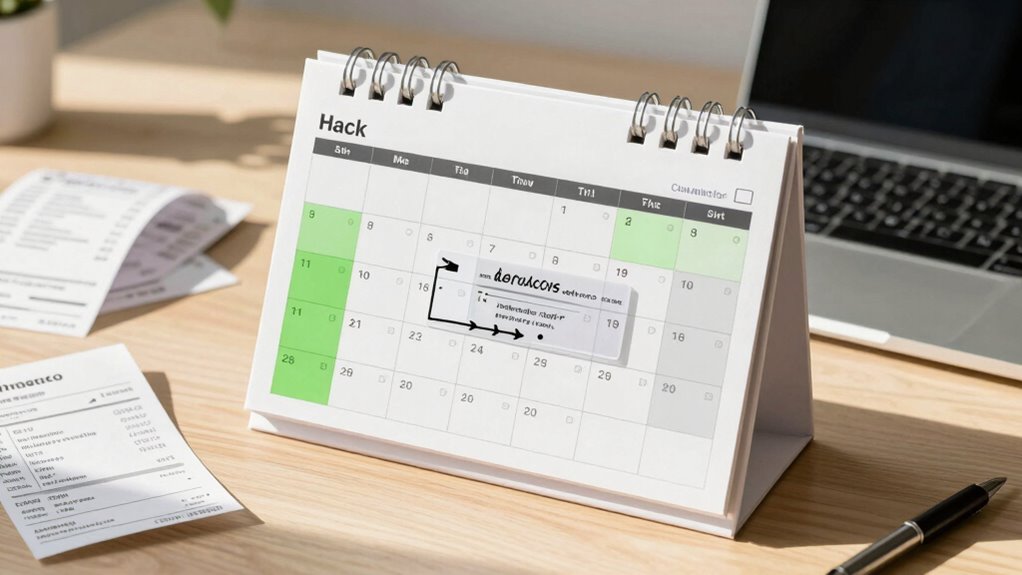

To save refunds, use a simple return-window calendar hack by marking purchase dates and deadlines on your calendar, whether digital or paper. Track your return periods, especially during busy seasons or sales, to avoid missing window closures. Planning ahead guarantees you handle returns promptly and avoid unnecessary stress or delays. Staying organized with this method makes refunds more manageable and less frustrating, and if you keep going, you’ll discover even more tips to maximize your refund chances.

Prime made for students and young adults
- Fast, free delivery for dorm and study essentials
- Prime Video and Amazon Music included
- Member-only deals
Key Takeaways
- Keep a dedicated calendar marking each purchase’s return deadline to avoid missing refund or exchange windows.
- Track all shopping dates, especially during sales, to plan returns before deadlines expire.
- Note gift return deadlines to manage returns efficiently and prevent last-minute stress.
- Understand store-specific return policies to plan purchases and returns accordingly.
- Use a return-window calendar hack to promote intentional shopping, reducing impulse buys and maximizing refund opportunities.

Looking to make the most of your return policies? If you’re savvy about managing your shopping habits, you can turn the often tricky process of returns into a straightforward, stress-free experience. The key is understanding how to maximize your return window, which often varies by retailer and product. This is where the return-window calendar hack comes into play—by tracking your purchases and their respective return deadlines, you can ensure you don’t miss out on refunds or exchanges. It’s especially useful during holiday seasons or when shopping for gifts, where gift return strategies become essential. Knowing when items need to be returned can save you money and help avoid the frustration of returning items too late. Additionally, understanding return policies can give you an edge in planning your purchases effectively.
Start by paying close attention to the return policies of each retailer before you buy. Many stores offer a standard return window, typically 30 to 90 days, but some have extended periods during holiday sales or special promotions. Write down the purchase date and the return deadline on a calendar—digital or paper—so you don’t forget. When you shop regularly, maintaining this calendar becomes second nature, helping you plan your shopping habits around these deadlines. For example, if you buy gifts for birthdays or holidays, knowing the return window helps you decide when to purchase so you can return or exchange items if needed without rushing or risking missing the deadline.
Track purchase dates and return deadlines to stay ahead and maximize your return window.
This approach is especially helpful for gift return strategies. When buying gifts in advance, you might not know whether the recipient will keep or return the item. Marking the return deadline on your calendar ensures you can return gifts that don’t fit, aren’t needed, or aren’t appreciated, all within the allowed timeframe. It prevents last-minute scrambling and helps you stick to your budget by avoiding unnecessary purchases. Additionally, if you’re shopping during sales or clearance events, tracking the return windows helps you manage multiple returns efficiently, avoiding the temptation to hold onto items just because you’re unsure about the return period.
Using a return-window calendar hack encourages better shopping habits. You become more intentional about what you buy, knowing exactly when you can return it if necessary. It minimizes impulse purchases that you might regret later or struggle to return. Over time, this strategy sharpens your awareness of store policies and enhances your overall shopping experience. Instead of feeling overwhelmed or unsure about returns, you’ll be confident in your ability to navigate the process and secure refunds or exchanges when needed. Ultimately, this simple hack turns a potentially frustrating chore into a manageable part of your shopping routine, saving you time, money, and stress—making sure your refund opportunities stay within reach.
Frequently Asked Questions
Can This Hack Work With International Retailers?
Yes, this hack can work with international retailers if you comprehend their global policies on international returns. Check each retailer’s return window and guidelines, as they vary worldwide. By tracking these dates carefully, you can guarantee your return falls within the permitted period, even across borders. Staying aware of international return policies helps you maximize refunds and avoid losing money on purchases from global stores.
Does the Hack Affect Warranty Periods?
Think of your warranty as a garden that grows with time. This hack doesn’t extend your warranty period; it only shifts your refund window. So, warranty extension isn’t affected, but policy implications mean you should be aware that the original warranty timeline stays unchanged. Use this calendar trick wisely, knowing it helps with returns but doesn’t alter your warranty’s natural growth, ensuring you’re covered without unexpected surprises.
Is There a Risk of Store Bans Using This Method?
There is a risk of store bans when using this method, especially if you repeatedly exploit return policies or appear suspicious. Store bans are a risk factor for those who push the limits or abuse the system. To minimize this, avoid making excessive returns, stay within reasonable timeframes, and don’t draw attention to your actions. Being cautious helps you avoid store bans and keeps your refund opportunities open.
How Often Do Retailers Update Their Return Policies?
Retailers typically update their return policies every few months or with seasonal changes, keeping them fresh and aligned with market trends. About 60% of stores make return policy adjustments during major seasonal updates, like holidays or end-of-season sales. These updates often happen quarterly, so you should check for changes regularly. Staying informed helps you maximize your refunds and avoid surprises, especially when stores tweak their policies to boost sales or reduce fraud.
Can This Hack Be Used for Digital Goods?
You can often use this hack for digital goods, but it depends on the retailer’s refund windows. Many digital products have strict policies or limited refund periods, so timing is essential. By tracking the refund window closely, you can request a refund before it closes. Just remember that some digital goods, like software or subscriptions, might have non-refundable clauses, so always check the specific refund policies before trying this hack.
Conclusion
By mastering this return-window calendar hack, you become the architect of your refunds, turning deadlines into your allies. Imagine your shopping cart as a treasure chest, each return window a secret passage guiding you to savings. Without it, your purchases risk becoming lost islands, unreachable and forgotten. So, mark your calendar wisely—this simple trick transforms chaos into clarity, making refunds a smooth journey rather than a frustrating chase. Your wallet will thank you.
Halloween Picks
halloween
As an affiliate, we earn on qualifying purchases.